












- WIADOMOŚCI
A new era of EU space security

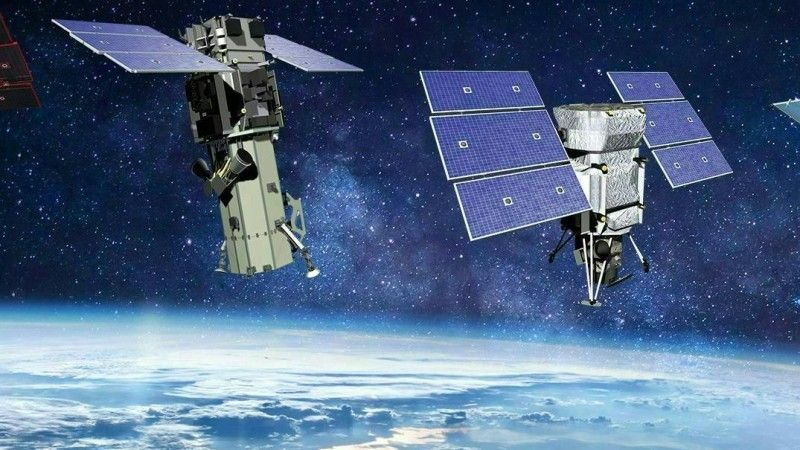
Photo. NATO (@NATO)/X
Europe is entering a new era of space sovereignty. The implementation of a three–tier security model, the deployment of its own navigation and observation constellations, and the expansion of public–private partnerships are enabling the continent to assume control over critical orbital services. At the same time, rapid response mechanisms to space–related threats, coupled with growing investments in Intelligence, Surveillance, and Reconnaissance (ISR) and quantum communications, are designed to provide Europe with lasting strategic stability in the space domain.
Space as the fifth Operational Domain
Outer space has been formally recognized as the fifth operational domain, standing on equal footing with the traditional arenas of land, sea, air, and cyberspace. This recognition is not a mere semantic nuance but a reflection of a reality in which all other domains are inextricably linked through orbital infrastructure. Widely used navigation satellites provide precise positional data to, among others, aviation, weapons guidance systems, and military logistics platforms.
Meanwhile, communication constellations ensure uninterrupted data transmission between land, naval, and aerial units, while simultaneously supporting cyber defense systems that must exchange information in real time to counter network attacks. In parallel, observational satellites capture high–resolution imagery, monitor climate change, and track military movements, thereby delivering strategic intelligence crucial for land operations planning and for cyber threat analysis, where shifts in critical infrastructure may serve as early indicators of an impending attack.
This multilayered interdependence means that interference with, or disruption of, satellite communications or incidents related to space debris immediately affect operational capabilities across the remaining domains. For instance, jamming of Galileo signals in the Baltic Sea region could paralyze maritime navigation and impair the precision targeting of missile systems. At the same time, such disruptions may enable cybercriminals to exploit temporal desynchronization as a means of bypassing cryptographic safeguards.
For this reason, the protection of orbital infrastructure has become a central pillar of contemporary national and allied security strategies. The European Union, NATO, and individual member states increasingly regard space situational awareness, rapid response to orbital incidents, and satellite resilience certification as indispensable components of their defense policies. This growing recognition underscores that the loss of control over space infrastructure translates directly into weakened operational capacity across each of the other four domains.
The evolution of the European Union's approach to space security
In 2016, the European Union adopted its first Space Strategy for Europe«, in which outer space was for the first time incorporated into a broader security policy framework. The document emerged against the backdrop of escalating international tensions following Russia’s annexation of Crimea. At that time, Western states began to recognize that access to independent navigation, communication, and Earth observation services could become a critical element of strategic resilience.
The 2016 strategy emphasized the necessity of developing Europe’s own satellite capabilities. Consequently, it encouraged efforts to reduce reliance on American GPS systems and on private constellations, which were only beginning to be developed at the time. The document also introduced the notion of a space ecosystem« – a set of interlinked services designed to serve both civilian and military users across the EU.
Another milestone came in 2022 with the publication of the Strategic Compass for Security and Defence«, which for the first time introduced the concept of strategic resilience. The Compass« made it explicit that autonomous space capabilities are an indispensable pillar of this resilience and that Europe must establish its own navigation, communication, and observation systems, resilient against both disruption and cyberattacks. It underscored that only full control over critical segments of the supply chain can guarantee that the EU will not be excluded from essential operations during crises. Within the framework of the Strategic Compass, the EU also committed to expanding its budget for space programs, allocating an additional €1.2 billion for the years 2023–2025 to support satellite infrastructure and research into technologies resistant to electromagnetic interference.
The most groundbreaking document to date has been the EU Space Strategy for Security and Defence«, published in March 2023. This strategy unequivocally reclassified space as a domain of security and defense, rather than merely a civilian sector supporting the economy. It introduced three central pillars. The first concerned observation capabilities, intended to provide early warning of both military and natural threats. The second addressed navigation and communication services, ensuring uninterrupted operational availability even under conditions of conflict. The third pillar focused on protection and recovery, encompassing space situational awareness, collision avoidance, and rapid response protocols against anti–satellite attacks.
In 2024, the EU launched the European Defence Industrial Development Programme« (EDIDP). This flagship initiative directly links dual–use technology projects with funding mechanisms aimed at strengthening the defense industrial base. The EDIDP provides grants and loans for projects that simultaneously meet security requirements and generate economic value. The program has facilitated the emergence of the first partnerships between major space industry corporations and small and medium–sized enterprises, which typically develop innovative solutions in areas such as artificial intelligence for satellite data analysis and quantum–encrypted communications systems.
In recent years, a profound transformation has become evident in how space is perceived. Initially regarded as the common heritage of humankind, with exploration serving scientific and economic purposes, space is now recognized as a cornerstone of security and defense. This shift is reflected in successive strategies and expanding budgets. As a result, the EU is building not only its own satellite infrastructure but also the organizational and legal capacities necessary to act autonomously in space, safeguard its interests, and participate effectively in international security structures such as NATO. In doing so, Europe is gradually establishing itself as a space power, capable of protecting its citizens and upholding its values.
Selected programs and initiatives strengthening Europe's presence in space
It is worth noting that since 2022 the EU Space Surveillance and Tracking (EU SST) system has been operational. Serving as the central hub for data collection on objects in low and medium Earth orbit, the system integrates information from ESA’s radar network, EUSPA’s sensors, and national observation infrastructures such as France’s CNES and Germany’s DLR. Through automated data processing, EU SST is capable of detecting new fragments of orbital debris in real time, forecasting their trajectories, and generating alerts for satellite operators. In practice, this enables collision avoidance and rapid responses to potential anti–satellite attacks when unauthorized maneuvers or jamming signals are detected.
Another key initiative is Galileo, Europe’s only independent contribution to the Global Navigation Satellite System (GNSS). It achieved full operational capability in 2022, thereby providing users with over 30% of global GNSS signal coverage. Galileo allows for precise positioning in challenging urban and polar environments and ensures access to protected services that require signal authentication. From 2025 onwards, the system will undergo the Galileo Second Generation (G2G) upgrade, introducing new frequencies, higher transmitter power, and improved error correction algorithms. This modernization will raise accuracy to the centimeter level while enhancing resilience against jamming and spoofing.
Galileo is part of the broader GNSS infrastructure in Europe, which also includes EGNOS. Acting as a correction layer for GNSS signals, EGNOS provides enhanced positioning accuracy, particularly in aviation. Since 2023, the system has operated in its V3 configuration, which features additional reference stations and more frequent updates of correction data.
Equally important is Copernicus, the world’s largest Earth observation program, which has been in its thirteenth operational phase since 2023. Comprising a series of Sentinel satellites, Copernicus delivers data across five key domains: optical, radar, atmospheric, oceanic, and terrestrial. These datasets support civilian applications such as weather forecasting, agricultural monitoring, water resource management, and crisis response. In 2026, the Sentinel–7 satellite will be launched, equipped with an advanced hyperspectral sensor capable of identifying materials with highly specific spectral characteristics.
In 2023, the European Space Agency (ESA) launched the pilot project QKD–Sat, aimed at demonstrating the feasibility of distributing quantum keys from orbit to ground stations across Europe. Tests have confirmed that keys can be exchanged over distances of up to 2,000 km with zero error rates, paving the way toward a global quantum communication network. Future plans include extending this technology to the GovSatCom constellation and to IRIS² satellites, thereby ensuring post–quantum security for Europe’s most critical communication channels.
The IRIS² (Infrastructure for Resilient Inter–Satellite Communication System) project is designed to become Europe’s counterpart to private constellations such as Starlink. Its overarching goal is to provide secure, encrypted, and interference resistant communications for public administrations, emergency services, and armed forces. During the definition phase (2024–2025), a hybrid architectural model is being developed, combining low Earth orbit satellites with medium and geostationary Earth orbit nodes. Demonstration tests will confirm the ability to dynamically switch between frequency bands, thereby increasing resilience against jamming and spoofing.
The GovSatCom program, in turn, aims to establish a dedicated communications constellation reserved exclusively for EU governmental agencies and armed forces. With a budget of €2.5 billion, the first satellites are scheduled for launch in 2026. The constellation will employ phased–array antenna and beamforming technologies, allowing for dynamic beam shaping and minimizing the risk of signal interception. Furthermore, all transmissions will be encrypted with AES–256 algorithms and additionally secured with Quantum Key Distribution (QKD) protocols.
It should also be emphasized that legislation adopted in 2024 introduced mandatory resilience certification for all satellites operating under EU programs. The certification covers two critical areas. The first relates to resistance against electromagnetic interference (EMI) and jamming. The second concerns cybersecurity, requiring secure boot, hardware–rooted trust mechanisms, and regular audits of both ground and onboard software code. As a result, every new EU satellite must comply with rigorous standards that strengthen the overall resilience of the European space system. Importantly, these programs are not designed in isolation; their architectures have been structured to function collaboratively, reinforcing one another within an integrated ecosystem.

Contemporary radioelectronic threats in the space domain
Cyberattacks and interference with satellite infrastructure became a tangible threat after an APT group disrupted the KA–SAT network in 2022. In 2023, the same group directed malware against ESA’s ground control stations. Such incidents interrupt access to services, enable the theft of cryptographic keys, and allow manipulation of telemetry data – leading to false readings and flawed operational decisions.
GNSS jamming and spoofing have demonstrated that low–cost kits capable of emitting powerful radio signals are already available on the black market. In 2021, GPS interference affected several European states, and in 2022 similar attacks targeted Galileo signals. Spoofing legitimate satellites and injecting false positioning corrections jeopardize precision–guided weaponry, logistics transport, and unmanned aerial system (UAS) operations. For this reason, the EU has introduced mandatory GNSS resilience certification and is developing anti–spoofing technologies as part of the Galileo modernization program.
The proliferation of new constellations further intensifies competition for access to valuable frequency bands. China is preparing to launch BeiDou–III, while Russia is working on the Luna–25 constellation. This implies that in the coming decade, a new wave of dual–use satellites will enter orbit. The race for Ku-band and Ka-band frequencies increases pressure on international regulation and raises the risk of interference between different systems.
To counter these multidimensional threats, the EU is enhancing its monitoring and rapid–response capabilities, as well as implementing technical resilience measures such as satellite hardening. At the same time, it promotes cooperation with NATO and transatlantic partners to establish common standards and enable real–time intelligence sharing, with the ultimate aim of preserving stability and security within the new fifth operational domain – outer space.
Fragmentation of competences in European Space Security Policy
Since 2020, the European Defence Agency (EDA) has served as the central coordinator for projects that integrate operational systems with space–based capabilities. Among these are programs such as Eurodrone and Eurofighter, which are being integrated with satellite communications and the Galileo navigation system, thereby enhancing their operational performance under conditions of disruption. In 2023, Brussels launched the Space Defense Hub, a platform where EU agencies, member states, and private sector partners exchange intelligence, develop joint protection procedures, and test new anti–jamming technologies.
Cooperation between the EU and NATO, initiated in 2019 and reinforced by the formal recognition of space as the fifth operational domain, took concrete shape with the Joint Declaration on Space Security of 2022. The declaration commits both sides to sharing threat data, jointly developing protection standards, and coordinating incident responses. Since 2023, annual Space Shield exercises have been held, involving NATO air forces, naval units, and cyber defense teams alongside EU contingents. These exercises simulate scenarios such as GNSS disruptions, cyberattacks on ground control centers, and satellite collisions.
In 2024, the EU adopted the EU Space Rapid Response Protocol«, which establishes a unified procedure for incident reporting. The Protocol« requires satellite and ground–station operators to maintain updated contingency plans and to conduct regular resilience testing.
Through the combination of project coordination, joint declarations and exercises with NATO, rapid response protocols, and mandatory technical standards, the European Union is building a defensive layer and capabilities for immediate reaction to threats in space, seeking to minimize vulnerabilities in the protection of its orbital infrastructure.
International partnerships shaping the balance of European space security
The United States continues to dominate in the field of space technologies. The Space Force and the National Space Policy« of 2023 emphasize the necessity of cooperation with allies, which led to the signing of the EU–US Space Cooperation Framework« in 2024. The agreement provides for joint research on GNSS protection, the exchange of data on orbital threats, and access to American early–warning systems against anti–satellite attacks. It also supports European projects such as IRIS² and GovSatCom.
China, meanwhile, is rapidly expanding its BeiDou navigation system and communications constellation, enhancing its capabilities in both the civilian and military sectors. BeiDou–III is set to deliver global coverage with built–in anti–jamming features, while the Chinese communications satellite network is intended to support military projects, including tactical communications and reconnaissance systems. Russia, for its part, continues to test anti–satellite weapons (ASAT) and is developing the Sfera constellation, aimed at providing an independent communications backbone for its armed forces and increasing resilience against Western disruption.
The private sector, represented notably by SpaceX and OneWeb, delivers broadband connectivity that NATO and the EU employ for logistical operations and cyber defense. Despite their importance, control over these constellations remains limited, raising concerns about strategic dependence and the potential militarization of their infrastructure.
Partnerships with the United States grant Europe access to cutting–edge technologies and joint protection mechanisms. However, the growing autonomy of China and Russia, combined with the prominent role of private companies, compels the EU to develop its own capabilities, introduce regulatory frameworks, and invest in sovereign constellations in order to preserve strategic autonomy in space.

Challenges and limitations in shaping European space security policy
The fragmentation of competences continues to hinder the EU’s effectiveness in space, as the European Commission, EUSPA, EDA, and individual member states pursue decisions in parallel. This results in dispersed responsibilities and lengthened decision making processes. Although the EU Space Rapid Response Protocol (SRRP) was introduced in 2024, the mechanism is not yet fully integrated with national warning systems. Nor does it provide a unified chain of command in crisis situations, highlighting the need for further procedural improvements.
Divergent national interests often lead to misaligned priorities and delays in the implementation of joint EU projects. The EU Space Programme« budget of €14.8 billion for the period 2021–2027 is substantial in a European context, but remains marginal compared to the expenditures of the United States and China. In 2023, it amounted to just 0.2% of EU GDP, limiting Europe’s ability to compete in the fields of megaconstellations, quantum communications, and the development of anti–satellite weapons.
The rapid pace of technological innovation demands more flexible decision making processes, accelerated resource allocation, and simplified procurement procedures. These steps are essential if Europeans are to respond effectively to emerging threats and leverage breakthrough technologies. To achieve a coherent and effective space policy, the EU requires a central coordinating body to unify the competences of the European Commission, EUSPA, and EDA. Such an authority would allow for more efficient use of resources, shorten project timelines, and secure Europe’s strategic sovereignty in the space domain.
The Current and Future Model of the European Union's Space Policy
The proposed three–tier model of space security could become the foundation of Europe’s strategy. The first pillar is detection and monitoring, based on the further development of the EU SST to ensure continuous mapping of outer space, automatic detection of new objects, and collision forecasting. The second pillar is resilience and protection of EU infrastructure. These measures will rely on integration with national operational centers and the certification of satellite cyber–resilience, introducing dedicated safeguards against jamming and spoofing. The third layer involves offensive capabilities, defined as intelligence, surveillance, and reconnaissance (ISR). This will enable the creation of European reconnaissance systems and secure communications, which can, if necessary, be employed in defensive operations.
The integration of these pillars with defense policy aligns with the European Defence Action Plan« (EDAP) of 2024. As a result, increased allocations within the European Defence Fund (EDF) will make it possible to finance joint technological projects and accelerate their transition from research to production. By 2028–2030, the EU aims to operate its own fully functional communications constellation, an independent navigation system, and an expanded Earth observation system. Achieving such autonomy will provide Europe with strategic stability in an era of intense space competition and allow it to access orbital space freely, without dependence on external providers.


