












- ANALIZA
- WIADOMOŚCI
American missile crisis. The war in Iran emptied the warehouses

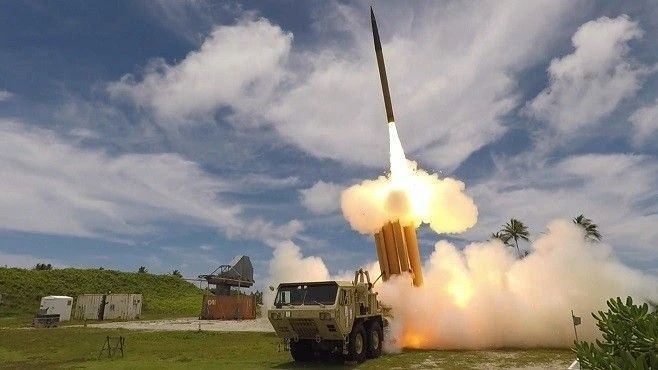
The latest data leaves no room for doubt: American interceptor missile stockpiles have shrunk drastically. This situation is already leading to serious consequences and forcing specific actions to halt the mounting crisis.
At the end of July, a CSIS report (Centre for Strategic and International Studies) was published. It presented interesting data on the stockpiles of US missile defence systems, primarily Patriot and THAAD missiles.
Stockpiles are dwindling
Information provided by the think tank shows that at the end of July, approximately 760 Patriot missiles (PAC-3 MSE and PAC-3) remained in the US Army’s inventory. Five months earlier—immediately before the start of Operation „Epic Fury” in Iran—the United States had 2,330 missiles for the aforementioned air and missile defence systems.
In the case of THAAD (Terminal High Altitude Area Defence), a system designed to destroy short, medium, and intermediate-range ballistic missiles at very high altitudes, the number of THAAD missiles fell from 452 (before 28 February) to approximately 234 at the end of July. It is worth noting here that during the period from the entry into force of the ceasefire (lasting since 8 April) until today—the moment combat operations resumed—the number of these missiles in the US Army’s inventory remained at a similar level. This means that current production only allowed for maintaining a constant level of stockpiles, without the possibility of real replenishment.
Problems with THAAD and Patriot missiles are not the end of the Pentagon’s worries. According to data obtained by Reuters, similar shortages in US Army stockpiles are appearing in the case of ATACMS missile systems and PrSM (Precision Strike Missiles).

A range of consequences
This puts the American authorities in a position that is at least uncomfortable. Shortages in the stockpiles of the described weapons can have both short- and long-term consequences. In the former case, this mainly concerns the ongoing operation in Iran and the increased probability of Iranian hits.
In the context of long-term effects, it is impossible not to notice problems in a potential conflict with China. The weakening of American offensive (and defensive) capabilities is being closely observed by Beijing, which may conclude that the United States will be deprived of adequate capabilities for a potential defence of Taiwan in the near future.
Europe will certainly also feel the effects of Washington’s problems. The review of the US military presence on the Old Continent, which began last week, may result in a significant reduction of US forces in our region of the world. The expenditure of hundreds of effectors in the Middle East will undoubtedly become an argument for limiting current involvement. Shortages in warehouses will also hit countries buying military equipment from across the ocean. We already know that the current situation will cause noticeable delays in deliveries to European customers (including Poland), as reported by, among others, Deputy Prime Minister and Minister of National Defence Władysław Kosiniak-Kamysz.
See also 

Taking specific action
In connection with the situation, the United States administration is looking for ways to replenish the shortages in warehouses as quickly as possible. During work on the Pentagon’s budget for next year, President Trump demanded as much as $95 billion for ammunition. Furthermore, the White House opted for an extraordinary $21 billion as part of a supplemental defence budget.
Specific action has been taken by the US Congress, which authorised the armed forces to move away from annual contract approvals in favour of Multi-Year Procurement contracts. This is intended to allow arms manufacturers to order key components well in advance.
The Pentagon is also playing a significant role in the process of urgently strengthening American reserves. The Department of Defence has decided to use so-called Undefinitised Contract Actions (UCAs), which allow defence corporations to immediately launch production lines or accelerate the recruitment of employees—even before individual agreements are finalised.
However, the steps taken, even if fully implemented, do not mean an immediate replenishment of depleted stockpiles. According to CSIS forecasts, a significant increase in missile deliveries for the US Army will not occur until the years 2028-2030. This is a direct result of the complicated and long-term production process of both PAC-3 MSE and THAAD missiles.


