












- WIADOMOŚCI
East Front News #74: New Infantry Fighting Vehicles for Poland; Greece preparing for a drone war?


East Front News is a weekly newsletter summarizing the past week’s most important events concerning security and the situation in the Central and Eastern Europe region. It includes original opinions and comments, along with key news items significant from a Polish perspective. If you would like to receive this newsletter, please sign up by clicking
The Polish Army received the first 15 serial models of the BORSUK Infantry Fighting Vehicles
The vehicles were delivered as part of a contract signed in March 2025. At that time, the Ministry of National Defense ordered 111 Borsuk vehicles for PLN 6.57 billion. Deliveries were scheduled for 2025-2029. The contract also includes a training and logistics package. In 2025, 15 vehicles will be delivered to the army, in 2026 there will be 3 vehicles, while in 2027-2029, 33 and 55 vehicles will be delivered, respectively – thus, in total, in 2025-2029, there will be 106 vehicles + 5 prototypes converted to serial standard.
Author: Mariusz Marszałkowski
Is Greece preparing for a drone war? Israel becomes a strategic partner
Greece is accelerating its defence modernisation efforts, focusing particularly on counter-drone and air-defence capabilities in response to the growing use of unmanned systems in contemporary conflicts. Athens assesses that drones, loitering munitions and precision missiles—visible today in Ukraine, the Middle East and North Africa—will become a permanent feature of warfare. This has driven the government to invest in a multi-layered air-defence shield based largely on Israeli technologies. The planned „Achilles Shield” system, integrating short-, medium- and long-range capabilities, is intended to replace ageing equipment and create one of the most advanced defensive architectures in Europe.
Cooperation with Israel is shaped not only by technological considerations but also by shared threat perceptions, particularly regarding Turkey’s rapidly expanding drone and missile programmes. Joint projects, including counter-drone systems and installations on Aegean islands, reflect a strategic partnership grounded in practical military needs rather than political symbolism. Although Greece does not expect an immediate direct attack, Athens is pursuing long-term planning aimed at enhancing deterrence, ensuring operational freedom in the Aegean Sea and strengthening NATO’s southern flank.
Author: dr Aleksander Olech & Magdalena Ciupińska

Visegrad Group Summit in Esztergom. Security and energy at the centre of discussions
The Visegrad Group summit took place on 2–3 December in Esztergom, Hungary, with the participation of the presidents of Poland, the Czech Republic, Slovakia, and Hungary. The meeting was a working one and focused primarily on energy security, regional cooperation, and the situation in Ukraine. One of the main topics of the talks was the supply of energy resources and the prospects for further diversification in the region. Participants discussed the need to strengthen transmission infrastructure, increase supply stability, and reduce vulnerability to external pressure. The discussions also covered issues related to European security, policies toward Ukraine, and cooperation within broader formats such as the Three Seas Initiative and NATO’s eastern flank initiatives.
During the summit, differing approaches among some member states toward relations with Russia were noted; however, the importance of maintaining dialogue and continuing cooperation in areas where the V4 countries share common interests was emphasised. Participants also highlighted the need to further strengthen the Group’s cohesion and functionality amid a changing international environment. The meeting in Esztergom confirmed that the Visegrad Group remains a platform for political consultations, particularly in energy, infrastructure, and security, even though differences among the member states influence the dynamics of cooperation.
Author: Justyna Smoleń
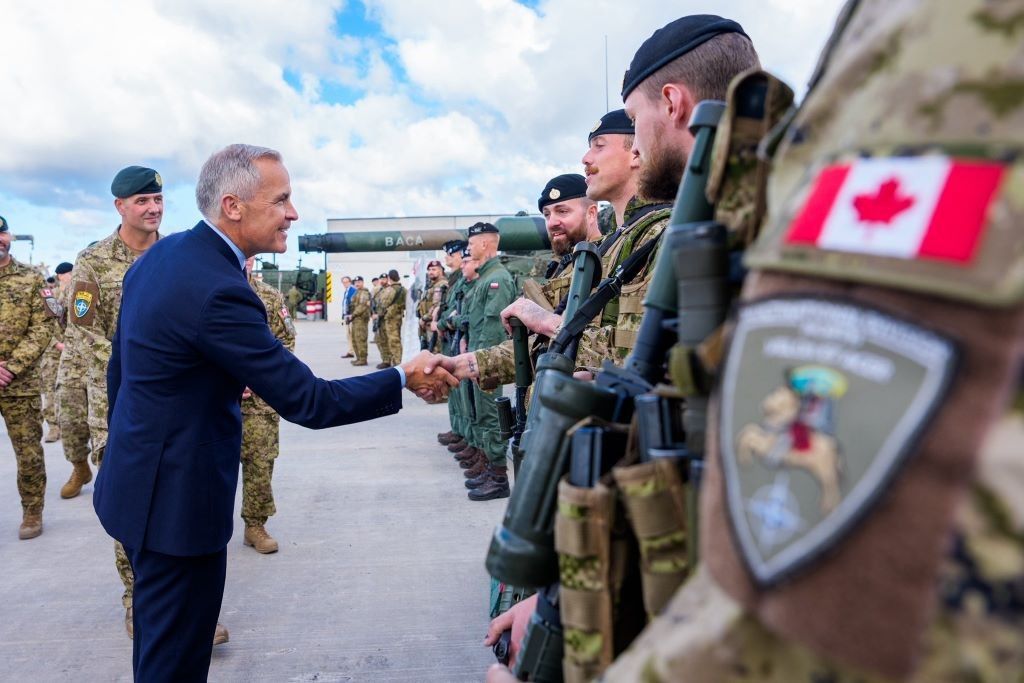
What Canada gains from joining the EU SAFE Programme
Canada’s decision to join the European Union’s SAFE instrument marks a significant step in strengthening defence cooperation between Ottawa and European partners. Participation in the programme will allow Canada to engage in joint procurement with EU member states, potentially securing preferential pricing and greater access to advanced military technologies. The move also opens the door for Canadian defence companies to compete for contracts in SAFE-participating countries, expanding their presence in the European market.
The accession is notable as Canada becomes the first non-European state to join the initiative, creating expectations about whether the United Kingdom will follow a similar path. Although London has yet to reach a final agreement with Brussels, the European Commission has confirmed that the UK may still join despite missing the initial deadline. Canada’s involvement therefore sets a precedent for broader international participation, signalling growing interest among close allies in aligning defence procurement with the EU’s evolving security architecture.
Author: Michał Górski
Proactive NATO: a real shift or just rhetoric?
A series of airspace violations across Eastern Europe—ranging from drones over Poland and Estonia to balloons reported above Lithuania—has reignited debate regarding NATO’s ability to maintain deterrence in the face of persistent hybrid pressure. These incidents form a pattern of gradual escalation, prompting policymakers to question whether the Alliance’s traditionally
reactive posture is still sufficient. Within this context, selected NATO officials have begun to signal openness to a more assertive operational approach.
Recent remarks by Admiral Giuseppe Cavo Dragone, Chair of NATO’s Military Committee, have intensified this discussion. He acknowledged the limits of NATO’s current cyber posture and suggested that, under specific conditions, measures resembling pre-emptive action could be interpreted as defensive. At the same time, he underscored structural barriers—most notably the requirement for unanimity among all 32 Allies—that continue to constrain any shift towards a more proactive doctrine.
Author: Karolina Kisiel

East front arms manufacturers advance in the global top 100 ranking
Regional defense companies advanced in the SIPRI ranking of top 100 arms producers for 2024, with revenues increasing by double-digit percentages compared to the year before. Swedish Saab rose 24% to over $5.5 billion in arms revenue, reaching 28th place globally. Polish PGZ saw a 34% increase to over $3 billion, securing 51st place. Just behind it is Ukraine’s largest arms manufacturer, Ukroboronprom, with a 41% rise.
Most impressive is the growth of the Czech Czechoslovak Group, which tripled its arms revenue from $1.2 billion to over $3.6 billion. The company rose from 81st to 46th place, benefiting from the Czech Ammunition Initiative and related sales to Ukraine. These increases far outpace both the 13% average rise in arms revenue among the 26 European firms in the top 100 and the 5.9% growth recorded by the global top 100 as a whole.
Author: Kacper Kremiec
EU budget for 2026. Defence and security are among the priorities
The 2026 EU budget, adopted by the European Parliament, totals €192.8 billion in commitments and €190.1 billion in payments is becoming one of the most important financial documents in recent years for European security.
In the face of rising geopolitical tensions, the protracted war in Ukraine, and threats to critical infrastructure, EU institutions have given next year’s budget a significantly more strategic character. Negotiations between the European Commission and MEPs resulted in an increase of over €370 million in the initial proposal, a move also highlighted in official announcements from the EU institutions.
Author: Justyna Smoleń

Africa as a strategic partner for European Union
When the attention of international community focused on the Russian-Ukrainian negotiation plans and American engagement in this matter, heads of states of African Union and European Union met at seventh EU-AU summit in Angola to strengthen the partnership and multilateralism between continents.
Author: Amelia Wojciechowska

Polish satellites launched. The military will gain new capabilities
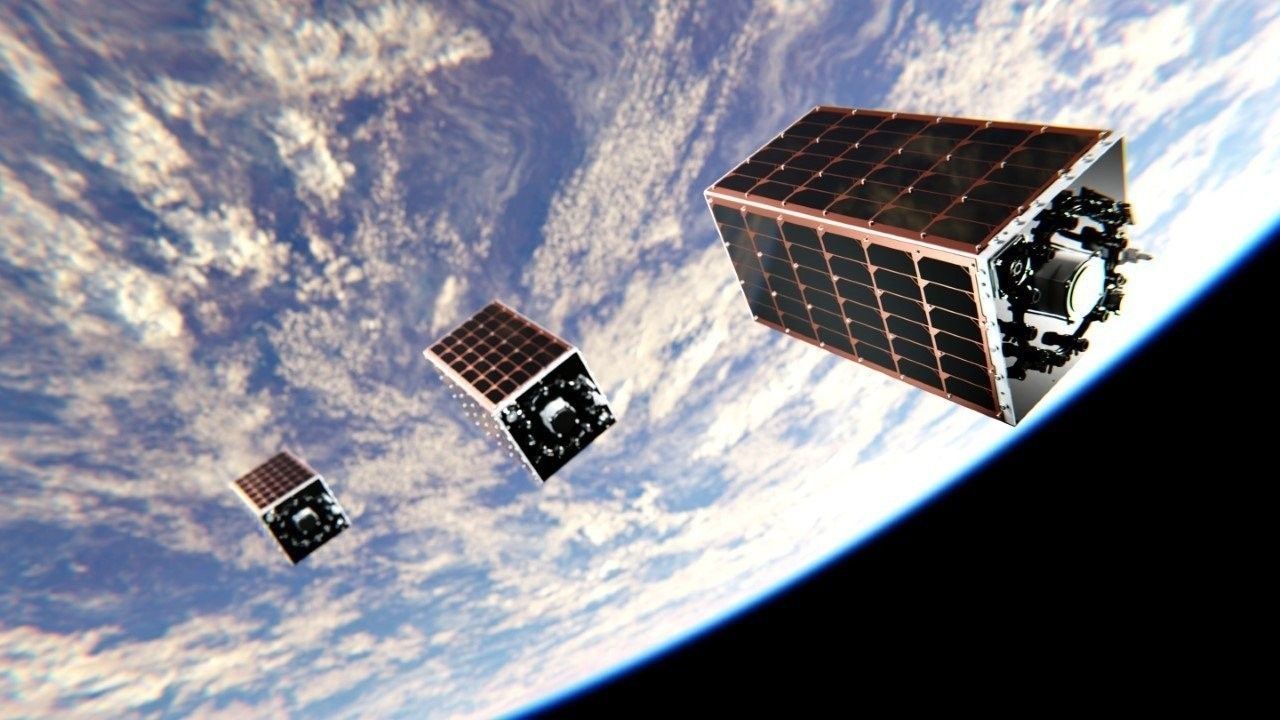
On November 28 SpaceX launched the Transporter-15 mission. A total of 140 payloads were carried aboard the Falcon 9 launch vehicle, including satellites developed by Polish entities. Of particular importance to the Polish Armed Forces is the first radar satellite contracted under the MikoSAR program.
Author: Mateusz Mitkow
If you would like to receive this newsletter, please sign up by clicking.
East Front News is a weekly newsletter and article on Defence24.com summarizing the past week’s most important events concerning security and the situation in the Central and Eastern Europe region. It includes original opinions and comments, along with key news items significant from a Polish perspective.


