












- WIADOMOŚCI
- WYWIADY
The Russian development of armed forces requires a response from Finland [INTERVIEW, Part 2]

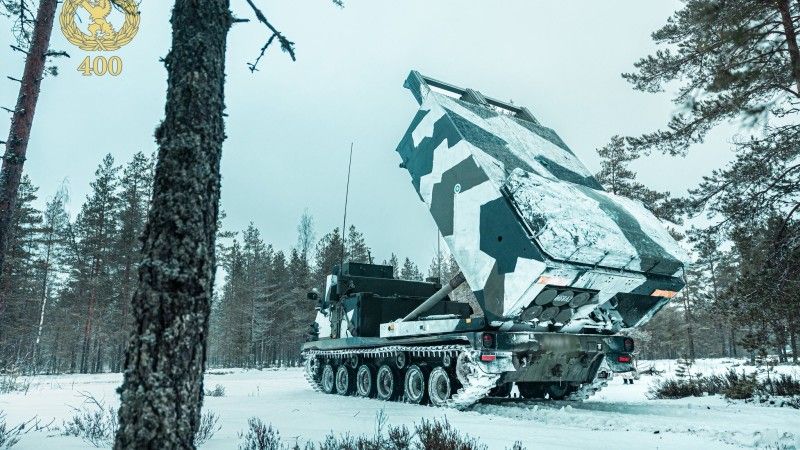
In the second part of interview with Defence24, Gen. Timo Kivinen, former Commander of the Finnish Defence Forces, discusses conventional systems including F-35, artillery and air defence as well as defence cooperation with Poland.
Defence24 (Jędrzej Graf): Another element of the current strategic debate concerns the development of Russian armed forces, particularly Russian ground forces, artillery and missile troops. In many European countries, long-range artillery and precision strike capabilities are becoming increasingly important. How does Finland view the modernisation of its land forces in this context?
Reserve General Timo Kivinen: We need to start with Russia. At the moment, a large portion of Russia’s ground forces is heavily engaged in the war against Ukraine, which obviously affects the military situation along Finland’s border. However, we are also aware of Russia’s long-term plans.
We know that Russia is rebuilding and reorganising its military structures, including the Leningrad Military District, and that over the longer term it will seek to significantly strengthen its military presence near Finland’s borders. It is reasonable to assume that once the war against Ukraine eventually ends, Russia will expand its military capabilities in this region.
That will be taken into account as the modernisation of Finland’s land forces is ongoing and will continue over the next decade. Once again, we are pursuing two parallel approaches. The first concerns the question: how should we adapt the capabilities we already have? In other words, how can existing platforms and systems be adjusted to the realities of the modern battlefield? The second question is: what new capabilities should we acquire? Let us take mobility and mechanised forces as an example.
Finland operates a relatively large fleet of infantry fighting vehicles and armoured personnel carriers, as well as around 200 main battle tanks. However, the war in Ukraine shows very clearly that armoured vehicles and tanks operating in a battlefield environment saturated with reconnaissance assets and precision strike systems cannot function exactly as they did twenty or thirty years ago.
This means that existing platforms must be equipped with both improved defensive systems and new capabilities. We are talking about active protection systems, passive protection, counter-drone solutions and improved situational awareness.
It also requires changes in doctrine and the way these systems are employed on the battlefield. When it comes to tanks, Finland has deliberately decided not to rush major decisions about their long-term future. We believe it is important to observe how the battlefield continues to evolve before making major structural decisions.
We currently operate around 200 tanks, and decisions regarding their replacement will be taken when we have a clearer understanding of how armoured warfare is developing and what is the next generation tank.
At the same time Finland is acquiring new armoured personnel carriers and modernising its infantry fighting vehicles. But these platforms must be designed for the current battlefield environment, not for the assumptions that existed twenty years ago.
Another important observation from the war in Ukraine is that direct engagements — tank versus tank or IFV versus IFV — are not the dominant form of combat in the future. Instead, indirect fire systems, drones, reconnaissance and precision strikes play an increasingly central role. Combat is becoming more dispersed and increasingly multi-domain in nature.
See also 

So the war is forcing not only equipment modernisation but also a broader shift in the philosophy of land warfare?
Exactly. This is not simply a matter of adding new sensors or upgrading existing equipment. What we are witnessing is a deeper transformation in how land warfare is conducted. On the modern battlefield large troop concentrations are much more vulnerable to detection and destruction. The battlefield has become far more transparent.
The time during which large formations can manoeuvre undetected has become significantly shorter. As a result, militaries must increasingly think in terms of smaller, more dispersed and more flexible formations, where manned and unmanned systems operate together. This applies both at the tactical and operational levels.
In the future it will become even more important to integrate different domains of warfare: land, air, maritime, space, cyber and the information domain. Military advantage will depend not only on the number of platforms but on the effectiveness with which they are integrated into a coherent operational system.
Let’s turn to artillery. Finland has long been seen as a country that places a strong emphasis on artillery capabilities. How does Finland currently view the role of artillery, long-range munitions and rocket forces?
Artillery remains a very important component of Finland’s land forces. In terms of scale, Finland maintains a substantial inventory of artillery systems and rocket launchers. Our focus today is on modernising these capabilities and adapting them to the changing battlefield environment.
One example is the modernisation of our multiple launch rocket systems. The goal is to extend their range and increase their strike capability. We are looking at munitions capable of engaging targets at distances of up to around 150 kilometres. This will be one of the key directions of development in the coming years.
Finland also operates K9 self-propelled howitzers from South Korea, which form an important part of our artillery capability. In this case as well we are exploring the use of longer-range munitions. This will become increasingly important.
Another interesting observation from the war in Ukraine is that towed artillery has not entirely lost its relevance. In certain situations, towed artillery pieces can actually be more difficult to detect and destroy using drones than self-propelled systems — particularly if they are deployed from dispersed firing positions rather than concentrated formations.
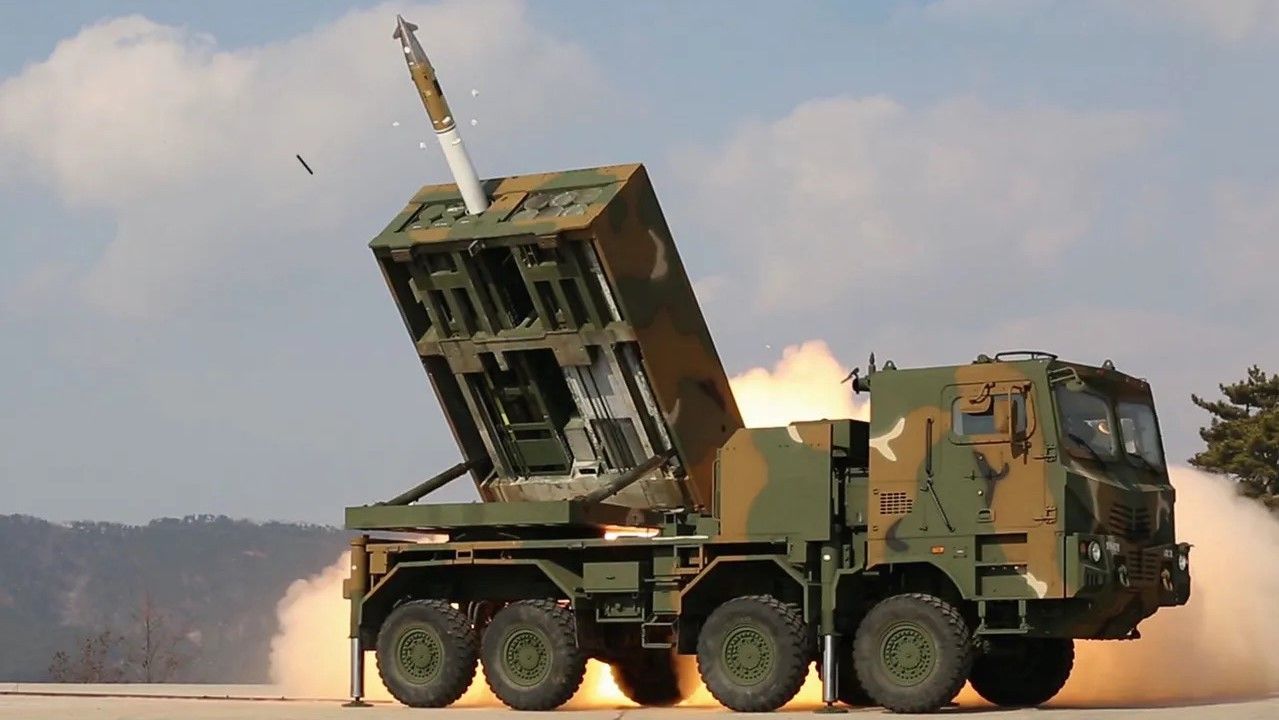
At the same time, technological developments are significantly extending the range of tube artillery. There are already solutions that allow 155 mm artillery to reach distances of 100 kilometres or more. This fundamentally changes how artillery can be used.
On the other hand, Finland still operates a number of older systems, such as 122 mm artillery pieces. In today’s conditions their range is relatively limited. Decisions about what will eventually replace these systems will be made in the coming years, but it is entirely possible that some of these capabilities will be replaced by unmanned systems.
This is an important point: in many cases drones are now faster to deploy, more flexible and more cost-effective than short-range artillery. For that reason militaries must carefully evaluate whether certain categories of short-range artillery remain relevant or whether unmanned strike systems may provide a more effective alternative.
This brings us to air defence. Many European armed forces now face the challenge of building layered air and missile defence systems. How does Finland approach this area?
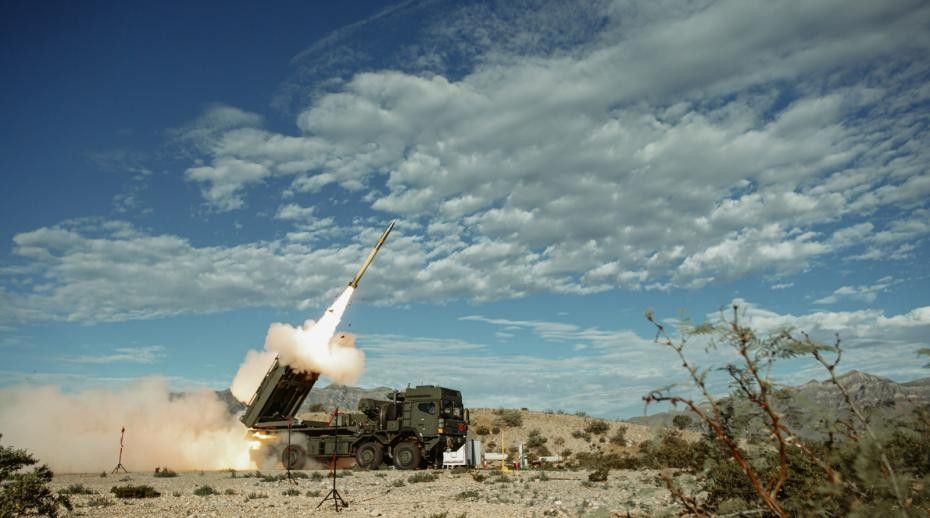
Layered air and missile defence has become absolutely critical. A modern state must build a system capable of addressing different types of threats at different altitudes — from low-flying drones and other aerial threats to more advanced missile threats.
In Finland’s case, the upper layer of that system will be provided by David’s Sling, which was selected after a very thorough evaluation process. This decision attracted considerable attention across Europe, because the competition included a number of European systems. However, our primary consideration was straightforward: we must acquire systems that actually work, meet operational requirements and perform reliably under our specific conditions.
There were naturally questions about whether a system originally developed and tested in the Middle East would function effectively in the Nordic climate. But this is precisely why extensive testing and evaluation are conducted. A system must perform not only in hot climates but also in northern conditions — and this was carefully assessed.
More broadly, Finland approaches major procurement decisions through very detailed analytical processes. The same was true in the case of the F-35 fighter aircraft selection. These decisions are not taken quickly or politically. They are the result of extensive evaluation of operational capability, interoperability, cost and overall combat value.
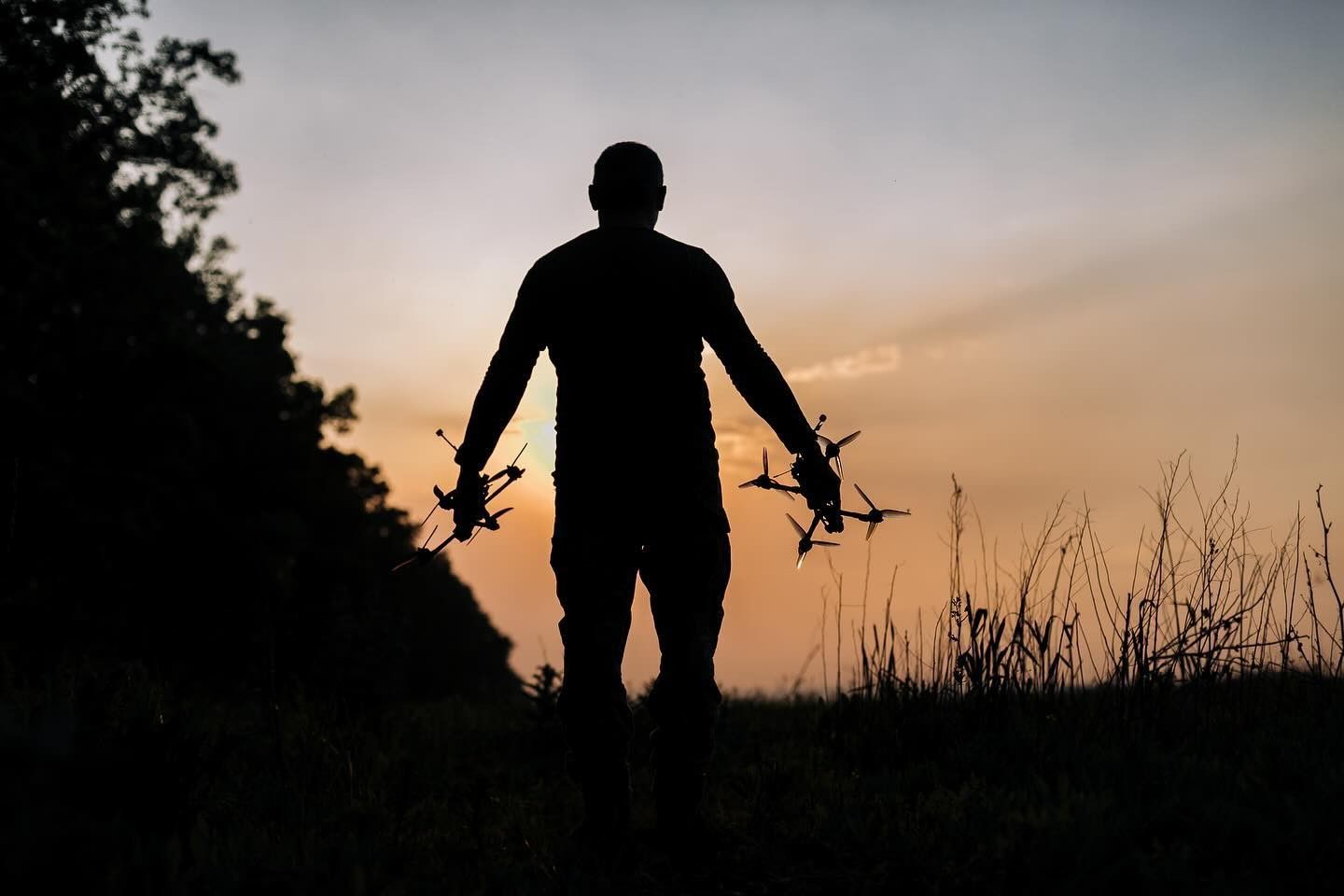
At the lower layers of air defence, Finland is also developing systems designed to protect troops and critical infrastructure, as well as capabilities specifically intended to counter drones. This is a challenge faced by all Western militaries today.
At the same time, no ground-based air defence system can cover the entire territory of a country as large as Finland. How do you address this problem?
That is correct. Finland is geographically large, and it is simply not possible to protect the entire country using dense networks of ground-based air defence systems.
Therefore, we must apply a layered and selective approach. Ground-based air defence is used to protect the most critical areas: key infrastructure, important military formations and essential operational nodes.
At the same time it is necessary to maintain the ability to maneuver air defence assets, maintain reserves and redeploy capabilities to areas where they are most needed.
The second pillar of air defence is fighter aviation. In a country as large as Finland it is impossible to rely solely on ground-based systems.
A strong air-to-air capability is essential. Fighter aircraft provide flexibility, mobility and the ability to respond quickly across a large area. They also contribute to building situational awareness and delivering effects across multiple domains.

This brings us to aviation. Finland has decided to acquire the F-35. How does this decision fit into Finland’s broader defence strategy?
The decision to acquire the F-35 was one of the most important modernisation decisions Finland has taken in recent years. The first aircraft are expected to arrive in Finland this year. For a certain period we will operate two fleets simultaneously — the existing F/A-18 Hornets and the new F-35 aircraft.
Only once the new system is fully introduced and personnel are fully trained will the Hornets gradually be retired, which is expected to occur around 2030.
Finland will acquire 64 F-35 aircraft. It is important to understand that the F-35 is not simply a fighter aircraft in the traditional sense. It is a multi-domain platform combining sensors, data fusion, strike capability and situational awareness. It contributes not only to air combat but also to ground attack missions, intelligence gathering and coordination with other military systems.
For that reason I often say that the F-35 is not simply an aircraft — it is a joint capability. Finland and Poland are introducing the F-35 on roughly similar timelines, which naturally creates opportunities for deeper cooperation between our countries.
See also

Speaking of cooperation — do you believe defence cooperation between Finland and Poland can become stronger than it is today? Both countries are frontline NATO states and both operate in the Baltic region.
Yes, I believe cooperation between Finland and Poland can certainly become stronger. In fact, it is already much deeper than it was just a few years ago, but there is still considerable potential for further development.
First, both countries operate in similar strategic environments. There are of course differences in geography and political context, but fundamentally we are both NATO frontline states facing comparable security challenges.
Second, both countries are closely connected to the security of the Baltic Sea region, which is of fundamental strategic importance. Third, there are already several concrete areas of cooperation.
One example is the F-35 programme. Another area involves satellite capabilities and reconnaissance systems. There is also cooperation related to the defence of NATO’s eastern flank more broadly. In addition, there are opportunities for industrial cooperation, including projects related to armoured vehicles and other defence technologies.
Equally important is the exchange of experience between military commands, planning staffs and operational units. This kind of cooperation is already developing and I believe it will continue to grow.

Let’s talk about the broader structure of the armed forces. The war in Ukraine has shown that traditional ideas about manoeuvre and concentration of forces may require revision. How does Finland view the relationship between manoeuvre and firepower today?
This is one of the most interesting questions emerging from the war in Ukraine. Traditionally military thinking assumed that firepower supports manoeuvre.
Manoeuvring forces would seize objectives, while artillery and air power supported those operations. Today we increasingly see that this relationship may be partially reversed.
One could say that manoeuvre now serves to enable the effective use of firepower. In other words, the key objective is not necessarily the movement of large formations but the ability to concentrate fire and other effects at the right place and the right time.
This may involve long-range artillery, missile systems, drones, aviation or other strike capabilities and non kinetic effects like EW.
Manoeuvre forces create the conditions that allow those strike systems to operate effectively. In the Finnish system we maintain local defence forces responsible for specific geographic areas as well as more mobile manoeuvre forces capable of operating across the country.
However, modern reconnaissance and strike systems make it increasingly difficult to move large formations undetected. The battlefield has become extremely transparent. As a result, the ability to rapidly concentrate firepower may become more important than the traditional massing of forces.

Finally, many analysts argue that Europe must rebuild its defence industrial base — increasing production of ammunition, air defence systems, drones and electronic warfare technologies. How do you see this challenge?
This is indeed one of the major challenges facing Europe. Everyone now understands that production must increase: more ammunition, more air defence systems, more counter-drone technologies and more affordable systems that can be produced in large quantities.
But simply stating that production must increase is not enough. Governments must provide long-term contracts and predictable demand if industry is expected to expand manufacturing capacity. Companies will not invest in new production lines or hire new employees based solely on political declarations. They need long-term orders.
Another issue concerns the cost balance of modern warfare. It makes little sense to use extremely expensive missiles to destroy targets that cost only a few thousand dollars. New, more economical solutions are required.
At the same time, if countries want to develop deep-strike capabilities, they must also build the necessary reconnaissance and targeting systems. Without those systems, long-range strike weapons cannot reach their full operational potential. Building such capabilities takes time and requires a comprehensive approach.
In Poland, Finland is often seen as a model of how a country can combine modern military capabilities with strong societal resilience. Do you believe this model can be transferred to other countries?
Every country has its own history, strategic culture and geographical circumstances. For that reason no model can simply be copied directly. However, lessons can certainly be drawn.
The most important lesson from Finland’s experience is that security cannot be built quickly and cannot rely solely on equipment purchases. Security is built over many years — through institutions, education, social resilience and a shared understanding of national defence.
If society understands why defence investments are necessary, if citizens accept the responsibility of service and if institutions enjoy public trust, then national defence becomes something real rather than simply a political declaration. This is why Finland entered the current security environment with a relatively strong foundation. And that is why the Finnish experience is now attracting growing interest in many other countries.
Thank you for the conversation.


