


- WIADOMOŚCI
Ukrainians found a way to deal with Russian jet-powered drones

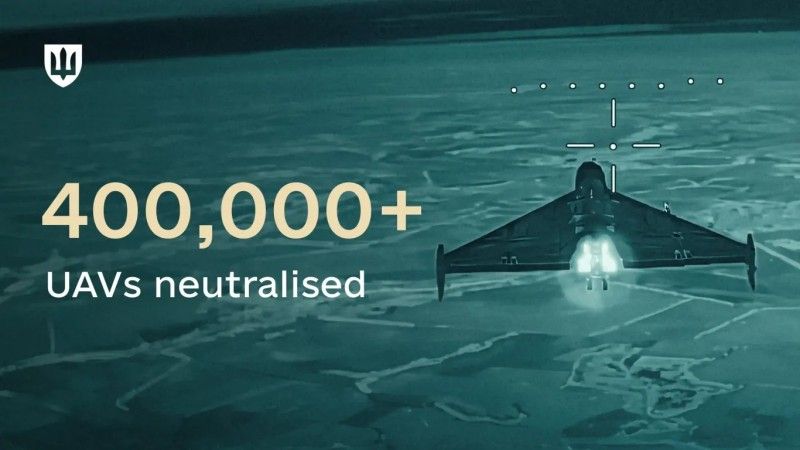
The number of jet-powered kamikaze drones shot down over Ukraine confirms that the Ukrainian anti-drone defence system has adapted to countering this new means of aerial attack.
According to data provided by the Ukrainian Air Force on their Telegram channel, on 3 November 2026, between 06:30 and 19:00, out of 74 Russian jet-powered unmanned aerial vehicles (UAVs) that attacked Ukraine, 56 were successfully „shot down or neutralised”, representing 76%. This reflects the same effectiveness recorded that day for piston-engine kamikaze drones (e.g. the Gerbera and Geran-2 types).
These UAVs accounted for 9% of the total, as 81 Russian drones crossed the Ukrainian border on 3 November. From this entire wave, the Ukrainians managed to shoot down 62 unmanned aerial vehicles. It should be noted that the shoot-down statistics for that day certainly changed, as the Ukrainian Air Force emphasised that „several enemy machines remain in the airspace” and that „combat operations are ongoing”.

The Ukrainians have not disclosed how they managed to improve their shoot-down statistics. However, it is highly likely that this was achieved through the appropriate reorganisation of defence systems using interceptor drones. These interceptors are beginning to play a leading role in defending the Ukrainian sky against Russian unmanned aerial vehicles. This has been somewhat confirmed by the Russians themselves, who periodically report on the introduction of new UAVs designed to be resistant to attacks from Ukrainian interceptor drones.
The latest solution of this type is reportedly the ZALA Z-61 unmanned reconnaissance mini-aircraft, already in combat use in Ukraine. It is unclear, however, what this increased resistance is supposed to consist of. It is a typical reconnaissance drone with an aluminium fuselage and a tractor engine located at the front. Nonetheless, the Russians boast that one of the Z-61 UAVs, by manoeuvring appropriately, successfully evaded attacks from as many as sixteen Ukrainian interceptors.
Evidence of this is purportedly a video published by the Russians on Telegram showing these attacks. However, this film is most likely a compilation of recordings from several drones, at different locations and at different times (as indicated, for example, by the appearance of the marking of a Russian drone unit and blurred flight parameter markings). It should also be noted that the individual clips usually end just as the Ukrainian interceptor reaches the Z-61. It may therefore also be the case that the Russians used recordings for propaganda purposes from attacks that ended in success for the Ukrainians.

Photo. ZALA/Telegram
In this way, the video, which supposedly demonstrates Russian resilience, is instead evidence of how effectively the Ukrainian defence system based on interceptors of various types is operating. Indeed, it is hard not to call it a success that the Ukrainians managed to dispatch as many as two of their interceptor drones simultaneously against a single UAV.


