












- KOMENTARZ
- ANALIZA
- WIADOMOŚCI
Extremism and soldiers' trips to Russia. German counterintelligence informs about the threats

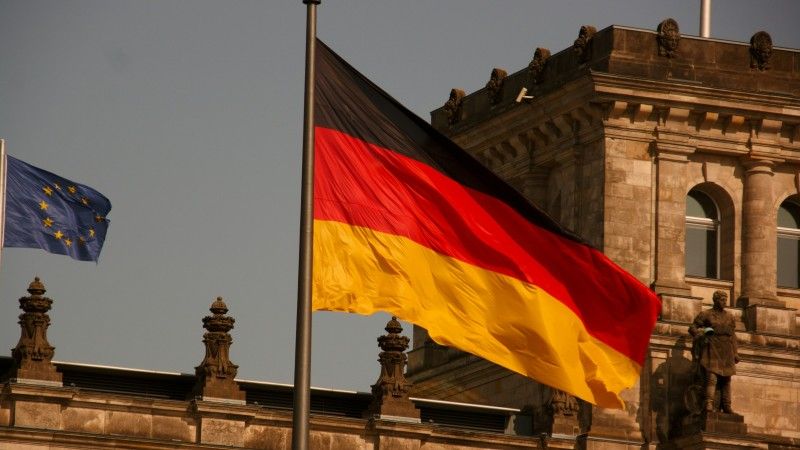
German services have published a report concerning threats to state security. The main themes include the rise of extremism within society and the armed forces, an intensified hybrid threat attributed primarily to Russia, and private travel by soldiers to Russia and Belarus, which – according to the services – results in them coming to the attention of local intelligence agencies.
Germany as a priority for Russian activities
The MAD (Militärischer Abschirmdienst – Military Counterintelligence Service) report identifies Germany as a „priority target for Russian espionage activities”. This is linked to the country’s location in Europe and its logistical importance for NATO’s eastern flank, the expansion of the Bundeswehr (Federal Defence Forces), and the introduction of new weapons systems. Among the tools of Russian intelligence, the report lists so-called „legal residencies” – undercover posts in embassies and semi-state representations – as well as press agencies.
German counterintelligence notes that the potential for sabotage carried out by so-called „one-off agents” has also increased, although it does not provide detailed statistics on this matter. The report adds that many cases of attacks below the threshold of war – such as cyber activities, infiltration via drones, potential strikes against critical infrastructure, or influencing public opinion – are attributed ”with a high degree of probability” to the Russian side.
Notably, the service attributes some espionage activity, including drone overflights and intrusions into Bundeswehr facilities, to Chinese intelligence, which, according to the report, also utilises parts of the Chinese diaspora. Russia and China remained the main actors behind activities targeted at the Bundeswehr in 2025.
„Chinese services operate strategically. They identify individuals who may become of interest to them in the future and only gradually build that connection. All Bundeswehr soldiers who have private or professional contact with Chinese citizens are particularly exposed to this threat. Furthermore, travel to China – especially if it takes place in connection with service in the Bundeswehr – carries the risk of coming to the attention of the Chinese intelligence service,” the report states.

Extremism in the ranks and in society
In 2025, the MAD opened 610 new proceedings in the area of extremism, compared to 524 such cases in 2024. The vast majority consist of right-wing extremism: 519 new cases compared to 413 the previous year, representing an increase of approximately 26 per cent. The service classified 11 individuals as right-wing extremists – the same number as in 2024. For a further 21 soldiers, it found evidence justifying a suspicion of a lack of loyalty to the constitution (26 the previous year). In total, across all categories, the MAD recognised 13 people as extremists (11 right-wing, 1 left-wing, 1 foreign-related extremism) and identified 28 individuals who undermined loyalty to the state and the Basic Law.
The MAD writes about an ongoing „blurring of boundaries” regarding right-wing extremism. Far-right positions are increasingly being „normalised”, and „the boundary of what can be said is successively being pushed.” Since mid-2024, the service has observed new right-wing youth groups operating mainly online – „Jung & Stark”, „Deutsche Jugend Voran”, and „Der Störtrupp”.
In other cases classified as extremism, no significant decreases or increases were recorded. Radical Islam: 30 new cases (35 in 2024); left-wing extremism: 10 (13); foreign-related extremism: 42 (50); „Reichsbürger” (Citizens of the Reich): 4 (5); delegitimisation of the state: 5 (7). Regarding foreign-related extremism, the MAD points to, among other things, conflicts of loyalty and approval of the Russian war against Ukraine.

German soldiers' trips to the East
What may cause the greatest concern for the German services, as well as NATO allies, are the numerous trips by Bundeswehr soldiers to Russia and Belarus, where they naturally become targets of observation by eastern intelligence services. These often involved individuals with family ties in those countries. The report suggests a „particular threat of blackmail and threats from local security authorities.” A separate risk is the access foreign services have to laptops and phones taken on these trips, as well as the installation of malware on them.
Interestingly, the German side has not officially banned such travel. As can be read, primarily preventative and informational measures have been applied, while there is not a single word regarding the blocking of such journeys. „In order to repel potential danger to soldiers in advance wherever possible, comprehensive information materials and advisory aids were prepared in 2025 for those affected and for their security officers. Furthermore, protective measures for the Bundeswehr were recommended, specifically for the protection of its soldiers during planned travel to countries with an increased threat level.”


