












- WIADOMOŚCI
East Front News #114: France and UK excluded from US-NATO consultations and the highest defence budget for Russia

East Front News is a weekly newsletter summarising the past week’s most important events concerning security and the situation in the Central and Eastern Europe region. It includes original opinions and comments, along with key news items significant from a Polish perspective. If you would like to receive this newsletter, please sign up by clicking
Russia warns NATO about Kaliningrad. Threatening to use 'the entire arsenal'
Russia has sharply escalated its rhetoric over Kaliningrad, accusing NATO of preparing scenarios aimed at isolating the Russian exclave. Moscow claims that increased allied activity in the Baltic could eventually be used to blockade the region.
The Russian Embassy warned that any attempt to cut Kaliningrad off from Russia would lead to direct armed conflict and said Moscow would be prepared to use its “entire arsenal”. The region remains strategically crucial because of its missile, air-defence and other military capabilities.
Author: Bartłomiej Wypartowicz

France and UK excluded from new US-NATO consultations. Poland is in the room
The United States is developing a narrower consultation format on NATO’s future with Poland, Germany, the Netherlands, Norway, Finland and Sweden. France, the United Kingdom and the Baltic states have not been included in the group.
For Warsaw, the key point is that Poland is increasingly being included in discussions with Washington on NATO’s European pillar, burden-sharing and the future US military presence in Europe.
Author: Aleksander Olech

New Pentagon document. More information about permanent bases in Poland
A new Pentagon report on the implementation of the 2026 US National Defence Strategy confirms that Washington and Warsaw are discussing a permanent US military base in Poland.
The document also stresses greater European responsibility for conventional defence while maintaining bilateral military cooperation with key allies. Poland is specifically cited as an example of this approach.
Author: Michał Górski

Another F-35 has arrived in Poland. It's different from the previous ones
Poland has received its ninth F-35A, which landed at the 32nd Tactical Air Base in Łask. It is the first Polish aircraft delivered from the Italian production line in Cameri rather than the United States.
Poland has ordered 32 F-35As, and deliveries are continuing according to schedule. Fourteen aircraft are expected to be in Poland by the end of 2026.
Author: Kamil Sikora

A huge deal for American missiles. Is Poland among the recipients?
Raytheon has received a framework agreement worth up to $20.7 billion to expand production of AIM-120 AMRAAM air-to-air missiles. Poland is explicitly listed among the countries able to obtain missiles under the programme.
The agreement could support production of around 13,000–14,000 missiles over several years if fully utilised. Poland has already signed agreements covering newer AIM-120D and C-8 variants.
Author: Bartłomiej Wypartowicz, Jakub Palowski

The highest defence budget since the fall of the USSR. How much Russia will spend in 2027?
Russia’s proposed 2027 budget includes defence expenditure of around 17.1 trillion roubles, approximately $203 billion. This would represent a major increase from the level planned for 2026.
If implemented, it would be Russia’s largest defence budget since the collapse of the Soviet Union. The figures nevertheless remain difficult to assess precisely because a substantial share of Russian federal expenditure is classified.
Author: Jarosław Ciślak

Spy plane over Poland
A Saab 340B+ ISR reconnaissance aircraft operated from Malbork and conducted a mission along Poland’s border with Russia’s Kaliningrad region before also flying over Lithuania and the Baltic Sea.
The aircraft belongs to Luxembourg-based CAE Aviation rather than NATO itself. Private operators can supplement allied intelligence capabilities while allowing NATO’s more specialised platforms to be reserved for higher-priority missions.
Author: Mateusz Saweczko
See also 

Russia ordered arson attack on Milrem Robotics. Estonia points directly to Moscow
Estonia has formally attributed the August arson attack against Milrem Robotics to Russian security services. Estonian counter-intelligence considers the fire a deliberate act of sabotage commissioned by Russia.
Milrem produces unmanned ground vehicles used by Ukraine, making it a particularly relevant target. The case also demonstrates Russia’s growing use of recruited intermediaries to conduct low-cost sabotage operations inside Europe.
Author: Aleksander Olech, Michał Górski

Rafale for Ukraine: French minister responds
France wants to begin initial Rafale training for Ukrainian pilots, while French engineers are also working to integrate AASM Hammer weapons with Gripen aircraft.
An operational Ukrainian Rafale fleet nevertheless remains a long-term prospect. Pilot training, technicians, infrastructure, logistics and aircraft availability mean that Rafale cannot be treated as an immediate wartime solution.
Author: Aleksander Olech

Putin's last chance? Major expansion of Russia's Unmanned Systems Forces [REPORT]
Russia is rapidly expanding its newly created Unmanned Systems Forces, establishing new brigades, regiments and battalions dedicated to drone warfare across different military formations.
The expansion reflects the central role drones now play in Russia’s war against Ukraine. Moscow is increasingly reorganising its armed forces around unmanned systems rather than treating drones merely as additional equipment for existing units.
Author: Jarosław Ciślak

UK offers nuclear umbrella to Finland and other JEF members
The United Kingdom has offered nuclear protection to Finland and the other members of the Joint Expeditionary Force, which includes the Nordic and Baltic states as well as the Netherlands.
Britain’s nuclear submarines would form part of this deterrence framework. Finland is simultaneously exploring participation in France’s Forward Deterrence initiative, showing Helsinki’s increasing focus on nuclear deterrence.
Author: Patryk Jagnieża

The US wants to buy more F-16s. Decision soon?
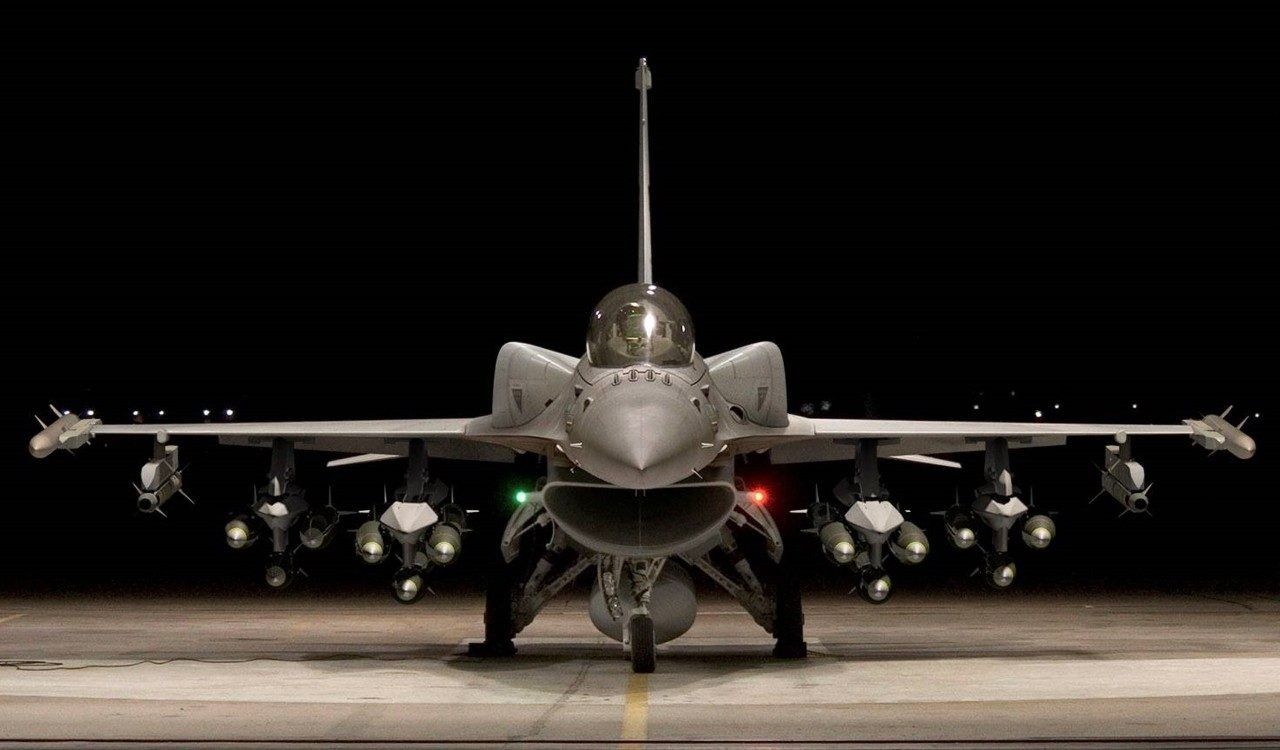
The US Air Force is considering buying new-build F-16 fighters as it searches for ways to maintain sufficient combat-aircraft numbers. A possible new variant could be designated F-16G.
The aircraft could combine the proven F-16 design with additional fuel, modern sensors and electronic-warfare capabilities. It would perform missions where using more expensive stealth aircraft such as the F-35 may not be necessary.
Author: Maciej Szopa
Armenia seeks new military partners. Why is Yerevan turning to China?
Armenia is accelerating the diversification of its defence partnerships after decades of heavy dependence on Russia. Defence Minister Suren Papikyan’s visit to China included meetings with Chinese military and defence-industry representatives.
The shift follows growing frustration with Moscow, including unfulfilled Russian arms contracts. China offers Armenia access to large-scale industrial capacity and technologies outside Russia’s traditional sphere of influence.
Author: Natalia Adrianna Potera

Russia is offering $20 million for information on a Ukrainian commander
Russia has reportedly offered $20 million for information leading to the location of Major Robert “Madiar” Brovdi, commander of Ukraine’s Unmanned Systems Forces. The offer has circulated through post-Soviet criminal networks.
The extraordinary reward reflects the growing importance of Ukraine’s specialised drone formations. Despite representing only a small share of Ukrainian personnel, these units are credited with inflicting a significant proportion of Russian battlefield losses.
Author: Patryk Jagnieża

Where did the peace dividend go?
An end to war does not automatically produce an immediate economic boom. Lower security risks may gradually free resources for infrastructure, energy and other investments, but different sectors will experience peace very differently.
Defence companies that benefited from urgent wartime procurement could see slower order growth, while other parts of the economy may benefit from lower risk premiums, cheaper trade and more predictable investment conditions.
Author: Andrzej Fałkowski
See also


