












- ANALIZA
- WYWIADY
- WIADOMOŚCI
First defeat, then half a billion losses for Russia. Shield AI targets Poland

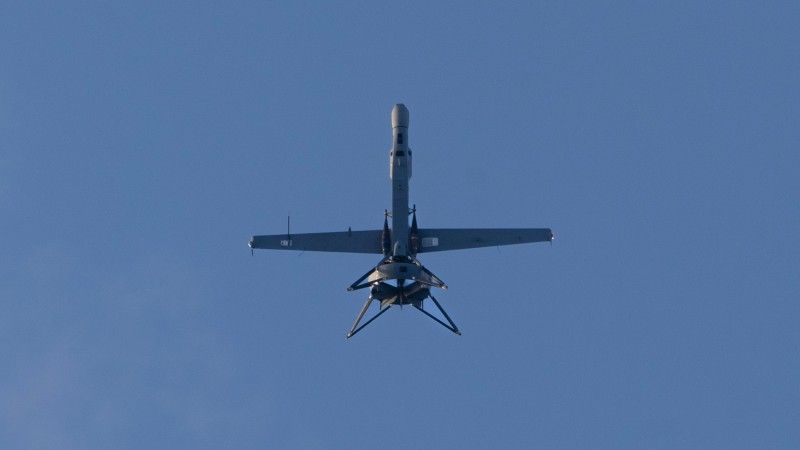
The CEO and co-founder of Shield AI, Brandon Tseng, admitted directly in an interview with Defence24: their systems failed in the first phase of the war in Ukraine. Only after these experiences did solutions emerge capable of operating in conditions of intensive electronic warfare. Today, the company offers Poland autonomous technologies that are supposed to work effectively without GPS, as well as a „loyal wingman.”
Jędrzej Graf: Your visit to Poland takes place in a specific moment. Poland is at the peak of the largest modernisation projects, and the country is investing substantial funds in purchases. In which areas can you offer solutions for Poland, considering major players are present here?
Gary Steele, CEO, Shield AI: I have many European countries on my agenda but Poland is first. At the end of the day, our mission is to protect service members and civilians using artificially intelligent systems. We aspire to deter conflict. We are very active in Southeast Asia, particularly with Taiwan, which presents an opportunity to deter China. Naturally, when a conflict occurs, our products are designed to help fight and win those engagements.
Given the broader security situation in Europe, everyone is concerned with Russia and Ukraine. Poland, obviously, has its own security concerns regarding its sovereignty. For us, this is an opportunity to support Poland, the Ministry of National Defence, and the Polish people.
What we offer are products based on AI that provide an advantage on a high-intensity battlefield. In my opinion, those could have a significant contribution to the defence of Poland and Europe.
What is the approach behind your strategy for Europe, particularly with regard to the AI systems? Today we speak about AI in defence almost every day, but often those are marketing slogans. What are the real capabilities in AI you offer, and what is the architecture?
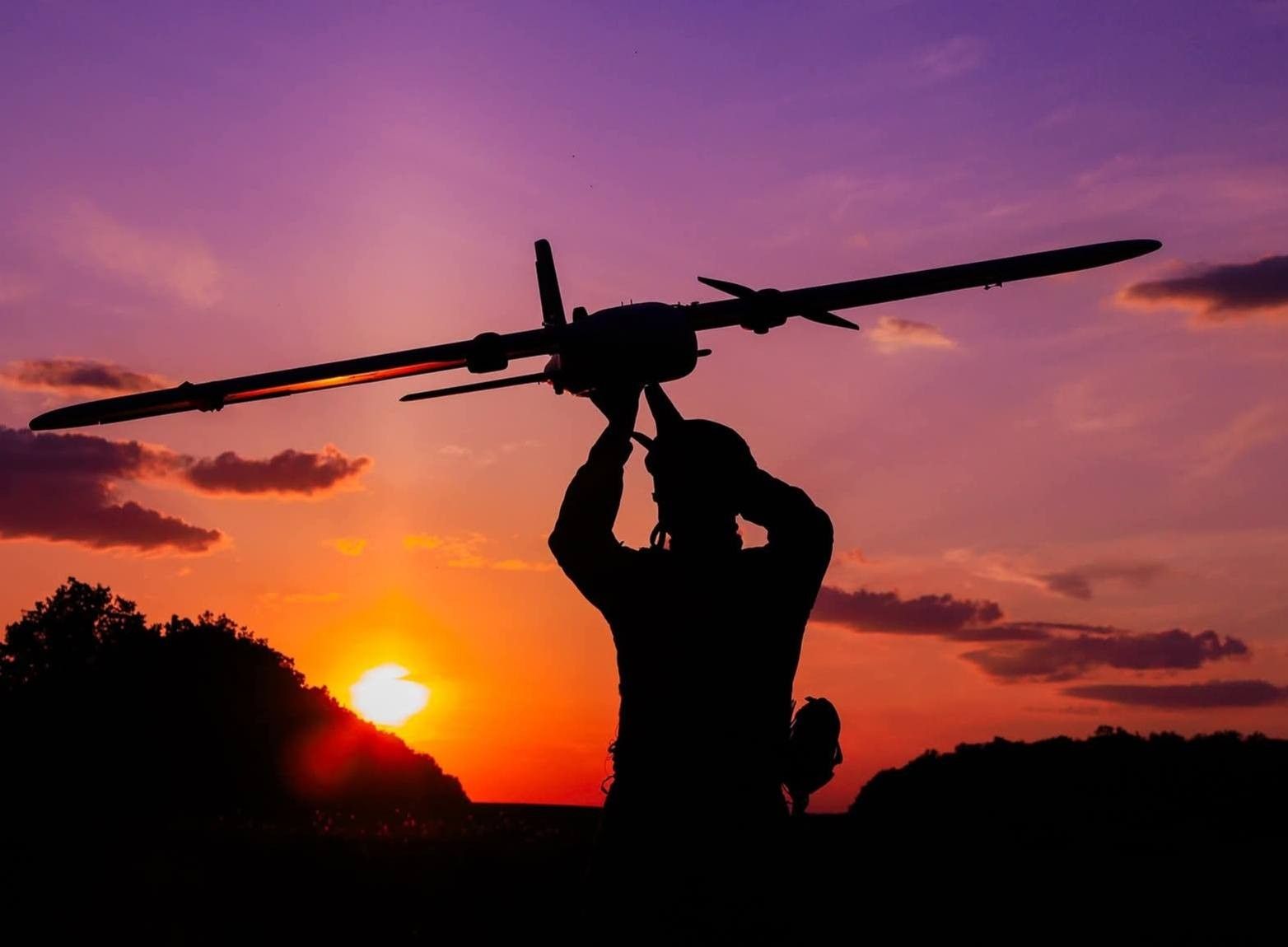
Regarding the architecture: Shield AI has three core products. There is the V-BAT UAV, the „X-BAT” (the unmanned fighter jet currently in development), and Hivemind. Hivemind is really an ecosystem with two core components.
First, there is the AI Pilot, which is installed on drones—whether they are quadcopters, fighter jets, or unmanned surface vessels. Second, there is Hivemind Enterprise, which is a software developer kit (SDK). You can think of it as „cloud code” for AI pilot development. It makes it very easy to build AI pilots and integrate them onto various platforms.
To what extent could the technology be transferred to Poland?
Regarding Hivemind, we would love to work with Polish defence companies, drone manufacturers, and OEMs to help them solve their autonomy problems. Shield AI has invested about $1.7 billion into AI and autonomy to date. I don’t expect every Polish drone manufacturer to invest that kind of capital to recreate what we have already built. Instead, we want to enable them with the same „tools”—the hammers and wrenches of AI development—so they can do it themselves. Alternatively, we are happy to do it for them.
But could Poland develop its sovereign capabilities for AI on the basis of Shield AI technology? Are you ready to provide genuine competence for the Polish partners, or do you offer a „Black box”?
We can either build an AI pilot for you or enable you to build your own. When we provide Hivemind Enterprise to a Polish manufacturer, they own the AI pilot they build; it is their IP, and they can monetise it as they see fit. Furthermore, our AI pilot enables operations even when GPS and communications are jammed—a situation extremely prevalent in Ukraine and along the Polish border. It enables autonomous mission execution, swarming, and teaming.
Is the system based on an open architecture? And to what extent have you implemented integration on platforms provided by third-party companies (outside Shield AI)?
Our system is open. We are one of the providers for the US Air Force’s CCA programs. The Air Force chose us because of our performance; we were deemed a top-tier AI pilot provider. Unlike others in that program, we have rapidly integrated onto several different platforms. For example, we recently integrated with Destinus on their one-way attack drones and with Ukrainian companies like Iron Belly.
You mentioned electronic warfare in Ukraine. We have heard many stories of companies testing products in that tough environment only to have them fail due to high-intensity jamming. What is the performance of your systems in Ukraine?
We actually failed in 2022 and 2023 in the Russia-Ukraine theater. The British had purchased some V-BATs, but we hadn’t integrated our AI pilot onto them yet. They were jammed and they failed.
So have you gained operational capability only after defeats?
Yes, and this makes a difference between the company that participates only in shows and the one that solves real problems. We went back and decided to solve this very hard problem. By 2024, we were successfully using V-BAT in these intense EW environments.
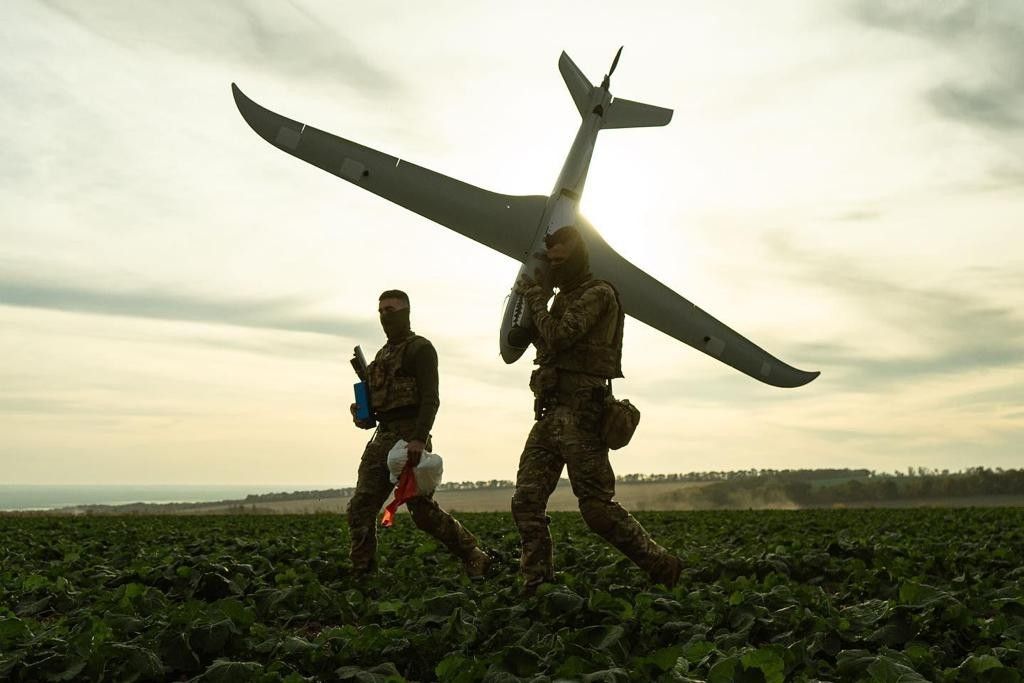
We targeted Russian surface-to-air missile systems and destroyed them using HIMARS. In 2025, this led to a massive demand signal from the Ukrainians. We ramped up operations and have since destroyed about half a billion dollars’ worth of Russian equipment. We are conducting operations daily.

What were the lessons learned? And how do you respond to battlefield evolution?
We learned two main things. First, no other U.S. company is operating daily while GPS and communications are jammed quite like Shield AI. Second, the EW environment is constantly evolving. The tactics we used in 2024 had to be updated for 2026. Electronic warfare is not static; the Russians evolve, so our AI pilot must evolve as well.
Many drones still fail because it is an incredibly difficult problem that requires immense resources. The Ukrainians have found a workaround with fiber optics for direct links, but you cannot reasonably run a fiber optic cable for a 200-kilometer ISR mission. We are hitting targets at those long distances.
Another key requirement today is capacity and delivery time. The Polish MOD expects quick deliveries, which is important. You have started relatively new products and technologies, but there is a need to deliver at scale. What can you say about the capacity?
We are currently producing about 200 aircraft per year. To be clear, the V-BAT is not a simple one-way attack drone; it is a sophisticated, shrink-wrapped „Predator” drone in terms of capability. While we are at 200 per year today, we have the capacity to scale to 1,000 per year. We are not rate-limited. With major international orders expected, we will likely increase to 400 soon, but we have the space to ramp up further. Currently, the average lead time for a customer to receive an aircraft is about six months.
I understand V-BAT as a surveillance platform, but there are many different surveillance UAVs on the market, with US companies often offering large but expensive systems. What are the key capabilities of V-BAT?
Poland is also leasing the MQ-9 Reaper from General Atomics. The V-BAT performs the exact same mission as the MQ-9 or MQ-1. However, between late 2023 and 2025, the U.S. lost 27 Reapers and Gray Eagles to much cheaper weapon systems. A $40 million aircraft can be brought down by a missile costing less than $1 million or even by a Russian jet dumping a thousand dollars worth of fuel on it. In one instance, 12 were shot down in two weeks.
See also 

Showcasing V-BAT as an alternative to MQ-9 Reaper is quite a strong statement. How do you support it?
The V-BAT does the Reaper’s mission but is far more survivable. You can buy 40 V-BATs for the price of one MQ-9. Furthermore, you don’t need a runway. Runways are „Day Zero” targets. They are stationary and easy to hit, as we’ve seen in conflicts involving Iran, Israel, and Saudi Arabia. V-BAT uses vertical takeoff and landing (VTOL), so it can be launched from the back of a truck or a ship.
Poland has decided to buy the F-35 and Apache—how does your platform connect with these new assets in a net-centric way? That needs to be genuine integration, not just a declaration.
It is fully net-centric. We have had F-16s launch munitions based on V-BAT data, and we’ve tied it into Navy destroyers for SM-6 launches, HIMARS, and one-way attack drones. Its success in Ukraine and its status as a U.S. Program of Record are the primary reasons countries in Europe, the Middle East, and Asia are adopting it.
Let’s go back to cooperation with Poland. What can you tell us about your talks with the Polish industry and government? What are the key elements?
One thing I discuss with politicians is manufacturing. While they often want us to set up physical factories for jobs, we encourage them to also think about „software jobs.” Building and running multiple hardware factories globally is operationally challenging. However, we can quickly help build an „AI factory” for the country—a sovereign AI capability owned by Poland.
If Poland goes to war, you don’t want to have to „reach back” to the United States to ask Shield AI to modify an AI pilot for a new threat. You want that capability in-house. We want to help Poland appreciate the necessity of sovereign AI. Instead of just a V-BAT factory, why not a factory for AI pilots, where your developers can rapidly update software for drones, ground vehicles, or ships?

As an F-35 operator, Poland is interested in what we call the „Loyal Wingman” program. However, there is strong competition in this area, and Poland has requirements both regarding capability and cost efficiency. How does your X-BAT fighter jet fit into this requirement?
We asked ourselves, if you were building a fighter jet today, what would you build to solve the security problems in the Pacific or Europe? Fighter jets today are vulnerable on the ground—we lose them on runways in war games, not in the air. Secondly, pilots are expensive; it costs $10 million to train one, and their experience leaves when they retire. An AI pilot only gets better over time.
X-BAT, which should be operational by 2029, can be a Loyal Wingman, but it can also do the job by itself. What sets it apart from Kratos or the Anduril Fury is the engine. We use a GE F110 fighter jet engine, generating eight times more thrust than our competitors. This allows for VTOL, higher flight altitudes (where sensors see further), and a larger payload. Because of the engine size, it generates 2.5 times more electrical power, allowing it to run electronic attack and jamming payloads similar to an F-18 Growler. It has twice the range of an F-35. It transforms every ship—cargo ships, destroyers, frigates—into an aircraft carrier.
Can your AI system be expanded beyond aerial drones to the wider battlefield for command and control or decision support? Or perhaps civilian solutions?
We are already doing AI for surface, underwater, and space vehicles. I started this company because I believe the world will be full of autonomous robots—self-driving cars, humanoids, and planes. We want Hivemind to power all of them. While defence is our fastest-growing sector, there will be commercial applications. We are currently partnered with Huntington Ingalls, the largest shipbuilder in the U.S., to provide AI for unmanned surface and underwater vehicles.

In which European countries are you having the deepest talks regarding government sales?
We are working with many European countries that have already purchased our products, including the UK, the Netherlands, Belgium, Greece, Romania, and Bulgaria. I won’t comment on active, undisclosed negotiations, but Poland is one of America’s best allies, and I couldn’t be more excited about our opportunities here.
You have expanded your company quite fast in a tough market, which is dominated by large companies. What was the most important factor that contributed to the company’s development?
It hasn’t been that fast—it’s been 11 years! But for what we’ve achieved, it’s a good place to be. The American entrepreneurial ecosystem looks for inefficiencies in large legacy incumbents. Large companies often forget the customer and focus on profit and loss statements. We focus relentlessly on solving the customer’s problem. No one „asked” for an AI-piloted quadcopter that flies inside buildings back in 2018; they thought it was impossible until 2040. We built it by asking how to solve the problem in the best way. It’s a simple concept but very hard to execute every single day. There are no easy days.
Thank you for the conversation.


