












- ANALIZA
- WIADOMOŚCI
Will Ukrainian security services be free to operate in Poland?

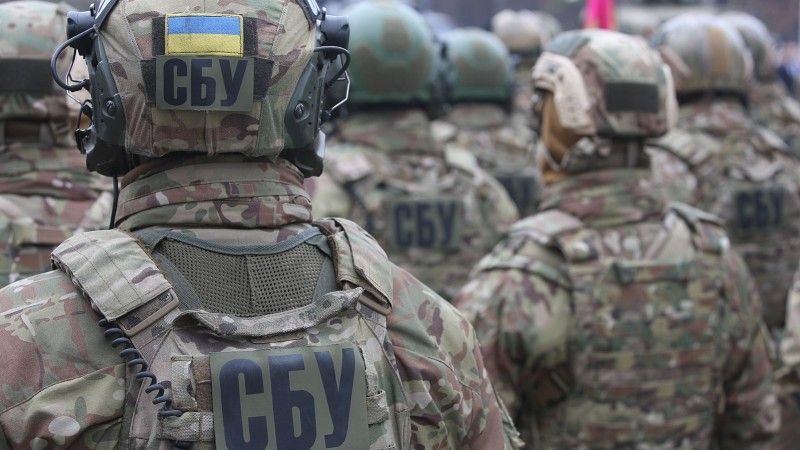
Photo. Адміністрація Президента України/Wikimedia Commons/CC4.0
The Polish-Ukrainian agreement on cooperation in combating crime may establish a legal basis for officers of Ukrainian authorities to be present on Polish territory, perform specified official duties, and participate in agreed forms of cooperation. The agreement will not grant Ukrainian officers the sovereign enforcement powers exercised by Polish services or the right to conduct independent operations in Poland, but it will allow them to perform specified official duties and participate in agreed activities. The President has signed the legislation paving the way for ratification, but the Polish-Ukrainian agreement itself was still not in force because, as of 27 July 2026, there had been no confirmation that the instrument of ratification had been signed, that diplomatic notes had been exchanged, or that an official date for its entry into force had been announced.
The document is not limited to exchanging information on wanted persons, stolen vehicles, or smuggling groups. It provides for the secondment of liaison officers, the establishment of joint working groups, the participation of observers, the transfer of telecommunications, location, and financial data, and the use of controlled deliveries. It is therefore more than an ordinary channel of correspondence between services.
This does not, however, mean that Ukrainian authorities have already acquired new operational capabilities in Poland. At the current stage, only the future consequences of the document can be assessed, should the procedure for its ratification and entry into force be completed.
The agreement covers the SBU, but not all Ukrainian services
On the Ukrainian side, the document lists, among others, the National Police of Ukraine, the State Border Guard Service, the State Bureau of Investigation, the Security Service of Ukraine, or the SBU, the National Anti-Corruption Bureau, the Economic Security Bureau, the customs service, and the institution responsible for financial intelligence.
It does not, however, name Ukraine’s military intelligence service, HUR, or the Foreign Intelligence Service of Ukraine. These services will therefore not acquire any new powers under this particular agreement, although this does not preclude cooperation conducted on other legal grounds.
The inclusion of the SBU is of the greatest political significance. It is not an ordinary police formation but a state security body with counterintelligence and investigative powers. Merely listing the SBU among the competent authorities does not, however, constitute consent for it to conduct autonomous operations in Poland.

What Ukrainian officers will be permitted to do in Poland
Article 7 provides for the possibility of seconding an officer as a liaison officer or authorised representative to perform “specified tasks” on the territory of the other state. Because the SBU is listed among the central authorities covered by the agreement, an SBU officer may also be assigned to Poland.
This will not, however, give such an officer freedom of action on Polish territory. Their activities must remain within the scope accepted by the competent authorities and permitted under Polish law. The difficulty is that the agreement does not define the term “specified tasks.” These may include coordinating the exchange of information, maintaining contacts with Polish institutions, consulting on cross-border cases, and participating in the work of joint working groups.
The document does not grant foreign officers the right independently to conduct operational surveillance, use informants, or carry out intelligence collection on individuals, networks, or milieus in Poland. It does, however, envisage more than their attendance at conferences and meetings. It regulates the criminal liability of officers, the protection afforded to them, and liability for damage caused while performing their duties. This confirms that the parties have anticipated their actual presence during the performance of specified official activities.
In certain cases, a Ukrainian officer may operate under the direct supervision of the Polish side. This does not mean, however, that every liaison officer will be permanently subordinated to a Polish commander. The degree of supervision will depend on the type of activity being performed, the provisions of Polish law, and the arrangements made between the competent authorities.
The fundamental limit is established by Article 18. Foreign officers are required to comply with the law of the host state and, as a rule, are not granted sovereign enforcement powers. They will therefore not be permitted independently to arrest individuals, demand identification from members of the public, search homes, issue binding orders, use coercive measures, or conduct Polish criminal proceedings.

The agreement also does not grant them direct access to the IT systems of the Police, the Internal Security Agency, or the Border Guard. Information is to be transferred between the competent authorities, rather than made available to a foreign service through unrestricted access to Polish databases.
Ukrainian officers will nevertheless be permitted to participate in working groups, analyse and transmit information, provide consultations on matters concerning Ukraine, and perform other agreed tasks consistent with Polish law. They may also wear uniforms or visible identification markings and use official vehicles, vessels, and aircraft, unless the Polish authorities exclude such a possibility or make it conditional on compliance with additional requirements.
The document does not grant Ukrainian officers the right to import, possess, carry, or use weapons on Polish territory. Any authority to do so would have to arise from a separate legal basis and would be subject to the conditions set out in Polish law. In certain specific circumstances, Polish law permits foreign officers participating in joint operations to possess and use weapons. This, however, falls under a separate statutory regime and applies to strictly defined categories of officers, rather than automatically to every person performing tasks under the agreement in question.
The agreement also provides for the establishment of joint working groups and for representatives of the other state to be invited as observers. The term “observer,” however, does not mean a participant in operational surveillance. The agreement does not determine whether this refers to participation in training, exercises, and meetings, attendance during technical activities, or involvement in specific operational activities. It cannot therefore be claimed on the basis of the agreement that Ukrainian officers will automatically be present during arrests, searches, or covert surveillance operations. Ukrainian officers could participate in such activities only on the basis of an additional, specific legal authorisation and a decision by the competent Polish authority. The observer function provided for in Article 8 does not automatically entitle them to be present during arrests, searches, or covert operations.
See also 

Covertly controlled parcel service
The clearest form of operational cooperation is controlled delivery. This mechanism may apply, among other things, to narcotics, weapons, ammunition, explosives, counterfeit means of payment, documents, securities, and money.
On the Ukrainian side, the SBU is expressly listed among the authorities covered by this mechanism. This does not, however, give the service the right independently to allow a shipment of weapons or narcotics to enter Poland. Any operation conducted on Polish territory will have to comply with Polish law and be authorised by the competent Polish authority, which may refuse permission, limit its scope, or impose additional conditions.
The agreement may therefore involve the SBU in a cross-border controlled-delivery operation, but the extent of the physical presence of Ukrainian officers and the activities performed by them will have to be determined by Polish law and by specific arrangements. It should also be emphasised that the agreement does not establish a basis for Ukrainian officers independently to conduct operational surveillance, use informants, install technical surveillance devices, or collect intelligence on individuals and groups in Poland.

Data exchange may pose the greatest challenge
The broad range of information exchanged between the authorities may have greater practical significance than the physical presence of Ukrainian officers. The agreement covers data on persons and organisations suspected of criminal activity, telecommunications network users, call records, the place and time of logins, bank accounts, vehicles, weapons, migration, terrorism, and human trafficking.
This does not mean that the SBU will have direct access to Polish registers. Data will be transferred by the competent Polish authority in accordance with domestic law and on the basis of reciprocity. Once the data have been transferred, however, Poland will have limited means of verifying where they have been stored, who has gained access to them, and whether they have been used solely for the declared purpose.
This risk cannot be assessed in isolation from the condition of Ukrainian institutions. Ukraine has implemented significant anti-corruption reforms, but corruption remains a serious systemic problem. In the 2025 Corruption Perceptions Index, it received a score of 36 out of 100 and ranked 104th among 182 countries. The OECD, meanwhile, has indicated that, despite progress, further efforts are still required to strengthen institutional independence, enforcement effectiveness, oversight, and auditing.
The threats therefore do not arise solely from Russian cyberattacks and intelligence penetration. They also include internal corruption, the trading of information, political influence, and unauthorised access to databases. Data transferred to Ukraine may be intercepted by Russian services, but they may also be exploited by corrupt officials, officers, or business groups connected to the state apparatus.
See also

A further problem is the incomplete transformation of the post-Soviet security-service model. This concerns excessively broad powers, the personalisation of decision-making, limited transparency, and insufficiently developed democratic oversight. Long-standing recommendations concerning reform of the SBU demonstrate that the transition from a post-Soviet security-service model to an institution subject to effective legal control has not been completed.
Requests concerning matters at the intersection of crime, politics, and national security will require particular caution. They may concern opposition activists, journalists, whistle-blowers, deserters, individuals evading mobilisation, or participants in commercial disputes presented as criminal cases. Poland will be able to refuse cooperation, but its services will first have to identify correctly the true nature of the request.
Safeguards exist, but depend on decisions made by the services
The agreement requires data transfers to be recorded, inaccurate information to be corrected, unnecessary data to be deleted, and data-protection breaches to be reported. Poland will be able to refuse to transfer data if Ukraine does not provide an adequate level of protection consistent with European Union law, although the document provides for exceptions relating, among other things, to public security and specific proceedings.
A Polish authority will also be able to refuse cooperation in whole or in part, or make it subject to specified conditions, if fulfilling the request could infringe sovereignty, national security, Polish law, ongoing proceedings, or human rights.
These are genuine safeguards, but their effectiveness will depend on the quality of the decisions made by the Polish services and public administration. The mere existence of appropriate provisions does not guarantee that every request will be assessed correctly or that every data transfer will be effectively monitored.

Implementing agreements remain the greatest unknown
Article 23 permits the competent authorities of Poland and Ukraine to conclude implementing arrangements that will not constitute international agreements. They will not be permitted to amend Polish statutes or grant Ukrainian officers new powers, but they may define the practical rules governing cooperation.
The agreement itself does not specify precisely which matters will be regulated by these arrangements. Nor does it determine whether all such documents will be publicly available or whether the Sejm will be regularly informed about the number of foreign officers present, the scope of the tasks performed by them, the number of data packages transferred, and any cases of violations.
This is a significant gap. Parliament has consented to the ratification of a framework document, while some of the measures of greatest practical significance may subsequently be agreed between the services and government ministries.
Cooperation necessary but must remain under control
Poland has an evident interest in close cooperation with Ukraine. People, goods, money, and criminal groups move across the shared border. The war has increased the importance of combating smuggling, human trafficking, fraud, illegal arms trafficking, and Russian sabotage operations. Following a potential cessation of hostilities, these threats may intensify on an unimaginable scale. The agreement currently in force, dating from 1999, is not adapted to address them.
Cooperation cannot, however, mean abandoning oversight merely because the partner is a state that has been attacked by Russia. The SBU remains the service of a foreign state and acts in Ukraine’s interests. The Internal Security Agency acts in Poland’s interests. A common adversary does not mean complete alignment of national interests or institutional standards.
Poland should therefore establish clear rules for recording the presence of foreign officers, defining the scope of their duties, monitoring how data are used, and supervising implementing arrangements. This is not about disclosing operational details, but about ensuring that the state remains accountable for who is performing official activities on its territory.

Common adversary, separate interests
Ukrainian services have not yet acquired any new operational capabilities in Poland because the agreement is still not in force. Once the procedure has been completed, however, their officers, including representatives of the SBU, will be able to remain in Poland as liaison officers or authorised representatives, participate in joint groups, and perform agreed official duties.
They will not be given the right independently to arrest individuals, conduct searches, or carry out autonomous operations. They will not replace the Police, the Internal Security Agency, or the public prosecutor’s office. The agreement will nevertheless create a genuine possibility for Ukrainian services to operate on Polish territory. The key issue will therefore be not merely its entry into force, but who will determine the scope of those tasks, who will oversee them, and who will be held accountable for any abuses.
For this reason, the greatest threat is not a formal loss of sovereignty, but the creation of an extensive system of operational cooperation and data exchange without equally strong, transparent, and independent oversight. Ukraine is a partner, but it remains a separate state whose interests are not always aligned with Poland’s and may sometimes be directly opposed to them. A common adversary does not relieve Poland of the need for counterintelligence vigilance. The state must know precisely who is operating on its territory, on what legal basis, under whose supervision, with access to what information, and who will bear responsibility for exceeding the established boundaries.


