


- WIADOMOŚCI
- KOMENTARZ
A call from Europe to Putin. Not as substantive as one may think


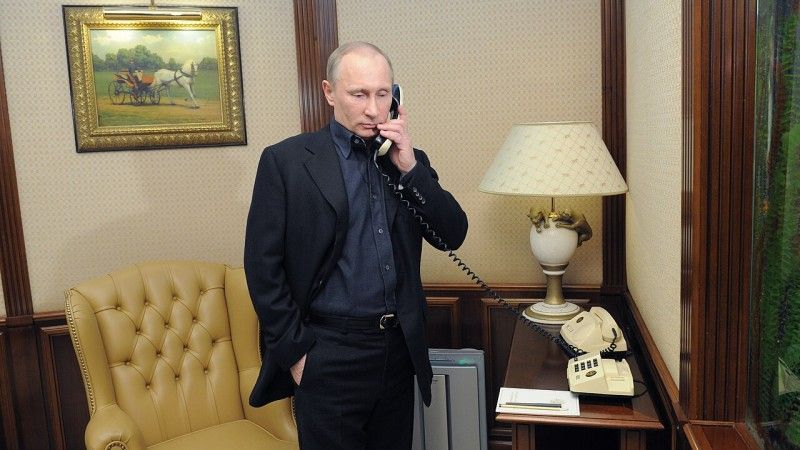
On Wednesday, 28 October, the “Financial Times” revealed new information regarding the conversation that the President of Finland, Alexander Stubb, and the Prime Minister of Norway, Jonas Gahr Støre, held with Vladimir Putin.
Finland and Norway talk to Russia
On Wednesday, 28 October, the British daily “Financial Times”, citing three people familiar with the course of events, reported on the background of the talks between the President of Finland, Alexander Stubb, and the Prime Minister of Norway, Jonas Gahr Støre, with the President of Russia, Vladimir Putin. Initially, the conversation was intended to last no more than 30 minutes and focus on ending the war in Ukraine.
“The conversation was candid and substantive. We are countries neighbouring Russia. The outcome of this war will have a direct impact on our security and the security of all of Europe. Ending the war requires direct talks,” Alexander Stubb reported.

90 minutes talking about history?
As it turns out, the conversation was not necessarily as substantive as the President of Finland diplomatically portrayed it. According to sources reached by the “Financial Times”, the conversation – which extended to 90 minutes – did not solely concern peace in Ukraine.
According to the information provided, Vladimir Putin reportedly devoted a significant part of the conversation to his monologue on the medieval history of the Slavs – or at least the Kremlin’s version of it. He also attempted to justify Russian aggression by referring to what Russia describes as the “original causes of the conflict”. According to reports, issues regarding a ceasefire in Ukraine or the November peace negotiations in Abu Dhabi were sidelined.
The talk was commented on by Dr. Timo Hellenberg: “Our goal is a just and lasting peace. Diplomacy must be judged by its practical consequences. The number of phone calls and meetings, or declarations of progress, do not in themselves demonstrate that Ukraine’s security has improved.
“We must increase pressure on Russia and strengthen Ukraine’s ability to win. Without credible security guarantees, sufficient deterrence and effective implementation and monitoring mechanisms, peace risks becoming little more than an interval before the next attack and renewed escalation. Europe needs less of the symbolism of endless emergency summits and more shared strategic direction, operational capacity and political resolve. We must be able to move from resilience to resistance and concrete countermeasures. Only then will diplomacy be backed by the strength needed to change Russia’s calculations as well.”


