












- KOMENTARZ
- ANALIZA
- WIADOMOŚCI
Against the war: Why is Spain challenging Trump’s foreign policy?

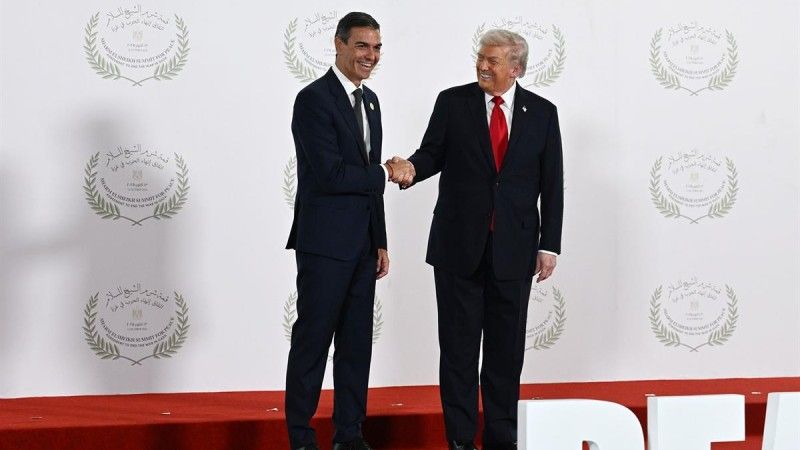
Photo. La Moncloa, Government of Spain, official website
Faced with the escalation of the conflict between the United States, Israel, and Iran in 2026, Spain took a markedly different course from many Western countries. Pedro Sánchez’s government not only refused to participate in military operations but also made decisions that led to serious diplomatic tensions with Washington and Tel Aviv. At the heart of this policy was a single slogan that continues to recur in Spanish discourse: no a la guerra” — “no to war.”
While Spain clearly rejects Tehran’s policies, it simultaneously opposes the use of military force outside the framework of international law. In practice, this means adopting the role of a normative actor—one that does not so much take sides in the conflict as question its very logic, thereby directly undermining Washington’s message. In this sense, Madrid’s position is not neutrality, but rather an active attempt to redefine the principles of security policy.
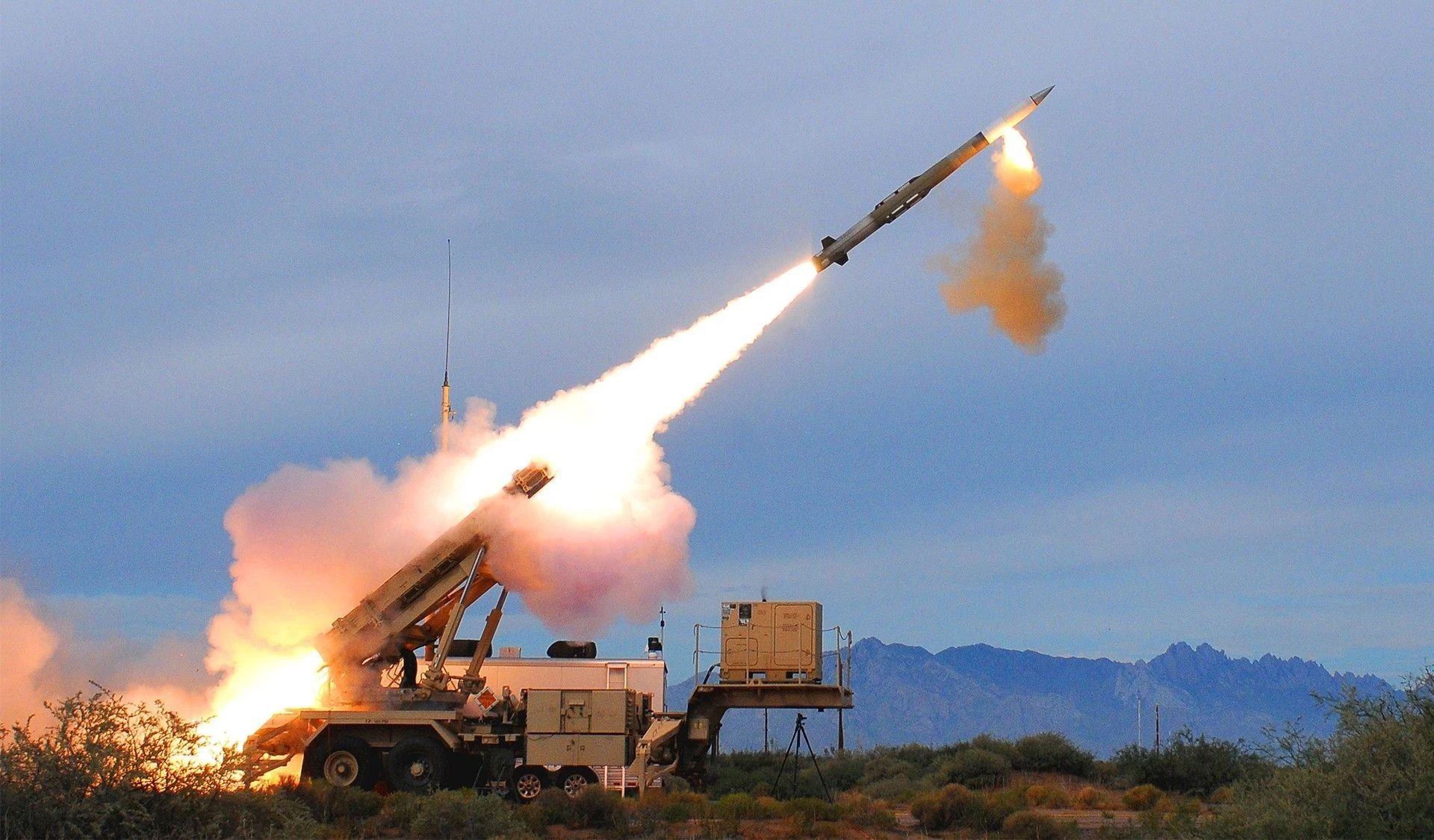
Madrid’s stance, however, is not limited to purely symbolic criticism, but entails concrete, strategic actions that could have a real impact on the course of the war. The most important of these was blocking the use of military bases in Rota and Morón by American forces. The government emphasized that these bases cannot be used for operations that fall outside the framework of international agreements or the UN Charter. In practice, this meant rejecting the entire operation as illegal, or at least legally questionable. At the same time, Spain made it clear that its NATO membership does not automatically imply support for every US-initiated military operation.
This decision had immediate consequences, leading to a direct conflict with the Donald Trump administration, which threatened Spain with economic sanctions. At the same time, the current foreign policy of Pedro Sánchez’s government — until now enjoying relatively low domestic support — has been met with broad public approval, suggesting that it is not simply the result of elite calculations but reflects deeper social preferences.

International law as the main argument
Spain’s decision to refuse support for the US-Israeli operation stems from several interrelated factors, some of which originate in events from previous years.
Spain has repeatedly emphasized that operations against Iran are unilateral in nature and lack a proper mandate. The government in Madrid has consistently argued that military actions conducted outside the structures of the UN, NATO, or the EU cannot serve as a basis for the international order. Prime Minister Sánchez has also called for reform of the United Nations system, including the abolition of the veto power in the Security Council — in order to make it more representative and less susceptible to pressure from the “Big Five.” At the same time, he criticized Russia and the United States for remaining permanent members of the Security Council, even though, in his view, both countries “introduce significant instability into the world through the wars in Ukraine and Iran.”
As a result, Spanish policymakers concluded that the use of military bases to support attacks on Iran would be contrary to existing legal obligations. This argument is consistent with Spain’s broader foreign policy vision, which emphasizes multilateralism and diplomatic solutions, while avoiding situations in which responding to one illegal act with another leads to further destabilization of the international system.

Tensions with Israel
The stance on Iran cannot be analyzed in isolation from previous diplomatic tensions between Spain and Israel, as well as the broader history of their bilateral relations.
For years, Madrid has consistently criticized Israel’s actions in the Gaza Strip, viewing them as a violation of humanitarian law and a disproportionate use of force against civilians. The left-wing ruling coalition has maintained strong support for the Palestinians, recognizing the State of Palestine in May 2024, supporting proceedings against Israel before the International Court of Justice, and restricting arms exports. At present, the government’s position enjoys strong public backing. A majority of Spaniards support both the recognition of Palestine and a two-state solution, while criticism of Israel’s actions in third countries is also increasing.

This attitude dates back to the Franco dictatorship, when Spain, isolated in Europe, established close relations with Arab countries, which ultimately led to lasting political and cultural ties. Moreover, unlike many European countries, Spain was relatively late in recognizing Israel (only in 1986), which has also shaped its distinct perspective.
In the context of the war with Iran, political preferences have become even more polarized. Madrid views US and Israeli actions toward Iran as part of a broader problem of unilateralism and violations of international norms, which contradict Spain’s policy based on references to international law, the right of nations to self-determination, and its own historical ties with the Arab world. Consequently, Spain has taken a series of political and symbolic actions, including limiting military cooperation, banning the transport of arms through its territory, and withdrawing its ambassador from Tel Aviv. The conflict with Israel is therefore not incidental, but rather fits within Spain’s long-term foreign policy strategy.

The Iraq Lesson and the Fear of Repetition
Another factor influencing Spain’s current stance is historical experience. Sánchez has repeatedly cited the 2003 Iraq War, arguing that such interventions lead to destabilization, increased terrorism, and social and economic crises. He believes that the conflict with Iran carries similar risks. The lack of clearly defined objectives, the potential for unpredictable escalation, and the risk of global consequences make the war seem like a repetition of past mistakes. It is this historical perspective that reinforces the government’s message: Spain does not want to re-engage in a conflict that could cause more chaos than it would bring security. Persistent anti-war sentiment and the experience of past conflicts have also contributed to Sánchez’s growing popularity, as his steadfast stance allows him to present himself as a leader acting in accordance with the will of the people.
Conflict with Donald Trump boosts Pedro Sánchez's popularity
Spain’s stance on the war finds strong support in public opinion. According to a poll conducted by 40dB for SER andEl País, over 68% of Spaniards oppose military intervention against Iran, with a majority supporting the government’s decision to refuse participation in the operation and to block the use of military bases. This stance increases Sánchez’s visibility on the international stage and positions him as one of Europe’s most prominent leaders.
Moreover, the confrontation with Donald Trump reinforces his image as an independent politician capable of defending the country’s sovereignty, despite the US president’s threats of trade sanctions against Madrid or even a complete severance of economic ties. However, Spanish government officials have remained committed to their chosen course, emphasizing that the country „will not be anyone’s vassal” and will not succumb to political pressure. Sánchez has also argued that uncritical compliance with the decisions of other countries is not a sign of leadership, but of weakness.
La derecha y la ultraderecha no pueden apoyar a quien incendia el mundo y luego quejarse del humo que provoca ese incendio.
— Pedro Sánchez (@sanchezcastejon) March 13, 2026
Vamos a poner todos los recursos del Estado al servicio de la gente para protegerles de una guerra que NO avala el Gobierno de España. pic.twitter.com/WL3wF7UY9i
This conflict revealed a deeper problem in transatlantic relations. Spain questioned not only the specific military operation but also the manner in which Washington made decisions, i.e., without consulting partners and outside of alliance structures.
Spain in the European Context: An Exception or an Emerging Trend?
Spain stands out among other European countries for its decisiveness, as it clearly opposes escalation and emphasizes that NATO membership does not imply unconditional support for military actions initiated by other states. The refusal to allow the use of the bases in Rota and Morón therefore sends a clear signal that Madrid is pursuing an autonomous foreign policy.
However, despite policies designed to be peaceful and stabilizing, Spain’s current stance also reveals deeper tensions within the European Union. While some countries lean toward supporting US actions or maintain strategic ambivalence, Madrid advocates a clear rejection of military logic, emphasizing that Europe should speak with “balance and moderation” and strive for de-escalation and a return to negotiations. At the same time, the Spanish government’s actions indicate an attempt to strengthen the EU’s strategic autonomy, understood as the ability to pursue an independent policy in response to global crises. In this sense, Spain is not simply reacting to the crisis, but is trying to shape the European response by promoting a model based on diplomacy rather than military force.

Although Spain is no longer completely isolated in its views, it remains one of the most vocal critics of the war and one of the few countries to combine political criticism with a genuine refusal of military support. At the same time, the question is no longer whether other countries will “repeat Spain’s example” in its entirety, but rather how many levels they will begin to align with it. This trend is already visible in the absence of military support for the United States. For example, Germany, Italy, Poland, and Canada are reluctant to send troops or engage directly. Even close allies (e.g., the UK and France) have rejected certain US operational initiatives, particularly at sea.
Criticism – especially among European allies – does exist, although it is often indirect. Concerns about the risk of escalation, the lack of consultation, and the need for de-escalation are more frequently expressed than direct criticism of the United States, as seen in Spain’s case.

This suggests three possible levels of response among Western countries. The first is the hard Spanish model: public criticism of the war’s legality, an emphasis on international law, and the refusal of military assistance. However, this appears least likely in the context of most European states. The second is the intermediate model, currently the most probable: no military engagement, an emphasis on de-escalation, but without open, frontal conflict with the United States. The third is the model of alliance loyalty with limitations, implying political support for the alliance with Washington while avoiding direct combat involvement. At present, most countries appear to be moving toward the intermediate model rather than the full Spanish model.
The conclusion remains that Spain, while still the most critical in its stance, is no longer alone—Europe is moving toward „non-participation + cautious criticism” rather than full support for the war. Most countries, largely due to their dependence on American military support, are unlikely to fully follow Spain’s example.
Conclusions
Spain’s stance on the war in Iran is one of the most striking examples of opposition to unilateral military action in the Western world. Its decision to refuse participation in the operation, to deny the use of military bases to the United States, and to criticize Israel’s actions demonstrates that Madrid is willing to bear political and diplomatic costs in the name of its principles.
Opposition to the actions of the United States and Israel does not imply a rejection of alliances, but rather an attempt to redefine them. Spain promotes a foreign policy model based on diplomacy, de-escalation, and multilateralism, while simultaneously strengthening its domestic and international standing.
In the broader context, Spain’s case could herald a more profound shift in European politics. Madrid’s diplomatic approach to security, coupled with the current mood surrounding the ongoing Russian–Ukrainian conflict, offers a political framework that could find support across many European societies. However, some security circles argue that such an approach could weaken deterrence and encourage authoritarian actors to act more aggressively. In an increasingly unpredictable and escalating environment, the lack of a coherent European position further increases the continent’s fragility. This crisis, more than ever, tests Europe’s ability to act as a strategic and united player, rather than a passive observer of other powers’ decisions.


