












- WIADOMOŚCI
Drugs, blood and geopolitics: A map of the Drug War

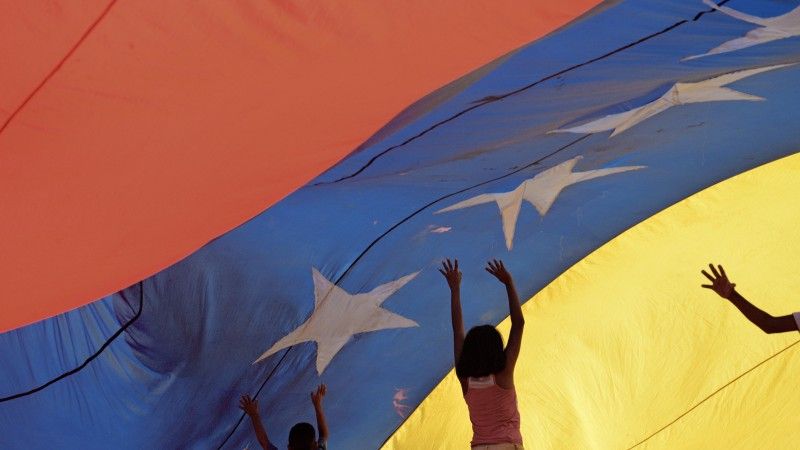
The contemporary drug war across the Americas no longer resembles a state-versus-cartel clash but a networked conflict in which market forces, violence and geopolitics reciprocally reinforce one another. From the polydrug market in the United States, through transit corridors, to decentralized criminal structures in Latin America — this war has no single map. It does, however, have a web of connections in which drugs are the fuel, blood is the cost, and geopolitics provides the framework that allows the system to endure despite successive interventions.
In the Americas a war has been waged for years that has no front line, no victory parades and no single date when it began. What it does have is a daily, repetitive ritual: sirens, emergency rooms, cut-off breaths, families who answer the phone in the middle of the night. According to the Centers for Disease Control and Prevention’s National Center for Health Statistics, more than 105,000 people in the United States died of drug overdoses in 2023.
That number does not fit comfortably within the language of an ordinary public-health crisis. For comparison: roughly 58,000 U.S. soldiers died in the Vietnam War, 4,614 in Iraq, and 2,300 in Afghanistan. Set against those tallies, overdoses cease to look like a mere social problem. They begin to resemble a national loss — a protracted, attritional campaign that hollows out whole segments of the social fabric.
This tragedy is no longer only the sum of individual collapses. The National Institute on Drug Abuse emphasizes that the scale of mortality has begun to affect demographic indicators, life expectancy and the stability of local communities — particularly where poverty intersects with deindustrialization and the erosion of institutions. In other words: in some U.S. regions the issue is no longer only who becomes dependent and why. The question is how dependence becomes a mechanism of social breakdown — of families, labor markets, social trust and, ultimately, local order.
Fentanyl changing the rules of the game
At the core of this transformation are synthetic opioids. The CDC reports that roughly 69 percent of overdose deaths were associated with synthetic opioids, primarily fentanyl. Journalistic shorthand often calls fentanyl the new heroin. That is a mistake — fentanyl is not merely another iteration of an old problem. It represents a paradigm shift. Where heroin could be conceived as an agricultural-industrial product — dependent on cultivation, supply chains and a certain geographic logic — fentanyl is largely a product of laboratories, chemical logic and economies of scale. It is potent, cheap, easier to move in micro-quantities and therefore better suited to a world in which the market demands something small, strong, fast.
It is precisely that attribute — brutal efficiency — that has, within a few years, reshaped the structure of the U.S. drug market. Were the crisis solely a fentanyl crisis, one might describe it as an epidemic of a single substance. But NIDA states plainly: this is a polydrug crisis. Users increasingly do not consume a single substance; they consume mixtures. Stimulants, opioids and synthetics now circulate within the same supply; patterns of addiction and risk are mixing with them. Where once one could speak of an opioid market or a cocaine market, today such labels fail to capture the surrounding reality.

Polydrug use: A market where boundaries have been blurred
Over the past decade — as NIDA documents in its work on multiple substance use — a radical shift has occurred: users less and less remain tied to a single substance. Cocaine, methamphetamine and opioids now operate within a single circuit. Market boundaries have blurred, and the consequences are twice as dangerous.
This stems primarily from unpredictability. The CDC shows that a substantial share of deaths classified as cocaine-related involve the concurrent presence of fentanyl. That means someone may believe they are taking a stimulant while actually ingesting a mix whose dosages they cannot gauge. In this sense today’s market is a market of blind consumption: even an experienced user no longer has the knowledge they once had.
At the same time systemic risk rises because mixing substances alters the biology of addiction and the logic of transitioning between drugs. The National Harm Reduction Coalition describes fentanyl’s presence in stimulant supplies — mixing at wholesale and street levels that increases a product’s addictive potential. A Journal of Substance Abuse Treatment points to pathways from stimulants to opioids driven by biological (crashes, exhaustion), psychological (seeking relief) and economic (price) factors.
If fentanyl — as the DEA notes — is now the cheapest opioid on the market, it can function in practice as a terminal substance for some users: the end point to which both addiction and economics push someone — starting with cocaine and ending with fentanyl. At this juncture the crisis ceases to be a problem of poor individual choices. It becomes a problem of market architecture.
The American Medical Association warns that this is not a single-substance crisis but a systemic crisis of the entire drug market: demand fuels supply; supply responds with ever cheaper and stronger chemistry; that chemistry increases mortality, which in turn generates political and security pressures. The result is a feedback loop.
That is why the DEA, in its 2025 National Drug Threat Assessment, advances a stark thesis: drugs — especially fentanyl — are among the principal threats to national security, comparable in social impact to terrorism or hostile activity by foreign states. The analogy may sound rhetorical, but it rests on concrete dynamics: social destabilization, loss of productivity, strain on health systems, and the erosion of local communities.
In practice this means the so-called war on drugs in its American incarnation is changing its profile. It is no longer solely a debate about criminalization versus liberalization. It becomes a debate about how the state can withstand a burden that, over time, operates like a demographic and economic drain.
And when a state frames the problem in national-security terms, it naturally looks beyond its borders. Demand is located in the United States; supply and logistics are in Latin America. Here the second part of the story begins — one that is not only about cartels but about how the two sides of the hemisphere interpret the meaning of this war very differently.
Drugs as harm and as a weapon: Two narratives of a single conflict
In relations between the United States and Latin America, drugs have long functioned not only as a criminal problem but also as a political and symbolic category. Two competing narratives — mutually antagonistic — circulate.
The first is the narrative of harm: an account of colonial legacies, economic marginalization and external interference in which the war on drugs appears as yet another instrument by which the center controls the periphery. The second is the narrative of drugs as a weapon — far harsher — found in indictments and geopolitical rhetoric, where drugs are portrayed as deliberately used instruments to strike at the United States.
In the Andean world, particularly Bolivia and Peru, coca is not merely an illicit crop but an element of culture, ritual and a survival economy. When the United States imposed aggressive plantation eradication policies, sent advisors, funded anti-drug operations and conditioned economic aid on results, many local people experienced those measures not as protection or assistance but as intrusion into a way of life.
Coca is also used in religious rites — as it has been for centuries. Therefore anti-coca campaigns were perceived by many indigenous populations as yet another repression by white invaders and their heirs. Research on U.S.–Bolivia relations shows that the war on drugs was often experienced as a relationship of power: impoverished communities bore the costs of global demand, and policy was imposed externally, often without viable economic alternatives.
From this context the cocalero movement and the political rise of Evo Morales emerged, in which resistance to U.S. anti-drug policy became a pillar of political narrative. Morales was not defending cocaine per se but defending the right to coca as a symbol of sovereignty and opposition to an imperial dictate.
A similar dynamic played out in Colombia. Plan Colombia — a massive U.S.-funded military and anti-drug assistance program — was officially aimed at reducing cocaine production and weakening insurgent groups. Critical analyses, however, framed it as a geopolitical project that militarized the country, expanded U.S. influence and shifted costs onto civilians. For many Colombians, drugs became the language through which foreign intervention was legitimated rather than the real stated policy objective. This is the narrative of grievance: not revenge, but the experience of being drawn into someone else’s war.
A very different logic underpins the narrative of drugs as a weapon. Organized crime and narcotrafficking — as scholars such as Zita Ballinger Fletcher have argued — increasingly function not as marginal criminality but as forms of irregular warfare and alternative governance. These are no longer gangs in the classical sense but political actors that assume state functions where the state fails: providing jobs, protection, order and access to resources, thereby building local loyalty and a form of legitimacy.
Violence, corruption, intimidation and selective service provision are not chaos here but tools of governance. In Latin America, drug networks do not merely traffic in commodity flows — they organize entire economic ecosystems. They exploit porous borders, fragile institutions and the absence of economic alternatives to erect parallel power structures. The more the state withdraws, the faster these networks fill the vacuum. Their global infrastructure — financial, logistical and technological — rivals that of many public administrations, and their adaptive capacity renders them resilient to law-enforcement pressure.
In that sense, drugs cease to be solely a commodity. They become a tool of destabilization. They function like a weapon with mass social effects: killing people, disorganizing communities and overburdening state systems. Money laundering and smuggling finance not only cartels but political actors and armed organizations, including terrorist groups.
The whole system increasingly resembles a proxy war: strategic goals are achieved not by conventional armies but by criminal networks that operate more cheaply, quietly and flexibly. Contemporary narco-business is not sheer criminality alone; it is an infrastructure of influence. And where it becomes infrastructure, it begins to undermine state sovereignty not head-on but from within.
This vision appears most clearly in U.S. Department of Justice indictments and political statements about hostile regimes. In this narrative, drugs are no longer merely a byproduct of poverty or a consequence of colonial history. They are an instrument of warfare.
The best-known example is the indictments leveled at elements of the Venezuelan elite, in which U.S. prosecutors used rhetoric about flooding the United States with cocaine as a form of assault on American society. Similar language — albeit in different contexts — has historically been used in reference to the FARC in Colombia, which combined insurgency and narcotrafficking to finance conflict with the state and its allies.
The greatest mistake is to conflate these two orders. The grievance and harm narrative explains why drug trade could take root in marginalized regions and why U.S. policy is sometimes perceived as colonial. The weapon narrative explains how, in specific political conflicts, drugs are presented or employed instrumentally. The problem arises when grievance rhetoric is taken to imply revenge, or when the weapon narrative is taken to mean that the whole region is acting against the U.S.
Both shortcuts fail to capture a reality that is simultaneously more banal and more brutal: the drug market operates primarily on a profit logic, and politics — in Washington, Caracas, Bogotá or La Paz — uses it instrumentally in its disputes. Hence some speak of imperialism, others of narco-terror. In the middle are people who cultivate coca because they lack other work, and criminal networks that lack ideology and have only a balance sheet — and at the end of the chain are people dying of overdoses on American streets.
That is why, when U.S. authorities begin to view drugs in national-security terms, the reflex is to pressure source countries and seek intervention. Thus terms such as intervention, destabilization and corridors enter the discourse, and a natural instinct arises to solve the problem at its source. Here begins another chapter of the story: the structure of crime in Latin America has changed as much as the drug market itself.

Latin America: The end of the Cartel as a pyramid scheme
UNODC reports show that drug-related crime in Latin America increasingly does not operate like a classic centralized cartel with one capo and a pyramid chain of command. In its place has arisen a network architecture: multilayered, decentralized and resilient to point strikes.
This is no longer a single organization but an ecosystem. Producers, laboratories, intermediaries, transport groups, financial brokers, armed protection units and specialized money-laundering cells all operate within it. UNODC notes that this model is resilient because there is no single center whose removal would halt the system. When one link is lost, another takes its place. If one corridor is closed, another opens.
The contemporary cocaine supply chain, UNODC says, resembles the logistics of a transnational corporation: formally independent nodes that are functionally linked. Leaf production in Colombia, Peru and Bolivia, processing in laboratories, land and sea transit, warehousing in ports, distribution across North America and Europe — these are often the work of different groups that contractually assemble around a given operation.
The Global Initiative Against Transnational Organized Crime describes cartels as functioning more like business platforms coordinating activity than like traditional mafias. Sinaloa, CJNG, PCC and Clan del Golfo act as integrators. They do not need to perform every function themselves. It is sufficient that they can connect an ecosystem: producers, carriers, violence, corruption and finance.
One key element of this transformation is the outsourcing of violence. The International Crisis Group documents how cartels increasingly avoid maintaining centralized armed wings and instead hire local gangs, militias and paramilitary groups. It is practical: why maintain a heavy apparatus when you can purchase the service? And when the state strikes large cartel structures, a fragmentation process — a hydra effect — can be triggered.
The Global Initiative describes the dynamics of fragmentation: breaking one organization can create several smaller, often more brutal groups. The International Crisis Group points out that Mexico’s experience painfully illustrated this: dismantling cartels between 2006 and 2012 did not reduce violence and may have spread it. As the number of actors grows, so do conflicts over territory, extortion, kidnapping and micro-distribution.
Add to this the so-called balloon effect: pressure in one country displaces activity to neighboring regions. When control tightens along one corridor, another is strengthened. UNODC notes recent shifts of routes through Ecuador, Peru and parts of the Amazon as systemic responses to pressure elsewhere. Crime behaves like a fluid: it fills every void.

Venezuela: A state permeated by crime
In this context Venezuela is exceptional not only for its geography. The Global Initiative describes it as a criminalized state in which security apparatuses, politics and the illegal economy are interwoven in a network of mutual dependencies. Mechanisms for protection, concessions, escorting transports and laundering money are not peripheral to the state — they are embedded in institutions of power.
Transparencia Venezuela en el Exilio highlights the phenomenon referred to as the Cartel de los Soles: ties among senior officers and officials who, according to reports, not only turn a blind eye but actively participate in route management and profit distribution. Newer assessments, however, emphasize that this is not necessarily a single hierarchical cartel but rather a loose network of corrupt cells within the state. That distinction matters because a network is harder to cut off than a hierarchical organization.
UNODC also stresses a key point: Venezuela is not a primary cocaine producer (production is concentrated in Colombia, Peru and Bolivia). Its role is different: geography, a long coastline, porous borders and weak controls make it an attractive transit corridor — particularly toward the Caribbean and Europe. In other words: Venezuela is logistically valuable even when it is not a production hub.
At this point another dimension enters the game: great-power rivalry and infrastructural services that can intersect with illegal markets. If a state becomes a transit and corruption node, it also becomes an outpost for external actors that prefer to operate through intermediaries, contacts and networks.
Russia, Venezuela and the logic of leverage
Russian projection of power in the hemisphere is networked and transactional rather than institutional: it relies on footholds, intermediaries and arrangements with isolated regimes rather than durable state presence. In this configuration — as analysts such as Wes O’Donnell note — Venezuela was for Moscow an almost ideal partner. A sanctioned, diplomatically isolated state, dependent on external support and willing to pay for political umbrellas. Under Hugo Chávez, and later Nicolás Maduro, Caracas offered Moscow three assets Russia could not easily build on the Western Hemisphere: operational proximity, symbolic legitimization and strategic leverage.
First – proximity
The presence of Russian services and military advisors in Venezuela provided access to infrastructure, territory and operational space within the direct sphere of U.S. influence. This was not solely intelligence activity but the possibility of establishing a regional foothold: monitoring maritime movement in the Caribbean, gathering information on military, diplomatic and economic activity in Central and South America, and building local networks of contact.
At one point Moscow even secured access to airfields capable of hosting long-range strategic bombers — not as permanent bases but as options. In the logic of power projection that can be sufficient. Proximity need not be permanent to be useful; it is enough that it is possible.
Second - optics and legitimization
For years the Kremlin has operated not only with real force but with its staging. The presence of Russian ships, joint exercises, visits by generals, training on air-defense systems — these were not mere military gestures. They were signals sent to domestic audiences, partners and adversaries: We are not isolated, We have partners, We are present on your flank.
In that sense Venezuela served as a stage. Even if the direct combat value of those relations was limited, their propaganda and psychological value was significant. In geopolitics imagery often outweighs numbers.
Third – leverage
This is the crucial element. Venezuela provided Russia with the ability to signal presence in the immediate U.S. neighborhood during moments of heightened tension: after Crimea, after MH17, after successive sanction packages, and after the invasion of Ukraine. Not to provoke direct conflict but to introduce unease, distract attention and force the U.S. to think multidirectionally.
This is classic leverage logic: you do not strike; you show that you could. In the world of systemic rivalry that often suffices. The Moscow–Caracas relationship was never based on ideology or friendship but on pure calculation. Chávez gave Russia political and symbolic capital; Maduro increasingly became a liability rather than an asset.
Nevertheless, over two decades the Kremlin consistently linked Venezuela to itself militarily and technologically: arms sales, training, technical presence and the building of logistical dependence. It was not an episode but an investment in long-term influence. Today that infrastructure is exposed, and its erosion poses systemic risks for Russia — a loss of credibility, access and operational depth.
Venezuela was not merely an ally but a node: an intersection of state, military, energy and criminal interests. In a network logic, losing such a node does not mean defeat but a change in the geometry of influence — a need to find new routes, intermediaries and regimes willing to transact.
And here Russian presence meets the logic of global criminality. When the state weakens, networks step in. When a space opens, actors appear to serve it — financially, logistically and technologically. Russian-language criminal structures are thus not anomalies but natural extensions of the same strategy: building influence not by flags but by infrastructure.
Global financial backing: Russian-language networks as infrastructure
The most global element of this puzzle, however, is money — and the infrastructure that moves it. Britain’s National Crime Agency describes Russian-language networks as global money-laundering systems tied to drugs, ransomware and even espionage threads. The Associated Press has reported on dismantling major laundering operations that processed funds from Latin America and reinvested them in Europe.
Chainalysis highlights the role of crypto-infrastructure, and Europol underscores the presence of such networks in European logistical hubs. From this emerges a clear conclusion: Russian-language networks are not peripheral actors but systemic components linked to the Latin American narco-market. They act as a service backbone — financial, logistical and technological — without which international flows of drug money would be far more difficult. If destabilization in Venezuela increases fragmentation and flows, demand will rise for laundering, masking and transfer services. In such a world chaos in one country can translate into a rise in the professionalization of crime at a global scale.
Intervention: Not a solution but a catalyst for reconfiguration
This leads to a political conclusion: in a state permeated by crime, intervention — military or political — may not resolve the problem but reconfigure it. The Global Initiative warns that the overthrow of a leadership or the collapse of central authority in a country deeply infiltrated by criminality can ignite brutal competition for control of markets, routes and resources. If previously arrangements were held by central authorities or corrupt agreements, their disintegration opens the field to a war of all against all.
The International Crisis Group emphasizes that power vacuums are immediately filled by non-state armed actors: urban gangs, prison gangs, paramilitary squads and transnational actors — guerrillas and dissidents from Colombia among them. Each seeks to seize a slice of the market: a route, a port, a warehouse, an airfield, a section of border. And because the system is networked, these fragments can later reunite into new alliances.
Role fluidity — today an intermediary, tomorrow a protector, the day after an administrator — complicates classical strategies based on removing leaders. That is why UNODC states that such turning points in regional history almost always lead to escalations in violence: there is no stabilizing arbiter. When the state loses control, violence becomes a tool for establishing order. Unfortunately, there are situations in which forceful interventions may be the only option.
Weapons: The risk of diffusion from state stockpiles
Venezuela brings another, menacing factor to the table: weapons saturation. The Small Arms Survey estimates roughly 5.9 million firearms in civilian hands in the country. Under destabilization that is not background noise but fuel. The Global Initiative also notes the problem of military and police stockpiles — often significant and poorly secured. In crisis, depots can be looted, seized or dissolved into circulation through corruption and embezzlement.
UNODC emphasizes that in political destabilization legal stockpiles leak into criminal spheres more rapidly than in stable states. When weapons circulate easily, three dynamics rise simultaneously: the brutality of competition, the scale of extortion and kidnapping, and groups« capacity to secure routes. In short: weapons are not an accessory to narcotrafficking but an amplifier that allows a shift from a smuggling model to a model of territorial control.
Gold: A parallel economy of violence
The second amplifier is gold. The Global Initiative points out that illegal mining in the Orinoco region has become a second financial pillar for organized crime in Venezuela. The International Crisis Group describes an arrangement in which gangs, armed groups and corrupt officials jointly control mines. Gold has an advantage over drugs: it can be legalized and is harder to trace. UNEP and UNODC note that commodities like gold are ideal tools for money laundering.
This creates a parallel economy of violence: when pressure mounts on drugs, revenues can be stabilized with gold; when the state withdraws, mines become quasi-territories governed by armed actors. Environmental and social costs follow: degradation, toxic contamination, violence against local and indigenous communities, forced labor, migration, displacement.
In practice crime diversifies: it is no longer dependent on a single revenue stream. The more diversified it becomes, the harder it is to starve through law-enforcement action.
Systemic pillars: Mexico, Colombia, Brazil — A stable triangle
Even if Venezuela were to undergo violent reconfiguration, the system would not collapse because its pillars lie elsewhere. The DEA identifies Mexico as the distribution and wholesale-management hub to the U.S. market: Sinaloa and CJNG, integrated logistical and financial structures. UNODC and the Global Initiative describe Colombia as the production core — groups controlling plantations, labs and routes. Europol highlights Brazil as a key logistical corridor to Europe, underpinned by powerful organizations such as the PCC and Comando Vermelho.
This is a functional triangle: Colombia supplies production, Brazil supplies transcontinental logistics, and Mexico supplies distribution to the world’s largest market: the United States. That division of roles is stable because it reflects geography, infrastructure, conflict histories and market arrangements. Striking one element does not destroy the whole — it tends to strengthen the others as the system redistributes. Interventions, even if necessary, do not annihilate the system; they change its geometry.
Connecting the threads yields a picture in which modern narco-business no longer resembles a pyramid that can be toppled by cutting off the head. It resembles a network that can survive the loss of nodes. In that logic, intervention in Venezuela — instead of eliminating the problem— can trigger a reconfiguration. U.S. demand remains a constant driving force. The U.S. market has become polydrug and more lethal because fentanyl has seeped into multiple supply segments.
Crime in Latin America is modular and adaptive. Venezuela — as a state penetrated by criminality — is particularly prone to fragmentation after a shock. Weapons and gold act as violence amplifiers and income stabilizers. Global financial backstops — including Russian-language networks — ensure that money continues to flow.
Consequently the likeliest effect is not system collapse but transformation: more actors, more brutality, more improvised alliances, more local wars over ports, borders, mines and routes. The more diffuse and multi-sourced this world becomes, the harder it is to control — both for regional states and for external interventions that can destroy but rarely construct durable institutions to replace what collapsed under pressure.
If one seeks a succinct slogan to summarize: intervention will not destroy the system — it will change its geometry. And the geometry of dispersed, modular criminality is always worse for the state than the geometry of a single adversary. With a single opponent one can negotiate, fight, or broker ceasefires. Against a network one fights endlessly, striking nodes that regrow elsewhere. For that reason every intervention begets the need for another one.


