












- WIADOMOŚCI
- ANALIZA
Europe needs Türkiye, but does not know how to deal with it

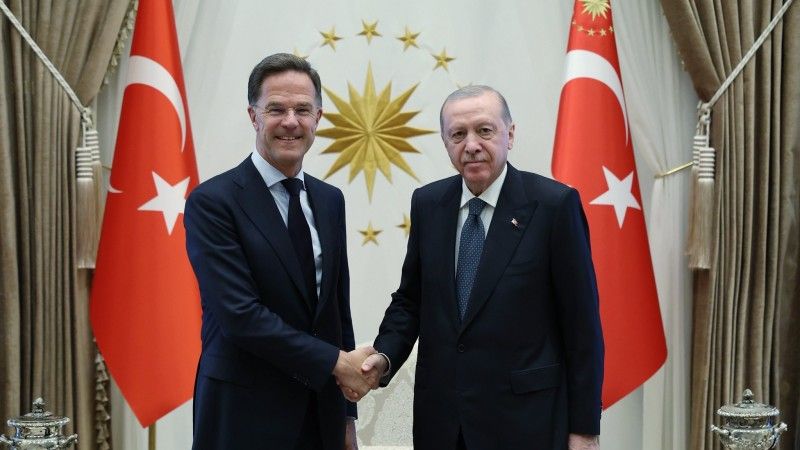
Photo. @trpresidency / X.com
Türkiye is returning to the centre of NATO politics. After more than two decades, the Alliance summit is being held again on Turkish soil, and Ankara is using the moment to promote its defence industry, deepen bilateral deals and remind Europe that it cannot build a serious security architecture while keeping Türkiye at arm’s length.
The NATO summit in Ankara exposes a dilemma that Europe has tried to postpone for years. The European Union needs Türkiye in defence, migration, trade, logistics and regional diplomacy, but it does not know how to speak to Ankara with one voice. Some European leaders see Türkiye as an indispensable security partner. Others see it as a disruptive actor whose policy towards Greece, Cyprus, Israel, Russia and Iran creates serious political problems. Both views are partly correct, and that is exactly why the issue is so difficult.
Türkiye has the second-largest army in NATO after the United States and a defence industry that has become increasingly independent, export-oriented and tested in real conflicts. Turkish drones, armoured vehicles, naval systems, missiles and aerospace projects are no longer marginal products. They are part of Europe’s defence conversation. Ankara already has defence-industrial links with more than ten European countries, including Spain, Italy, Poland and Belgium. At the NATO summit, it will try to turn this momentum into more contracts and deeper political recognition.
The defence industry forum in Türkiye is therefore not just an accompanying event. It is a strategic showcase. Turkish Aerospace Industries facilities in Kahramankazan, exhibitions of Turkish defence products and demonstration flights of indigenous air platforms are meant to send a direct message to European capitals: Türkiye is not only a NATO host, but also a producer of the capabilities Europe increasingly needs. At a time when Europe is struggling with ammunition shortages, slow procurement, fragmented industries and limited production capacity, Ankara wants to present itself as part of the answer.
This raises the central question: does the EU need Türkiye more than Türkiye needs the EU? In defence, the answer is uncomfortable for Brussels. Europe needs production capacity, drones, industrial flexibility, military mobility and partners able to operate in difficult regions. Türkiye can offer many of these things. It also remains important for migration management, energy routes, Black Sea security, the Caucasus, the Middle East, Central Asia and Africa. Ankara has channels with actors Europe often cannot reach, including Russia and Hamas. That does not make Türkiye an easy partner, but it makes it a difficult partner to ignore.

The problem is Greece and Cyprus. Türkiye is excluded from key EU defence programmes, including SAFE, because Athens and Nicosia block full access over maritime disputes, threats of military action and the Turkish occupation of northern Cyprus since 1974. From their perspective, there can be no blank cheque for Ankara. They argue that European defence cooperation cannot ignore Turkish pressure in the Aegean, Cyprus or the Eastern Mediterranean. This is not a technical obstacle. It is a strategic and historical conflict inside Europe’s own security debate.
Ankara wants Europe to separate defence needs from political disputes. Greece and Cyprus want the opposite: any deeper EU-Türkiye defence relationship must include conditions. This is where the EU’s weakness becomes visible. It wants Turkish capabilities, but it lacks a common political framework for dealing with Turkish power. Bilateral agreements are therefore multiplying, while EU-level coordination remains blocked. That fragmentation benefits Ankara, because it can negotiate with individual capitals instead of accepting a more conditional European framework.
The contradiction is even clearer inside NATO. As a defence alliance, NATO accepts Türkiye as a central military actor despite Ankara’s continuing contacts with Russia, its refusal to join EU sanctions, its purchase of Russian S-400 systems and its separate policy towards Iran, Hamas, Israel, Greece and Cyprus. This is the reality of NATO: it is not a club of identical foreign policies. It is an alliance built around military utility and collective defence. Türkiye is difficult, but it is useful. In NATO, that matters.

The Ankara summit therefore shows something larger than a dispute over one country. It shows that European security is entering a more transactional phase. States with armies, production capacity, geography and regional influence will have leverage. Türkiye understands this very well. The EU still behaves as if political discomfort can replace strategic necessity. It cannot. Europe may not like Erdoğan’s policy, and it should not ignore the concerns of Greece and Cyprus, but it also cannot pretend that Türkiye is outside the defence equation. The real question is not whether Europe should work with Türkiye. It is how much political cost Europe is ready to accept in order to do so.


