












- WIADOMOŚCI
How Iran could disrupt shipping in the Strait of Hormuz?

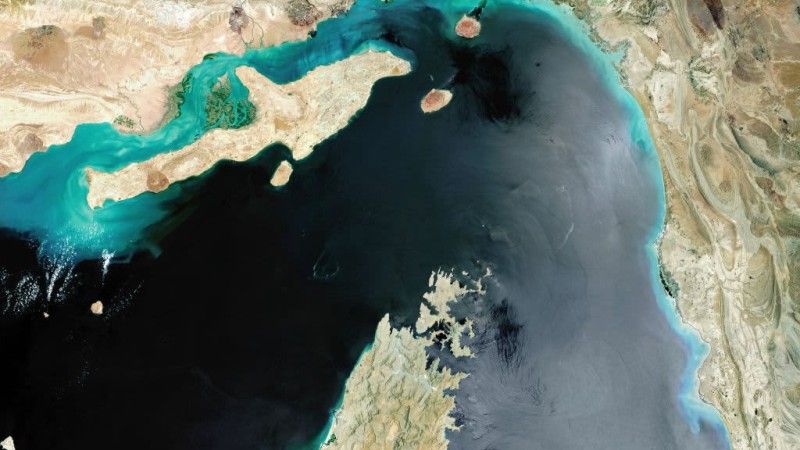
Photo. @PolymarketIntel/X.com
There is concern that, when cornered, Iran might finally carry out a long-standing threat: to try to block passage through the Strait of Hormuz, which connects the waters of the Persian Gulf with the Arabian Sea and the Indian Ocean. However, this would be a „nuclear option”, likely to do Iran more harm than good.
Following a US strike on its nuclear facilities in June, Iran’s parliament approved the closure of the Strait of Hormuz. Ultimately, the blockade did not happen, but that does not mean it cannot happen in the future. What consequences would such a move by Iran have?
For Iran, the Persian Gulf is of particular strategic importance, not only for its access to oil and gas reserves, but also as a source of national pride, power, and historic continuity. As one 17th-century Persian historian wrote: „If the world were a golden ring, Hormuz would be its jewel.” Iran gained control over part of the Strait of Hormuz following the Persian-Portuguese War in 1622.
The Persian Gulf and the Strait of Hormuz form a theatre of operations where attempts could be made to paralyse transit traffic. At its narrowest, the Strait is 54 kilometres wide, and it has only two deep enough channels suitable for larger surface or submarine vessels. The area is relatively small, about 251,000 square kilometres, less than the size of Italy or Poland.
Within the Strait lie several islands of varying size, including Qeshm, Lark, Hormuz, Abu Musa, Hengam, and the Greater and Lesser Tunbs. These are under Iranian control, whereas Oman controls smaller rocky islands such as Al-Ghanam, Quoin, and Musandam. Iran has deployed anti-ship systems on some of these islands.
The Strait of Hormuz averages around 50 metres in depth, 36 metres near Lark Island, and up to 144 metres near Musandam. The seabed deepens from north to south and from west to east.
In peacetime, both civilian and military shipping pass without hindrance; well-navigated large tankers, including VLCC-class vessels, routinely transit through the Strait.
Iran has sought to learn from past conflicts, especially the 1980–1988 Iran–Iraq War. Between 1984 and 1988, the so-called „Tanker War” took place, aimed at economically destabilising the opponent through attacks on tankers and oil ships leaving the Persian Gulf. Iran began targeting civilian vessels, mainly tankers, in response to Iraqi air raids on oil terminals at Khorramshahr and Kharg Island. When Iraq bombed Iran’s oil and transport infrastructure, Iran retaliated by attacking tankers linked to Iraq’s backers, notably Kuwait and Saudi Arabia. Over 400 ships belonging to various nations were attacked. Iran was responsible for more than 160 of these attacks, often using surface-to-sea missiles and IRGC speedboats. Civilian ships flying neutral flags were also repeatedly attacked, heightening international tensions.
In response to Iran’s mining of the Gulf and the damage inflicted on the USS Samuel B. Roberts in 1988, Washington launched a naval operation codenamed Praying Mantis. Iran’s navy was ill-equipped for a head-on fight with the US Navy, which swiftly destroyed two Iranian offshore platforms (being used for military purposes), sank five Iranian surface ships, including the frigate Sahand, and seriously damaged the Sabalan (both British-built Alvand-class frigates).
These events taught Iran that asymmetric tactics, especially „hit-and-run” operations, were the only viable means of countering a stronger enemy. It was proven effective: the USS Samuel B. Roberts was damaged not by conventional forces but by a sea mine based on a 1908 Russian design.
Iran’s Clear Message
Iran has repeatedly threatened in the past that it both can and will close the Strait of Hormuz. Such bellicose rhetoric is deliberate and forms part of its deterrence doctrine, though Israel has increasingly challenged this in the past year.
In 2011, for example, IRGC Navy commander Rear Admiral Ali Fadavi stated, „If we are threatened, we will close the Strait of Hormuz.” That December, Vice President Mohammad Reza Rahimi warned that „if sanctions are imposed on Iranian oil exports, not a drop of oil will pass through the Strait.” In June 2012, General Hasan Firouzabadi, then Chief of Staff, declared: „If our interests are threatened, we will close the Strait of Hormuz.”
In July 2012, Deputy Rear Admiral Alireza Tangsiri threatened: „If one day we determine that we cannot use the strait for entry or exit, we will block it.” In 2014, Fadavi further stated that his forces not only „fully control the Strait of Hormuz” but could „sink an American aircraft carrier in under a minute.”
In April 2016, IRGC Deputy Commander General Hossein Salami said, „If threatened, Iran will close the Strait.” In 2018, President Hassan Rouhani issued a more veiled warning about the consequences of blocking Iranian exports.
Crucially, Iran has always phrased these threats conditionally, underlining their defensive nature. The Strait would only be blocked in response to external aggression. But such a situation may now be at hand.
According to a security expert living in Iran (identity known to Defence24.pl):
„Although this isn’t the first time the Islamic Republic has threatened to close the Strait of Hormuz, the threat is more credible than ever. Iran finds itself in a near-existential crisis. A few nights ago, an Israeli strike decapitated Iran’s top military leadership, leaving lower ranks with the difficult task of continuing the War. Until now, Israel has avoided escalating operations in the Gulf, wary of American reaction and regional destabilisation. But chaos suits the IRGC; it is their modus operandi. Stability does not benefit them.”
Iran is being pushed further into defence with each Israeli strike. On the first day of conflict, it launched around 200 missiles; in the past 24 hours, just 30. The IDF is actively targeting launchers and missile storage sites, forcing the IRGC into survival mode.
Recently, MP and former IRGC commander Esmaeil Kowsari stated that closing the Strait is „under consideration” and that a „firm decision” will be made at the right time. His comments were widely circulated by Iranian media and on X. Likewise, on 15 June 2025, IRGC Navy commander Alireza Tangsiri told Hezbollah-affiliated Al-Mayadeen that „if our rights are violated, a decision will be made to close the Strait,” which would be implemented „in line with the orders of the highest authorities.”
The pro-government magazine Javan published an editorial calling for the Strait to be blocked. While no senior state official has echoed this publicly, more pro-regime accounts on X, often serving as propaganda channels, are openly calling for the Strait’s closure.
So far, the UKMTO (United Kingdom Maritime Trade Operations) has reported increased GPS signal interference in the Persian Gulf and Strait of Hormuz, hindering the Automatic Identification System (AIS) used by civilian vessels.
Iran’s Options
Since 2007, Iran’s regular navy (NEDAJA) has had responsibility for the Caspian Sea and the Gulf of Oman, while the Persian Gulf and the Strait of Hormuz fall under the IRGC Navy (NEDSA).
Iran’s capabilities are based on six pillars: fast attack boats with missiles, submarines armed with torpedoes and naval mines, cruise, ballistic, and anti-ship missiles, various sea mines, aircraft and drones with anti-ship weapons, and conventional surface ships including destroyers and hovercraft. These are supported by air defence and electronic warfare systems (at least before the Israeli strikes).
In wartime, Iran would likely adopt an offensive naval posture using a „swarm strategy” employing numerous small, fast, and hard-to-detect vessels armed with missiles and torpedoes.
Naval mines would be significant. Still effective in both terrorist and asymmetric warfare, they are relatively cheap, hard to detect, and suitable for different ship types. However, their deployment could be hampered by strong currents in the Strait, which might displace them from their intended positions.
Mines could be laid from military or civilian vessels, submarines, or aircraft. It is estimated Iran has acquired 3,000–6,000 Soviet/Russian, Chinese, and North Korean sea mines. Most are conventional bottom mines with contact fuses. Particularly dangerous are Chinese EM-52 rocket-propelled mines that detect targets acoustically, magnetically, and through pressure changes. These can operate in the relatively deep waters of the Strait.
Land-based anti-ship missiles would also pose a serious threat. Mobile launchers, often disguised on civilian trucks, are harder to spot than large ballistic missile batteries. Yet without the ability to track targets, even well-camouflaged batteries would lose effectiveness. In such a scenario, the entire Iranian coastline near the Strait would become subject to US strikes, limiting Iran’s options.
Nonetheless, the threat posed by anti-ship missiles cannot be dismissed. They are considered Iran’s key maritime defence asset and are controlled by the IRGC on sea, land, and air platforms. A deliberate strike on a civilian vessel, especially causing an oil spill, would severely contaminate the area and halt traffic, achieving strategic disruption at significant political cost. Such a move would likely prompt international support for military action against Iran.
Beyond the Gulf, Iran could harass vessels with submarines if they could slip past US escorts. Iran’s submarines may not inflict significant losses, but they would force adversaries to commit substantial resources to tracking them.
Iran has three Soviet-designed Kilo-class submarines (Taregh, Nooh, and Younes) commissioned in 1992, 1993, and 1997. Its mini-submarine programme, developed in recent years with North Korean support, may comprise about 20 vessels.
Some experts believe Iran could attempt a kamikaze-style boat attack on a tanker, similar to the failed 2010 M. Star attack. This would require high precision and breaching reinforced hulls.
One Iranian expert told Defence24:
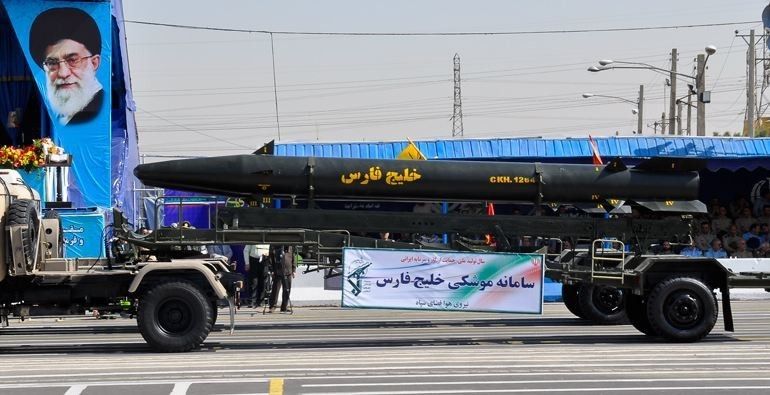
„Blocking the Strait is difficult, but certainly possible. The IRGC’s key asset isn’t mines, boats, or subs, but jamming systems, drones, and ballistic anti-ship missiles like the Khalij Fars, an advanced Fateh-110 variant.
In my view, Iran isn’t aiming for a complete closure; it knows that’s unfeasible with the US and Gulf States present. The likely scenario is limited actions: mine-laying, drone harassment, missile salvos, and pressure tactics.
It’s a bargaining chip aimed at the world, especially China and the EU. Essentially, it’s hostage strategy, Iran holds global trade and energy routes at gunpoint because that’s the only language it speaks.”

A Political-Fiction Scenario?
Ultimately, this is a double-edged sword. As a country dependent on exporting oil via this route, Iran would suffer severe economic consequences. While Admiral Habibollah Sayyari once claimed closing the Strait would be „easier than drinking water,” the reality is logistically complex, especially maintaining the blockade long-term. It would almost certainly provoke US military retaliation, as Washington would see it as a hostile act threatening American and allied interests.
Mines could temporarily halt traffic, but the US or allied states would likely strike Iran’s coastal infrastructure and deploy mine-clearing task forces. Both the US and Gulf monarchies possess such capabilities. Iran’s submarines, meanwhile, are not well-suited for prolonged blockade enforcement.
The 1980s showed that attempts to paralyse the Strait and Gulf incur significant consequences, economic (lost exports, damaged terminals), military (fleet losses), and political (deteriorating international relations). Iran’s actions would be seen as a threat to free navigation, impacting even China, which prioritises energy access.
In short, Iran must consider whether it is worth the price. Yet if the Islamic Republic’s leadership deems the situation critical, they may well take the plunge if only to create chaos and seek a way out.
Author: Robert Czulda


