












- WIADOMOŚCI
- ANALIZA
Is Rosatom returning to Europe through the back door? Germany approves controversial nuclear project

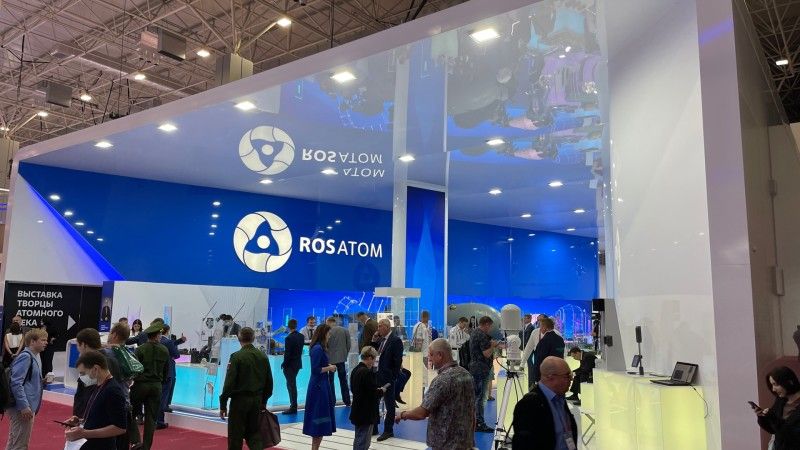
Photo. The official Twitter/ X account of the Rosatom State Corporation
Lower Saxony authorities have approved the expansion of the Lingen nuclear fuel fabrication plant, allowing fuel assembly production under Russian licences. The project, operated by Advanced Nuclear Fuels, a subsidiary of the French company Framatome, relies on technology supplied by TVEL, a subsidiary of the Russian state-owned company Rosatom. The decision has sparked significant political controversy and national security concerns, including the risk of espionage and sabotage by Moscow. Despite criticism from the German Federal Environment Ministry, Lower Saxony officials have stated that, without EU sanctions against the nuclear sector, there are no legal grounds to block the project.
What is the Lingen project?
The Advanced Nuclear Fuels (ANF) plant in Lingen, a subsidiary of the French group Framatome, specialises in the production of fuel assemblies for nuclear power plants. The hexagonal fuel assemblies, which are to be manufactured on the plant’s new production line, are essential for operating Soviet-designed VVER reactors, which are still in use in Central and Eastern European countries and Finland.
As part of the planned project, the French company Framatome and its subsidiary ANF are responsible for the actual assembly, production, and management of the plant. However, the entire process relies on cooperation with TVEL, a subsidiary of the Kremlin-controlled state-owned enterprise Rosatom. In this collaboration, Rosatom is not merely a passive supplier. On the contrary, it acts as a technology licensor, providing machinery, key production components, and intellectual property. The production of fuel assemblies for VVER reactors in Lingen, Germany, therefore represents, de facto, the transfer of an important element of the Russian supply chain to the European Union, while retaining the Russian technological basis of the fuel produced.

Why did Germany approve the controversial project?
The approval of this project perfectly illustrates the discrepancy between political declarations and the strict constraints of the legal system. Politicians at the state and federal levels – including Lower Saxony’s Environment Minister, Christian Meyer – sharply criticised the agreement, deeming it fundamentally flawed from a political and geopolitical perspective in the context of Russia’s war against Ukraine. However, the primacy of administrative law over political declarations prevailed. Because EU sanctions do not cover the nuclear sector and safety assessments showed that potential risks, such as sabotage, could be minimised by imposing strict monitoring conditions, the Lower Saxony Environment Ministry had no legal basis to reject the application under German nuclear law, specifically the Atomic Energy Act.
The economic interests of France and Framatome may also have influenced the broader political context surrounding the project. According to media reports, including a report by Politico, French President Emmanuel Macron raised the issue directly with German Chancellor Friedrich Merz, suggesting that the dispute had reached the highest political level. However, there are no publicly available statements from Macron or Merz, nor are there any official statements from the Élysée Palace or the German government suggesting that France pressured the German authorities to approve the project.
Another argument was the demand from Central and Eastern European countries. Framatome representatives argued that opening a production line in Europe was a temporary solution that would ultimately help end direct fuel imports from Russia, while protecting European nuclear power plants, including those in the Czech Republic, Hungary, and Bulgaria, which remain heavily dependent on Russian-designed technology, from supply disruptions.
This situation clearly demonstrates the disconnect between French industrial pragmatism, aimed at securing the market, and Germany’s anti-nuclear policy. It raises a fundamental question about who is actually shaping European nuclear policy during an energy crisis – individual states, the European Commission, or the largest state-controlled enterprises.

Diversification or dependence in a new form?
The debate surrounding the project is a clash of completely contradictory narratives.
According to Framatome and ANF, domestic production strengthens Europe’s “industrial sovereignty”. Assembly in Germany is intended to eliminate direct purchases of fuel from suppliers in Russia and constitute a key evolutionary step, giving the industry time to fully master this type of technology without Rosatom’s involvement by around 2030.
On the other hand, critics, including the Greens, some members of the CDU, and independent think tanks such as DiXi Group, consider this explanation exceptionally naive and even dangerous. They argue that EU member states’ dependence on Russian nuclear fuel is not disappearing. On the contrary, it is merely changing form. Europe would no longer purchase finished fuel assemblies from Russia but would instead use Russian machinery, licences, and certificates within European territory, which would consequently continue to generate revenue for Moscow (“filling Putin’s coffers”) and pose a risk of infiltration of sensitive critical infrastructure. Critics also note that a fully independent alternative to Russian fuel could be cooperation with the American company Westinghouse. Westinghouse has developed its own fuel assembly technology for Soviet-designed VVER reactors and currently supplies VVER fuel to Ukraine, Bulgaria, and Finland, while also holding supply agreements with operators in the Czech Republic and Hungary. This debate therefore raises the question of whether the German authorities’ decision represents genuine diversification or merely preserves dependence on Rosatom in a different form.
Why has the European nuclear sector remained exempt from sanctions?
Unlike the drastic restrictions imposed on Russian oil and gas following Russia’s invasion of Ukraine in 2022, much of the European civilian nuclear energy sector’s cooperation with Russia – including uranium imports and dealings with Rosatom – remains outside the scope of EU sanctions.
The lack of comprehensive EU sanctions is largely due to opposition from member states that remain dependent on Russian nuclear technology, particularly Hungary and Slovakia. Several EU countries, including Hungary, Slovakia, Bulgaria, the Czech Republic, and Finland, still operate Russian- or Soviet-designed reactors. They have been concerned about disruptions to their domestic energy supplies if cooperation with Rosatom were suddenly interrupted by an embargo. There are several reasons for this. First, adapting reactors to alternative fuel suppliers takes years and requires significant investment. Moreover, Rosatom is not only a fuel supplier but also a designer and builder of new reactors, such as those planned for Paks II in Hungary, and a provider of maintenance and other technical services for operating nuclear units.
For this reason, the German authorities, despite their political opposition to the cooperation, had to approve the application. They also openly acknowledged that, although Germany is strongly advocating comprehensive EU sanctions against the Russian nuclear sector, Rosatom will continue to benefit from its technological involvement in the EU until member states reach the necessary agreement and EU-wide restrictions come into force.
See also 

Rosatom as an instrument of Russian state policy
Rosatom is no ordinary commercial supplier. It is fully controlled by the Kremlin and constitutes one of Moscow’s most important strategic assets, and has even been dubbed its “crown jewel.” The company’s activities are therefore strictly subordinated to the foreign policy goals of the Russian state, which officially recognises the European Union, and Germany in particular, as its adversaries.
Technological dependence in the nuclear sector therefore primarily serves to build long-term influence, not unconditional aid to third countries. European politicians, including those in Germany, openly point out that Russia uses raw materials and energy as a weapon. Nuclear contracts, including those based on licences for the production of components for Soviet-era VVER reactors, make European countries dependent, exposing them to blackmail. Furthermore, this advantage is compounded by the fact that Russia controls a significant portion of the global uranium supply chain, including through its influence in post-Soviet states such as Kazakhstan. The state-owned giant’s profits from the European market are deeply controversial from a strategic perspective. Critics point out that allowing Rosatom to expand its operations in the EU is hypocritical, as every euro earned by the corporation directly feeds into Russia’s defence budget (“Putin’s treasury”), supporting the country’s aggressive war effort.
Risks of intelligence and sabotage
Cooperation with the Russian giant on Western critical infrastructure also raises serious security concerns. Critics, including the Green Party, warn that the project will allow Moscow to obtain information about highly sensitive nuclear facilities located in Germany. Services and experts have analysed, among other things, the risks of cyberattacks, potential sabotage, and manipulation of Russian machines, software, and fuel rods. Concerns have also been raised that Russian personnel could gain access to crucial security data through simple technical contacts. Representatives of the German parliament have explicitly warned that the Russians are attempting to find indirect ways to maintain control over key elements of Western critical infrastructure.
Despite these allegations, German federal authorities have stated that the project does not pose a sufficient risk of espionage or sabotage to legally withhold consent under nuclear law.
Russian technology without Russians? Cooperation mechanism with TVEL
Because nuclear infrastructure is considered critical, the authorities have imposed numerous restrictions on licensing. Rosatom and TVEL employees are prohibited from accessing the Lingen nuclear power plant. Exceptions are possible only in specific, precisely defined cases and only when accompanied by a German supervisory inspector.
The cooperation is therefore based on a model that permanently excludes Russians but does not eliminate technological dependence. Lingen uses Russian technical licences for fuel production. The Russian company supplied the production equipment, procedures, and relevant software on which the plant relies. To minimise cybersecurity risks, all software and devices supplied from Russia must undergo external audits and be strictly isolated from the rest of the plant’s IT infrastructure. Furthermore, all Russian fuel rods imported for production will be certified and regularly checked for tampering using special scanners, in accordance with the “four-eyes” principle. In turn, employees at Lingen will receive regular training to protect the plant from sabotage, espionage, and potential Russian recruitment. However, given the nature of modern hybrid threats, a key analytical question arises: is denying Russian personnel physical access sufficient for a project based on Russian equipment, documentation, and intellectual property?
The paradox of German energy policy
The approval of the Lingen nuclear power plant reveals a glaring paradox and inconsistency in German policy. On the one hand, Germany finally closed its last nuclear power plants in 2023. On the other hand, it did not completely eliminate the nuclear industry, treating fuel production plants (such as ANF) as separate legal entities with their own licences. As a result, a country that abandoned nuclear power for safety reasons allows fuel for foreign reactors to be produced on its territory, even using Russian technology.
It would be difficult to find a more glaring example of risk export. Germany retains its industrial benefits – the Lingen plant now employs 420 people (an increase of almost a third in recent years) – but it is local communities and politicians like Christian Meyer who are grappling with fears of espionage and sabotage. Furthermore, this decision drastically undermines the credibility of Berlin and the entire European Union. As critics point out, agreeing to cooperate with the Kremlin’s “crown jewel” is hypocritical and weakens Europe. Although sanctions have been imposed on banks, energy exporters, and oligarchs, the nuclear sector continues to allow Russia to operate legally.

Consequences for EU energy security
When analysing the impact of this decision, a clear distinction must be made between short-term and long-term effects.
According to the manufacturer, the transfer of production to Germany aims to stabilise fuel supplies for operators in Central and Eastern Europe, thus strengthening the EU’s industrial sovereignty and reducing the risk of an energy crisis in the event of a sudden disruption to supply chains from Russia.
However, from a long-term perspective, it may seem that maintaining cooperation with Rosatom risks perpetuating de facto technological dependence, which in turn leaves Germany and Europe vulnerable to blackmail while simultaneously boosting Putin’s coffers. At the same time, given the existence of Western alternatives such as Westinghouse, it is increasingly difficult to argue that supply security over the next few years justifies maintaining Russian technological dependence.


