












- ANALIZA
- WIADOMOŚCI
The economic crisis in Russia is becoming more visible

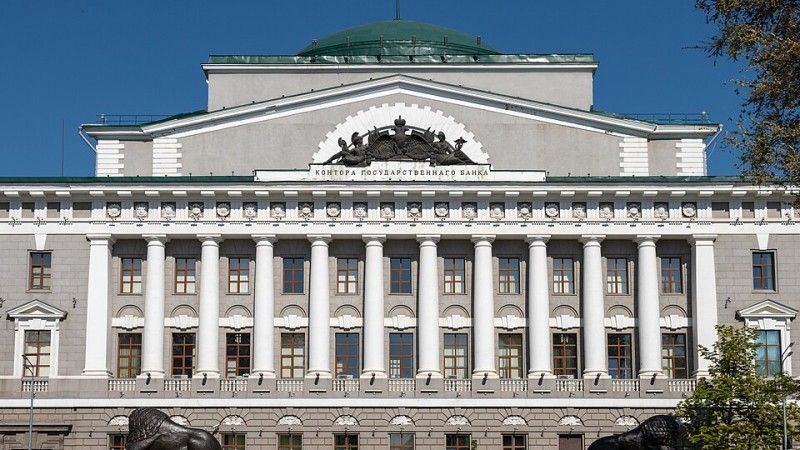
Photo. Vyacheslav Argenberg / Wikimedia Commons
Last week, the Central Bank of the Russian Federation lowered its GDP growth forecast to 0.0-1.0%. The downward revision of expectations is related to the current fuel crisis as well as price increases across many goods and services.
As Central Bank Governor Elvira Nabiullina noted, Russia is facing a temporary reduction in production capacities, while real-time data suggest that businesses expect demand to weaken. Against this backdrop, the Bank of Russia revised its 2026 GDP growth forecast downward from 0.5-1.5% to 0.0-1.0%, reflecting the country’s increasingly challenging economic outlook.
Furthermore, it was announced that the inflation forecast for this year is estimated at 6.0–7.0%. This is connected with the rise in fuel prices as well as an increase in prices for other goods. According to previous estimates, inflation was supposed to slow to 4.5–5.5%. Nevertheless, analysts expect that inflation will increase further because of fuel shortages resulting from Ukrainian attacks on energy infrastructure.
Moreover, the Bank of Russia cut its key interest rate to 14%. For many economists, this decision was a surprise because they expected that the institution would keep its key interest rate unchanged.

Background of the current economic crisis in Russia
The current economic difficulties facing Russia are closely linked to the consequences of the full-scale invasion of Ukraine and the sanctions imposed by Western countries. Following this, the European Union and the United States imposed comprehensive sanctions on Russia’s economic sectors. One of the key targets of these economic restrictions was the Russian oil industry. This is because crude oil is a critical source of revenue for the Russian economy. Compared to other natural resources such as gas or coal, crude oil was the most stable and dominant component of fossil fuel export revenues.
Initially, during the first few months of the full-scale war, Russia was able to generate very large budget surpluses thanks to high oil prices on the market. Nevertheless, in the following years, this trend changed. Moscow is currently dealing with a number of economic consequences of the war and restrictive measures. According to analyses conducted by several think tanks and research institutions, sanctions have reduced Russia’s export revenues and undermined the country’s long-term economic growth potential. This situation has recently intensified as a result of Ukraine’s attacks on Russian refineries, fuel depots, and logistics centers.
It is worth noting that already in December 2024, Vladimir Putin acknowledged that inflation and economic overheating represented significant challenges for the country. In October 2024, to curb inflationary pressures, the Russian Central Bank raised interest rates to 21%, reaching their highest level since the beginning of the twenty-first century. Another issue that became increasingly apparent was the growing indebtedness of Russian enterprises, a trend that accelerated during the war. In 2023, Russian factories operated at approximately 80% of their production capacity due to labor shortages and constraints in the supply of raw materials.

However, in the long term, the sanctions have not achieved their intended goals – they did not lead to the collapse of the Russian economy and, consequently, to an end to the war. Certainly, they are contributing to a decline in revenue from Russian hydrocarbon sales, thereby limiting Russia’s ability to finance military operations, despite the use of a shadow fleet and the redirection of hydrocarbon exports to China, India, and Türkiye.
Nevertheless, recent economic data show that the economy’s resilience is becoming increasingly fragile. In 2024, Russia’s real GDP growth reached 4.3%, exceeding the International Monetary Fund’s initial forecast of 2.6%. However, this situation was related to state-driven economic growth, closely linked to military production. According to research by the International Institute for Strategic Studies, Russia’s defense budget accounted for 3.6% of GDP in 2021, prior to the full-scale invasion, whereas by 2025 it had risen to approximately 7.3% of GDP. Despite the continuing increase in military spending, economic growth has slowed significantly.
The IMF estimated GDP growth at only 0.6% in 2025, a projection supported by data for the second quarter of 2025, when the economy expanded by just 1.1%, compared to 4% during the corresponding period of the previous year. For 2026, both the IMF and the World Bank forecast Russian GDP growth of approximately 1%, indicating a period of economic slowdown. According to last week’s projections, GDP growth is forecast to be between 0.0% and 1.0%, indicating that the Russian economy is facing serious structural challenges.
See also 

Summary and outlook for the future
Even though the sanctions did not lead to the collapse of the Russian economy, they have contributed to the current crisis, which has been further exacerbated by fuel shortages resulting from Ukrainian long-range attacks. At present, Moscow is struggling with a likely recession, which poses a challenge not only for ordinary citizens but also, and above all, for policymakers. Although a severe economic downturn is not inevitable, the outlook remains increasingly negative.
Without a doubt, it is important to monitor the domestic situation in the Russian Federation as it will have a major impact on the country’s foreign policy decisions.


