












- WIADOMOŚCI
- PILNE
U.S. deploys Marines to Iran

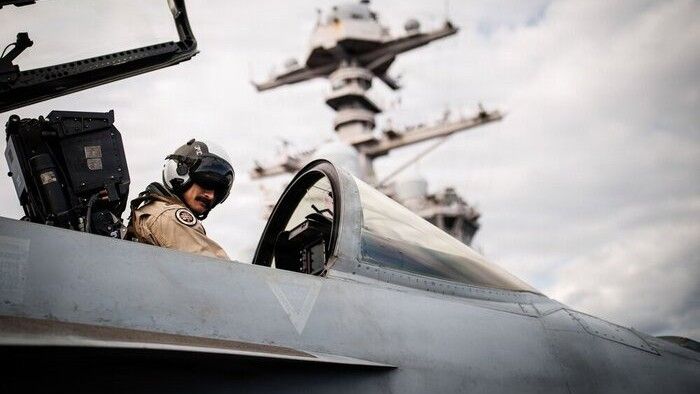
The United States is increasing its military presence in the Middle East, with the amphibious assault ship USS Tripoli and a Marine Expeditionary Unit set to deploy to the region. The decision raises questions about the future course of Operation Epic Fury and whether the move will prove militarily consequential.
Strengthening the U.S. military presence
The decision to deploy additional forces was taken by the U.S. Central Command (CENTCOM) in coordination with U.S. Secretary of Defense Pete Hegseth. As a result, an amphibious task group together with the 31st Marine Expeditionary Unit (MEU) will be deployed to the region. The decision was taken against the backdrop of recent escalation, including the bombing of Kharg Island.
These units will be deployed across several vessels, most notably the USS Tripoli, an amphibious assault ship normally stationed in Japan. The additional force package is estimated to include around 5,000 sailors and marines, equipped with capabilities for conducting amphibious operations, securing strategic infrastructure, and supporting maritime and air operations.
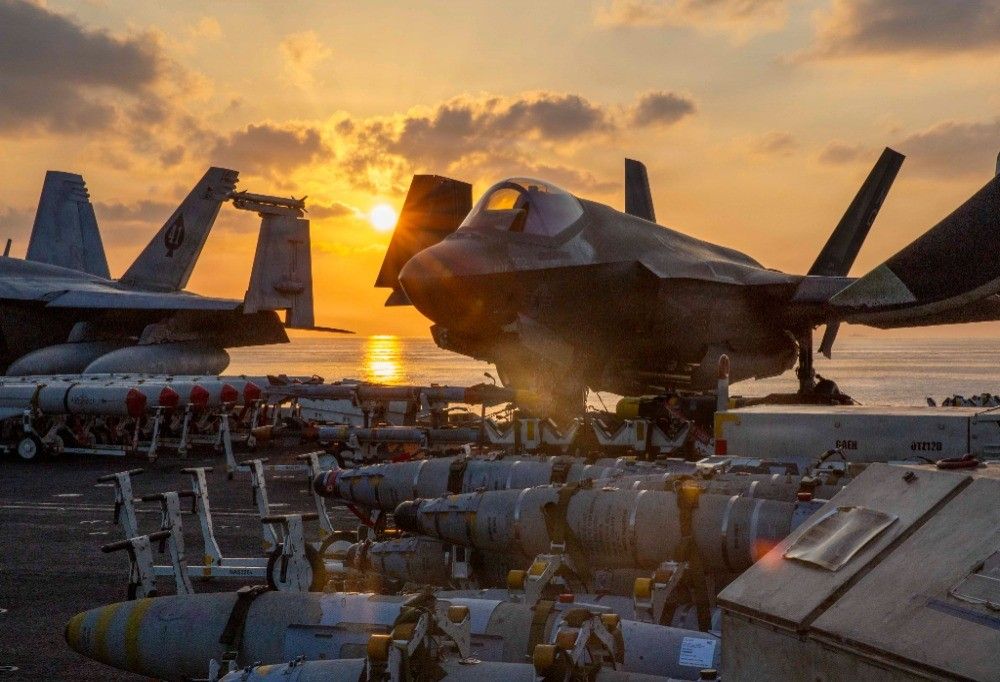
Possible scenarios – escalation or stabilisation?
The deployment of a Marine Expeditionary Unit may have significant implications for the future course of the operation. Such units are primarily designed for amphibious operations, allowing the United States to operate both in the maritime and land domains.
On the one hand, the move could signal a potential escalation of the conflict, including the possibility of limited ground operations. On the other hand, it is important to note that MEUs are not used exclusively for offensive missions. They also perform tasks related to the evacuation of civilians, crisis response, humanitarian operations, and the protection of diplomatic facilities.

In this context, several possible scenarios for the further development of the conflict emerge. The first assumes a limited stabilisation mission focused on protecting maritime traffic, deterring Iran, and securing critical infrastructure as well as American citizens.
The second scenario would involve a limited expansion of military operations, including the neutralisation of Iranian anti-ship systems deployed near the Strait of Hormuz.
The third, most escalatory scenario, would involve the possibility of limited ground operations. Such a development would, however, carry the risk of increased casualties and a significant risk for further escalation of the conflict in the region.
See also 

Prospects for the further development of the conflict
The growing number of casualties suffered by U.S. forces, combined with the sensitivity of the American political system to military losses, may favor a strategy based on the limited use of force, relying primarily on air strikes and maritime operations.
This does not mean, however, that a scenario of further ground escalation can be completely ruled out. The deployment of a Marine Expeditionary Unit increases the operational flexibility of the United States and provides Washington with the ability to rapidly shift from deterrence to more direct military operations.
The presence of these forces therefore not only serves as a security reinforcement but also as an instrument of strategic pressure on Iran. The way these units will be used in the coming weeks may largely determine whether the conflict ends in the near term or continues to drag on.


