












- WIADOMOŚCI
- ANALIZA
Tomahawks for Poland. How to launch an American cruise missile?

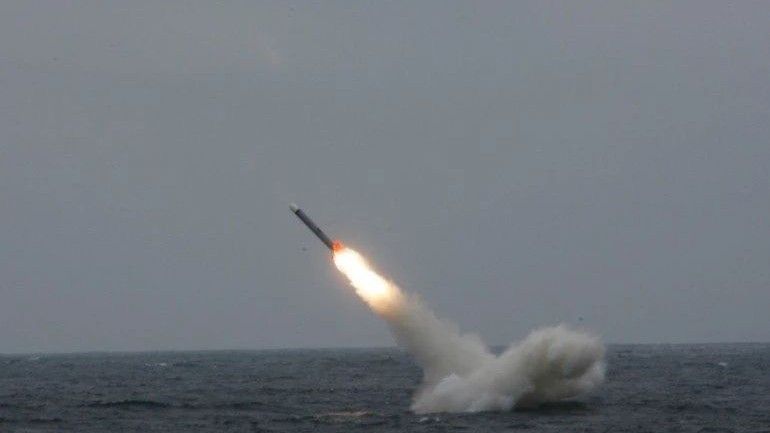
The Polish Ministry of National Defence’s plans to purchase Tomahawk cruise missiles have generated considerable interest. However, these weapons form part of broader weapon systems. Could Poland’s Miecznik frigates and Orka submarines launch Tomahawks, or would the country have to rely exclusively on American land-based launchers?
On Tuesday, 10 November, Deputy Prime Minister and Minister of National Defence Władysław Kosiniak-Kamysz met US Secretary of Defense Pete Hegseth in Washington. One of the topics discussed was the Polish Ministry of National Defence’s interest in purchasing Tomahawk cruise missiles together with launchers. On 11 November, Poland’s Independence Day, Kosiniak-Kamysz revealed that the Polish government had submitted an enquiry to the United States several months earlier. According to the Deputy Prime Minister, the talks are „progressing very well”. The matter was also addressed by Paweł Bejda, Secretary of State at the Ministry of National Defence, who suggested that Congress could decide whether to approve the sale of the Tomahawk system to Poland at the beginning of next year.
See also 
It should be emphasised that the Polish Ministry of National Defence’s interest, together with the favourable attitude of the US executive authorities and the Pentagon towards a potential transaction, does not mean that Congress will automatically approve the sale of Tomahawks to Poland. It remains unknown how many missiles and launchers the Polish Ministry of Defence is considering acquiring. It is also impossible to speculate about the cost of such a transaction or the time required to fulfil the order. For these reasons, the only reasonable area for consideration is the potential launch systems in which Poland might be interested. It is worth noting that, apart from the US Army and US Navy, the Tomahawk system is operated exclusively by the navies of close American allies: Australia, Japan, the Netherlands and the United Kingdom.
Combat-proven
The Tomahawk is a subsonic, jet-powered cruise missile equipped with advanced navigation and guidance systems. It is manufactured by Raytheon, part of RTX. The current Block IV and Block V variants, powered by the Williams F415 engine, have a range of approximately 1,600 km. The WDU-36/B warhead weighs 313 kg, of which 120 kg constitutes the explosive charge. In the United States, Tomahawks are carried by surface warships, including Arleigh Burke-class destroyers, and submarines, such as Virginia-class attack submarines. The United States has also acquired a land-based variant for the Mk 70 Mod 1 Payload Delivery System (PDS) launchers used by the US Navy, as well as the Typhon Mid-Range Capability (MRC), a variant intended for the US Army.
In the past, the United States developed a Tomahawk variant intended to be carried by multirole combat aircraft, but the programme was eventually abandoned. Today, the role originally envisaged for the air-launched Tomahawk is fulfilled in the US Air Force by various versions of the AGM-158 Joint Air-to-Surface Standoff Missile (JASSM), manufactured by Lockheed Martin. This weapon is also in service with the Polish Air Force, where it is carried by F-16C/D Jastrząb and F-35A Husarz aircraft. In the 1990s, the US Air Force also operated BGM-109G Gryphon launchers, which were integrated with a Tomahawk variant equipped with a W84 variable-yield thermonuclear warhead. These systems were withdrawn from service several years after the United States and the Soviet Union signed the Intermediate-Range Nuclear Forces (INF) Treaty.
Only for allies
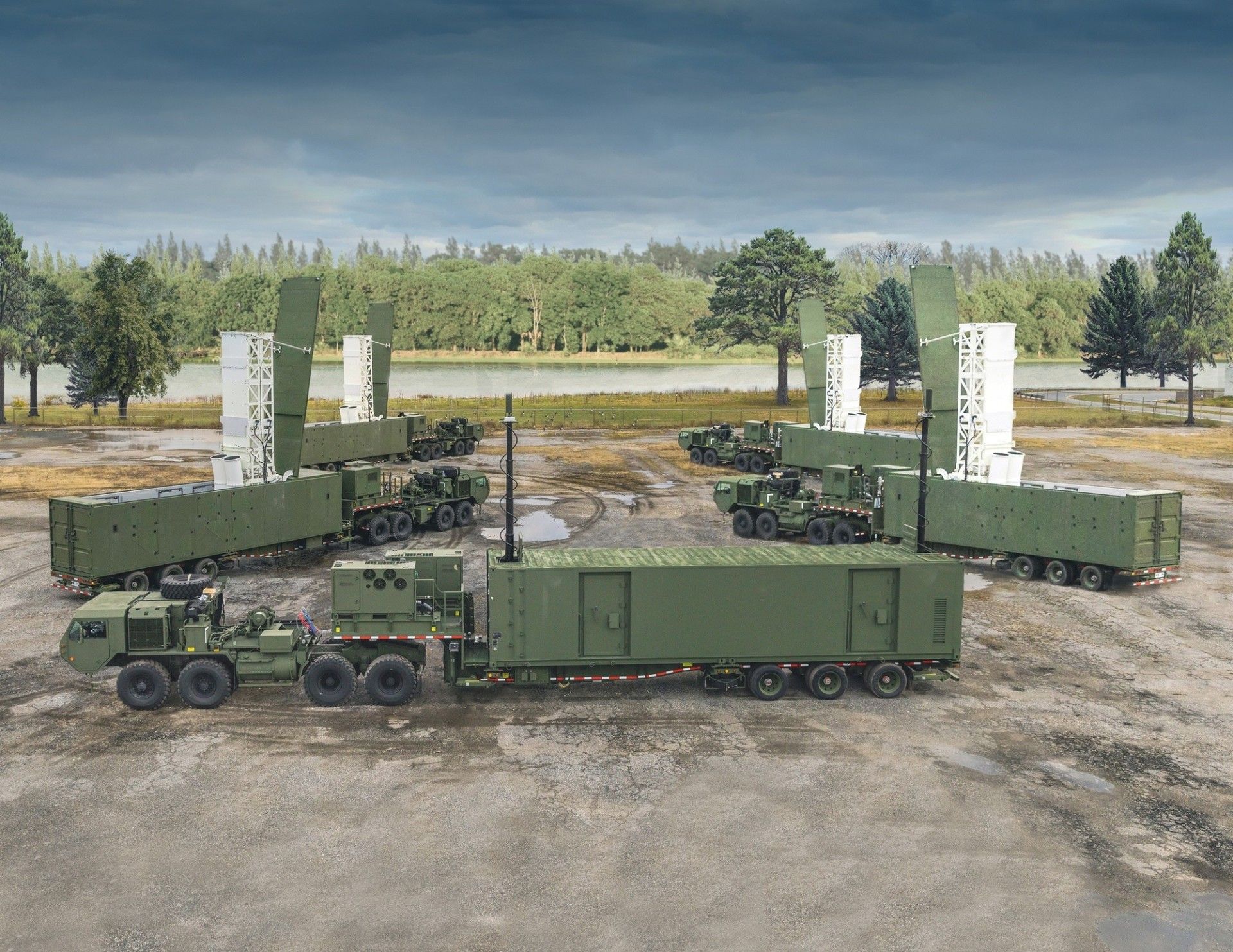
American surface warships, including the aforementioned Arleigh Burke-class destroyers, carry Tomahawk missiles in Mk 41 Vertical Launch System (VLS) launchers in the Strike configuration, which are approximately seven metres long. The previously mentioned land-based Mk 70 and Typhon systems are variants of the Mk 41 VLS, featuring four Strike-length launch cells housed inside a 40-foot ISO container. Land-based Tomahawks are transported horizontally. When the launcher is deployed at a firing position, the missiles are raised vertically before launch. Submarines, including Los Angeles- and Virginia-class attack submarines and Ohio-class strategic submarines, can launch Tomahawks from underwater using either vertical launch systems or 533 mm torpedo tubes.

The Royal Australian Navy (RAN) operates Block IV and Block V Tomahawk missiles aboard its Hobart-class destroyers. These vessels are equipped with 48-cell Mk 41 launchers and the American Aegis combat management system. The Japan Maritime Self-Defense Force (Kaijō Jieitai) has adopted a similar approach, using its large Kongō-class destroyers as launch platforms. These vessels are also equipped with the Aegis system and Mk 41 launchers, although in this case they have 90 launch cells. Meanwhile, the Royal Netherlands Navy (Koninklijke Marine) has integrated Tomahawk missiles with its De Zeven Provinciën-class frigates, which have 40-cell Mk 41 launchers, although their combat management system was developed by Thales Nederland. The British Royal Navy uses Tomahawk missiles launched from the 533 mm torpedo tubes of its Astute-class attack submarines.
Orka without Tomahawks
Poland may be interested in Tomahawk Block IV or Block V missiles, as well as two potential launch systems: Wicher-class frigates and land-based launchers. The submarine-launched variant can be ruled out with a high degree of confidence for several reasons. Firstly, according to available information, the Polish A26 submarines being built in Sweden will not be equipped with a hydropneumatic weapon launch system for their 533 mm torpedo tubes, commonly referred to as a „push-out” system. Secondly, the three submarines ordered under the Orka programme will not be equipped with vertical launch systems. These factors make it impossible to integrate Tomahawk missiles with A26 submarines, at least in their current configuration.
Another fundamental problem concerns the availability of the submarine-launched Tomahawk variant. Last year, the Dutch government’s press office (Rijksoverheid) announced that the Netherlands had abandoned plans to integrate these weapons with its Walrus-class submarines and the new Orka-class vessels ordered from France (the similarity between their name and Poland’s Orka programme is purely coincidental). The reason was the need to restart production of this Tomahawk variant, which would result in high unit costs and long delivery times for weapons supplied by the United States. It is also unclear whether the Americans would agree to integrate the missiles with a French naval combat management system.
Launching from the surface
This brings us back to the starting point: the potential integration of Tomahawk missiles with Poland’s Wicher-class frigates, which will be equipped with 32-cell Mk 41 launchers in the Strike configuration. The three vessels being built under the Miecznik programme will therefore be physically capable of carrying and launching American cruise missiles. A separate issue is the ability to integrate the Tomahawk with the ships’ onboard electronics. The new Polish frigates will be equipped with the Thales TACTICOS combat management system, which is related to the system installed aboard the aforementioned Dutch frigates. It remains unclear whether integrating Tomahawks with Wicher-class vessels would have to be carried out “from scratch” or what costs Poland would incur in the process.
Purchasing land-based launchers would involve fewer complications. One particularly important feature of the Typhon and Mk 70 Mod 1 systems is that, in addition to Tomahawks, they can also launch RIM-174 Standard Extended Range Active Missiles (ERAM), otherwise known as Standard Missile 6 (SM-6). Furthermore, work is underway to integrate the SM-6 with the Lower Tier Air and Missile Defense Sensor (LTAMDS) radar and the Integrated Battle Command System (IBCS), the new American air defence battle management system. Poland has already purchased both of these solutions. If, alongside cruise missiles, the Ministry of National Defence were to request approval to purchase SM-6 missiles, land-based Tomahawk launchers could simultaneously become the highest tier of Poland’s air defence system.


