- WIADOMOŚCI
- ANALIZA
Sanctions on paper, billions still flowing: Deutsche Bank and Russian money

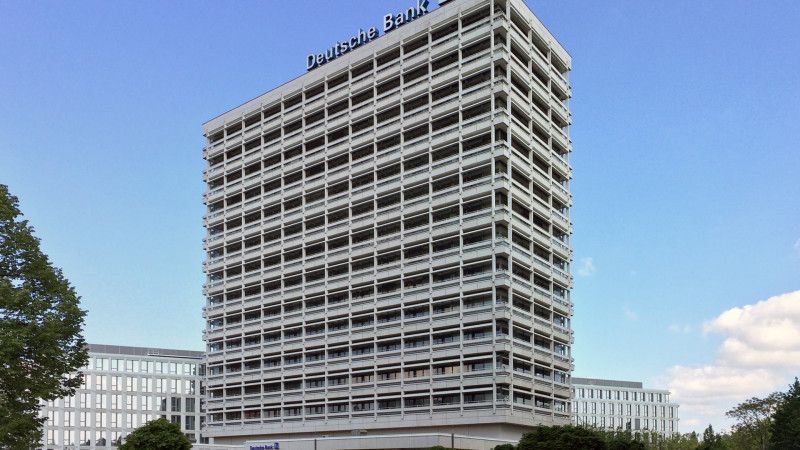
An international journalistic consortium has published the results of an analysis of over 15 million internal Deutsche Bank documents. The material, provided by two whistleblowers, includes emails, minutes, due diligence reports, and risk analyses dating after 2010. The documents reveal that Germany’s largest bank maintained relationships with oligarchs close to the Kremlin and companies partially controlled by them, even after sanctions were imposed and around the time of the full-scale aggression against Ukraine in 2022.
This provides concrete, documented evidence that the German financial system—for years a primary conduit for Russian capital in Europe—systematically prioritised profit over the warnings of its own services.
The analysis of this data was made possible by… a leak of banking data that revealed numerous links to Russian oligarchs. According to the weekly „Der Spiegel”, this is likely the largest known banking data leak in the world. Whistleblowers provided the documents to editorial offices. The materials originate primarily from Deutsche Bank departments responsible for anti-financial crime, as well as those handling high-risk clients and transactions. The international journalistic investigation, titled „Inside Deutsche Bank”, also involved the German television station ZDF, as well as daily newspapers including the American „New York Times”, the British „Financial Times”, and the French „Le Monde”.

Revealed documents show that in April 2021, Deutsche Bank decided to expand its operations in Russia. This decision was made despite the fact that a few months earlier, lawyers appointed by the New York financial regulator had recommended that the bank urgently consider suspending its Russia-related activities. Internal audits revealed suspicious fund flows, the beneficiaries of which may have been oligarchs from the inner circle of Russian leader Vladimir Putin.
According to the documents, at the end of 2020, the bank was serving at least 46 Russian oligarchs, including Roman Abramovich and Alexei Mordashov. Just weeks before Russia launched its full-scale war against Ukraine, Deutsche Bank was granting Russia’s Sberbank short-term loans amounting to millions of euros. In a statement provided to „Spiegel”, the bank claimed that it had significantly reduced its operations in Russia since 2014, and that subsequent transactions were entered into selectively and subjected to strict control.
Russian money in the German system
The materials show that Deutsche Bank continued to serve, among others, Sibur (Russia’s largest petrochemical concern) and Polyus even after sanctions were imposed on their partial owners. In the case of Sibur, a 14.5% stake belonged to Gennady Timchenko (subject to US and Canadian sanctions since 2018), and the shareholders also included Kirill Shamalov, identified as Vladimir Putin’s former son-in-law. An internal bank memo admitted that Sibur’s success was largely due to Timchenko’s political connections. The bank, however, did not sever the relationship, arguing that sanctions on shareholders do not block cooperation with a company as long as their combined stake does not exceed 50%.

Particularly telling is the case of a €1.1 billion transfer in mid-2020. The funds moved from the Russian accounts of a company registered in the British Virgin Islands to Swiss accounts. An internal bank investigation indicated that the beneficiary was intended to be Suleyman Kerimov—who was already under US sanctions at the time. The bank also included Oleg Deripaska, Viktor Vekselberg, and others among its „most sensitive clients”. In 2020, an internal review indicated that among approximately 160 Russian clients, 17 were on the US Treasury Department’s list of oligarchs and individuals close to the Kremlin—they generated nearly half of the revenue from this segment.
The documents also show that under the leadership of Christian Sewing, the bank considered expanding its Russian business as late as 2021, despite warnings. After the annexation of Crimea in 2014, part of the operations were moved to Switzerland and Luxembourg, where stronger banking secrecy rules apply.
Ignoring risk for profit
It is not as if Deutsche Bank had not received warnings before, as such warnings did appear. However, revenue and competition remained the priorities. It is also no secret that Deutsche Bank had previously been linked to Russian money laundering.
Such an attitude is, however, symptomatic. It shows that in the German model of relations with Russia, economic and financial interests long dominated security calculations. This is not exclusively a problem of one bank—it is part of a broader culture in which Russian capital was treated as a normal element of the European financial circulation, and sanctions as a technical obstacle to be bypassed rather than a strategic tool.
What does this mean for the eastern flank and Poland?
The effectiveness of Western sanctions against Russia depends largely on whether the EU’s largest financial institutions actually enforce them. The leak shows that in the case of Deutsche Bank, enforcement was at the very least incomplete. Every billion euros that circulated in the European banking system over the years strengthened the Kremlin’s ability to finance the war, maintain influence networks, and evade isolation.
For Poland and the states of NATO’s eastern flank, this has direct significance. Germany is a key logistical state for the Alliance. If Russian capital continued to find channels in its financial system even after 2022, it naturally raises questions about the resilience of the entire European financial ecosystem to Russia’s hybrid activities.
Another mark against Berlin's reputation
There are no grounds to claim that Deutsche Bank deliberately helped Russia bypass sanctions in a systemic way following the full-scale invasion. The bank formally withdrew from Russia in 2022, and its credit exposure to the country fell dramatically. However, the documents reveal that the culture of prioritising profit over risk was deeply rooted, and control mechanisms were insufficient.
It is also worth adding that this is not the first instance where German safeguards have simply failed. In October, a report by the German military counter-intelligence service (MAD – Militärischer Abschirmdienst) was released, identifying Germany as a priority target for Russian espionage and hybrid activities. Risks related to Bundeswehr soldiers travelling to Russia and Belarus, as well as growing extremism, have also emerged. The Deutsche Bank leak provides a financial supplement to this diagnosis. Russian influence is not limited to information operations, espionage, or sabotage below the threshold of war. It also has a lasting capital dimension—and in an institution of systemic importance to the economy of the EU’s largest country.