


- WIADOMOŚCI
- WYWIADY
The art of conversation in hostage crises: How Poland’s negotiator saves lives

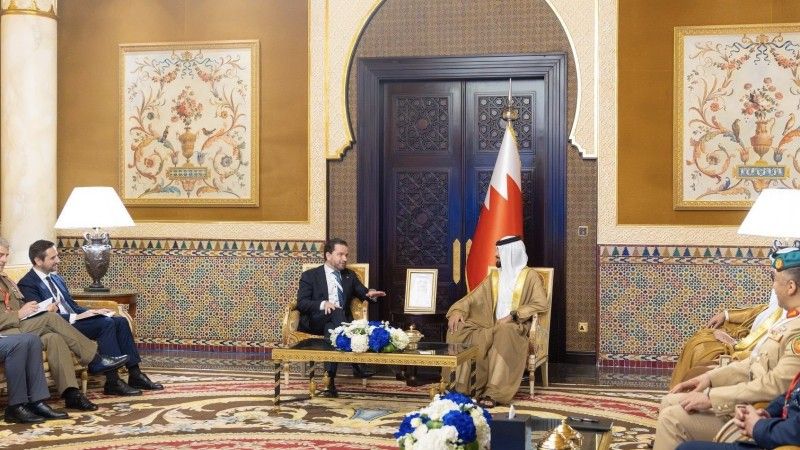
Sometimes, a single conversation can mean the difference between life and death. InfoSecurity24.pl spoke with Jakub Głowaczewski, a negotiator for the Polish government who has dealt with heads of state, intelligence chiefs, generals, and even members of terrorist organisations. Often, the outcome of his negotiations determines whether a Polish citizen detained abroad is freed.
Imagine you’re a young Polish doctor providing medical care in southern Chad. One day, some men come to your clinic and kidnap you. They probably want to sell you to the Wagner Group. Or you are a tourist in Burkina Faso, dragged off a bus and abducted by al-Qaeda militants. Or a Polish citizen, wrongly accused of espionage and facing a likely death sentence in one of the world’s harshest prisons in the Democratic Republic of Congo.
Your future depends on whether the negotiator Poland sends can reach an agreement with the decision-makers on your case.
Sounds like something out of a movie? Perhaps. But for one Polish government official, such cases are all too familiar. Jakub Głowaczewski is an international negotiator who’s sat across the table from presidents, warlords, and the emissaries of terrorist groups and criminal organisations throughout Africa and the Middle East.
Julia Zalewska-Biziuk: How do you negotiate with people like that?
Jakub Głowaczewski: Whenever I visit, say, a country in the Sahel, let’s be honest – Poland has little in common with it. Language, religion, customs, culture, history: almost everything sets us apart. Once, the president of such a country told me it was the first time in his life he had met a Pole.
If I’m there because something happened, the person I’m seeing already knows it – I don’t have to explain. That’s why I don’t really prepare for these talks.
When I walk into the room, I never know how the talks will go. Those first few seconds after the greeting are crucial – that’s when I read the room and decide how to lead the discussion.
There have been times when I’ve arrived at a meeting intending to discuss a specific issue – say, the kidnapping of a Polish citizen – only to spend 80 percent of the time talking about everything but that: history, or the situation in Poland, for example. Often, when I speak with government officials or heads of state, we look for common threads in our countries’ histories. Focusing on what unites us helps build a relationship that goes beyond the immediate problem.

Photo. © Personal collection of Jakub Głowaczewski

Photo. © Personal collection of Jakub Głowaczewski
The key to success is putting yourself in the other person’s shoes – to see the situation from their perspective. When I arrive, I try to understand the position of whoever I’m meeting, including the challenges they face and the problems they’re dealing with. Then I put those concerns into words to show that I understand their situation.
The very act of asking for help – or even discussing whether the person I’m meeting can provide it – has become little more than a formality. Of course they can help. The real question is whether they’re willing to.
Have you ever heard something in those conversations that made you think, “This can’t be real”?
(Laughter) Once, as a gesture of goodwill, the president of Botswana offered to give Poland 1000 elephants – and even proposed to cover part of the transportation costs. He wasn’t joking. While I was there, I called one of our ministers and said, “Listen, the president of Botswana wants to give us 1000 elephants.” He replied, “Ask if they can be armed. We’ll line them up along NATO’s eastern flank.”
Later, after we’d left the president’s office, the head of Botswana’s intelligence service told me they had 20 000 elephants to give away but thought offering that many might scare me off. “So you thought if you said 1000, I wouldn’t be scared?” I asked. “That’s why we offered to cover part of the transportation costs,” he replied.
Besides helping Poles return from abroad, what else does your job entail?
I’m also actively involved in building bilateral relations between Poland and so-called difficult countries. That often includes addressing economic issues. Poles are showing increasing interest in countries in Africa, the Middle East, and South America. As our economy grows, more Polish companies are looking to expand into markets on other continents.

Photo. © Personal collection of Jakub Głowaczewski
That’s why building bilateral relations matters – even if only to ensure that a Polish entrepreneur or a state-owned company can operate safely in the region, knowing they have a political safety net. This kind of support gives businesspeople more opportunities to succeed in such environments. Our Western partners, whose companies operate worldwide, take the same approach.
Are there many people around the world who do what you do?
Not really. The idea of having dedicated negotiators for kidnapping cases is still relatively new. Take the United States: Americans are involved in a significant number of kidnappings and detentions abroad, but until recently, it wasn’t clear who was responsible – the White House, the State Department, or perhaps the Pentagon. It wasn’t until 2016 that the US government created the position of Presidential Special Envoy for Hostage Affairs.
Each year, more countries are following suit. Just this year, for example, Canada appointed its first deputy minister specifically responsible for handling kidnappings.
I’d add that we negotiators meet regularly – sometimes at planned gatherings, sometimes more informally. Recently, for example, we all flew to Doha for a meeting held during a major security forum. Much of what we do at these events is about expanding our network of contacts, ensuring we have the relationships needed to do our jobs as effectively as possible.
What backgrounds do international negotiators typically come from?
All sorts. There is no single career path. People sometimes ask me how I ended up doing what I do. My answer is always the same: by chance. I doubt that any negotiator, at least among those I know, ever planned to work in this field.
Many have held senior government positions, though they don’t always remain in public office. Some continue as negotiators or special envoys because of the experience they’ve gained and the relationships they’ve built over the years. Those personal connections can’t simply be passed on to a successor.
Do you work with the intelligence services of other countries?
Of course. They’re the best people to work with. If you want to get things done in the Middle East or Africa, it’s usually much easier to work with the intelligence services than the foreign ministries. In many of these countries, foreign ministries tend to move at a glacial pace, while intelligence agencies often report directly to the president. I have extensive contacts there. These are the people you call when something happens. They are also responsible for my security while I’m there.
How did you end up doing this kind of work?
After graduating, I interned and then worked at the Polish embassy in Beirut. That gave me the chance to build relationships that later proved crucial for developing Poland’s ties with Lebanon and Syria, which was still under Bashar al-Assad’s rule at the time.
Over time, the Polish government began turning to me more often for matters related to the Middle East. This coincided with Europe’s migration crisis, as our government searched for new ways to engage with Damascus. So, largely due to the political circumstances of the moment, I found myself at the centre of it all.
At that time, a large number of people were being detained in Syria. Many were journalists who had crossed the border illegally to report on the country, only to end up in the hands of the Syrian security services. There were some more unexpected cases, too. I recall one man who travelled to Syria to convert Syrians to Christianity. He was also eventually captured by the Syrian secret police.
The relationships we had built beforehand allowed us to reach people who would otherwise have been extremely difficult to reach. They were often willing to help – sometimes even making it possible for detained individuals to return safely to Poland.

Photo. © Personal collection of Jakub Głowaczewski
So it all began in the Middle East. Later, my work expanded into Africa.
Have you ever found yourself negotiating somewhere that felt unsafe?
In 2018, I travelled to Damascus at a time when ISIS was in control of many areas across Syria. I remember conducting negotiations in a bunker while ISIS forces, just 15 kilometres from the city, were shelling Damascus. We sat there talking as bombs fell around us.
I can’t say I felt very comfortable. But the generals sitting with me seemed completely unfazed and just kept talking. I figured if they could stay calm, so could I.
Is it harder to negotiate with ISIS or al-Qaeda?
A few years ago, a Polish citizen was kidnapped in Burkina Faso. The local government informed us that al-Qaeda was responsible. I must admit, I felt a certain sense of relief. Until recently, ISIS had a strict no-negotiation policy, especially with Western governments. It is only now starting to change. Back then, persuading them to talk would have been nearly impossible – a kinetic operation would probably have been the only option.
Al-Qaeda, by contrast, despite its brutality, often keeps its word.
Interestingly, al-Qaeda representatives will sometimes reach out to pass along information. When a citizen from one of our southern neighbours was recently kidnapped, al-Qaeda contacted an acquaintance of mine based in the region. “Tell everyone it wasn’t us,” they said.
How did the kidnapping of the Pole in Burkina Faso happen?
Kidnappings are relatively common there. The young man was travelling by bus from Burkina Faso’s capital to Niger when, at a checkpoint near the Nigerien border, he was forcibly dragged off the bus. His captors then put him on a motorbike and drove off.
Our European partners informed us of the incident after receiving the information from Burkina Faso’s security services.
The case was particularly challenging because Poland has no diplomatic relations with Burkina Faso. Our closest embassy is in Senegal. We flew from Warsaw to Ouagadougou, the capital, where the authorities received us. Later, a staff member from the Polish embassy in Senegal joined us to provide consular assistance.
Officially, no one has contact with terrorist organisations. In reality, though, local security services often do. We held a series of meetings in Ouagadougou, including one with Burkina Faso’s president.
I told the president I was very pleased to meet him, though I regretted the circumstances of our introduction. I added that something good could sometimes come out of a bad situation. After all, under different circumstances, we probably never would have met.
We got along very well. At one point, I reached for a large bag and handed it to the president, saying, “Your Excellency, I have a small gift for you.” Inside was a sculpture of Józef Piłsudski. The president leaned in and asked, “Vodka?” I promised to send him a bottle once I was back in Poland.

Photo. © Personal collection of Jakub Głowaczewski
The president made no specific commitments during our talks but said he would “do what he could” to help secure the release of our kidnapped citizen.
Three weeks later, we received a phone call: they had found the Pole. As I later learned, our meeting with the president had prompted the Burkinabè security services to mobilise. They established contact with the kidnappers and eventually arranged for the young man to be handed over to the authorities.

Photo. © Personal collection of Jakub Głowaczewski
He had been held in a dried-up riverbed in the jungle in the south of the country. Al-Qaeda wanted to avoid a confrontation with the local intelligence services, so the kidnappers left the Pole near the closest police station and told him to walk there.
Has it ever been necessary to use military force to free a Polish citizen?
Yes. There was the case of a young doctor who was kidnapped in southern Chad. She was working at a clinic in a remote area. Several men arrived on two motorbikes, pretending to be patients. They kidnapped her and a Mexican citizen, put them on the motorbikes, and drove off. The Mexican fell off somewhere along the way. The Polish woman was left alone.
It was a race against the clock. The kidnappers belonged to a local group affiliated with ISIS. We suspected they intended to sell her in the Central African Republic, possibly to mercenaries from the Wagner Group.

Photo. © Personal collection of Jakub Głowaczewski
The Chadian authorities acted very quickly, blocking the kidnappers’ route to the border with the Central African Republic. Forced to change course, the kidnappers headed toward the mountains and jungle instead. The president of Chad ordered a high-speed pursuit unit to be dispatched.
Everything unfolded at remarkable speed. The unit travelled day and night, eventually tracking down the kidnappers in the mountains of southern Chad and launching a kinetic operation. The soldiers ambushed the terrorists while they slept. The doctor spotted movement in the grass and was ordered to lie down. She was rescued. The kidnappers were killed.
Why might they have wanted to sell her to the Wagner Group?
This is often how it works. Small groups carry out kidnappings and then try to sell their captives to someone with the capacity to negotiate. A larger organisation will know whom to contact, how to provide proof of life, and how to open negotiations.
Local terrorist groups, by contrast, are often unable to conduct talks themselves. Instead, they profit from kidnappings by handing hostages over to organisations with the expertise and resources to manage ransom negotiations.
Besides meeting the president, what else did you do during your mission in Chad?
I did some field research in Chad. Surprisingly, several Poles live in the capital. A Polish priest based in N’Djamena for more than 20 years was especially helpful. Former members of the French Foreign Legion also live there – many Poles have served in the Legion over the years.
Both former and serving legionnaires know the Francophone world extremely well, especially the countries of the Sahel and Sahara. I met with some of them several times. They explained the intricacies of Chadian politics, including the dynamics around the president, so I could better understand the situation and position myself accordingly.
Who else do you collaborate with on the ground?
I’ve sought help from, or contacted, all sorts of organisations – sometimes rather unexpected ones. On one occasion, I even turned to the Vatican for assistance in a country that was entirely Muslim. The Vatican has maintained a missionary presence in various parts of Africa for many years.
Priests can spend decades in the same region. They know local communities and have strong relationships with them. This makes them an extraordinarily valuable source of information about a place and its people. They can often access information others can’t.
I also work with the Red Cross, which operates globally and understands that building relationships is key to ensuring security for both the organisation and its staff. As a result, it places great importance on establishing and maintaining contacts in the countries where it works. The Red Cross even has a dedicated team for hostage negotiations.
The principle is simple: you contact anyone who might be able to help. It makes little difference whether you’re dealing with a democracy or an authoritarian state. If you’re operating in a country, you need to communicate with those who hold power and can genuinely influence events. You must talk to people on the ground, whoever they are and whatever political system they represent.
Have you ever negotiated with members of the Wagner Group?
No, never. The Wagner Group has largely ceased to exist. However, Russians remain active in the region. I have information from certain sources that they are beginning to kidnap people in the Sahel, posing as various organisations. Sometimes these operations are attributed to local groups, or even to terrorist organisations such as al-Qaeda or ISIS.
How do you initiate communication with terrorist organisations?
In most cases, I try to establish contact through an intermediary. It puts the other side at ease. It helps to have someone they trust who can pass along a message, deliver something they need, or help get things done. An intermediary builds trust and makes establishing contact much easier.
Are there women doing what you do?
Yes. The person recently appointed to Canada’s hostage-negotiation post is a woman. I see absolutely no reason why women shouldn’t hold such positions.
People sometimes assume women are unsuited to this kind of work in Arab countries. But I’ve met women with extraordinary presence and strength of character. So much so that they’re known even in the Arab world as “Iron Ladies,” commanding enormous respect.
Have you ever thought about joining the secret service?
Not really. During my university years, though, I was interested in joining United Nations peacekeeping missions. I considered working in cultural mediation between local communities and the Blue Helmets.
Some people serve as interpreters of cultural codes. They build relationships and explain to local communities why peacekeepers are there and what they hope to achieve. At the same time, they help soldiers understand the cultural norms and rules they need to respect.
Is it an advantage or a challenge to do your job as a civilian?
In many countries, military rank and hierarchy carry significant weight, and uniforms are highly regarded. If I were a retired military officer, it certainly wouldn’t hurt – if anything, it might even be an advantage.

Photo. © Personal collection of Jakub Głowaczewski
I haven’t served in the military or security services. But I’m effective in what I do because I represent the government. My interlocutors tend to see me as someone operating somewhere between politics and security. Naturally, if I were a former general, things might be easier – though I doubt they’d give me the rank. I should ask at work (laughter).
Do you mostly work alone?
This isn’t a one-man business. I’m not some miracle worker flying around the world and sorting everything out on my own. An entire team of highly capable specialists is here in Warsaw. They gather information from other countries and institutions and pass it on to me when I’m working in the field.
I remain in constant contact with them. I keep them informed as the situation evolves. In return, the team provides me with considerable support.
They also stay in touch with the family of the kidnapped person. This is a critical part of crisis management. The family needs to know someone is looking out for them and that they haven’t been left to cope alone.
A crisis occurs, and you must respond. Where do you start?
The foreign ministry sets up a crisis management team. My job is to make sure that, when something happens, I have someone I can call who will actually answer. Having those contacts means I’m starting from a completely different position.
A large part of this job is about building and maintaining relationships. That’s why negotiators work together and have contacts worldwide.
How is a crisis management team put together?
Suppose someone is kidnapped. The minister or deputy minister then forms a crisis management team, bringing together representatives from various ministries, security services, and state institutions. Each member contributes their own expertise, skills, and operational capabilities.
The team stays in constant contact, sharing information and coordinating activities as they work toward a common solution.
What personal qualities are most important in your line of work?
Emotional intelligence is crucial. So is the ability to listen actively, a skill that seems to be gradually disappearing. Too often, when we talk to people, we don’t truly listen. We simply wait for our turn to speak. Many of us have developed this habit.
In this line of work, you need to understand people. You might find yourself talking to individuals who seized power in coups, members of terrorist groups, security-service officials, or representatives of authoritarian regimes. To truly master the art of conversation, you need to understand the person you’re speaking with.
Do you have a go-to negotiating technique?
Whenever I arrive somewhere to secure the release of a kidnapped person, I use the same strategy. I tell my interlocutor, “From this moment, I work for you. We’ll work together until we find a solution we can both accept.”
If someone has kidnapped a person, or represents those holding them, I’m quite direct. I say: “Listen, I’m here for this person. I want to make sure they get home safe and sound. Tell me what we can do to make that happen. How can we work out a solution you can accept? What do you need? Let’s think it through together.”
I don’t arrive with a list of demands or tell the other side what they must do. I come to find a way forward together. For now, I’m on their team – at least until they hand over my citizen.

Photo. © Personal collection of Jakub Głowaczewski
The Americans have also begun using the same technique. They studied the approach closely and found that it could deliver exceptional results.
Think about it from the other side’s perspective. Until now, they’ve dealt with adversaries who arrive and say, “Give us the hostage or face the consequences.” Then, suddenly, someone turns up and says, “Listen, from now on we’re on the same side. Let’s sit down and figure out what needs to be done. I’ll do my best to arrange whatever is necessary on my end.”
The other party’s mindset shifts. Confrontation gives way to cooperation.
What are the biggest pitfalls in your line of work?
I have to operate within certain established boundaries and always keep in mind that, when meeting important people, anything I say could be used against me. That’s why I need to always exercise particular caution.

Photo. © Personal collection of Jakub Głowaczewski
Day to day, I also have to keep a close eye on what’s happening around the world and anticipate changes. With access to a vast amount of information, we try to identify emerging trends and understand where different situations may be headed.
We analyse where conflicts might break out, what political ambitions various parties have, and where tensions could arise that might threaten Poland’s interests or the safety of its citizens. I need to be prepared for any crisis – to know whom I can contact and what steps I might need to take.
During your missions, have you ever seen anything that left a lasting impression?
Many of the places I’ve visited are associated not only with difficult experiences, but also with some surprisingly positive observations. I remember visiting refugee camps and meeting children who, despite having almost nothing, were probably the happiest I’d ever seen. It’s extraordinary how, even in such challenging circumstances, they can retain such natural joy and ready smiles. It made a tremendous impression on me.
Of course, there is another side to it. The poverty in refugee camps is immense.
I’ve also met many wonderful, open-hearted people in countries that are far from easy places to live. Just visiting a market or town square in the Sahara – or anywhere else in Africa – can be enough to experience extraordinary, sometimes even legendary, hospitality.
When meeting high-level government officials, have you encountered any customs or aspects of other cultures that initially surprised you?
In Arab countries, men often hold hands while walking. I experienced this myself when I visited one such country. The head of the security service – a general who commanded enormous respect – held my hand as we walked through the presidential palace to meet the president.
To us, that might seem rather unusual, wouldn’t it? Something similar happens during meetings with intelligence chiefs in North African countries. When we pose for a photograph, the head of the service might take my hand and stand beside me. It’s perfectly normal – the gesture simply means: “This is my brother.”

Photo. © Personal collection of Jakub Głowaczewski
If you left your job, could someone step into your role?
I hope so. There’s no point pretending this job doesn’t involve sacrifices. You have to be available almost around the clock, seven days a week. I was on holiday once when I got a call saying a crisis had erupted. My response was: “Right, I’ll pack my bags. I’ll be there tomorrow.”
Of course, I could refuse. But what’s the point of sitting on a beach when I know I’m needed elsewhere? It wouldn’t feel much like a holiday. In this job, you have to be available.
That’s the first thing. Second, it’s not a job you do for the money. It requires considerable personal sacrifice, so you have to genuinely enjoy it. It’s not a nine-to-five job – it means weekends and late-night conversations with all sorts of people.
Do you ever have a typical nine-to-five working day?
Yes, of course. There are days like that. It all depends on how busy things are at the time. When a lot is going on, my working hours become very flexible.
I’m still a member of the civil service, so I usually come into the office. I need to be somewhere with access to documents and information – often classified – as well as work phones and email. That’s where I can do my job. But no one expects me to sit at my desk just for its own sake.
My most significant contribution to my country begins when I’m abroad – that’s where I do my most impactful work. Much of what I do in Poland is preparation: negotiations, follow-up, and maintaining contacts. It’s all aimed at making sure I can travel to the country in question and have the necessary talks.
What has been your most difficult mission?
Every mission is different. The most complicated was in the Democratic Republic of Congo in 2024. We were trying to secure the release of a Pole who had been falsely accused of espionage and imprisoned.
An extraordinary number of factors made it difficult to find a solution. The case received extensive coverage in the Congolese media. Politicians and military officials became involved. We also had to contend with pressure from Congolese public opinion, which felt aggrieved by the Polish side’s actions.
The judge handling the case, with whom I had built a relationship, was supposed to clear the Pole of all charges. Unfortunately, the situation was complicated by a failed coup attempt involving Americans, which took place while Mariusz was awaiting his verdict.
The plotters stormed government buildings, including the prime minister’s office, and attempted to seize the presidential palace. Congo was thrown into turmoil. Soldiers took to the streets, and authorities imposed a curfew. The situation was dramatic – the Congolese do not take kindly to anyone attempting to overthrow their president.

Photo. © Personal collection of Jakub Głowaczewski
The failed coup turned the Pole’s case into a matter of domestic political calculation. It was no longer about Mariusz himself. He could have been the most innocent man in the world – and it wouldn’t have made any difference. The point was to demonstrate the consequences of interfering in Congo’s internal affairs.
As a result, the day before his planned release, his sentence was changed to death. The judge later commuted the death sentence to life imprisonment, giving us more time to find a way forward.
The Pole was eventually released. What happened to the Americans who were captured?
The day after the failed coup, Joe Biden called Félix Tshisekedi, the president of the Democratic Republic of Congo, and asked him not to execute the Americans.
Our situation was very different. After Mariusz was imprisoned, we waited several months for our head of state to call his Congolese counterpart. The Americans were in a completely different position: their president intervened almost immediately.

Photo. © Personal collection of Jakub Głowaczewski
Interestingly, the American administration knew a great deal about Mariusz and the entire situation. Their representatives even asked me how I had managed to secure his release from prison.
In the end, the Americans who had taken part in the coup were also released, but only on the condition that they serve their sentences in the United States.
Have you helped citizens of countries other than Poland?
We generally try to help other governments when they ask. Recently, two European countries approached us about missing or detained citizens and requested help in establishing the necessary contacts.
I also offered to provide direct assistance, including support on the ground. To me, that’s what cooperation is about: helping one another. Whether I ultimately travel there can be decided later, although such a move would have to be an official act of the Polish state, not a private initiative. Poland would need to be formally asked for assistance before I could access its resources.
My American counterpart also helped me considerably in Venezuela, following the capture of Nicolás Maduro and the operation to free people held in the country’s prisons. Many had been imprisoned during his rule, including Polish citizens. Thanks to my American colleagues, I brought them to our embassy in Caracas.

Photo. © Personal collection of Jakub Głowaczewski
The Americans know they can count on me, too. When two US citizens went missing in Niger, they reached out and asked me to contact the right people and help resolve the situation.
Have you ever intervened to prevent danger?
A year after we secured the Pole’s release in Burkina Faso, I was having dinner with the head of the country’s intelligence service. During the meal, I received a message from our embassy in Senegal: a group of Poles was planning to drive two jeeps from Côte d’Ivoire through Burkina Faso, and then continue on, probably to Togo.
It was a bit like someone deciding that cycling across Sudan would be a brilliant idea.
I showed him the route they planned to take and said, “Look at this. Where on earth do they think they’re going?” He studied the map and replied, “They’re going straight through al-Qaeda territory. They will be kidnapped. One hundred percent.”
Fortunately, I was with someone who knew the local situation inside and out. He called the border guards in Ouagadougou, and they arranged to prevent the Poles from entering Burkina Faso. Nevertheless, they managed to enter the country. The authorities then decided to escort them, placing the Poles in a convoy that travelled to Ouagadougou under military protection.
What does it take to succeed in your profession?
In our line of work, no matter how many times you’ve successfully completed a mission and brought someone home safely, every new case means starting from scratch.
Let me share an anecdote I once used in a speech in Qatar. I was asked how I build relationships in countries where we have few points of contact – places with no embassy, where no one knows who we are, and where we lack an existing network. How do you build relationships strong enough to make people willing to help you?
I once came across an interview with Hans Zimmer in which he said he wished that every time he received an Oscar, someone would immediately hand him the main theme for the next film he was going to compose for. Zimmer explained that whenever someone approaches him with an offer to compose a film score, he replies, “Listen, I haven’t the faintest idea how to do that.”
Despite being a musical genius, he starts from scratch every time. He simply sits down and says, “I have no idea how to do this.”
I think our profession works much the same way. For us, the equivalent of that next main theme is a telephone number. Every time something happens, you start from zero, no matter how many times you’ve succeeded before. Uncertainty is always part of it. As we say in our line of work: things are bad until they are good.

Photo. © Personal collection of Jakub Głowaczewski
Just because I achieved something in one place doesn’t mean I can do the same somewhere else a year later – not at all. That’s why humility is essential. Without it, you won’t get very far in this profession.


