- WIADOMOŚCI
Türkiye's S-400 dilemma and the path to F-35 re-entry

Türkiye’s efforts to regain access to the F-35 fighter jet programme are undoubtedly linked to the need to dispose of the Russian S-400 air defence system. Ankara is considering selling these controversial long-range air defence missile systems to a third country, but this would require Russia’s prior consent.
Although President Donald Trump has declared his willingness to lift sanctions against Türkiye, this process requires congressional approval and formal confirmation that the Russian weapons have left the ally’s territory. The Kremlin has confirmed that talks are ongoing, describing the situation as extremely sensitive and requiring consultations at the highest levels. Meanwhile, Greece and Israel oppose the agreement, fearing that it would upset the balance of power in the region. Resolving the S-400 dispute, however, is crucial for modernizing the Turkish Air Force and strengthening cooperation within NATO, as repeatedly emphasized during the recent summit in Ankara.
Türkiye’s S-400 Dilemma
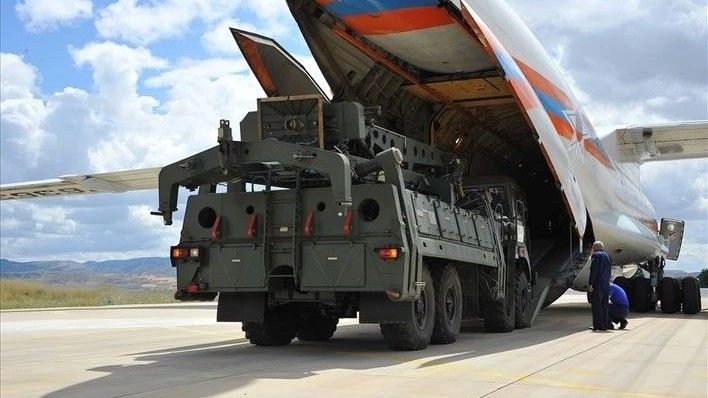
Türkiye purchased the Russian S-400 system in 2017 for approximately $2.5 billion. Ankara cited the urgent need to secure its airspace, which was threatened by the effects of the Syrian civil war and the imminent threat posed by ISIS and the Kurdish YPG militant group. Türkiye explained that the United States refused to sell Patriot systems on Turkish terms, which included technology transfer. Consequently, the United States excluded Türkiye from the F-35 fifth-generation fighter programme in 2019 and blocked the delivery of aircraft that had already been purchased. Washington argued that using S-400 radars near the F-35 could allow Moscow to collect classified data on the flight profiles of US stealth fighters. Furthermore, Türkiye was subjected to strict economic and arms sanctions under the Countering America’s Adversaries Through Sanctions Act (CAATSA).
Footage of the deployment of the S-400 long-range air and missile defence system
S-400 Uzun Menzilli Bölge Hava ve Füze Savunma Sisteminin İntikali’nden görüntüler.https://t.co/Jp27tuzPJb#MSB #TSK pic.twitter.com/UdejuhkEoN
— T.C. Millî Savunma Bakanlığı (@tcsavunma) July 12, 2019
Over time, however, the situation has changed significantly, and the chances of Türkiye returning to the F-35 programme are now very real. However, its eventual return depends on overcoming significant legal and geopolitical obstacles. During the NATO summit in Ankara in July 2026, US President Donald Trump announced the lifting of CAATSA sanctions against Türkiye and signalled that the door was open to the sale of F-35 fighter jets. The US Ambassador to NATO, Matthew Whitaker, even stated that the agreement was »realistic« and, in his opinion, »will happen«.
See also 

Why is Ankara only now considering the sale of the S-400 system?
When analysing the intentions behind and reasons for this move, it is crucial to consider Türkiye’s evolving strategic situation and the level of development of its own defence industry. As Türkiye is no longer solely dependent on imported air defence systems, the S-400 has become a diplomatic bargaining chip rather than a military necessity. Ankara is seeking the lifting of US sanctions and renewed access to F-35 fighters. Furthermore, it also needs US approval for the transfer of F110 engines for the domestically developed fifth-generation KAAN fighter.
It is worth noting that the S-400 system remained inactive and in storage for most of the period following its delivery. The main reason it remained inactive in Türkiye and was placed in storage was the strong US reaction and the threat, followed by the imposition, of severe political and economic sanctions. After the first batteries of the Russian system were delivered in July 2019, the United States responded by removing Ankara from the F-35 fighter jet programme and subsequently imposing arms sanctions under the CAATSA Act. Faced with such serious consequences from its most important NATO ally, the Turkish authorities decided not to activate the delivered launchers and instead left them in hangars.
According to sources, in all the years since the purchase, the system has been tested only once, in Sinop, after which the equipment was metaphorically »put back in the boxes«. The S-400 systems have spent most of their »lifespan« in storage.
Over time, the storage of the S-400 systems also became part of a diplomatic game. During months of negotiations aimed at resolving the crisis, Türkiye and the United States considered the possibility of deliberately removing key components from the stored systems. The idea, coordinated with the United States, was to ensure that the equipment remained completely inoperable and was stored in a secure location. Ultimately, however, the American side decided that simply storing the weapons was not enough to fully lift the sanctions and demanded that Türkiye permanently cease to possess them.
Pictures of the arrival of S-400 Long Range Missile Defence System Parts.https://t.co/esA4fXmmdZ pic.twitter.com/NIHJrJicOC
— T.C. Millî Savunma Bakanlığı (@tcsavunma) July 12, 2019
Is the sale of the S-400 even legally and technically possible?
From a legal perspective, the agreement signed by Türkiye requires official Russian consent for the sale or transfer of the system to a third country. This gives Moscow a veto over any attempt by Ankara to dispose of the missiles.
Russian sources, citing ongoing negotiations, including those concerning a potential arms transfer to the United Arab Emirates, clearly indicate that, while Moscow views the idea positively, certain details still need to be worked out and the final decision on the matter must be made personally by Russian President Vladimir Putin.
This requirement for legal and political consent is the main reason why Kremlin spokesman Dmitry Peskov has described the current talks between Ankara and Moscow as »extremely delicate«. The need for Putin’s consent makes the resale a powerful source of leverage for the Kremlin, enabling it to negotiate additional concessions from Türkiye in other areas.
See also

Russia’s Position
Russia holds significant influence over Türkiye and its economy. It is expected that, in exchange for consenting to the potential transfer of the S-400 systems to a third country, Moscow will demand specific political, military and economic concessions.
The main areas in which the Kremlin could seek concessions are issues related to the war in Ukraine and Western sanctions.
- Non-participation in EU sanctions: Most likely, one of Moscow’s main demands of Ankara will be that it maintain its current course and continue to refrain from joining the broad sanctions imposed on Russia by the European Union and other Western countries.
- Restriction of military aid to Ukraine: Russia has repeatedly pressured the Turkish authorities to limit military support for Kyiv.
- Grain transit and strait crossings: Türkiye remains a key grain transit hub, including for grain from Russian-occupied Ukrainian territories. Moreover, Ankara’s decision, under the Montreux Convention, to ban Russian warships stationed outside the Black Sea from passing through the Turkish Straits has remained a matter of dispute since the beginning of the war. Therefore, this may become an element of future negotiations.
Another pressure point could be economic dependence, especially in the energy sector.
- Negotiations on a new gas agreement: Türkiye and Russia are currently negotiating a key agreement concerning Russian gas supplies, which has not yet been finalised. Moscow could link its authorisation of the S-400 sale to the need to secure more favourable terms for this contract.
- Akkuyu Nuclear Power Plant: The massive Akkuyu Nuclear Power Plant being built by Russia in Türkiye, along with the Turkish economy’s overall heavy dependence on Russian gas supplies, remains a very powerful source of leverage.
It is also possible that Russia will seek geopolitical advantages in Africa and Central Asia.
- Spheres of influence: Russia’s consent to the S-400 transfer may depend on respect for Russian interests in other regions of the world. A significant source of leverage is Russia’s growing military presence in the Sahel region, which directly affects, and may limit, Türkiye’s political freedom of manoeuvre and interests in Africa.
Moscow undoubtedly also expects cautious action from Ankara, given Russia’s »sensitivity« in regions such as Central Asia and the Eastern Mediterranean.
As the above points demonstrate, the process of negotiating the arms resale agreement itself appears to be highly beneficial to the Kremlin, as it allows Moscow to retain a tool with which to exert direct influence on Turkish policy, thereby strengthening its position in sensitive regions at the expense of other countries. Turkish decision-makers must therefore ask themselves what these concessions are worth and whether the costs of making them would outweigh the supposed benefits of returning to the F-35 fighter jet programme.
Potential Buyers of Türkiye’s S-400 System
The sale of the S-400 system to a third country was expected to be one of the main topics of the Presidential Cabinet meeting held on 13 July 2026 in Beştepe and chaired by Recep Tayyip Erdoğan. According to available information, the Cabinet discussed possible options for disposing of the Russian system in exchange for Türkiye’s return to the F-35 programme.
The most likely buyers of Türkiye’s S-400 systems are the Gulf states, particularly the United Arab Emirates (UAE) and Qatar. Although the Turkish government has not yet officially confirmed the identity of the final buyer, these two countries have been mentioned most frequently in media reports and unofficial leaks.
The UAE appears to be the leading candidate for several reasons
According to diplomatic sources, Moscow views the potential sale of the S-400 system to the UAE »positively« and does not currently oppose the transfer of the system to the country.
Furthermore, there is some compatibility with the UAE’s existing systems. The UAE already possesses Russian air defence systems, including the Pantsir, and is actively seeking to diversify its arms suppliers in order to strengthen its defence capabilities. Finally, the Emirates« tourism-based economy has been severely affected by Iranian attacks, prompting the country to urgently seek alternative and effective air defence solutions.
Qatar is also being considered as a potential recipient of the system. The country’s needs have increased after US Patriot missile systems deployed there reportedly failed to intercept an Israeli strike on targets in the capital, Doha.

Besides these two most likely buyers, analysts have discussed and speculated about other potential purchasers. However, given the current constraints and geopolitical realities, they can largely be ruled out at this time.
- India: The likelihood of a purchase by India is assessed as very low. The country has already signed a $5.5 billion contract with Russia for the direct delivery of its own S-400 batteries and is in talks over further agreements.
-African countries, such as Algeria, Angola, Egypt and Morocco: Although these countries, especially Algeria, traditionally purchase Russian weapons (Algeria already has its own S-400 systems) or, like Egypt, are diversifying their suppliers, there is no evidence linking any African government to Ankara’s current negotiations.
It is worth noting that a potential sale of the S-400 system to the United Arab Emirates or Qatar would constitute a bilateral agreement between Türkiye and the selected Gulf state, allowing the transaction to be completed without directly violating US sanctions. However, due to the original contractual obligations, Türkiye still requires final approval from the Kremlin to complete the sale.
Could the S-400 systems be returned to Russia?
There has been speculation about the possibility of returning Türkiye’s S-400 systems to Russia, but such a scenario currently seems unlikely, as Moscow has previously refused to take them back.
Theoretically, the return of the systems would be militarily advantageous for Russia. Due to the ongoing war in Ukraine and increasing pressure from Kyiv — including attacks by Ukrainian long-range drones and cruise missiles on Russian territory — Russia’s air defences are increasingly strained. From this perspective, reacquiring additional, previously manufactured S-400 batteries to defend its own territory seems highly desirable.
Despite these potential benefits and media reports suggesting the possibility of such a transfer, credible sources indicate that the Russian authorities have rejected an offer to buy back the Turkish launchers.
A much more favourable scenario for the Kremlin would be to allow the resale of these systems to a third country. Such a transaction would offer Russia several strategic and political advantages.
First, it would constitute a visible demonstration of demand for Russian weapons. A successful sale of the S-400 to another buyer would demonstrate continued global interest in Russian weapons, despite the West’s stringent sanctions on Moscow.
Second, maintaining influence over Türkiye is highly beneficial to the Kremlin. Ankara’s need to obtain official Kremlin approval for the re-export of the systems gives Moscow control over the situation and a powerful means of influencing the Turkish government.
Furthermore, any approval for a resale would likely require Russia to negotiate additional concessions. In exchange for authorising the transaction, Moscow could demand specific concessions from Türkiye, such as more favourable terms for a gas agreement, Türkiye’s continued refusal to join EU sanctions against Russia and limits on Turkish military aid to Ukraine, as mentioned in the previous paragraphs.

Conclusions and Most Likely Scenarios
For the North Atlantic Alliance, the removal of Russian weapons from Turkish territory would finally eliminate the »Trojan horse« that has undermined trust and hindered full military and technological cooperation on the Alliance’s south-eastern flank for several years. For Ankara, disposing of virtually useless equipment in exchange for the lifting of restrictive CAATSA sanctions, a return to the lucrative F-35 programme and the acquisition of key technologies for the KAAN project would constitute a significant diplomatic and strategic victory. The potential sale of the stored S-400 launchers with Russia’s consent would therefore be an unprecedented move.
However, despite the initial declarations and willingness to move forward, the matter is much more complex, and its final outcome will depend on the strategy and determination of all the parties involved. Currently, there are three distinct scenarios for how the impasse could develop.
- Successful Third-Party Sale Scenario: The S-400 system is transferred, with the mutual consent of Moscow and Washington, to a non-NATO member state, freeing Türkiye from the restrictions. This is currently the most desired scenario by the allies.
- Lack of Russian Authorisation/Political Deadlock Scenario: Russia refuses to grant authorisation, using its economic leverage, and the S-400 systems remain in Turkish warehouses, blocking the full normalisation of US–Turkish relations.
- Lack of US Congressional Approval Scenario: Despite the potential transfer of the S-400 system to a third party, strong lobbying in the US Congress, most likely by Greece and Israel, as well as concerns about human rights in Türkiye, prevent the lifting of sanctions and Ankara's return to the F-35 programme.