- WIADOMOŚCI
1.4 billion euros for new anti-tank mines. The Bundeswehr is rebuilding its capabilities

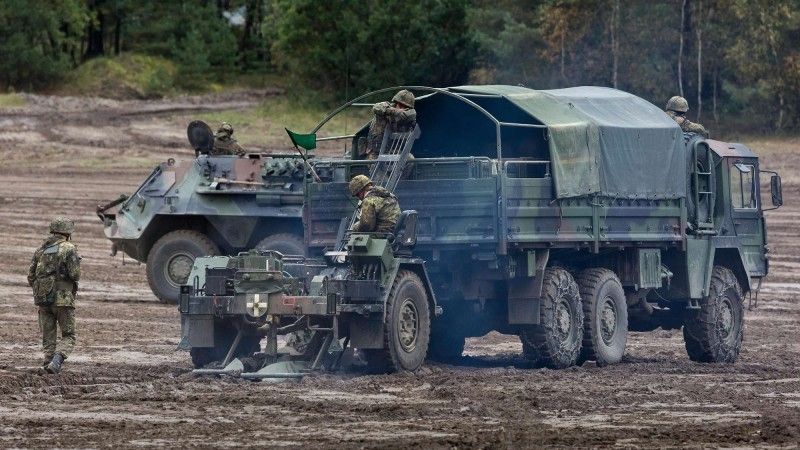
The Bundeswehr plans to award a contract worth nearly €1.4 billion later this year to purchase and stockpile a new generation of Panzerabwehrverlegemine 3 (DM41) anti-tank mines. Deliveries of the mines, which will be manufactured by Dynamit Nobel Defence (DND), are expected to begin in 2028.
According to German defence industry publication Hartpunkt, acquiring the new anti-tank mines is intended to replenish engineering ammunition stocks substantially and replace the DM31 mines currently in service. The Association of German Combat Engineers (Bund Deutscher Pioniere e.V.) has also previously reported that the DM41 procurement programme is firmly scheduled in the German Army engineers’ procurement plans for 2026.
Digital fuze and full compliance with the Ottawa Convention
The new Panzerabwehrverlegemine 3, designated DM41 in German nomenclature, is an extensively modernised version of the approximately 9 kg DM31 mine currently used by the Bundeswehr, which is based on the Swedish FFV 028 design. According to reports in the German specialist media, outdated components have been removed and replaced with a new digital fuze and modern electronics.

A key requirement for the new weapon is full compliance with the Ottawa Convention, which bans anti-personnel mines. In the case of the DM41, its operating principle and sensors mean that the charge is triggered only by the pressure or impact of multi-tonne armoured vehicles and lorries, completely ruling out activation by a person.
New ammunition for the reactivated Minenverlegesystem 85
The DM41 mines are intended to become the primary munition for the Minenverlegesystem 85 (MVS 85) mechanical mine-laying system. The history of this system neatly illustrates the evolution of German defence policy over recent decades. The MVS 85 entered service in the mid-1980s as a conventional system for laying defensive minefields in a full-scale war. However, in 2011, amid cuts to the armed forces and a focus on expeditionary missions, it was withdrawn from service. Following the change in Europe’s security situation after Russia’s annexation of Crimea in 2014, the Bundeswehr decided to return the system to service in 2016.

According to official Bundeswehr data, the MVS 85 is a single-axle trailer with a combat weight of 2.9 tonnes. It is towed by a military lorry with a payload capacity of at least 7 tonnes and operated by two soldiers. The system has its own air-cooled diesel engine rated at 2.6 kW, which powers the hydraulic system. An integrated plough cuts into the ground, allowing mines to be laid automatically at a depth of up to 20 centimetres—or directly on the ground surface—at set intervals. Levelling blades (Einebner) behind the plough immediately cover the furrow with soil, concealing the newly laid minefield.
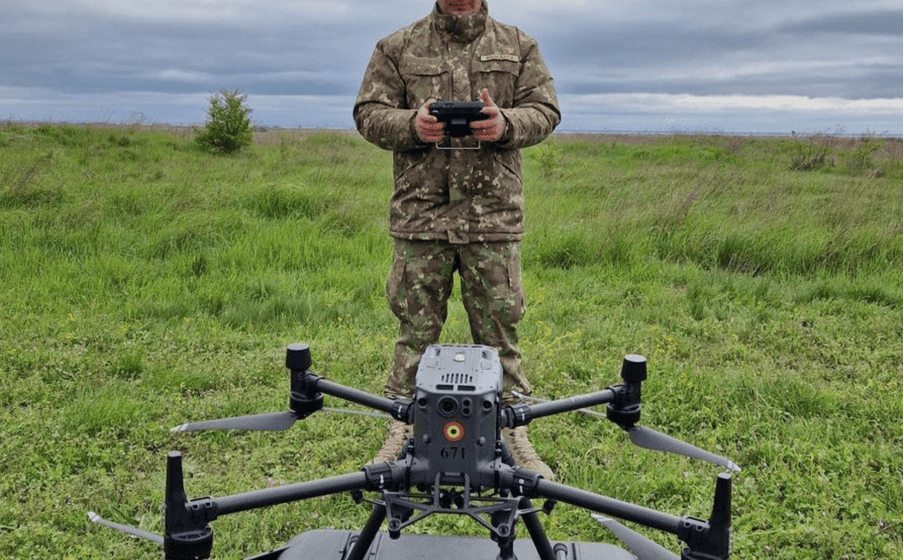
Laid anti-tank mines, commonly known as disc mines (Tellerminen), are used to create minefields rapidly at varying scales—from blocking individual roads, defiles and bridge crossings to closing off entire operational axes. In addition to mines being laid by hand or by vehicles such as the MVS 85, German sources point to experience from the war in Ukraine, where such mines are increasingly being carried and emplaced by unmanned ground vehicles (UGVs) and heavy cargo drones.

Photo. Bundeswehr/Marco Dorow
Germany’s wider mine-laying drive
The planned purchase of DM41 mines for nearly €1.4 billion is just one part of a wide-ranging programme to rebuild the Bundeswehr’s ability to create engineer obstacles. The programme has gathered pace both after some of its DM31 and DM22 stocks were transferred to Ukraine and amid Germany’s record defence budgets—more than €108 billion in 2026 and nearly €140 billion planned for 2027.
Berlin is also pursuing two other major projects in this area:
- Skorpion² mine-laying system: The Bundeswehr is preparing to buy modern Skorpion² mine-laying systems, also developed by Dynamit Nobel Defence and using AT2+ anti-tank mines. They will be integrated with Husky 3 (BvS10) articulated tracked carriers. Sweden, Denmark and Latvia have also selected the system, and DND recently unveiled the EGGBOX module, which enables the mines to be dropped from unmanned aerial vehicles.
- DM22 (PARM) directional anti-tank mines: Under a 2023 framework agreement, TDW, a subsidiary of the MBDA Group, is setting up a new production line for DM22 directional mines, with deliveries to the Bundeswehr due to begin in early 2027. In April 2025, Germany signed a multilateral agreement with Latvia and Norway in Brussels, paving the way for the allies to make joint purchases of this weapon.

Photo. Bundeswehr/Ralph Zwilling