












- WIADOMOŚCI
East Front News #82: Major reshuffle of NATO’s top operational commands

East Front News is a weekly newsletter summarizing the past week’s most important events concerning security and the situation in the Central and Eastern Europe region. It includes original opinions and comments, along with key news items significant from a Polish perspective. If you would like to receive this newsletter, please sign up by clicking
Ukraine opens contract service to men over 60
Ukraine has amended its mobilisation rules to allow men over the age of 60 to sign one-year military contracts during martial law, following an executive decree signed by President Volodymyr Zelensky. The change formalises a pathway to bring older volunteers into the force at a time when manpower pressures remain acute and the average age of serving soldiers is widely reported to be high, particularly in frontline formations.
The move underlines the strain that a prolonged high-intensity war places on rotation, recruitment and force regeneration, but it also raises practical questions about combat fitness, medical support and unit effectiveness in the most demanding roles. In the near term, the measure is likely to be used selectively—bolstering rear-area, specialist and support functions—yet it signals that Kyiv is willing to widen the eligible pool further as attrition and endurance become as decisive as equipment on the battlefield.
Author: Michał Bruszewski

Polish–Slovak defence-industrial dialogue in Bratislava
A Polish–Slovak conference on defence and defence-industrial cooperation will take place in Bratislava, bringing together government representatives and companies from both countries in an expanded format. The meeting follows a previously signed letter of intent by the defence ministers of Poland and Slovakia and is intended to review ongoing projects and identify new areas of collaboration, including air defence, ammunition production, armoured vehicle programmes and unmanned systems.
Beyond existing initiatives, the dialogue aims to strengthen practical industrial links, financial cooperation mechanisms and business contacts between the two defence sectors. The event reflects a broader regional trend in Central Europe towards closer coordination of procurement and production, driven by modernisation needs and the security situation on NATO’s eastern flank, where neighbouring states increasingly seek complementary capabilities and shared industrial capacity.
Author: Aleksander Olech
Poland to co-lead NATO's Joint Force Command in Brunssum
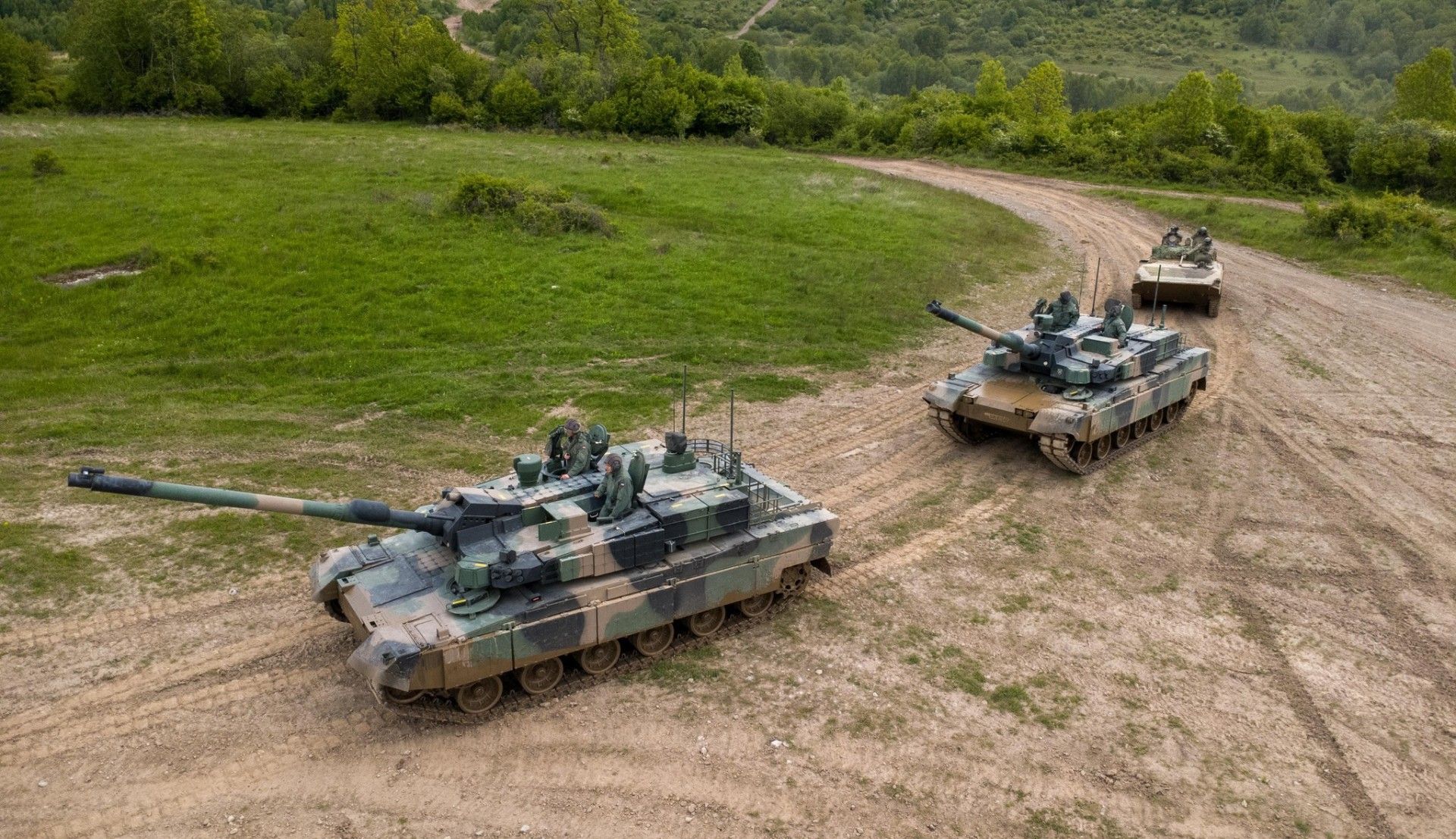
In a major reshuffle of NATO’s top operational commands, Polish and German generals will take turns leading the Joint Force Command (JFC) Brunssum in the Netherlands on a rotational basis. This marks the first time in history that Poland will assume command of one of NATO’s operational-level headquarters, underscoring Warsaw’s rising weight within the Alliance.
JFC Brunssum holds particular strategic significance for Poland, as it is responsible for operations along NATO’s eastern flank. As part of the broader realignment, European allies will now lead all three NATO Joint Force Commands (Brunssum, Naples, and Norfolk), while U.S. commanders will assume leadership of all three theater component commands (Air, Land, and Maritime). The reshuffle rebalances command responsibilities within the Alliance, elevating the roles of the most powerful European allies.
Author: Kacper Kremiec

India and the United States reach trade deal amid shifting global alignments
India and the United States have announced a bilateral trade agreement following months of tense negotiations and tariff disputes, shortly after New Delhi concluded a separate Free Trade Agreement with the European Union. The deal includes mutual tariff reductions across a wide range of industrial and consumer goods, addresses selected non-tariff barriers and may affect energy trade, with Washington seeking to reduce India’s purchases of discounted Russian oil.
Together with the EU agreement, the arrangement reflects an accelerating reconfiguration of global economic relations driven by protectionist policies and geopolitical competition. While the agreements draw India closer to Western economic structures, New Delhi is likely to preserve its strategic autonomy and diversified partnerships, maintaining links with Russia and the BRICS framework. The result is not a formal alignment but a pragmatic balancing strategy that could influence both global trade patterns and the broader political balance of power.
Author: Adam Burakowski

Munich Security Report warns of a more uncertain European security order
The latest Munich Security Report depicts a deteriorating strategic environment in which Europe faces both an assertive Russia and a more conditional transatlantic relationship. The document highlights the impact of Russia’s invasion of Ukraine, the re-emergence of spheres of influence and the growing divergence in priorities between the United States and its European allies, even as American military engagement on the continent continues. Although European NATO members have significantly increased defence spending, the report notes that the United States remains indispensable in key capabilities such as air and missile defence, intelligence and strategic lift.
The assessment suggests that Europe is entering a transition period in which it must assume greater responsibility for its own security while still relying on NATO’s collective framework. Continued hybrid activity from Russia, capability gaps and political hesitancy over measures such as joint procurement or the use of frozen Russian assets illustrate the distance between ambition and implementation. The report concludes that European states will need sustained investment, deeper cooperation and clearer strategic decisions, as the transatlantic partnership is likely to remain vital but less automatic than in the past.
Author: Karolina Kisiel

France plans major rise in defence spending
France intends to steadily increase military expenditure beyond its current defence budget, with discussions in Paris pointing to a long-term target of up to €100 billion annually. The planned expansion would nearly double present spending and is justified by the deteriorating security environment in Europe and the need to sustain the modernisation of the armed forces, despite fiscal constraints and a high public deficit.
The policy is closely linked to France’s broader strategic ambitions and its strong domestic defence industry, supported by nuclear-based energy stability and significant arms exports. By expanding capabilities and production, Paris aims to strengthen its influence within both the European Union and NATO while promoting greater European strategic autonomy. However, political instability and upcoming elections could affect the implementation of these plans and reshape defence priorities.
Author: Aleksander Olech

Finnish military intelligence highlights Russia's networked war economy
A Finnish military intelligence assessment argues that Russia continues to treat Western liberal democracies as a strategic threat and uses the war in Ukraine and hostile hybrid activity to weaken the West. The report stresses that sanctions pressure has been mitigated through third-country involvement, with Russia increasingly operating a „networked” war economy in which capital, raw materials and components flow through non-Western channels. It also points to the importance of energy exports, noting that China and India together accounted for the overwhelming bulk of Russian oil purchases in late 2025, providing Moscow with predictable demand and revenue.
The assessment warns that external support—ranging from trade links to defence-industrial inputs—reduces production risks for Russia and lowers the likelihood that economic pressure alone will constrain a prolonged conflict. It also highlights ongoing Russian armed forces reforms that could increase military presence near Finland over time, even as Finnish intelligence does not anticipate a direct attack on Finland in 2026.
For European states, the implication is that deterrence and economic strategy must increasingly account for the policies of key non-Western actors, not only successive rounds of sanctions aimed at Russia itself.
Author: Justyna Smoleń

What sits behind Putin's $15 billion arms-export claim
Vladimir Putin has claimed Russia earned around $15 billion in foreign-exchange revenues from arms deliveries to more than 30 countries in 2025, alongside hundreds of planned cooperation projects for 2026–2028. The figure is difficult to verify given reduced transparency in Russian economic reporting since the full-scale invasion of Ukraine, and the wording itself is elastic, leaving unclear whether it reflects delivered systems or contracted deals, and whether values are gross or net. Available external assessments point to a sharp post-2022 decline in Russian arms transfers overall, driven by sanctions, production constraints and the diversion of equipment to the war effort.
At the same time, Russia appears to be adapting by concentrating on a smaller set of partners and channels, with a particular focus on parts of Africa and selected Asian and Middle Eastern markets. Deliveries and security ties in Africa can be reinforced by on-the-ground presence and access to resources, while countries such as India, Saudi Arabia, Iran and Kazakhstan stand out as potentially consequential hubs for future deals. For Western policymakers, the core issue is less the precise headline number and more the persistence of export relationships that can generate revenue, deepen influence and help sustain Russia’s defence-industrial base—highlighting the importance of targeting secondary pathways that enable sanctions evasion alongside monitoring other war-funding streams such as energy exports and shadow-fleet activity.
Author: Karolina Kisiel

NATO launches the Arctic Sentry mission
On February 11 Allied Command Operations (ACO) officially launched the new multi-domain activity – Arctic Sentry to strengthen the NATO presence in the High North. The main objective of this mission is to increase the Alliance presence and security effort in the region taking into consideration the growing Russian and Chinese influence in the region. This initiative includes several military exercises such as Denmark’s Arctic Endurance or Norway’s Cold Response which brings together the capabilities from multiple NATO members.
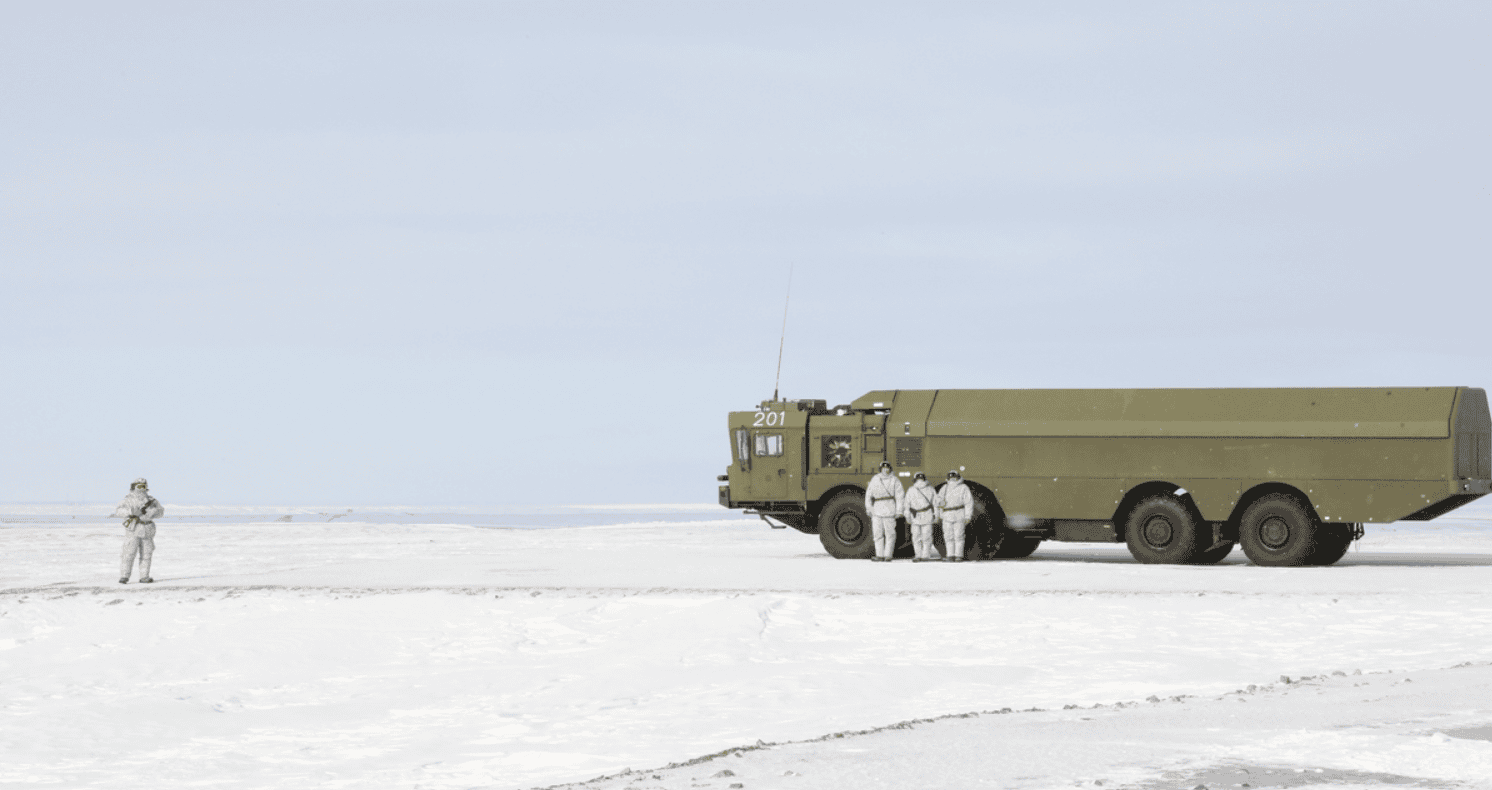
Secretary General Mark Rutte in Davos, American president backed away from annexation threats.
Arctic Sentry is based on the previous military exercise – Baltic Sentry – announced in January 2025 - with primarily goal to strengthen the protection of the critical infrastructure (including submarine cables and pipelines) from potential threats posed by Russian Federation, that is constantly attacking these installations using the shadow fleet vessels.
Author: Amelia Wojciechowska


