












- ANALIZA
- KOMENTARZ
- WIADOMOŚCI
Global military balance in 2026

The new IISS Military Balance 2026 report sheds fresh light on key developments shaping the military balance across regions and operational domains, underscoring the unprecedented scale and pace of change.
The United States: Recalibrating defence and military priorities
The report notes that homeland defence and internal security became a priority under Trump’s second administration. The US military expanded its role in counter-narcotics operations beyond US territory, and in border security and domestic law enforcement support at home. In parallel, growing nuclear and conventional missile threats from China, Russia and North Korea drove the administration to pursue the „Golden Dome” homeland missile-defence initiative. The authors caution that „it is uncertain whether such a shield is achievable,” and argue that if implemented it would reorient US homeland missile defence away from a posture designed for limited long-range threats from rogue states toward one implicitly aimed at peer nuclear powers.
Concerns over rising Russian and Chinese activity in the Arctic refocused US attention on the region. The report cites the head of US Northern Command/NORAD, Gen. Gregory Guillot, who said the US is in a „woeful situation with icebreakers” and „completely outnumbered”. It notes that the US Coast Guard commissioned its first new icebreaker in 25 years, and that Washington signed a memorandum of understanding with Finland authorising construction of up to 11 Arctic Security Cutters (four in Finland, followed by up to seven in US shipyards) to begin closing the icebreaker gap vis-à-vis Russia in particular.
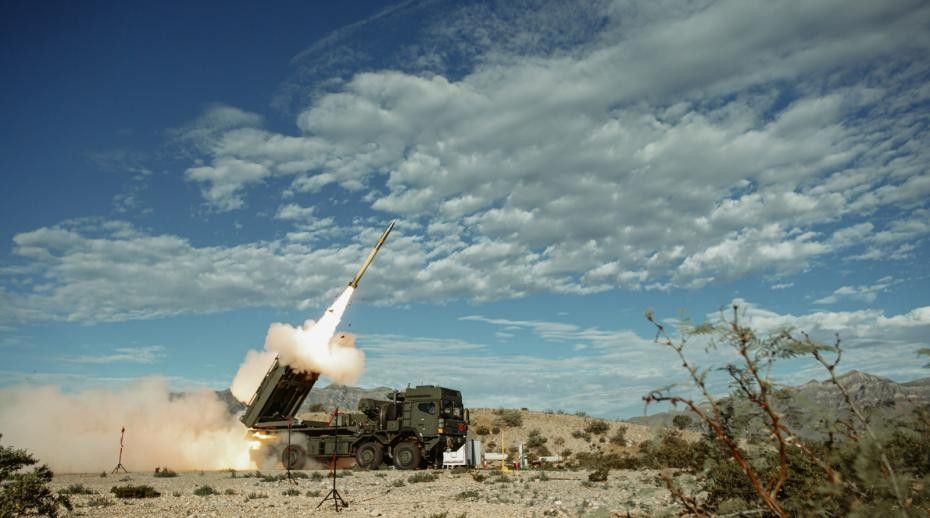
According to the report, it is in Europe that „the Trump administration’s break with US foreign policy tradition was most evident.” Washington pressed for greater burden sharing, and in practice burden shifting, arguing that Europe should assume primary responsibility for conventional defence on the continent and for sustaining support to Ukraine. In parallel, Trump demanded higher defence spending from Indo-Pacific allies to reinforce deterrence against China, even as the region remained the US priority theatre and the United States continued expanding its forward presence through new deployments. At the same time, the report highlights a relative US naval decline vis-à-vis China, driven by chronic shipbuilding delays and inadequate industrial capacity.
Beyond this, the report identifies the United States as likely the principal driver of global defence spending in 2026, citing a proposed record FY26 military budget of USD1.01 trillion. This represents a 13.4% annual increase following a slight real-term decline in FY25 compared to FY24. The authors also underline the legislative complexity involved in reaching this figure, including the addition of a USD150 billion reconciliation „megabill,” while noting concerns over the long-term financial sustainability of such elevated spending levels.
Europe: Rearmament accelerates, but future remains uncertain
By contrast, it was Europe, alongside the Middle East, that drove the 2.5% increase in global defence spending, from USD2.48 trillion in 2024 to USD2.63 trillion in 2025. European military budgets surged by 13% in real terms, accounting for 21% of global defence expenditure in 2025, up from 17% in 2022. Germany, following reform of its »debt brake«, accounted for roughly a quarter of this European growth, with its 2025 defence budget reaching USD107.3 billion, double its 2021 level. It is projected to rise further to USD136.8 billion in 2026 and to USD188.0 billion (3.2% of GDP) by 2029.
In that way, the report notes, Germany is „rapidly becoming the region’s dominant spender,” outpacing the UK and France, both of which face tighter fiscal constraints and difficult trade-offs. In London, the planned increase in defence spending from 2.4% to 2.6% of GDP by 2027 required reductions in Overseas Development Assistance. In Paris, despite broader expenditure cuts aimed at containing a 5.4% deficit, the defence budget was raised to 2.25% of GDP, representing an 8.9% real-terms increase. The authors further suggest that substantially deeper fiscal adjustments would be required should these countries seek to meet NATO’s 5% target by 2035.
See also 

The authors identify three related trends associated with heightened defence spending across the continent. First, the expansion of venture-capital funding into the European defence sector, accompanied by the emergence of several defence „unicorns” and the prospect of further growth. Second, a growing share of national budgets is being directed toward space-domain capabilities, with Germany and France at the forefront. Third, rising defence expenditure has intensified the need for coordination, reinforcing the EU’s role in defence policy, as illustrated by the introduction of the SAFE programme, which provides EUR150 billion in EU-backed loans for national defence procurement.
Thus, the authors observe that Europe is responding to the „worsening security environment” and moving toward the 2025 Hague Summit spending commitments. However, they caution that the durability of this trend remains to be tested. They stress that meeting these objectives will require sustained long-term investment and a deeper transformation of civil–military relations, potentially including the reintroduction of national military service. Such measures, they note, will demand enduring political resolve and public support amid mounting fiscal pressures.
A sustained long-term commitment is required, particularly as significant capability and production gaps persist. Despite notable investments and improvements in armoured forces, air defence and artillery, the report underscores that Europe remains critically dependent on the United States for all-domain intelligence, cloud-computing capacity and space-based assets. Moreover, reducing dependencies in areas such as geospatial intelligence, airborne signals intelligence and ballistic-missile early warning will take considerable time, likely extending well beyond 2030. On this basis, the authors conclude that building a credible, Europe-led NATO capable of sustaining a prolonged, large-scale, high-intensity conflict remains politically, financially and industrially demanding for European states.

Russia: a wider threat to Europe and beyond
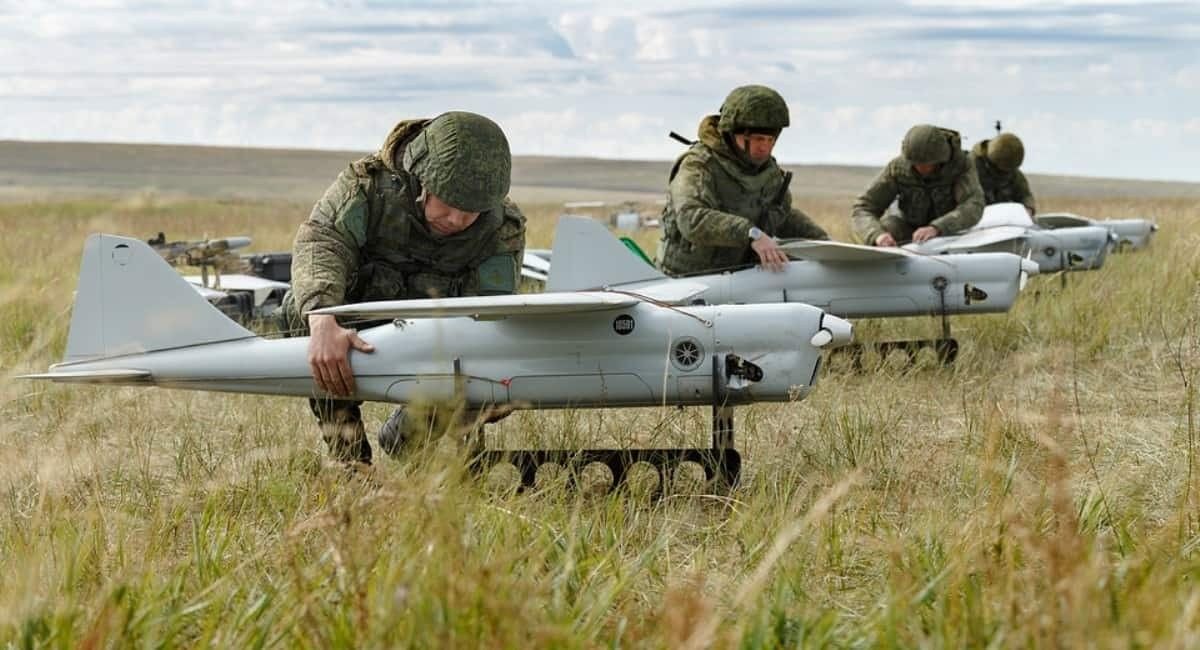
In its war against Ukraine, the authors note that Russia made small territorial gains in 2025 — no more than 1% of Ukrainian territory — at significant personnel and material cost, with casualties often exceeding 1,000 per day. The conflict continued to drive technological and tactical evolution, particularly in uninhabited systems and artificial intelligence. This was illustrated by Ukraine’s Operation Spiderweb, in which drones launched from trucks on Russian territory destroyed aircraft from Russia’s Long-Range Aviation.
However, the authors argue that Russia has continued to adapt and remain competitive in the innovation cycle. It established dedicated Unmanned Systems Forces, took a leading role in the development of fibre-optic-guided UAVs, and intensified deep-strike operations against Ukrainian UAV production sites. These efforts were partially offset by the deployment of new Ukrainian interceptor UAVs.

At the same time, Moscow expanded recruitment through legal and administrative changes, enabling the call-up of 160,000 conscripts in April, which was the highest number since 2011. By contrast, manpower remains „Ukraine’s principal constraint,” with the authors noting that „Kyiv cannot match Russia’s persistently high recruitment rates,” a disparity that has left parts of the frontline vulnerable to Russian small-unit infiltration and localised breakthroughs.
What is particularly important from a European perspective is the authors« assessment that Russia is posing an increasing threat to „wider Europe.” They point to Moscow’s relatively stable financial position, its medium-term capacity to close gaps in manpower and equipment, and its ability to strike deep into the continent with long-range weapons. They stress that one of the most serious threats to Western countries lies in Russia’s nuclear-powered submarine force, which provides a platform for long-range conventional and nuclear strike missions and is undergoing continued modernisation by the Kremlin.
China: Catching up with the US and driving regional rearmament
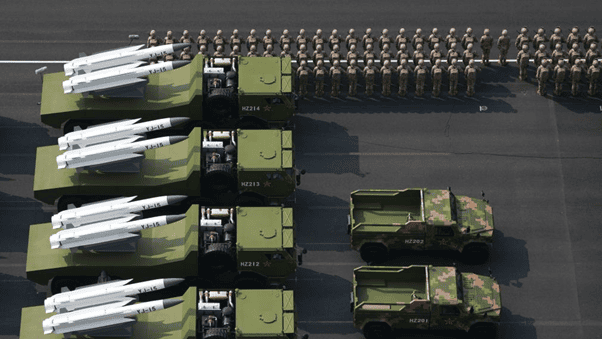
Although Europe drove global spendings, it was perhaps China that achieved the most significant relative progress vis-à-vis its principal peer competitor. The report highlights the political and military significance of September’s military parade, overseen by Xi Jinping alongside Russian President Vladimir Putin and North Korean leader Kim Jong-un. During the event, the JL-1 air-launched ballistic missile was displayed, marking the first public confirmation of the PLA’s nuclear triad.
The authors emphasise continued advances in China’s naval modernisation, noting that the expansion of the PLA Navy outpaced that of the United States over the past year in both hull numbers and overall tonnage. In 2025, China completed its third — and largest and most technologically advanced — aircraft carrier, Fujian, and commissioned nine additional major surface combatants. Furthermore, between 2021 and 2025, China launched ten new nuclear-powered submarines, including the seventh and eighth Type 094 Jin-class nuclear-armed ballistic missile submarines.

In the air domain, the PLA Air Force was reinforced in 2025 by more than 300 J-20 fifth-generation fighters and by the first deliveries of the J-35A multirole stealth aircraft. The May Indo-Pakistani conflict provided a real-world test of Chinese military technology, with Chinese-origin aircraft and air-to-air missiles used by Pakistan shooting down at least one Indian Air Force Rafale, generating a notable reputational gain for Beijing’s defence industry. These advances were nevertheless accompanied by Xi Jinping’s ongoing anticorruption purge of senior PLA officials, a development the authors suggest may compress operational readiness and China’s defence-industrial capabilities.
In response to a heightened threat perception from China, combined with renewed pressure from the Trump administration, US Indo-Pacific allies moved to increase defence spending and investment. Japan’s new prime minister, Takaichi Sanae, signalled an intention to raise defence expenditure to 2% of GDP by March 2026. In Taiwan, President Lai Ching-te proposed increasing spending to 5% of GDP by 2030, up from 2.4% in 2025. South Korea agreed to an 8.2% increase in 2026, while Australia moved toward a 7.3% nominal rise in defence spending in the same year. Nevertheless, the report underscores that China „remains a major long-term driver of regional defence spending”, with its share rising to 44%, up from 39% in 2017.
See also

Middle East: Prolonged instability and security realignments
While the war in Ukraine continues to demonstrate the importance of mass and scalability on the modern battlefield, the American Operation Midnight Hammer targeting Iranian military and nuclear infrastructure using B-2A Spirit strategic bombers has underscored the enduring relevance of high-end capabilities. In this respect, the authors draw reader attention to a growing challenge for military planning and procurement: how to strike the right balance between developing cutting-edge capabilities through conventional, time- and resource-intensive processes, and prioritising speed, scale, and affordability in production.
Instability persisted and intensified across the Middle East in 2025, prompting regional actors to pursue new security arrangements and defence agreements. The authors underline new, stronger US partnerships, with Saudi Arabia gaining major non-NATO ally status and Qatar receiving a US security guarantee. Meanwhile, heightened tensions between Morocco and Algeria led Algiers to increase its defence spending to 8.8% of GDP, the second-highest share globally after Ukraine.
See also


