












- WYWIADY
- WIADOMOŚCI
- WAŻNE
Wagner’s legacy is not gone

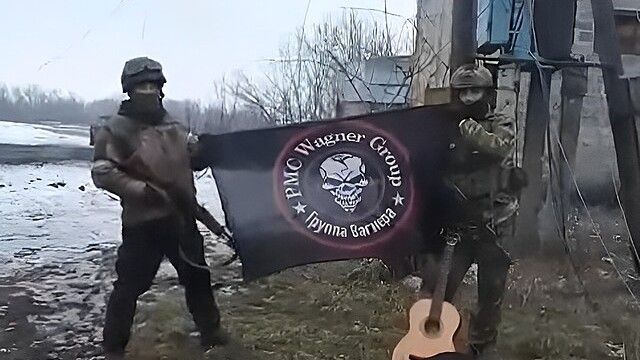
Photo. 2s3m akatsiya/Wikimedia Commons
Following the death of Yevgeny Prigozhin, many observers assumed that the story of the Wagner Group had come to an end. In reality, however, its legacy — networks of people, combat experience, and influence structures — remains part of Russia’s broader security ecosystem. Dr. Aleksander Olech speaks with Stanisław Sadkiewicz, author of the new book”Musicians. The Untold Story of the Wagner Group”, about what the „post-Wagner” world looks like today and what it may mean for Europe.
Dr. Aleksander Olech (AO): In your view, does the Wagner Group, in its current transformed form, still constitute a real threat to European security? If so, is the response of European states and NATO structures adequate to the nature of this threat?
Stanisław Sadkiewicz (SS): Both yes and no. The Wagner Group itself — or what remains of it as an organization and structure — has in recent years been marginalized and reduced to the role of private protection for the president of the Central African Republic, the last country where the Wagner Group is still present and active. As such, it does not, at least for now, constitute a direct threat to Europe.
On the other hand, the real legacy of Yevgeny Prigozhin and Dmitry Utkin lies in the tens of thousands of people who passed through the Wagner Group and in the myth the organization left behind. Both of these elements are used by the Russian state in various ways and may constitute risk factors.

Within the armed forces, many volunteer units have emerged that refer to Wagner traditions, often commanded by former high-ranking Wagner commanders. Their role is to attract volunteers through the legend of the organization, which remains very much alive in Russian society and within the armed forces. The African Corps, an expeditionary unit of the Russian army, has almost entirely taken over Wagner’s African structures. Networks of propaganda specialists left behind by Prigozhin have, in turn, been taken over by Russian intelligence services and are still used to conduct influence and disinformation campaigns, including in Europe. Post-Wagner recruiters with knowledge of African realities also act as intermediaries in recruiting volunteers from the continent to fight on the Ukrainian front. Recently, reports have also appeared suggesting that individuals linked to the Wagner Group are being used to protect vessels belonging to the so-called „shadow fleet.”
These thousands of people, possessing very specific skills and experience and additionally bound together by a sense of elitism, a certain ethos, a shared combat experience, but also resentment toward some structures of the Russian state, constitute a true explosive mixture and may in the future cause many problems both for Europe and for Russia itself.
Considering the largely covert nature of the Wagner Group’s activities and the scale of disinformation present in public discourse, how were you able to base the content of your book on sufficiently reliable sources? What did the process of verifying information look like under such limited transparency and contradictory narratives?
This was definitely the most difficult element of writing the book. On the one hand, in recent years — after the death of the Wagner Group leadership and the resulting disintegration of the organization — there was a significant loosening of the secrecy rules that had previously applied. As a result, thousands of memoirs, testimonies, photographs, recordings, and other materials from all of Wagner’s campaigns suddenly appeared online. On the other hand, many of them had to be treated with considerable caution, given that they were often filled with subjective opinions, disinformation, propaganda, or simply lies.
Verifying the information contained in them, therefore, required a particularly strict analytical approach, careful attention, and confrontation of each account with other available sources that could confirm or contradict it.
See also 
A good example is the assault on Luhansk Airport, the first major battle of the Wagner Group in 2014. For a long time, accounts from participants in these events had existed in the public space, both defenders and attackers. However, it was difficult to base attempts to reconstruct the course of the battle solely on them. For some time now, a high-resolution satellite image taken over the airport and its surroundings on the day of the battle has also been available, allowing the comparison of these accounts with a bird’s-eye view of the battlefield. Relatively recently, another element of the puzzle appeared — one of the participants in the battle published previously unseen footage online, recorded by Wagner fighters during the assault. Comparing all available sources — testimonies, the satellite image, and the video recording — made it possible to reconstruct the course of the battle in great detail, minute by minute, step by step.
However, not every event in the history of the Wagner Group can be described with similar precision. Many uncertainties and mysteries still remain. Where I was not certain about the course of events, I clearly indicated this.
See also

Which of the cases involving Wagner fighters described in the book did you personally find the most interesting or intriguing? What made that particular case especially significant to you?
It is difficult to choose just one. Twelve years of the Wagner Group’s history are full of such events. Whether it is the story of Yevgeny Prigozhin himself, who went from being a small-time criminal in Saint Petersburg to a restaurateur and owner of a profitable catering business, and eventually a charismatic warlord commanding his own army operating in several countries across three continents; or the individual campaigns and battles of the Wagner Group; or its „back office” conducting influence and disinformation campaigns — each of these elements could easily constitute material for another book.
If I had to choose just one event, I would probably point to the so-called March of Justice, the one-day mutiny of the Wagner Group. Both the causes and the course, the ending and the consequences of the March of Justice are so grotesquely unbelievable that if it were not a real event but part of a fictional story, it would be easy to accuse the author of letting their imagination run wild. This is also why it still fuels numerous conspiracy theories suggesting that the mutiny was not really a mutiny at all but some kind of staged event with mysterious goals.

Who are Wagner’s biggest competitors who could potentially fill the „gap” it left behind?
It depends on the location. In Africa, apart from the aforementioned Central African Republic, the Wagner Group has been replaced by the so-called African Corps, a Russian expeditionary unit composed largely of former Wagner fighters but incorporated into the structures of the regular armed forces and subordinate to the Ministry of Defence.
On the „near front,” as Wagner fighters refer to Ukraine, the situation is more complex. In 2022–2023, the Wagner Group and other smaller private military companies constituted a kind of supplement to the mobilization gap: they allowed the recruitment of people who, for various reasons, were not interested in serving in the regular armed forces. Prigozhin was also probably the author, or at least the first executor, of the concept of recruiting prisoners to fight on the front.
After the Wagner mutiny, which clearly demonstrated the risks associated with tolerating such independent formations, all private military companies were incorporated into the structures of the Ministry of Defence, although they retained a certain level — at least formally — of autonomy and operational independence. For example, until recently, volunteers in these units, unlike soldiers in the regular army, could terminate their contracts at any time. On the other hand, they were not entitled to various benefits offered to regular soldiers, including social benefits or official „combat participant” status. Volunteer units also accepted people considered unfit for normal service, for example, those suffering from terminal illnesses such as AIDS or viral hepatitis (which was also originally Prigozhin’s initiative). They also offer other incentives and often use the personal reputation of commanders, the reputation of the unit itself, or promises of better equipment and treatment in recruitment campaigns.
These units have therefore replaced the Wagner Group as a kind of alternative to the regular armed forces, particularly attractive to various freelancers, mercenaries, and volunteers who want to fight but not necessarily within the ranks of conventional military units.

Where does the term „musicians” come from?
From musical associations with Richard Wagner. According to legend, Dmitry Utkin, the commander of the organization, adopted the pseudonym Wagner because he was a great admirer of the works of this German composer. Although Utkin himself quickly abandoned this nickname and in later years used the name „Ninth,” the label remained permanently attached to the organization. This is where all the musical metaphors widely present in Wagner culture come from: the „orchestra,” the „musicians,” symbols of musical notes or instruments, and similar references. Even the official decoration issued by the Luhansk People’s Republic for the capture of Bakhmut features — in tribute to the Wagner Group — a musical staff and the opening notes of Richard Wagner’sRide of the Valkyries.
Who exactly makes up the Wagner Group? Where do its members come from, what motivates them, and what does its internal structure look like, because it is not a uniform organization, correct?
Over the twelve years of its existence, the Wagner Group went through various stages, and depending on the period, it was a completely different organization. During the first two years, during the first campaign in Donbas, it was a narrow, elite group composed largely of former Spetsnaz and airborne troops personally selected — either through personal acquaintance or recommendation — by Dmitry Utkin. At that time, it was a small unit of several dozen fighters performing special tasks. It participated in the aforementioned assault on Luhansk Airport but also, for example, in keeping unruly separatist commanders under control.

After the beginning of the campaign in Syria, the Wagner Group expanded significantly, and recruitment became more mass-based and less selective. At that time, a fundamental change also occurred in the organizational structure: from a battalion tactical group — an unofficial subunit of the Russian armed forces — it transformed into a private military company. This was not merely a cosmetic change but the result of Wagner’s growing independence and the increasing conflict with the Ministry of Defence. As a result, the organization had to begin financing itself to a large extent, and during this period, a model of functioning emerged based on a symbiosis between military operations and business ventures. For example, Prigozhin’s companies were supposed to receive a certain percentage of profits from gas and oil fields recaptured from the Islamic State by Wagner fighters under agreements with the Syrian government.
Expansion into Africa brought further changes. At that stage, the so-called „back office” appeared — a group of civilian specialists and advisers from various fields: political scientists, sociologists, experts in political PR and influence campaigns, geologists, and journalists. This entire structure was meant to support the Wagner Group in its main task on the continent: maintaining in power those leaders who had decided to purchase Prigozhin’s services.

Finally, the return to Ukraine in March 2022 brought yet another transformation: mass recruitment of volunteers and recruitment in prisons. Within just a few months, the Wagner Group grew into an army of several tens of thousands of fighters, roughly half of whom were prisoners. After the mutiny, relocation to Belarus, and ultimately the collapse of the organization, the Wagner Group changed once again. In each of these periods, the organization looked different and recruited entirely different types of people.
Who in the countries where the Wagner Group operated (Syria, Mali, Mozambique) actually facilitated its operations? Were these specific officials, businessmen, or entire sectors of the economy, such as mining, involved in this ecosystem?
The activities of the Wagner Group in Africa and Syria were based on a symbiosis with state structures, particularly with the given leader and his immediate entourage. Prigozhin approached them with an offer that could be summarized as „security in exchange for resources.” Supported by specialists from the „back office,” the Wagner Group was supposed to guarantee the leader’s survival in power or the defeat of his rivals, while Prigozhin’s companies would receive profits from the extraction of natural resources.
This was the case in Syria, where the Wagner Group significantly contributed to saving the rule of President Assad, as well as in the Central African Republic and Mali. There were also failures: in Sudan, the president supported by Wagner, Omar al-Bashir, was overthrown; in Mozambique, the Russians suffered defeat while attempting to suppress an insurgency; and in Libya, despite Wagner’s support, Marshal Haftar failed to seize power over the entire country.
A similar model is currently being implemented by the African Corps — it has extended protection to leaders who came to power through coups in Niger and Burkina Faso. In Equatorial Guinea, meanwhile, soldiers of the Corps are expected to ensure the peaceful transfer of power from the elderly president to his son.
Do Wagner members have the possibility to leave the organization? What happens to people who try to leave it? Are we dealing with desertions or rather controlled separation?
Again, it depended on the period. In most cases, service in the Wagner Group was voluntary and based on contracts, after which members could leave the organization. It was also relatively easy to be expelled for violating discipline or internal rules.
The situation was very different for prisoners recruited to fight in Ukraine. They were required to serve six months on the front line, after which they received a pardon. During those six months, they had no right to withdraw, and desertion — or even refusal to carry out an order — was punished severely. Being captured by Ukrainian forces was also treated as desertion. According to numerous accounts, Prigozhin communicated this openly and clearly during recruitment meetings in prisons and penal colonies.

Perhaps the most famous case is that of Yevgeny Nuzhin, a prisoner who, after being captured by Ukrainian forces, gave an interview shedding some light on the Wagner Group’s activities. He later somehow ended up back in Wagner’s hands and was brutally murdered, with the execution video subsequently released publicly.
Are there indications that the experience gained by Wagner fighters in Ukraine and Africa could be used in the future in Eastern Europe or the Baltic region?
Absolutely. Former and current members of the Wagner Group have enormous experience gained from eight wars in which they participated — including conventional combat operations, hybrid warfare, and propaganda or disinformation campaigns. After the Wagner mutiny, when the Kremlin decided to remove its leadership, it simultaneously offered the remaining members of the organization a form of amnesty. The offer was accepted.
Former Wagner fighters therefore joined the Russian armed forces, and some also trained Belarusian troops. It would be a mistake to assume that after the deaths of Prigozhin and Utkin, the experience of their subordinates simply disappeared. There is no doubt that these skills are and will continue to be used by the Kremlin.


