- ANALIZA
- WIADOMOŚCI
Europe's defence readiness. Is 2030 impossible to achieve?

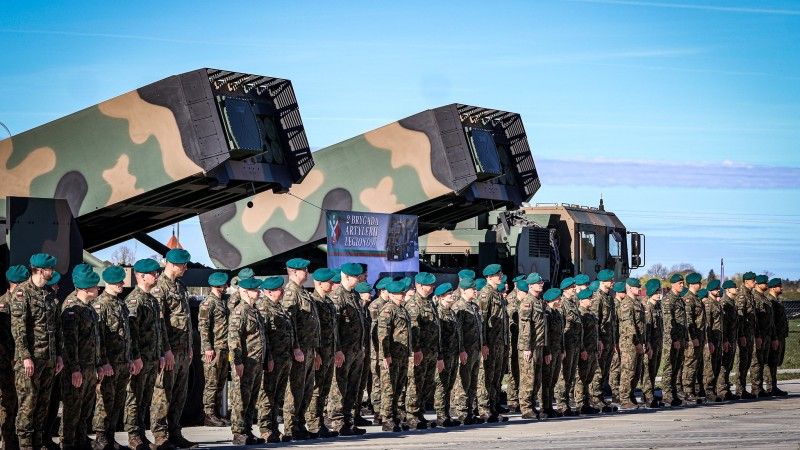
According to EU Commissioner for Defence Andrius Kubilius, the European Union is rearming too slowly to achieve readiness for defence against Russia by 2030. The politician also outlines what EU countries must do to meet the deadline.
Last week, Andrius Kubilius, the European Commissioner for Defence and Space, spoke before the European Parliament’s Subcommittee on Security and Defence. During the speech, he addressed several issues vital to the security of the Old Continent.
State of the Union and what next?
The Commissioner’s recent addresses were primarily remembered for his words regarding the possibility of invoking NATO’s Article 5 should Russia decide to attack European arms factories. “If Russia attacks weapons factories in NATO countries, the Alliance may respond in an extremely painful manner,” Kubilius warned a few days ago, referring to recent statements made by Maria Zakharova, the spokeswoman for the Russian Foreign Ministry.
However, it is worth examining the specific data and initiatives he recently pointed to in the European Parliament. In his speech, Kubilius referred to Ursula von der Leyen’s State of the European Union address delivered in mid-September. The President of the European Commission devoted a large part of her speech to security, warning that the EU is not keeping pace with global changes. The Commissioner also supported the concept of establishing a European Security Council, which – in addition to member states – would include the United Kingdom, Norway, Canada, and Ukraine, among others. In his assessment, such an expansion of the EU security architecture could facilitate Europe’s implementation of the NATO 3.0 concept. More details on this and other topics are expected to appear in the European Defence Strategy, which is scheduled for publication later this month.
See also 

Ukraine as a priority
Kubilius repeatedly emphasised the importance of a sovereign Ukraine for European security. In his view, Kyiv should be a strategic priority for European allies, who should not only increase their commitment to helping Ukrainians but also make it more effective and predictable.
In this part of the speech, several significant figures were mentioned. Andrius Kubilius confirmed the approval of the delivery schedule for armaments financed by a loan to Ukraine for 2026, the total value of which amounts to €28.3 billion (these funds are allocated, among other things, for the purchase of American PAC-3 anti-ballistic missiles). In recent days, a further tranche of €3.3 billion was released, bringing the total funds paid out so far to €11.7 billion. According to Kubilius’s announcements, the entire sum of nearly €30 billion is to be made available by the end of this year.
Concluding the topic of supporting Kyiv, Kubilius was critical of the bilateral aid provided so far. He pointed out that too many countries make declarations that they subsequently fail to honour. According to the data he presented, the Ukrainian defence funding deficit amounts to as much as €23 billion. One of the main causes of this gap is the fact that part of the commitments declared by allies at the NATO summit in Ankara – totalling €40 billion – has still not actually been transferred. He added that another problem is that 75 per cent of bilateral military aid is provided by just five countries (including Poland). “Where are the others?” Kubilius asked.

SAFE for Ukraine
While discussing aid for Ukraine, Kubilius mentioned the SAFE programme. According to the EU Commissioner, the Union currently has approximately €20 billion in unused funds under this loan mechanism. These funds are intended to support Kyiv.
“We plan to use them to announce a second call for proposals, as the President of the European Commission announced in her State of the Union address. The aim of this second call is to intensify cooperation with Ukraine, both in Ukraine and in the EU; both for Ukraine and for ourselves, given Ukraine’s leading role in the field of defence innovation,” Kubilius indicated.
It should be recalled that the right to low-interest loans under SAFE is granted to European Union member states. The entire Security Action for Europe (SAFE) programme has a total pool of €150 billion. The largest beneficiary of SAFE is Poland, which is set to receive over €43 billion under the scheme.
See also

Will rearmament accelerate?
Towards the end of the speech, Andrius Kubilius announced the publication of a “Defence Readiness Report”. The document, prepared by the European Defence Agency, is intended to summarise the Union’s progress in the field of security so far, but also to highlight shortcomings in specific areas. According to Kubilius, the key conclusion of the text – which will be presented to the public in the coming weeks – boils down to the fact that “the European Union is not rearming fast enough or effectively enough to achieve the goal of being ready for defence against Russia by 2030.” It is worth recalling the recent statement by KNDS Vice President Marcel Grisnigt, who drew attention to delays in the rearmament of EU countries, citing Russian hybrid attacks that hinder the continuity of work in European factories as one of the causes.
In the further part of his address, Kubilius referred to what is working better and what could also bring tangible benefits to the community countries in the near future. As an example, he cited the EDIP (European Defence Industry Programme) as well as the EDPCI mechanism, which coordinates public-private investment in the European Union’s defence industry.
“This is our chance for a breakthrough in pan-European projects where member states and EU institutions can work together to match Europe’s common defence needs with the potential of the pan-European industry. I am convinced that EDPCI projects will create strong synergies between member states, EU institutions, and the European defence sector. They will allow us to break the slow pace of the purely national “bottom-up” approach that has dominated the development of European defence capabilities until now,” he said. He added that the European Council recently approved the first five EDPCI projects. These included drone protection and – of particular importance in the context of Poland – the East Shield (specifically Eastern Flank Watch, of which the East Shield is a part).
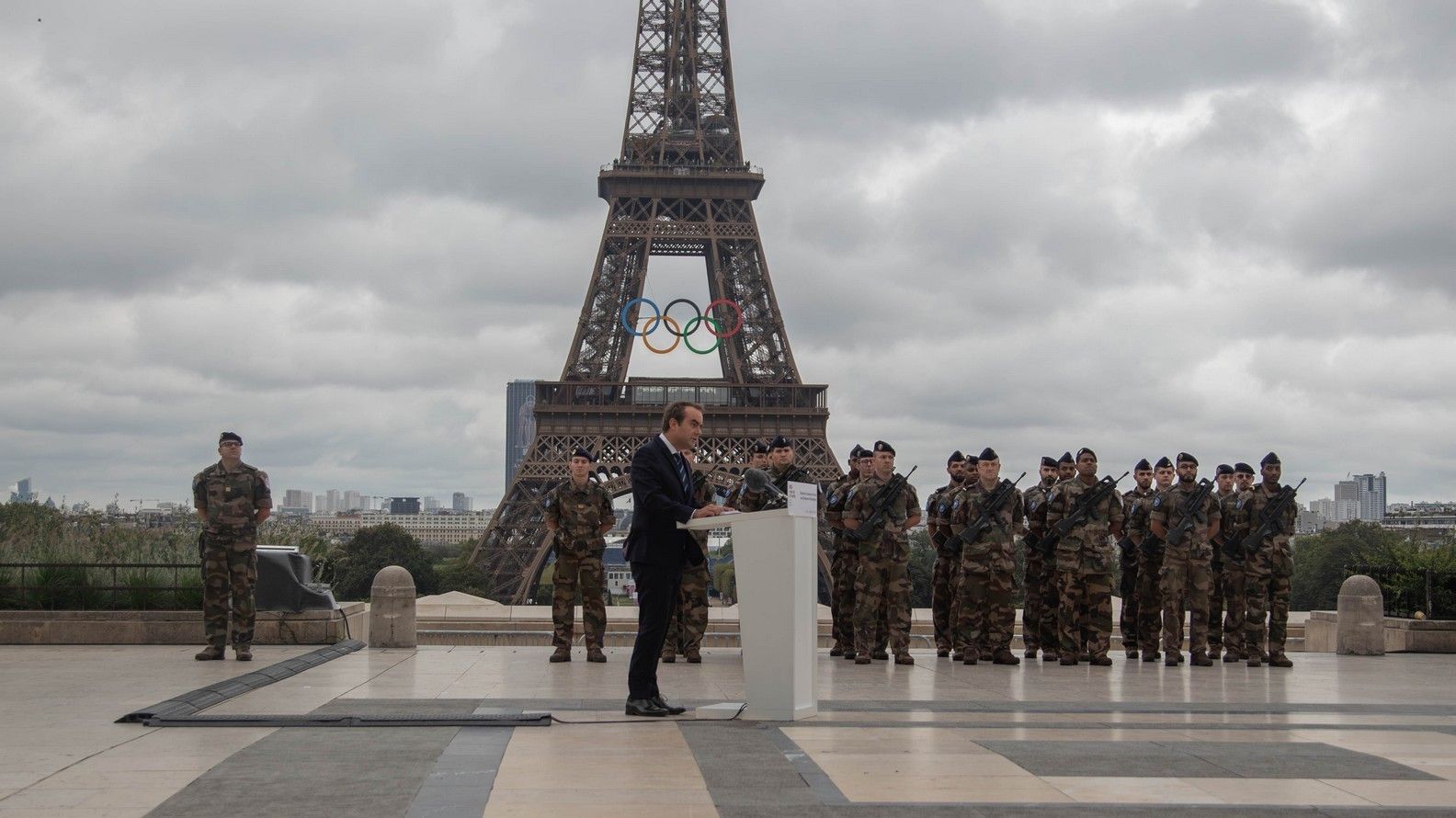
Commenting on the functioning of these programmes, he added that timely deliveries of raw materials are the basis for success. “A lack of nitrocellulose or other key components will weaken our defence capabilities — it simply means less ammunition,” he stressed, noting that €160 million from the EDIP programme will be allocated to support European industry.
Regarding production itself, Kubilius pointed to the need to move away from a “haute couture” approach in favour of “good enough” solutions. “This is the lesson from Ukraine: production should be good enough to achieve goals — less technically complex, cheaper, and easier to scale,” he explained. He also emphasised the necessity of maintaining factories in constant reserve. “We need factories with ready production lines so that, in the event of a crisis, equipment manufacturing can be ramped up instantly. These enterprises will receive EU contracts that will reduce their investment risk and maintenance costs,” he continued.
Finally, Kubilius touched upon two further issues. The first is market fragmentation, which blocks the scaling of production (due to, among other things, complicated certifications, procurement procedures, or testing). The solution is to be the integration of the EU defence market with the support of the European Council and the European Parliament. Although details are not yet known, Kubilius signalled that one of the improvements would be an amendment to the directive on public procurement in the field of defence. The second key area requiring change is military mobility. In the Commissioner’s opinion, the package concerning it should be “as ambitious as possible”.