












- WIADOMOŚCI
- ANALIZA
France refused to share Rafale F5 secrets. Now the UAE is back with billions

 Add as preferred on Google
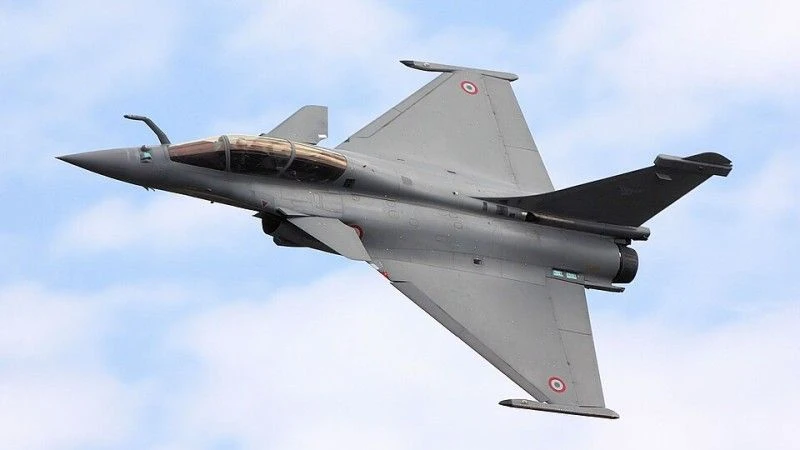
France and the United Arab Emirates have reached an agreement on the development of the Rafale F5, ending months of difficult negotiations over financing and access to sensitive technologies. Paris has resisted pressure from Abu Dhabi and India to share greater control over its fighter aircraft technology, despite the enormous financial opportunities involved. Now France has secured a new partnership with one of its largest defence customers. However, the future of its sixth-generation fighter remains unresolved, and the final financial arrangements for the Rafale F5 have yet to be agreed.
On 20 October 2026, during President Emmanuel Macron’s visit to Abu Dhabi, France and the UAE concluded an intergovernmental agreement concerning the future Rafale F5 standard. The details were subsequently presented to the French Senate on 28 October by Patrick Pailloux, head of the Directorate General of Armaments (DGA).
The agreement covers four specific areas: the new M88 T-REX engine, conformal fuel tanks, an advanced reconnaissance and targeting pod, and next-generation optical and infrared sensors. Interestingly, France has managed to resume cooperation without agreeing to the broad technology transfers previously sought by the Emirates.
This is particularly significant given the earlier collapse of negotiations. Abu Dhabi had reportedly been prepared to contribute approximately €3.5 billion towards the development of the Rafale F5, but expected greater access to sensitive technologies in return. Dassault Aviation and the French authorities resisted those demands, despite the financial pressure surrounding France’s increasingly expensive military modernisation programmes.
Paris was prepared to risk losing billions rather than surrender control over key elements of its combat aircraft technology. France has also faced similar pressure from India, where negotiations over future Rafale acquisitions have involved demands for greater industrial participation and control over aircraft systems.
Four technologies and billions of euros
The most important technological development concerns the M88 T-REX engine, being developed by Safran. Its thrust is expected to increase by 20%, from 7.5 to 9 tonnes per engine. This additional power will help the Rafale accommodate heavier equipment and future weapons, including France’s next-generation ASN4G nuclear missile.
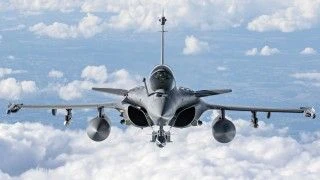
The second element involves conformal fuel tanks, designed to increase the aircraft’s operational range without occupying the external hardpoints normally used for additional fuel. This would allow the Rafale to carry more weapons while maintaining greater endurance.
Cooperation will also include the POD TR reconnaissance and targeting system developed by Thales, alongside upgraded front-sector optical and infrared sensors. The latter are particularly important for detecting aircraft with reduced radar signatures. According to Pailloux, the POD TR could eventually be integrated into a large combat drone being developed by the Emirates.
However, the exact division of industrial responsibilities and access to technical information remains subject to further negotiations. The French government has confirmed that future contracts will contain provisions protecting intellectual property.
Financing is another unresolved question. France’s draft 2027 budget includes €3 billion in commitment authorisations for the Rafale F5 programme. Pailloux has also referred to an initial €1.6 billion estimate for preparatory development work, rather than the total cost of the new standard.
The previously discussed Emirati contribution of €3.5 billion has not been formally confirmed. Nevertheless, Abu Dhabi has committed to developing the partnership, and negotiations are now taking place with industrial companies, including Dassault Aviation and the Emirati EDGE Group.
For France, securing such a partner is an important achievement. The UAE has already ordered 80 Rafale F4 fighters, the largest single export order in the aircraft’s history. Its participation in F5 development could provide substantial financial support while extending industrial cooperation between Paris and Abu Dhabi for years.
France has secured a partner, but its next fighter remains uncertain
The agreement comes at a difficult time for French combat aviation. The collapse of the Franco-German FCAS programme has left Paris facing the prospect of developing its future sixth-generation fighter under national leadership, without a confirmed international partner capable of sharing the enormous costs.
France has the necessary industrial expertise. Dassault Aviation, Safran, Thales and MBDA can develop advanced aircraft, engines, sensors and weapons. The real question is how France will finance several major programmes simultaneously, including the Rafale F5, its future combat aircraft, unmanned systems, nuclear deterrence and the next aircraft carrier.
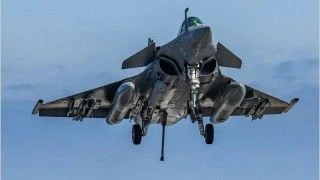
The Rafale F5 is expected to be qualified in 2033, with at least 47 aircraft at this standard planned for the French Air and Space Force by 2035. However, it remains an extensive modernisation of the existing Rafale rather than a completely new sixth-generation fighter.
Interestingly, the Emirati agreement could also indicate how France intends to approach future international partnerships. Instead of building entire aircraft through complicated multinational programmes, Paris may increasingly seek foreign partners for individual technologies while retaining overall control over the design.
This is precisely what Pailloux suggested during his Senate hearing. After the difficulties experienced with Germany, cooperation on specific technologies, such as engines, sensors and drones, may prove more practical than another enormous multinational fighter programme.
For now, France has achieved something important. It has resisted financial and technological pressure, brought the Emirates back into the Rafale F5 programme and retained control over the aircraft’s overall development. The next challenge will be to turn the agreement into industrial contracts and secure sufficient financing for the years ahead.
There is also a geopolitical dimension that deserves attention. The UAE maintains extensive economic and political relations with the Russian Federation. In August 2026, a new bilateral trade and investment agreement between Abu Dhabi and Moscow entered into force. Meanwhile, Russia has expanded its military influence in several African countries where France has lost much of its former military presence, particularly in the Sahel.
It is therefore interesting that France is deepening a strategic defence partnership with a country that simultaneously maintains close relations with Moscow. Paris and Abu Dhabi clearly see significant advantages in continued cooperation, despite their different relationships with Russia. That broader question, however, deserves a separate discussion…


