












- WIADOMOŚCI
Poland’s Border Guard is expanding its anti-drone system. Completion date has been announced


By the middle of next year, the Ministry of the Interior and Administration aims to complete a system for detecting objects in airspace along the entire eastern stretch of Poland’s border. As Deputy Minister Czesław Mroczek announced, the project, being carried out by the Border Guard, is intended to strengthen airspace monitoring and provide the military with additional information.
Deputy Interior Minister Czesław Mroczek appeared on Polish Radio One on Monday. During the interview, he was asked, among other things, what conclusions the ministry had drawn from recent incidents involving breaches of Polish airspace, and about the activities of the services under his authority.
“As far as the Border Guard is concerned, a few months ago we began building a highly effective system for detecting objects in airspace. This is also an element that strengthens the information available to the military,” Mroczek said.
He announced that the work would cover the entire eastern stretch of the national border. “We will probably have completed the system along the whole eastern border by the middle of next year, starting with Ukraine, then Belarus and Russia,” the Deputy Interior Minister said.
The first module of the Border Guard’s anti-drone system was launched in March 2026. The investment was completed in Ozierany Wielkie, near the border with Belarus, and cost more than 60 million złoty.
At the time, the Ministry of the Interior and Administration said the system was designed to detect, identify and counter flying objects. It consists of radars that detect aircraft and radio scanners that can identify objects. It is also integrated with the border barrier and can track flying objects over distances of up to several hundred kilometres.

The ministry stressed that the solutions were designed by Polish scientific and engineering teams, while the equipment was manufactured by Polish companies. System operators have completed training, and airspace surveillance is carried out around the clock.
The system’s launch coincided with an expansion of the Border Guard’s powers. Since 1 August 2025, officers have been able to neutralise unmanned aircraft.
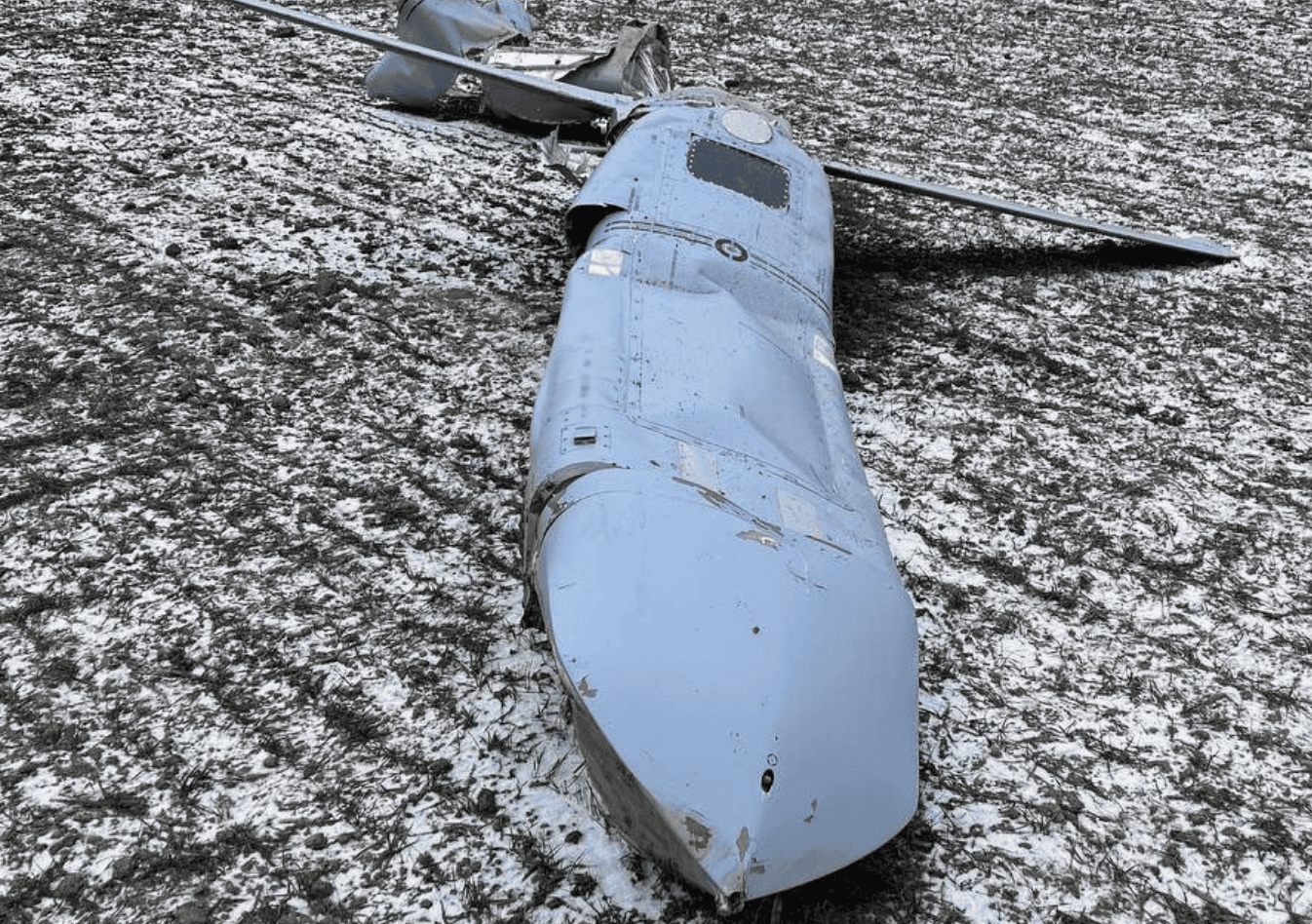
The information provided on Monday by Deputy Interior Minister Czesław Mroczek came in the wake of Friday’s breach of Polish airspace, which occurred during Russia’s large-scale overnight attacks on Ukraine. Deputy Prime Minister and Defence Minister Władysław Kosiniak-Kamysz said at the time that objects had fallen in three locations: Nowy Lipowiec in Biłgoraj County, Rudnik nad Sanem in Nisko County, and Mołodycz in Jarosław County.

The Defence Minister initially said that two of the objects might have been missiles, while the third was most likely a jet-powered drone. On Sunday, however, the District Prosecutor’s Office in Lublin announced its preliminary findings, which indicate that the remains of Russian Kh-101 cruise missiles were found at all three locations.
“Based on the inspections carried out so far (…) it has been established that remains of Kh-101 cruise missiles were found at all three locations: Nowy Lipowiec (Biłgoraj County), Rudnik (Nisko County) and Mołodycz (Jarosław County),” the Lublin prosecutor’s office said.
Prosecutor’s office spokesperson Marcin Kozak added that the missiles found were manufactured in the fourth quarter of this year at a facility in Dubna, in the Moscow Region of the Russian Federation.
Investigators cautioned that these were preliminary findings, based on inspections of the sites carried out so far with the involvement of military technology and weapons specialists. The circumstances surrounding the objects’ fall are being investigated by the prosecutor’s office and the Military Police.
 / Defence24.com