












- WIADOMOŚCI
East Front News #92: new power in Hungary and Russian hybrid attacks in Poland

East Front News is a weekly newsletter summarizing the past week’s most important events concerning security and the situation in the Central and Eastern Europe region. It includes original opinions and comments, along with key news items significant from a Polish perspective. If you would like to receive this newsletter, please sign up by clicking
What can we learn from Finland? a lot actually
Finland’s accession to NATO in 2023 has strengthened both its national defence and the Alliance’s deterrence, particularly in Northern Europe. While the country maintains responsibility for defending its own territory, integration with NATO has enhanced joint planning, interoperability, and operational readiness. Finland contributes significantly through its large, well-trained reserve forces, general conscription system, and a strong societal commitment to defence, all of which increase resilience and strategic depth in the Baltic and Nordic regions.
The Finnish model of comprehensive security links military defence with civilian preparedness, involving authorities, businesses, and citizens in maintaining national resilience. Despite no immediate military threat, the regional security environment remains tense due to Russia’s actions, especially the war in Ukraine. Finland continues to modernise its armed forces, focusing on land capabilities, multi-domain operations, and cooperation with allies such as Sweden and Poland, ensuring readiness for high-intensity conflict and long-term security challenges.
Author: Aleksander Olech

New power in Hungary. how much will actually change?
Peter Magyar’s decisive electoral victory in Hungary marks the end of Viktor Orbán’s 16-year rule and grants his TISZA party a constitutional majority, enabling sweeping reforms. The transition of power was largely smooth, though concerns about media bias and misuse of state resources were noted. International reactions suggest the change could influence EU policy, relations with Ukraine, and the broader political landscape, with expectations of improved cooperation with Brussels and potential access to previously frozen EU funds.
Despite a more pro-European and pragmatic approach, major policy shifts may be gradual. The new government is expected to reduce confrontational tactics within the EU and adopt a more cooperative stance, while maintaining core national interests, particularly regarding Hungarian minorities and energy security. Relations with Russia will likely become less overtly political but remain shaped by strong energy dependence, with diversification planned over the long term. Hungary’s future policy is therefore expected to be more predictable, though not radically transformative.
Author: Patryk Jagnieża

Russia forms new helicopter regiment
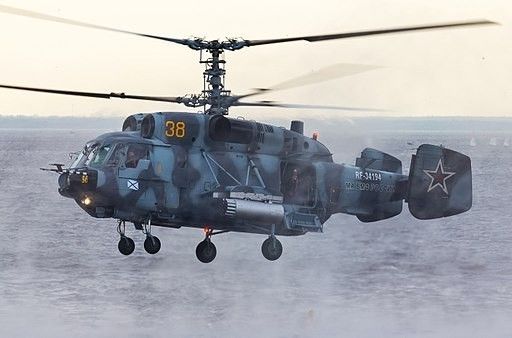
Russia has established a new independent helicopter regiment based at Severomorsk-2 in Murmansk Oblast, under the Northern Fleet’s 7th Mixed Aviation Corps. Unlike most recent military developments focused on the war in Ukraine, this unit is intended for operations in the Arctic region. It has been built around existing Mi-8 helicopters and reinforced with refurbished Ka-27 and Ka-29 variants, with an increasing emphasis on shipborne operations and pilot training.
The move highlights Russia’s continued strategic focus beyond Ukraine, particularly on securing its northern maritime assets, including key naval bases and ballistic missile submarines. Lessons from the war in Ukraine—especially the effectiveness of helicopters against unmanned systems—have influenced this development. Despite ongoing combat operations, most Northern Fleet aviation assets remain dedicated to Arctic operations, underlining the region’s long-term military importance.
Author: Jarosław Ciślak
See also 
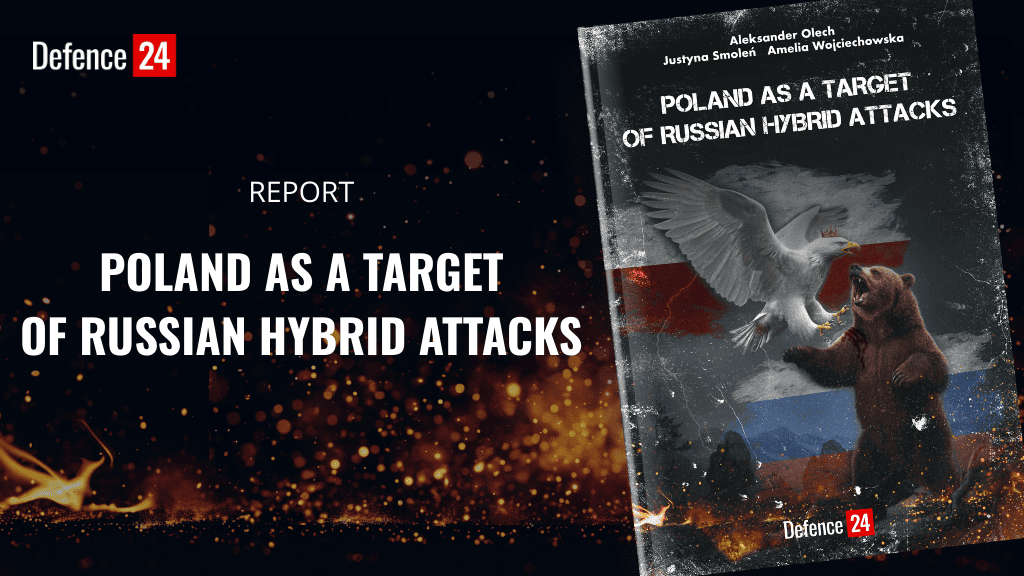
Report: Poland as a target of russian hybrid attacks
Poland has become a key target of Russian hybrid operations, including sabotage, cyberattacks, disinformation, and intelligence activities conducted below the threshold of open war. These actions, described as „Phase 0” of conflict, have intensified significantly since 2022, when Poland emerged as a major logistical hub supporting Ukraine. The report highlights that these incidents are not isolated but form part of a long-term strategy aimed at testing resilience and destabilising both Poland and NATO’s eastern flank.
The study shows that the true scale of these activities is likely underestimated due to incomplete data and ongoing investigations. It calls for a comprehensive response strategy combining deterrence, offensive capabilities, protection of critical infrastructure, and consistent information policy. Strengthening military capabilities and societal resilience is seen as essential, as hybrid warfare remains a central tool of modern geopolitical competition.
Author: Aleksander Olech
Macron in Poland. strategic missiles and nuclear deterrence
French President Emmanuel Macron’s upcoming visit to Poland is expected to focus on strengthening bilateral cooperation in defence, energy, and security. Key discussions will include France’s extended nuclear deterrence initiative, which may involve Poland alongside other European partners, as well as nuclear energy projects such as Poland’s second nuclear power plant. The talks are also likely to address deeper political and industrial cooperation, reflecting France’s growing role as a strategic partner for Poland.
In addition to nuclear issues, negotiations may cover major defence procurement and joint development programmes, including long-range missile systems and aerial refuelling capabilities. Potential cooperation with French industry could enhance Poland’s military modernisation, particularly in deep-strike and logistics capabilities. Overall, the visit signals a significant step towards closer Polish-French relations and greater European defence integration.
Author: Jędrzej Graf

Trump has a list of "naughty" NATO members
The administration of Donald Trump is reportedly categorising NATO allies into „model” and „naughty” members based on their level of engagement and support for US-led operations. Countries that declined to assist during Operation „Epic Fury” are said to be under particular scrutiny, with discussions in Washington focusing on possible ways to penalise less cooperative allies. The classification was allegedly prepared ahead of a visit by Mark Rutte, although it remains unclear whether he reviewed the list.
While the full list has not been disclosed, Poland and Romania are believed to be among the „model allies”, recognised for defence spending and support for US operations. Positive standing could result in benefits such as increased American troop deployments. The approach highlights a more transactional view of alliances, where commitment and cooperation may directly influence strategic and military decisions within NATO.
Author: Michał Górski

Europe's unspoken divide: Italy's quiet pivot toward Türkiye
Italy is increasingly deepening its strategic cooperation with Türkiye, particularly in defence and advanced military technologies, marking a shift from traditional EU-centred partnerships. This rapprochement reflects Europe’s growing reliance on Turkish capabilities in areas such as drones, air defence, and naval systems, where EU programmes remain delayed or insufficient. For Rome, Türkiye offers not only modern equipment but also operational experience and a strong geopolitical presence in regions crucial to Italian interests, including the Mediterranean and North Africa.
This partnership highlights a broader contradiction within Europe: while the EU promotes strategic autonomy, it increasingly depends on external partners like Türkiye to meet urgent security needs. Italy’s pragmatic approach prioritises bilateral cooperation, co-production, and rapid capability development, even as political tensions with Ankara persist. The growing alignment may reshape European security dynamics, raising questions about Türkiye’s long-term role within Europe’s defence architecture.
Author: Natalia Potera

France to procure additional artillery
France is planning to expand its artillery capabilities by increasing the number of CAESAR Mark II self-propelled howitzers, potentially reaching up to 150 systems by 2035. The modernisation programme includes replacing older systems and supplementing existing fleets, with initial deliveries expected in 2026. Depending on procurement decisions, the total number of new systems by 2030 could range from around 120 to slightly higher, reflecting a gradual but consistent strengthening of French artillery forces.
The CAESAR Mark II offers improved mobility, protection, and advanced fire-control systems, while maintaining compatibility with a wide range of ammunition. This expansion aligns with broader efforts to enhance operational readiness and adapt to high-intensity conflict scenarios. At the same time, older systems may be transferred to allies, reflecting both modernisation priorities and ongoing international demand for proven artillery platforms.
Author: Adam Świerkowski

Estonia accelerates domestic ammunition production with major new investments
Estonia is rapidly assembling a domestic ammunition industry in record time and from minimal existing capacity through a series of major strategic investments. This week, Tallinn announced that Turkish firm ARCA Defense will build a €300 million large-calibre 155 mm ammunition plant in the Põhja-Kiviõli Defence Industrial Park. The facility is expected to open in 2028 and create around 1,000 jobs.
The project sits within a wider industrial expansion. Under contracts signed in March, four manufacturers — Nitrotol OÜ, Frankenburg Technologies OÜ, Infinitum Strike OÜ, and Odin Defence OÜ — are set to build similar facilities in the Ermistu Defence Industrial Park from 2027. It follows another major investment by South Korea’s Hanwha Aerospace, which is committing more than €100 million, including to a 40 mm ammunition plant with annual output exceeding 300,000 rounds.
Both the speed and scale of Estonia’s expansion are striking. The country opened its first munitions plant in a century only in January, yet within a few years it is set to operate several large, modern production facilities. For Tallinn, boosting ammunition output has become a central security priority, with nearly one third of its record defence budget set to be devoted to munitions, with spending in this area projected to reach €3 billion over 2025–2029.
Author: Kacper Kremiec


