


- WIADOMOŚCI
Israeli elections inconclusive. Arab parties could be the deciding factor
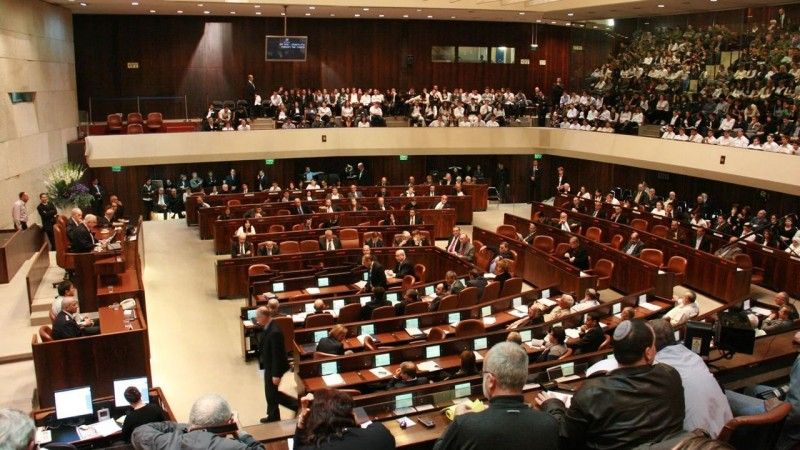
Tuesday’s parliamentary elections in Israel have failed to yield a clear result. According to exit polls, Prime Minister Benjamin Netanyahu’s Likud party won the most votes; however, neither the ruling camp nor the opposition secured a majority in the 120-seat Knesset.
The bloc of the Prime Minister’s opponents, which brings together groups ranging from the right to the left and is led by former Chief of General Staff Gadi Eisenkot, may win 52–53 seats, while parties aligned with Netanyahu are projected to take 50–51. At least 61 seats are required to form a government.
Parties representing Israel’s Arab citizens could play a key role in negotiations. Forecasts suggest they could win 17–18 seats, which would be a record result for them. Their support could enable the opposition to remove Netanyahu from power, although before the elections, almost all major Jewish groups had ruled out cooperation with Arab parties.
See also 

Preliminary projections indicate that Mansour Abbas’s moderately Islamist Ra’am party could obtain seven seats, while the left-wing Joint List may secure 10–11. Both groups remain outside the two main political blocs, and their potential support for a new cabinet will depend both on the readiness of other parties to cooperate and on the fulfilment of their demands.
Arab citizens constitute approximately one-fifth of Israel’s population. Most are descendants of Arabs who remained within the state’s territory after the 1948 war and obtained Israeli citizenship. They have full voting rights, yet their community has faced discrimination and inequality for decades. Arab localities often receive fewer funds for infrastructure and public services, and residents face limited opportunities for home expansion as well as poorer access to healthcare and bomb shelters. Crime also remains a serious problem, with the police facing accusations of insufficient enforcement.
Cooperation with Arab groups is hindered by the mistrust of a significant portion of the Jewish electorate, which has deepened following the Hamas attack on 7 October 2023 and the subsequent war in the Gaza Strip. However, as a community, Israeli Palestinians are not linked to Hamas, and the victims of the attack and those abducted to the Gaza Strip included Arab citizens of Israel. Meanwhile, far-right nationalist parties have sharpened their anti-Arab rhetoric, promising, among other things, the “Judaisation” of the Galilee and the Negev, which are inhabited by large Arab communities.
See also

Following the announcement of the exit polls, Moshe Feiglin, a politician running on the far-right Otzma Yehudit (Jewish Power) list, described the strong performance of Arab parties as a “political 7 October”. He also stated that Arab citizens of Israel are Palestinians, not Israelis, contrasting identities that for some of the country’s inhabitants are not contradictory.
Arab parties have their own demands, the implementation of which they may expect in exchange for supporting a government. Ra’am MK (Member of Knesset) Iman Khatib-Yasin pointed to the problems facing Israel’s Arab citizens and also advocated for the creation of a Palestinian state and the resumption of the peace process. These are demands that are difficult to reconcile with the positions of almost all potential coalition partners. However, Ra’am already broke a political taboo in 2021 by joining Naftali Bennett’s government as the first Arab party in an Israeli ruling coalition.
The leader of the Joint List, Yousef Jabareen, emphasised that his group cannot be overlooked in any political scenario. Among his priorities, he listed the fight against crime and discrimination, opposing the demolition of Arab homes, and improving housing conditions.

After the elections, Eisenkot announced the formation of a “Zionist government” as quickly as possible, without clarifying whether he is still considering the creation of a minority cabinet that would later seek support in the Knesset, including from Arab parties. Meanwhile, Avigdor Lieberman, leader of the right-wing Yisrael Beiteinu party, did not repeat his earlier declaration excluding cooperation with these groups after the vote. The opposition is therefore faced with a choice between upholding pre-election promises and entering into negotiations that may prove essential to ousting Netanyahu from power.
Following the elections, President Isaac Herzog will hold consultations with parliamentary parties and then entrust the mission of forming a government to the politician he believes has the best chance of building a majority. A lack of agreement could mean a weeks-long impasse, benefiting Netanyahu, who will remain Prime Minister until a new cabinet is appointed. If attempts to form a coalition fail, further elections could be held early next year. A similar crisis led to five votes between April 2019 and November 2022.
Netanyahu, who is 77, has held the office of Prime Minister for nearly 19 of the last 30 years and has repeatedly emerged victorious from political crises. Since 2009, opponents have managed to remove him from power only once—in 2021—but he returned to the post eighteen months later. The current elections were held in the shadow of the Prime Minister’s trial on corruption charges and criticism regarding the failures of the security services prior to the Hamas attack on 7 October 2023, in which approximately 1,200 people were killed and 251 were abducted to the Gaza Strip.
See also

Netanyahu’s main rival was 66-year-old Eisenkot, a former Chief of General Staff, who lost a son and two nephews during the war in the Gaza Strip. During the campaign, he emphasised his military experience and tough stance on security matters, while presenting himself as a centrist politician on domestic issues.
On international matters, the positions of the two main rivals remain similar. Both advocate for ending Hamas rule in the Gaza Strip and disarming the organisation, including through the use of military force. They are also united in their aim to weaken Iran militarily and prevent it from acquiring nuclear weapons. The largest Jewish parties also oppose the creation of an independent Palestinian state. The arrest warrant for Netanyahu issued by the International Criminal Court (ICC) in connection with allegations of war crimes in the Gaza Strip did not play a significant role in the campaign; the charges are widely rejected in Israel.
Tuesday’s elections were characterised by an exceptionally high turnout. According to the Central Elections Committee, by 8:00 PM, over 74 per cent of eligible voters had cast their ballots—the highest at this hour in several decades and approximately eight percentage points higher than in the 2022 elections.


