












- ANALIZA
- KOMENTARZ
- WIADOMOŚCI
Problematic relations between Europe and the United States

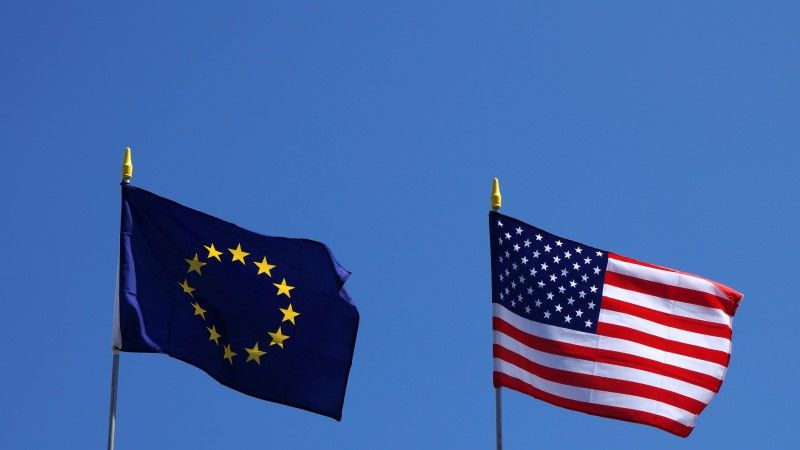
We have reached a point where it is necessary to seriously consider— in which direction is the Transatlantic heading? The question sounds striking, although from the outset it is clear that something does not quite fit. Because if we maintain even a bit of nautical precision, no serious vessel „floats” — it sails. The problem is that relations between Europe and the United States increasingly resemble a ship that is not so much following a course as drifting between declarations and reality, without a clearly defined direction.
This is not, of course, about the literary, Gombrowicz-styleTrans-Atlantyk, although at times one might be tempted to treat the current situation as yet another grotesque. One side speaks solemnly about a „community of values,” while the other, with even greater seriousness, checks what exactly is hidden behind that slogan - preferably in dollars, equipment, and concrete decisions. When it comes to action, however, it turns out that „allied solidarity” is a concept broad enough for everyone to fit something different into it.
We are dealing with a situation in which mutual cynicism ends, because hard reality begins. The conflict in the Middle East is escalating, missiles are flying, installations are burning, tensions around the Strait of Hormuz are affecting global security and oil prices, and above all - people are dying. And in all this turmoil, the Transatlantic, instead of sailing on a steady course, gives the impression that its crew is still debating where it actually wants to go.

How should this all be interpreted?
If anyone still has doubts about where transatlantic rhetoric ends and reality begins, the past weeks have provided more than enough examples. Relations between the EU and the US have just moved from the level of declarative unity to a stage where that unity can be truly tested. As is often the case, the test turned out significantly worse than the announcements.
The current situation has ceased to be an abstract debate about security. Since the strike on Iran, we are no longer dealing with incidents, but with a regular conflict. This is no longer a topic for a press conference with appeals for calm and peace. It is a situation that requires decisions. And those decisions are no longer as „common” as we like to believe.
The problem begins when the pace of action on one side collides with the lack of a sense of co-ownership on the other. The Americans, in line with their strategic DNA, act decisively and assume that allies will at least politically fall into line.
Europe looks at this more coolly. If the decision was made without it, it is difficult to expect automatic readiness to bear its consequences. Lack of consultation means lack of co-responsibility, and lack of co-responsibility means - put mildly - limited motivation to act.

As a result, we have a situation in which one side speaks of a global threat and expects solidarity, while the other responds with a set of familiar tools: diplomacy, appeals to international law, and a clear reluctance to engage militarily. So this is not a hard refusal, but rather a European specialty of simultaneously not refusing and not participating. In practice, this means a distance that is large enough not to take part, yet soft enough not to say so directly.
From Washington’s perspective, this looks like a lack of solidarity at a critical moment. From Brussels’ point of view, it appears as an attempt to limit the consequences of a decision made elsewhere. It is difficult to support an operation one did not help shape, especially when its consequences - energy, economic, and security-related - may primarily affect Europe. In this view, the „community” begins to resemble a structure that works well at the level of declarations, but loses coherence when confronted with real risk.
The whole situation can be summarised in a less diplomatic, but more realistic way. America initiates a conflict and expects support, assuming the threat is global. Europe responds that globality does not automatically mean equal involvement of all parties. Washington speaks of solidarity in action, Brussels offers responsibility in words and considerable caution in deeds. One side wants quick decisions and support; the other wants influence over decisions before bearing their consequences - and watches gas prices nervously.

The essence of the problem
Here we reach the core of the issue, which goes beyond the current conflict. This is not just about the lack of support in one specific case. It is a difference in approaches to security, the use of force, and the very nature of the alliance. For the United States, military power remains one of the primary tools of policy. For Europe, it is rather a last resort, burdened with a high risk of destabilization and costs that would have to be borne locally. There is also a fundamental difference in the perception of threats. What for Washington is a test of global credibility does not necessarily have an existential character for Europe - at least not to the same extent as conflicts in its immediate neighbourhood.
As a result, tension is embedded in the very structure of transatlantic relations. The alliance functions smoothly as long as it does not require taking large-scale risks together. When a real war appears, differences in interests, perceptions, and styles of action come to the forefront. The partnership does not disappear, but begins to operate on terms defined independently by each side.
This leads to a rather uncomfortable conclusion. Transatlantic unity exists, but primarily in declarations. In practice, it resembles conditional cooperation, where solidarity ends where real military involvement begins and its consequences must be borne. Does the alliance function well only as long as it does not require going to war together?
Is a Europe–US "divorce" possible?
What still binds the two sides? To a large extent, habit, intertwined interests, and the awareness that the world outside this arrangement is even less stable. At the same time, the list of factors pushing them apart is growing. In the United States, there is an increasing tendency to treat alliances conditionally - as arrangements based on contributions and measurable benefits. In Europe, impatience with such a model is growing, along with the conviction that greater self-reliance is necessary. The concept of „strategic autonomy” in practice means building one’s own defence, technological, and regulatory capabilities - as if preparing for more independent functioning.
Although a complete „divorce” can be imagined, in practice it remains an extreme solution. A gradual erosion of ties, resembling a long-term separation rather than a sudden break, is far more likely.
A full separation would have consequences far beyond bilateral relations. It would mean a profound restructuring of the international order. Key security institutions, with NATO at the forefront, would be weakened or redefined. In economic relations, sharp tensions would emerge, and existing coordination on major challenges - such as policies toward China or Russia - would cease to function in its current form. As a result, the common system of sanctions, norms, and standards associated with the West would break down.

There are, however, clear forces that may deepen the distance between partners. On the American side, the dynamics of domestic politics are crucial. The consolidation of isolationist tendencies or a purely transactional approach could lead to reduced US engagement in Europe. Europe, in turn, is consistently developing the capacity to act independently - both in security and in industrial and technological policy - which naturally reduces dependence on the United States.
Differences in strategies toward China also remain a source of tension. Washington leans toward a more confrontational approach, while European capitals attempt to combine economic cooperation with risk reduction. Such differences may, over time, lead to an increasingly visible divergence of priorities. At the same time, the growing importance of industrial policy and technological regulation means that economic relations are increasingly taking on a competitive rather than purely cooperative character.
An additional field of disputes concerns the Middle East, including policy toward Iran. Differences in approach - from favoring pressure and force to prioritising diplomacy - lead to interpretative tensions and mutual accusations of lack of solidarity. Each side evaluates its own actions differently, which makes it difficult to build a common narrative and strategy.
Divorce scenarios, or increasingly apart
Diverging interests and approaches lead to gradual divergence, but full separation faces significant barriers. In the security domain, Europe still does not possess a full spectrum of deterrence capabilities and would need time to develop them. From the US perspective, the absence of a European base would mean losing an important pillar of legitimacy and support for global actions. Strong economic ties - covering investments, supply chains, and financial markets - further increase the cost of any separation. Importantly, neither side has a full-fledged alternative to the current partner.
The most realistic variant is an evolution toward a more distanced partnership. NATO will most likely survive, but will operate under conditions of greater tension regarding burden-sharing. One can expect more frequent trade disputes and more selective cooperation - for example, closer with regard to Russia, but less coherent toward China. Europe will develop autonomy without severing transatlantic ties.

An intermediate model is also possible, which could be described as functional separation. In such an arrangement, the United States would focus primarily on Asia, while Europe would assume greater responsibility for its own security. Transatlantic cooperation would continue, but in a more limited and conditional form.
A real „divorce” could occur only as a result of a major political shock - such as US withdrawal from NATO, a serious trade war, or a fundamental strategic conflict, for example over China. Without such a shock, adaptation of the relationship is more likely than its breakdown.
Although formal separation between the US and Europe is not impossible, it remains unlikely from a structural perspective. A gradual weakening of ties, growing European autonomy, and a more conditional American approach are far more probable. This does not mean the end of transatlantic relations, but their transformation into a framework less based on declarations and more on concrete interests.
What are the implications for our country?
A potential weakening of EU–US relations would have almost existential significance for Poland. Poland is in a particular situation: it is both one of the greatest beneficiaries of strong transatlantic ties and one of the countries most exposed to the consequences of their weakening.
In security terms, the change would be most strongly felt. Europe’s defence system still relies on NATO (out of 27 EU countries, 23 are NATO members, and conversely, out of 32 NATO countries, 23 are EU members). Within NATO, the American potential plays a key role. For Poland, any weakening of US engagement would automatically increase the level of strategic uncertainty. This is not only about military presence, but about the credibility of the entire deterrence mechanism. In such a scenario, we would have to move even faster toward a model based on maximising our own defence capabilities (which we are already intensively doing), assuming that allied support may be less certain or delayed.
The most difficult challenge, however, would be our fundamental strategic dilemma. Poland is deeply rooted both in transatlantic security structures and in European integration. In a situation where the interests of Europe and the US diverge, it could be forced to balance between these two poles. Clearly choosing one side would entail costs - either weakening its position in the European Union or limiting its security guarantees. Therefore, it becomes crucial to maintain the ability to function as a state that connects both worlds, rather than choosing between them.

Opportunity in crisis?
Such a situation creates a certain opportunity for Poland. If transatlantic relations become more selective, the United States may rely more on chosen, most credible European partners. However, this must be associated not only with greater military presence, but also with access to technology and greater political significance. Are we achieving this? For example, if we invest billions in armaments abroad, are we buying real defence capabilities, or merely the right to use them in a limited way - without access to technology, source codes, and the ability to service them independently?
Poland has already strengthened its position as a key US ally on NATO’s eastern flank. Such a role carries certain risks. It may generate tensions with some Western European countries and increase exposure to pressure from adversaries.
Thus, the weakening of transatlantic ties is not only a problem. It is also a potential - though not automatic - advancement for Poland. In a world where Europe must increasingly rely on itself, the role of frontline states becomes invaluable. Poland, as a large country on the eastern flank with a growing military potential, has already entered the top tier of European security policy.
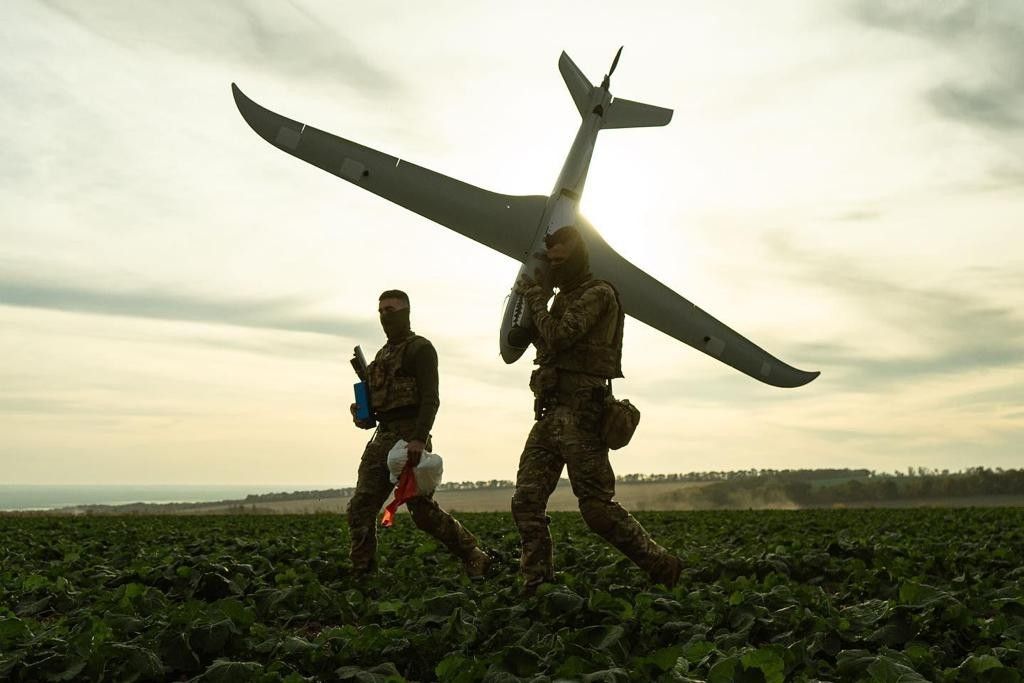
Of course, it is not enough to showcase large investments in the military. Equally important is increased political activity and the ability to build coalitions. However, the foundation is the economy. A strong economy, with international linkages (because purely national industry is now more of a curiosity), deters a potential aggressor better than all military exercises combined. At the same time, it gives allies a strong reason to defend their interests in Poland.
We often forget about the economy in the context of global tensions. Potential EU–US disputes may mean market fragmentation, technological wars, and differing standards. Poland, connected to both the EU and the US, will have to balance carefully so as not to choose one side at the expense of the other. It will be crucial to maintain access to both economic spaces without being forced into a clear choice.
In this context, regional cooperation becomes critical. It is not only about neighbours. Finland, Sweden, and other „north-eastern allies” think similarly about threats. In a world of weaker transatlantic ties, such regional formats may replace part of the burden currently carried by NATO and the EU. Poland cannot be merely a passive participant - it must co-create the security architecture in the region if it wants to truly matter.
Ultimately, the greatest threat to Poland would not even be the „divorce” between the EU and the US itself, but its chaotic, unstructured course. Uncertainty about the rules of cooperation, lack of clear guarantees, and dispersed responsibility would increase the risk of strategic miscalculations. In such an environment, the importance of states capable of acting proactively and building stability around themselves grows.
In a world of less stable transatlantic relations, Poland may become either a peripheral frontline state or one of the central pillars of a new security architecture in Europe.

Community of values or divergence of interests?
Is this picture really as obvious as it seems? The European – American alliance endures, but functions best when no one has to truly test its value. In moments of trial, the United States acts quickly and decisively, while Europe reminds us that, besides values, it also has a cost calculation and its own limits of engagement. Some see this as a lack of loyalty, others as a remnant of rationality. The US-Iran conflict exposes this clearly. America stands for quick decisions, a hard line, and pressure on allies. The EU represents cautious calculation of costs, fear of escalation in the Middle East, and the question of whether this is truly „our war.” The result? Instead of a united front, there are diplomatic appeals for de-escalation and very limited support, if any. Europe does not see this conflict as „existential for Europe” (unlike, for example, the situation in Ukraine).
In practice, this means that the transatlantic relationship increasingly resembles not an unconditional alliance, but a discretionary arrangement. The US does not want to be Europe’s „expeditionary force,” and Europe does not intend to be one for the US. The problem is that the world does not necessarily intend to adapt to this.
It is not possible to simultaneously expect American determination and European restraint as a permanent model of action. Nor is it possible to conduct interventions alone while counting on others’ legitimacy, or to build stability solely through declarations and appeals for de-escalation.
If the West wants to remain more than just a „consultative format,” it will eventually have to answer an uncomfortable question: is it still a security community, or already just a club that meets to jointly conclude that the situation is complicated?


