












- WIADOMOŚCI
- ANALIZA
Putin to Trump: Let’s crush the common enemy

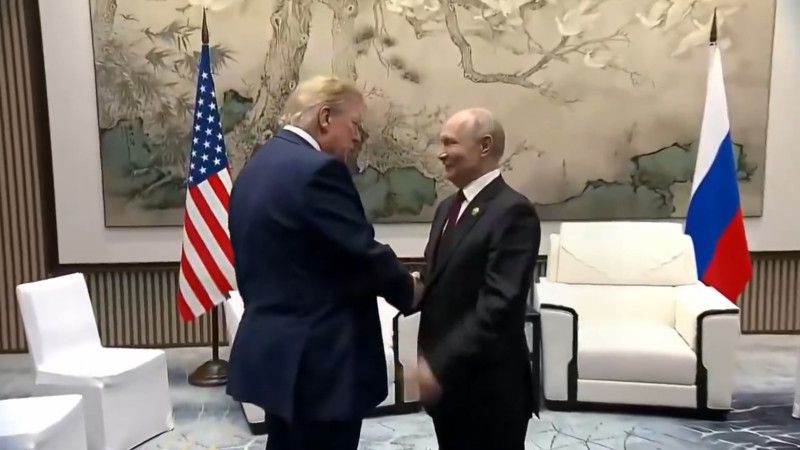
Vladimir Putin is acutely aware that, from his perspective, an open confrontation with the US would be suicidal. Having deciphered Trump’s mindset, he has chosen a different path. This presumptive alliance is based neither on universal, democratic principles nor on the shared will to solve global problems. It’s based on the intent to destroy the common enemies: the woke culture, the globalists, the liberal order.
Last Thursday, during a press conference in Shenzhen, President Vladimir Putin was asked by a Russian journalist about the historical echoes of the trilateral China-US-Russia summit, specifically the emerging comparisons to the Yalta meeting over 80 years ago. “What was so bad about Yalta?” the Russian leader replied. “Firstly, Yalta enshrined the victory over Nazism. I wouldn’t be against that. I believe it would be right to enshrine the victory over neo-Nazism, so that we can speak of eradicating the very ideological roots of xenophobia, Russophobia, and other phobias, and of eradicating everything connected with collaborationism during the Second World War and collaboration with Hitler and his regime. What is wrong with that?”

In all likelihood, no one in the audience had any doubts about which nations and which politicians Vladimir Putin was referring to while speaking of the need to “eradicate neo-Nazism”.
Quite obviously, he had Ukraine in mind, a country depicted in today’s Kremlin propaganda virtually as the heir to the old fascist movements in Europe. The reference to “collaborators” working with Nazi Germany, in turn, clearly points to the Baltic states—a recurrent tune in Moscow’s narrative, in which Estonians, Lithuanians, and Latvians are oftentimes portrayed as Hitler’s ardent supporters during World War II.
This is another area where Vladimir Putin would like to form a united front with Donald Trump. Thus, the “fight against neo-Nazism” would become yet another battlefield where Russia and the United States would face a common enemy. These particular efforts have so far been unsuccessful, although the ground for such an alliance seems to be fertile.
The American president makes no bones about his animosity towards Volodymyr Zelensky, yet he expresses flabbergasting sympathy for his Russian counterpart. He has repeatedly stressed Putin’s apparent willingness to “end the war” and ostentatiously called him “my friend”.
This means Trump will be increasingly inclined to accept Putin’s arguments and agree with his geopolitical assessments. Perhaps also with the Russian president’s view of Zelensky as a “neo-Nazi”. Already, a legion of MAGA-aligned opinion makers believes, for example, that in 2014 the Americans staged a coup in Kyiv, ousting Viktor Yanukovych. And they question the legitimacy of every subsequent Ukrainian president, including the current one. Elon Musk, among others, came up with this interpretation in a recent interview with The New York Times. If the Russians can infect Trump’s inner circle with such ahistorical deliberations, they will surely try again.
See also 
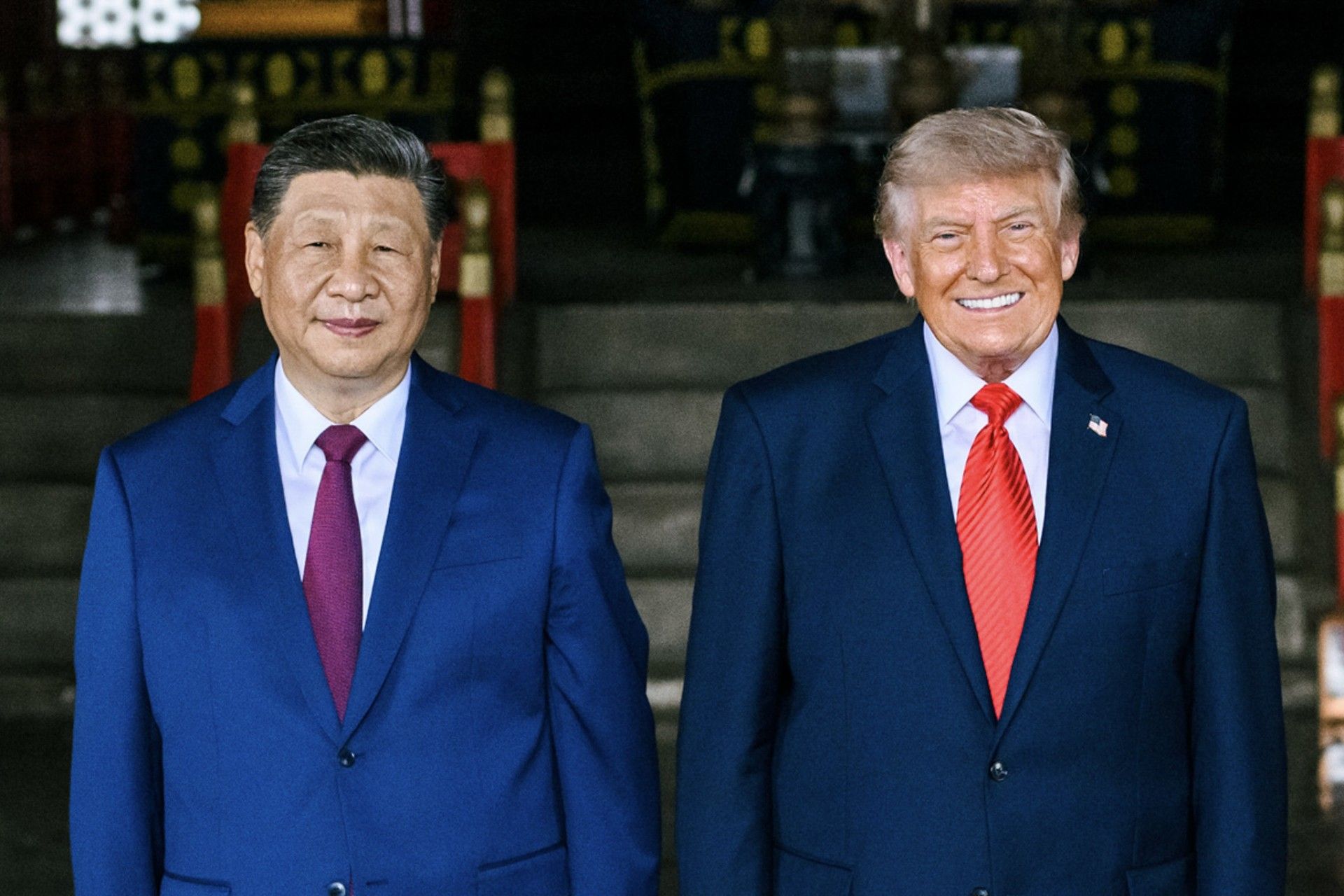
Seemingly, the Kremlin has chosen the “common enemy” strategy for good and is remarkably consistent in its modus operandi. Interestingly, this is by no means a new phenomenon. Russia once covered up its crimes in Chechnya, talking about a “joint global fight” against Islamic terrorism. Nowadays, it’s the woke culture, which could be described as a “common enemy”, with Putin and Trump “defending Christianity” against the onslaught of hedonism. The “globalists”, led by George Soros, are another example. As is the International Criminal Court in The Hague. And the broadly defined “liberal order”. During the aforementioned conference in Shenzhen, Putin claimed that he shared “civilisational values” with Trump. “We were just discussing the issue of democracy—but what is democracy, really?” the Russian president mused. “Is it the liberal order that certain groups have sought, and continue to seek, to impose upon the entire world, fashioned according to their own template? Is that what democracy is? Or is it, in fact, a liberal attempt at monopolistic power, a liberal dictatorship? What is it, exactly?”
These words are music to the ears of Trump and his loyal electorate in the US. As is all criticism of former President Joe Biden. And the mockery or explicit threats aimed at European countries, which Trump holds in low regard. Any derision of a “technologically backward” and “morally rotten” Europe that appears in the comments of MAGA influencers is immediately picked up and amplified by pro-Russian bots.
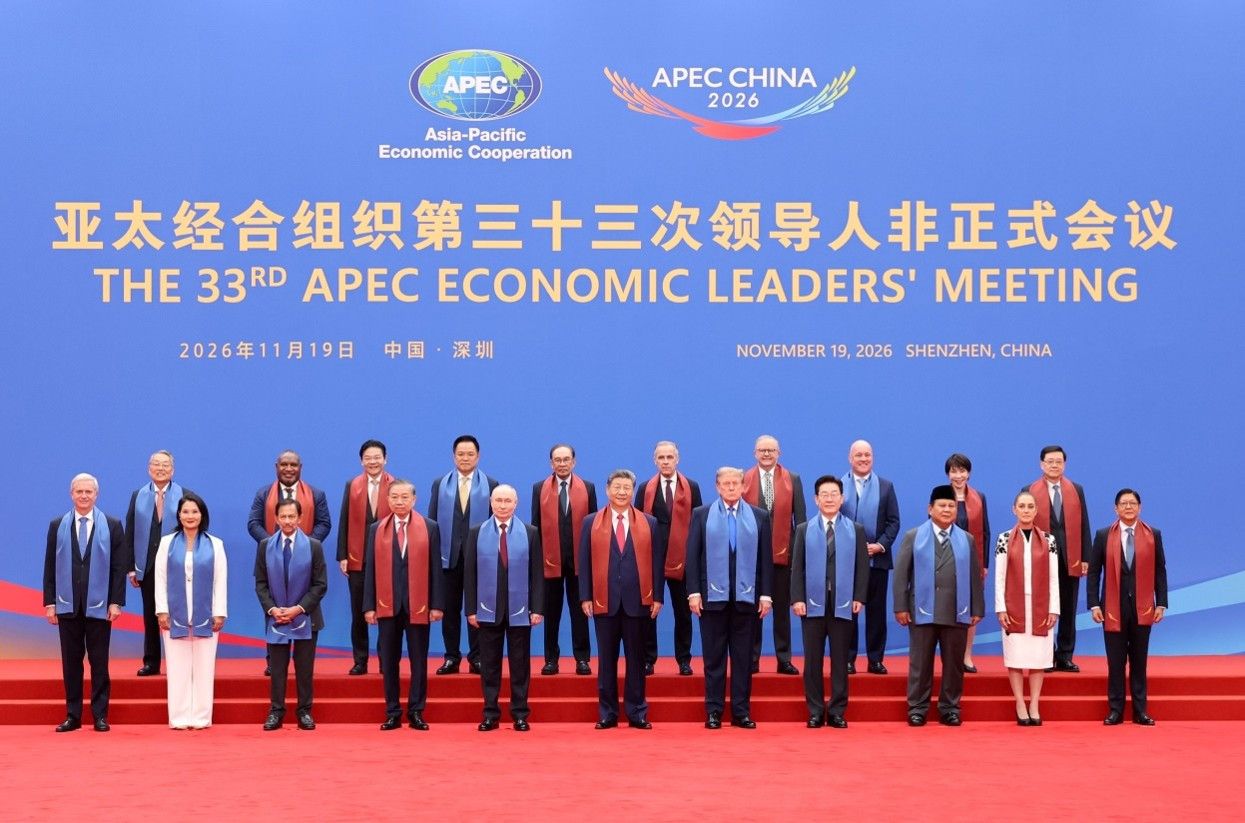
In Putin’s rhetoric, the United States is no longer an enemy, or even a rival. Since Donald Trump’s second inauguration, Russian authorities have conspicuously refrained from sparring with the Republican administration (except for condemning the military intervention against Iran). Quite the contrary. Let us quote another passage from Putin’s remarks in Shenzhen: “The most important point is this — and I have no doubt about it — President Trump is genuinely committed to resolving conflicts, including the conflict in Ukraine, and he is sincerely interested in improving bilateral relations across a range of areas, including, of course, the US-Russia relationship, which matters to us.”
Undoubtedly, US-Russia relations are of utmost importance for Putin. However, he is acutely aware that, from his perspective, an open confrontation would be suicidal. Having deciphered Trump’s mindset, he has chosen a different path. This presumptive alliance is based neither on universal, democratic principles nor on the shared will to solve problems and build a better future for the world. It’s based on the intent to destroy the common enemies.