












- WIADOMOŚCI
- KOMENTARZ
Russia cannot protect its border. Ukrainians have entered Kursk Oblast again

 Add as preferred on Google
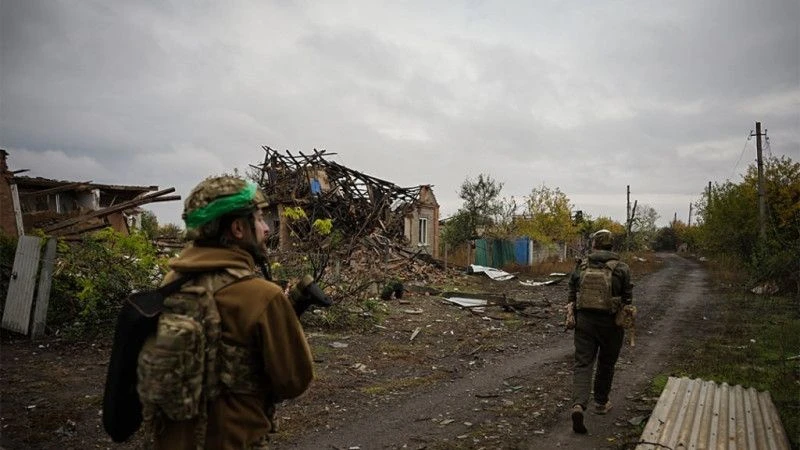
Ukrainian forces have probably crossed into Kursk Oblast and captured the small settlement of Novy Put.
The Ukrainian armed forces’ actions in Kursk Oblast are probably not the start of a major offensive. They are, however, a clear sign that the Russians cannot secure their own territory and that, under any Ukrainian pressure, their defences give way very quickly. Interestingly, the first reports of Ukrainian forces entering Kursk Oblast appeared in Russian military bloggers’ posts.

Western sources, meanwhile, have found no confirmation of these reports. In any case, the capture of Novy Put in Glushkovsky District on 18 November 2026 was not a military breakthrough, especially as the settlement is probably no more than a thousand metres from the border. It was, however, a clear signal to the participants in the meeting held in Shenzhen, China, on 19 November 2026.
Presidents Vladimir Putin, Donald Trump and Xi Jinping were due to discuss a new political division of the world, and Putin wanted to be treated as an equal partner in those talks. The Ukrainians got in his way, though: first, on the night of 16–17 November 2026, they damaged the road section of the Crimean Bridge, thereby blocking passage from the Sea of Azov to the Black Sea; then, a day later, they entered Russian territory in Kursk Oblast.
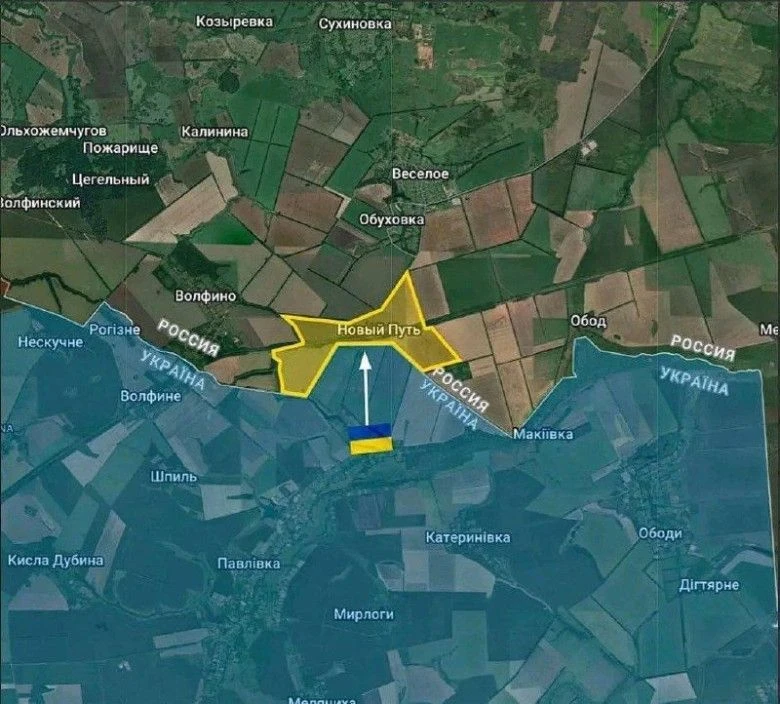
Photo. Kiiw24/Telegram
According to Russian bloggers, Russian forces regained control of Novy Put a few days later. This did not happen as a result of any major offensive; the Ukrainians probably withdrew across the border, beyond the fortifications and barriers erected there. There are also reports that Ukrainian forces will continue trying to hold positions south-west of the town of Glushkovo in Kursk Oblast, about 10 km from the border.
This may be an attempt by the Ukrainians to push the grey zone—a strip several kilometres wide under full drone control—onto Russian territory. That would completely frustrate the Kremlin’s plans to establish a 15–20 km-wide grey zone on the Ukrainian side. This strip of land, without Ukrainian troops, would be under full control of the Russians.
In trying to carry out these plans, the Russian command has accepted very heavy losses among its own units, which have continued to use bloody infiltration tactics. This has been particularly evident in Sumy Oblast, where the Russians have indeed begun slowly pushing deeper into Ukraine. Since June 2026, however, Russian losses have far exceeded the capacity of its recruitment centres to enlist soldiers on contract. At first, Russia was short by around 10,000 soldiers.
By October, losses had reached more than 50,000, reducing the size of the Russian army by over 20,000. November is likely to be even worse. It is possible that this month the Ukrainians will eliminate a record number of more than 66,000 Russian soldiers, most of them killed.
The Russians are therefore facing growing difficulties securing their own borders while continuing bloody attacks—and making few territorial gains. Their forces are becoming increasingly stretched, with the consequences recently visible not only in Kursk Oblast but also on the Lyman front, where the Ukrainians retook the settlements of Shandrygolove and Derylove, previously captured by the Russians.


