












- WIADOMOŚCI
The Russians have learned its power. Ukraine is set to produce more Neptunes

 Add as preferred on Google
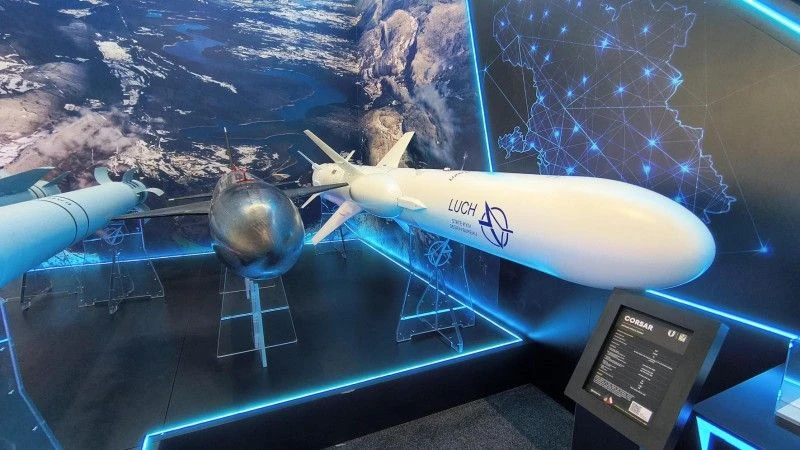
Ukraine wants to increase the production of Neptune cruise missiles, which were used during strikes on the Crimean Bridge. According to the chief designer and general director of the Luch Design Bureau, Oleh Korostelov, this year’s production is set to reach several hundred missiles. Further increases in deliveries will depend on additional funding.
Korostelov announced that throughout 2026, the number of Neptunes produced will be in the hundreds, though it will remain below a thousand. As he pointed out, additional funds would allow for an increase in the production rate. He also reported reaching the capacity to produce over a thousand Palianytsia jet-powered strike weapons per year. Both types of weaponry were utilised in the November operation against the Kerch Strait crossing.
The expansion of the Ukrainian missile industry is hampered by a shortage of funds, a lack of an adequate number of workers, and the threat of Russian strikes. Facilities must disperse their operations to mitigate the risk of losing entire production lines.
Unofficial reports have also emerged regarding a shift in priorities within the Ukrainian missile programme. During a meeting between President Volodymyr Zelenskyy and Minister of Defence Yevheniy Khmara, it was reportedly agreed to shift a larger portion of funding from FP-5 Flamingo missiles to Neptunes. The reason for this was said to be the superior combat performance of the latter in recent months.
Operation against the Kerch Bridge
Neptunes were one of several types of weaponry used during the operation against the Crimean Bridge. The strike on the night of 16–17 November led to the collapse of the main arched span of the road section. The structure plummeted into the Kerch Strait, blocking the waterway.
The Ukrainian Ministry of Defence also confirmed another strike carried out on the night of 18–19 November. At that time, Neptune coastal missile complexes belonging to the Ukrainian Navy were utilised. According to the communique, a target was hit, the railway track was damaged, and traffic across the crossing was blocked.
The Neptune family originates from an anti-ship missile programme. The system was commissioned into service in 2020, and it gained the greatest notoriety for striking the Russian cruiser Moskva in April 2022. In the following years, the design was further developed, expanding its capability to strike land targets.


