












- KOMENTARZ
- WIADOMOŚCI
Italy-Japan summit confirms acceleration of the GCAP programme

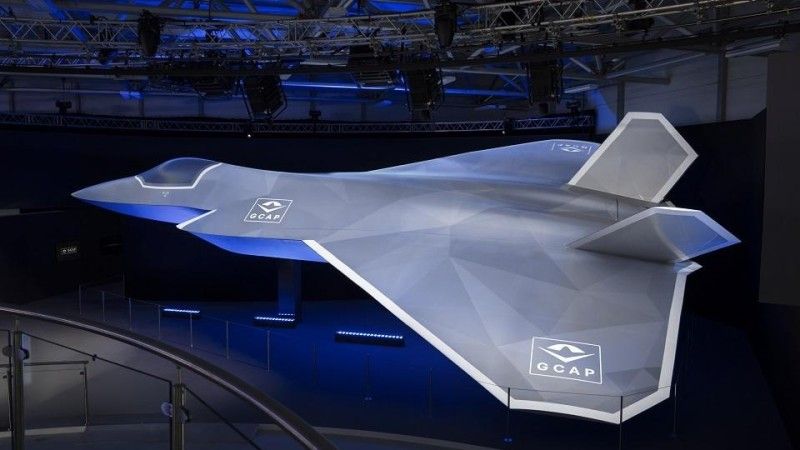
Photo. UK Ministry of Defence / Open Government Licence v3.0
On 15 June, Japanese Prime Minister Sanae Takaichi met Italian Prime Minister Giorgia Meloni in Rome.
The meeting followed Takaichi’s visit to London on 13 and 14 June, where she held talks with British Prime Minister Keir Starmer. On both occasions, one of the key items on the agenda was accelerating the Global Combat Air Programme known as GCAP.
GCAP is currently the most mature next-generation fighter aircraft programme involving major European partners. It is being developed through Edgewing, a trilateral joint venture established by BAE Systems in the United Kingdom, Leonardo in Italy and JAIEC in Japan.
The shadow of FCAS
Until recently, the most ambitious European-based initiative was FCAS, the Franco-German-Spanish programme that was supposed to become the main continental alternative in next-generation air combat. FCAS was built around a new fighter aircraft, unmanned systems and a combat cloud, but it collapsed on the central issue of industrial control. Dassault wanted real leadership over the aircraft, while Airbus refused to accept a secondary role in a programme also financed by Germany and Spain.
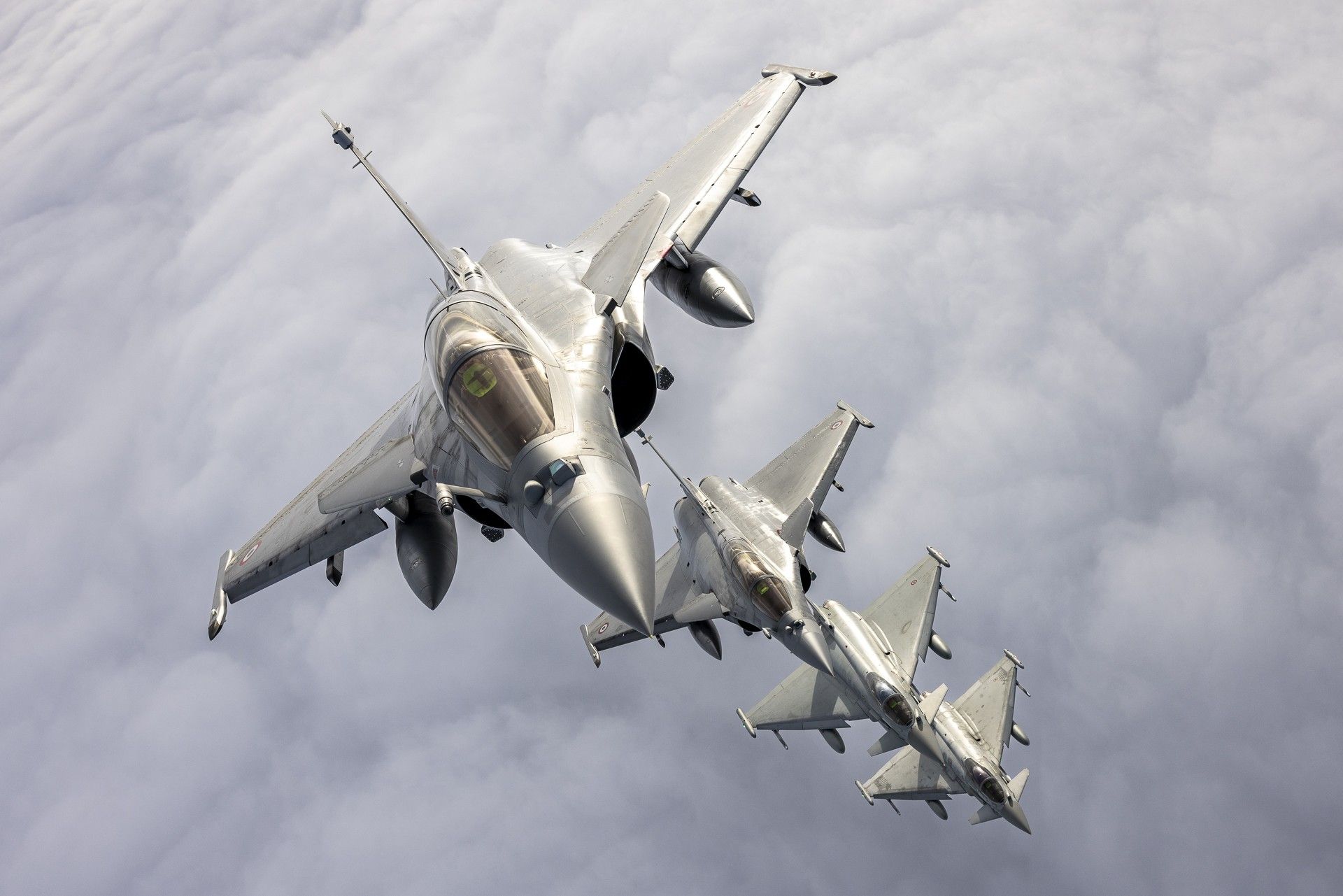
Other European paths remain less mature. France may rely on the Rafale F5 and future combat drones to preserve its national autonomy, but this is more of a sovereign bridge than a completely new sixth-generation fighter. Germany and Spain could seek a new Airbus-led configuration, possibly involving Saab, but this option still lacks a clear political structure, a dedicated joint venture and a defined timetable.
Germany remains the main external variable for GCAP. After the collapse of FCAS, Berlin could join the Italo-British-Japanese programme. A German entry would bring money, industrial capacity and political weight, but it would also reopen sensitive questions on workshare, governance and leadership. In other words, Germany could make GCAP stronger, but also more vulnerable to the same industrial tensions that destroyed FCAS.
In April, the GCAP Agency awarded Edgewing a £686 million contract for key design and engineering activities, marking the transition from nationally coordinated work towards a fully-fledged international programme. This makes GCAP stand out from other European initiatives.
What's still unresolved
Despite the important steps forward, many challenges are still to be resolved within the GCAP programme:
First, money. Italy has approved €8.77 billion for the initial phases through 2037, but expected early-phase costs have already risen to €18.6 billion, compared with an original estimate of about €6 billion at 2021 prices. The UK side is also sensitive because Japanese officials have been concerned about British funding delays and the impact on the design and development contract.
Second, time. The programme is supposed to deliver a next-generation fighter by 2035. That is especially important for Japan, which needs a replacement for the F-2 and sees the aircraft as part of its response to the Indo-Pacific security environment.
Third, technical integration. GCAP is not just a jet. It is supposed to be a “system of systems” connecting the fighter with crewed and uncrewed platforms across air, land, sea, space and cyber. That means drones, sensors, data networks, combat cloud, AI and cyber resilience all have to work together. This makes the programme more complex than a traditional aircraft project.
Fourth, technology sharing and industrial balance. Technology sharing has already emerged as a sensitive issue. In April 2025, Italian Defence Minister Guido Crosetto told Reuters that Britain was not fully sharing technology with Italy and Japan within GCAP, urging London to lower what he called the “barriers of selfishness”.

This matters because GCAP is supposed to be a partnership of equals, not a British-led project with Italian and Japanese participation. If trust breaks down on technology sharing, the programme risks reproducing the same industrial tensions seen in FCAS.
GCAP is entering its decisive phase just as the old Franco-German axis of European defence is showing all its limitations. Rome, London and Tokyo want to accelerate towards 2035, but the programme will have to address three dilemmas: the stability of British funding, the management of a possible German entry and the transformation of the fighter aircraft into an integrated system combining drones, AI, sensors and combat cloud capabilities.
Despite these challenges, the political will behind GCAP remains strong. For Rome, London and Tokyo, the programme is not only an industrial project, but also a strategic instrument to reduce long-term dependence on U.S. capabilities and strengthen their own technological and defence autonomy.


