












- ANALIZA
- KOMENTARZ
- OPINIA
- WIADOMOŚCI
New players are taking over the global arms industry. China is not the only one

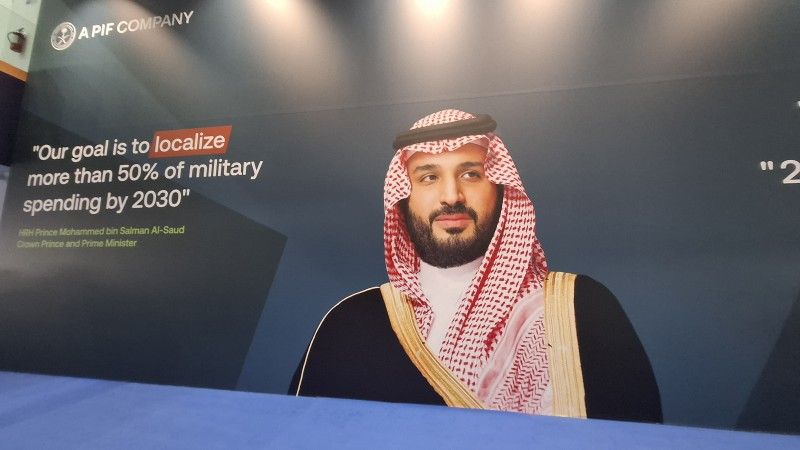
Photo. Jacek Raubo/Defence24
The World Defense Show (WDS) arms fair, held every two years in the Kingdom of Saudi Arabia, has firmly established itself in the landscape of global industry exhibitions.
This year, Defence24 had the opportunity to directly observe another edition, resulting in a series of articles on various weapons and equipment systems showcased at the event. However, it is also worth taking a look at certain trends that could be observed in the overall picture of WDS 2026.

Saudi display of power and capabilities
First of all, the WDS is each time a showcase of the growing role of the Saudi side and, more broadly, the Middle East in the contemporary arms market. It should be noted that since the first edition of this event, the Saudis (and not only them) have been striving to change their position from merely being recipients of ready-made military solutions. And the effects are visible, as Saudi entities are already capable of creating a pavilion with solutions originating from this country. Moreover, in many places, vehicles marked as produced in the Kingdom of Saudi Arabia were proudly displayed, for example. This does not mean following the path of complete autarky and spending huge sums of money on the development of all aspects of military technology. On the contrary, the Saudis, as could be observed, are becoming an assertive partner for foreign entities. They aim to acquire as much knowledge as possible and enable effective cooperation, rather than merely being dependent on foreign manufacturers. Moreover, the growing needs and capabilities of the domestic industry in the Kingdom of Saudi Arabia have motivated the organizers to create a space within one hall devoted to building and integrating supply chains. The initiative, called Saudi Supply Chain Zone, is an interesting venture that creates a network of relationships between companies of various sizes and scales. At the same time, there is a clear intent to ensure the logistics and supply capabilities of the domestic economy, including the defense industry.
Something that also drew attention was the event hosts« focus on research and development potential. Hence, aside from the somewhat conventional weapons systems, the Saudi side wanted to present their pavilion as filled with breakthrough technologies. This refers to a range of local development projects in unmanned systems, not only aerial ones. In conversations with exhibitors, Saudi Arabia’s efforts to build its own industry supported by a necessary workforce and research and development centers were also evident. For example, with UAV systems, one could meet young engineers proud of their work. The fruit of investment in education, research teams, and acquiring knowledge for the benefit of their own country. An interesting initiative was also the establishment of the Future Defense Lab under the auspices of the General Authority for Defense Development (GADD – General Authority for Defense Development). It was a space where organizers brought together startups, investors, and government representatives to understand technological changes that could transform defense. Another valuable element of the fair was an initiative called the Future Talent Program, which aimed to provide a space for engagement among educators, students, and industry leaders.
However, as we indicated at the beginning, the change by no means occurs in opposition to drawing on existing military solutions. In this context, a significant amount of knowledge was provided by the external exhibition of the Saudi armed forces and guard units. There was a rather specific arrangement of American technologies and, for example, Korean ones. Although, ultimately, this arrangement will change. As Crown Prince Mohammed bin Salman bin Abdulaziz Al Saud pointed out, the goal is to allocate over 50 percent of the country’s defense spending on a domestic level by 2030. The World Defense Show proves that such assumptions are not merely political statements in the Saudi context. It should be emphasized that the Crown Prince’s words were hard to miss for those walking through the central pavilion of the entire exhibition. Let us also remember that in addition to showcasing the growing industrial capabilities of the Kingdom of Saudi Arabia, WDS is also a tool that directly signals the political-military aspirations of this country. On one hand, in the open section, it was possible to become acquainted with elements of the equipment of the land forces, but also of the air forces. The aircraft exhibition, of course subjectively, made a particular impression. The Saudis brought in a full range of helicopters used in their armed forces and the guard, as well as combat aircraft (including some with very distinctive paint schemes).
Secondly, the aforementioned aspirations were also reflected in the very scale of the undertaking. As the organizers indicated, 513 delegations from 121 countries participated in the event. It should be noted that the Saudi side is capable of bringing together often highly hostile states. Thus, in the pavilions, one could see exhibitions of equipment from both Ukraine and Russia. Of course, this year there was widespread discussion about the regional rift between the Saudis and the United Arab Emirates. Moreover, the event is said to cover 272,800 square meters of exhibition space. The Saudi GAMI (General Authority for Military Industries) also boasted that the current edition of the event gathered 1,486 exhibitors and 137,000 visitors. Although it should be added that the organizers rose to the occasion when it came to logistics, as no problems could be noticed with such a huge group of guests. But perhaps most importantly, GAMI reported contracts worth 8.8 billion dollars precisely in the context of WDS. It must be admitted that contracts and the actual amounts behind them are both the fuel of all defense fairs and a measure of the significance of the event itself. In the case of this year’s WDS edition, compared to the one two years ago, the increase in contract value is close to almost two billion dollars.
See also 

To illustrate the infrastructural capabilities of WDS, it can be mentioned that there were dynamic demonstrations of wheeled vehicles on tracks with hills, water obstacles of varying depth, and a fully operational airport used not only for logistical purposes but also for many air shows. Let us add that above the heads of WDS participants, acrobatics were performed by pilots from special teams, and combat aircraft (including fifth-generation ones) also flew by. In addition, there were areas reserved exclusively for unmanned solutions. At this point, it should be noted that dynamic demonstrations in the land domain also included the participation of unmanned machines. An interesting scenario involved a large UAV transporting a small unmanned ground vehicle to the operation area. Although the experience was also enhanced by FPV drone speed and agility demonstrations, which could give an idea of the challenges soldiers face on the modern battlefield.
In conclusion, WDS 2026 is undoubtedly an event that positions the Kingdom of Saudi Arabia highly not only within the defense industry itself but also more broadly in the political-military dimension. We are talking about the vision of a country that does not intend to be passive when it comes to new and breakthrough technologies, as well as its investments in the defense or dual-use industry. Moreover, the Saudi authorities recognize the necessity of a systemic approach, ensuring not only an influx of technology but also creating scientific and research infrastructure. It is therefore necessary to remember that the Saudi market is and will continue to be even more demanding. It is essential to understand it not only from a purely Middle Eastern perspective but from a broader one. Especially since the Saudis are capable of gathering almost the entire world for several days, and importantly, this world comes to WDS.

The Chinese Pavilion and the Turkish Pavilion as a show of strength by new players
If the Kingdom of Saudi Arabia’s defense industry was placed at the epicenter of the WDS exhibition, it is worth noting two countries that located their national pavilions in halls on both conceptual flanks. These are China and Turkey, which showcased their capabilities and global aspirations at the Saudi event. It should be noted that the Chinese pavilion was not the only one presenting Chinese defense offerings. Chinese companies were also visible in the area covering the Saudi supply chain, which we have already written about. However, it should be emphasized what distinguished the core of the Chinese exhibition. It was a multi-domain approach. Chinese companies had offers for land, sea, and air components, as well as the space domain. Additionally, the Chinese side presented entire systems in terms of creating, for example, air defense, as well as military and industrial support. There was also a wide range of sensors, observation, and robotic systems. In the latter case, it was possible to see live, for example, a range of solutions including the development of walking robots (quadrupeds), so well known from the propaganda materials of the Chinese People’s Liberation Army.
Emphasizing that we are talking about systems that are diverse in terms of their tasks on the battlefield, ranging from reconnaissance or logistics to having offensive weapons in their equipment. Attention could also be drawn to the range of Chinese electronic warfare solutions, as well as more broadly to the use of various effectors for striking targets on the modern battlefield. For example, technologies were shown covering the development of missile systems, but also directed energy (DEW). However, it should be noted that the Chinese approach revolves around surrounding their champions, such as NORINCO, with a range of smaller companies, often highly specialized. This increases the country’s ability to influence various segments of the arms market, which of course are open to Chinese products.
However, when it comes to the air domain, it is also necessary to note the full spectrum of solutions, not only unmanned (including unmanned helicopters, loitering munitions, and various classes of UAVs for ISR operations) but also manned. The Chinese had on offer (though the presentations unfortunately only included models) attack helicopters, multirole helicopters, as well as combat, transport, and training aircraft. But it should also be emphasized that outside the halls there was a large booth of China State Shipbuilding Corporation (CSSC), which showcased a very diverse range of watercraft – both manned and unmanned, and varying in size and functions. WDS 2026 is yet another example that the Chinese side is now able, at least in the exhibition space, to offer a comprehensive package to foreign recipients. As mentioned, this ranges from the construction of infrastructure and logistics, through equipping a soldier/operator, to entire system components. Chinese companies, it must be said, have clearly outshone even the entire presence of the Russian side, which is evidently a certain symbol of the changes taking place on a global scale.

Observing their scale, way of operating, and openness to conversation while visiting individual booths, it can confidently be assumed that the authorities in Beijing no longer quietly, but openly, see themselves most likely in the role of taking Russia’s place in the global arms market. And importantly, there is a tool for this in the form of the growing defense industry sector in China. The question remains, however, about its effectiveness and actual testing in combat operations. Also, there is the issue of maintaining an appropriate producer-end user relationship. This does not change the conclusion, however, that China today is not only capable of challenging others in very difficult arms markets, such as those in the Middle East, but it is doing so. We are talking about an arms industry that is developing holistically, not neglecting traditional areas, but also striving to set its own pace in new and breakthrough technologies.
If we talked a lot about the significance of the exhibition or rather the presence of China at WDS 2026, a similar display of growing capabilities was visible on Turkey’s side. In this case, however, the strength of the Turkish pavilion was its offering of a diverse range of vehicles. Once again, it should be emphasized that creating a national pavilion played a major role, where the driving force toward visitors were major players like Otokar or Aselsan, while other Turkish companies benefited from this synergy effect. It should be noted that the modern Turkish defense industry comprises multi-domain solutions and the latest technological developments. The Turks were thus visible with the aforementioned range of tracked and wheeled vehicles, but also with small arms, artillery solutions, and a variety of solutions for the country’s navy. In this latter case, for example, TAIS Shipyard showcased smaller unmanned trimarans (USVs), as well as larger landing units for transporting tanks and other vehicles. In the air domain, apart from the world-renowned Turkish UAVs, the Kingdom of Saudi Arabia also featured a presentation of the TAI Kaan aircraft model.
At this point, we can afford a digression that within the realm of fifth-generation aircraft in the Middle East, a major battle will soon unfold regarding the equipping of local air forces. This was symbolized not only by the promotion of the aforementioned Turkish design (important when considering the current Saudi-Turkish rapprochement), but also by the display of the American F-35 design (a 1:1 replica) in Saudi Air Force colors and the demonstrations of American F-35 aircraft over the exhibition. Returning to the Turks themselves, it is important to note, in terms of issues beyond just technological and military ones, their placement within the American-European sphere. This indicates that Turkey is an important element of the Western arms space and currently has great potential for expansion into Middle Eastern or African markets.
In summary, we must note that national pavilions are one of the key elements supporting the systemic promotion of established global defense manufacturers, as well as those aspiring to a new role. A market driven by international uncertainty, not just at the level of individual regions but on a global scale, offers an influx of financial resources. However, an increasing number of countries are focusing not only on the need for armaments, but also on the need to have their own industry. It is therefore not surprising that even smaller countries strive to strengthen their industry’s efforts by building a national system in foreign exhibitions. As a point of interest at WDS 2026, we can highlight the Thai defense industry, offering wheeled armored vehicles. However, we must be aware that the world is not so much running as it is now racing with the development of domestic defense solutions. Let’s mention, for instance, the growing capabilities of companies from Pakistan or India (where the conflict between the two countries drives investments). Not forgetting that certain representatives of the Republic of Korea’s industry have long since firmly established their position.

Russia versus Ukraine, or another front of 'rivalry'
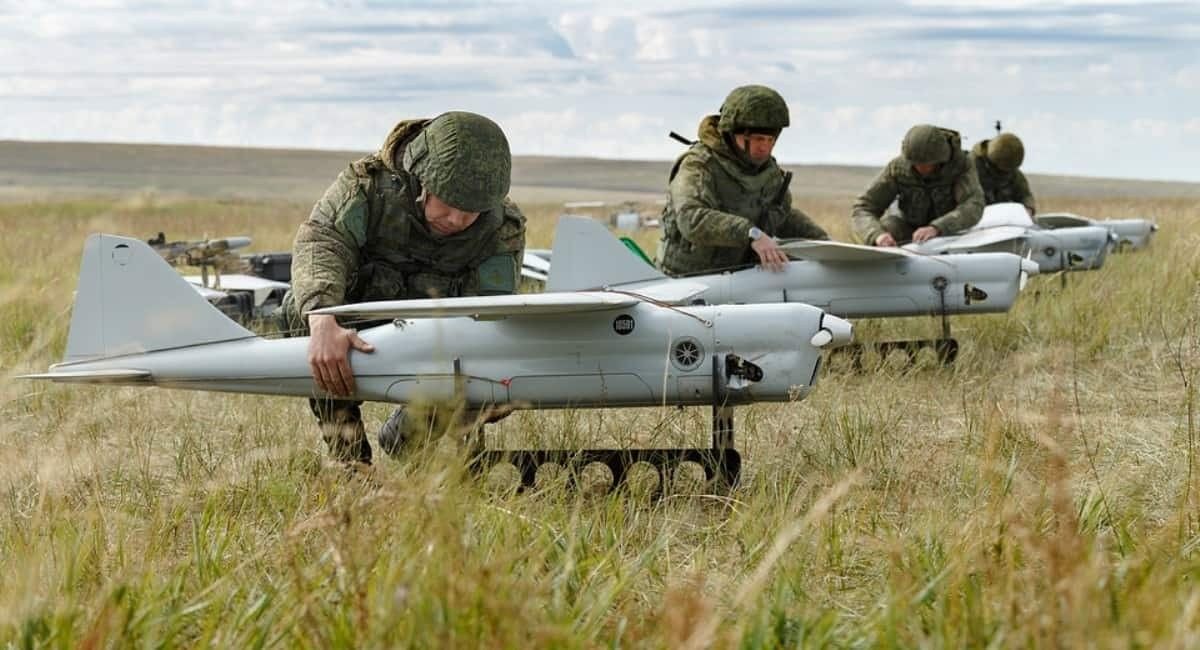
Although the WDS took place almost an hour’s drive from the capital of the Kingdom of Saudi Arabia, there was no shortage of important references to the reality of the conflict taking place in Europe. This, of course, refers to the presence in the Middle East of defense industry exhibitions from Ukraine and Russia. As has already been noted, the Russian presentations were somewhat overshadowed by the expansiveness and complexity of the Chinese offerings. However, the Russians brought with them small arms, anti-tank systems, as well as a range of unmanned solutions. The most attention could be focused on the developed range of strike systems, which essentially defined their capabilities to continue aggression in Ukraine, right after the Ukrainian side halted some of their tactical activities using their own drones. There was no shortage of Iskander models or Russian-made air defense systems. Although, this year promoting them in the Middle East didn’t necessarily have to be a great success, given the experiences with their breach during Israeli-American strikes on Iran. Let us remember that for years, the proverbial Russian ”anti-access/area denial (A2/AD) bubble” was not just a construct aimed at intimidating NATO’s eastern flank, but also a marketing tool driving clients. Yet today, experiences from the aggression in Ukraine, as well as those from Iran or Venezuela, have rather diminished the effectiveness of such a narrative.
In the outdoor section of the WDS fair, a presentation by ROSOBORONEXPORT could be observed, but even it did not constitute a major display of Russian capabilities. Most of the discussions revolved around the SARMA rocket artillery system, which was meant to be, in a way, the Russian response to Western solutions in this area. Attention was also drawn to the remotely controlled Ballista turret, but again, observing it up close and being able to compare this solution with the global solutions available at WDS 2026 quickly brought any narratives about the current technological capabilities of the Russian industry back down to earth.
In conclusion, the Russians were at the fair, but by no means did their offer dominate even the hall in which they were located. This is an important signal, as we are talking about one of the historically largest and most expansive exporters of equipment and weapons in the world. he Russian industry is trying to promote itself by leveraging its military aggression in Ukraine and presents materials showing that their unmanned systems, for instance, are capable of effectively striking Western designs. However, the nervous reactions at their booths indicate that they are not entirely confident in all of this, aside from, of course, their own propaganda messages. This should not be surprising when one sees a comparison with other leaders in defense technology from the USA, Europe, the Middle East, and of course, Asia.
As we have pointed out, WDS is a unique space because at the same exhibition event, one could also see the results of the Ukrainian defense industry’s work. This country also indicated that their solutions are competitive on foreign markets, as they are tested in real combat situations. One of the Ukrainian stands prominently displayed „combat-proven vehicles made in Ukraine.” Moreover, the Ukrainian side clearly aimed to emphasize its presence in the Middle East not only symbolically but also practically, as exemplified by the appearance of the 2S22 Bohdana self-propelled howitzer. Analyzing this fact, Adam Świerkowski pointed out that „although her international debut took place at the MSPO 2025 fair in Kielce, sending the entire vehicle to Riyadh was a much greater challenge, if only for logistical reasons. Therefore, the appearance of this artillery system at the World Defense Show should be regarded as a significant event and a demonstration of the capabilities of the Ukrainian defense industry.”
The war in Ukraine was still visible through the lens of highlighted technological solutions. Above all, at various booths, one could observe a drive to expand the market offering of unmanned systems in the style of »Shahid/Geran.« This shows a search for cheaper forms of aerial assault that can overload the opponent’s air defense systems while doing so at lower costs. Moreover, their development naturally implies a focus on counter-drone solutions, a significant number of which were also displayed both inside the halls and in outdoor exhibitions. It can be assumed that the fairs in Saudi Arabia indicate that market needs highlight the necessity of an appropriate balance in equipment and armament. Any radical visions, such as the idea that »dronization« will suddenly replace artillery (rocket or gun), eliminate tanks and other crewed vehicles, clash with the reality of military needs, which require the full spectrum of battlefield systems. In the Kingdom of Saudi Arabia, there was room for highly advanced cruise missile systems and loitering munitions, but at the same time, attention was drawn to displays of classic aerial bombs in various weight classes. Therefore, it is so important to observe not just trade show events but, above all, the interest in individual elements from the military and officials, rather than focusing solely on theoretical constructs.

Americans still strong in the region
Finally, it is worth adding one more important observation, stemming from the presence at the WDS in the Kingdom of Saudi Arabia. It relates to the still strong and influential position of the USA in the region. American companies have an established market position, and it is evident that they are investing heavily in further contracts with regional partners. Once again, the strength of the Americans lies in their systemic coverage of various elements of multidomain operations, something the Chinese have now learned. American equipment was therefore dedicated to equipping and arming individual soldiers, but also solutions for entire subunits, tactical-level units, and supporting the operational level of the military. There were missile systems, unmanned systems, as well as more traditional armored vehicles. MRAPs are still extremely important in the Middle East, partly due to local terrain conditions, and partly because some countries in the region are involved, to varying degrees, in operations in asymmetric conflict environments outside the region. Global corporations like Lockheed Martin, RTX, Boeing, Northrop Grumman, and L3Harris have been joined by a new wave of companies, led by the ever-growing Anduril Industries. Most importantly, the Americans had another advantage to support their own manufacturers. This, of course, refers to the presentation of American equipment and weaponry that is already in the inventories of the armed forces. This is an important tool, as many potential buyers of a given solution will first ask about its implementation in the US armed forces. Therefore, from the perspective of American exhibitors, it was so important that at WDS, for example, in the aviation section, one could see a whole array of airplanes and helicopters that are regularly used by various branches of the armed forces. In the land section, outdoors, the presence of the famous trio of land forces—Abrams, Bradley, and the youngest of them, HIMARS—also played an important role.
Let’s be honest, the USA understands very well that supporting its own defense industry is also a role of the armed forces, from static displays to the opportunity to talk with soldiers and officers. In the case of the latter, it also means the chance to participate in numerous seminars and discussion panels that accompanied WDS. Of course, this has been understood by the USA for years and allows them to build promotional capabilities while also gaining valuable experience for their own military. It cannot be denied that for commanders and military specialists, attending a trade show on the scale of WDS provides valuable analytical insights, especially since systems not belonging to allied countries are on display there (to put it diplomatically). Let’s emphasize this once again: even the Americans, with their global role and position, know that exports should also be supported with military tools. In conclusion, it can also be noted that this year, during the next edition of WDS, the USA had it much easier when it came to military exposure. This was due to the concentration of significant forces within the area of responsibility (AoR) of the US CENTCOM geographical command. All of this was due to tensions on the USA-Iran line. Consequently, F-15s, F-16s, and even A-10s stood side by side, although perhaps only the B-52 was still missing.

The WDS 2026 Fair was an important voice for both the defense industry and the global market, highlighting technological trends and the needs of armed forces. In the first case, it is essential to emphasize once again—or even more frequently—that the paradigm of arms industry operations is changing drastically. This is due to an increasing number of countries striving to locate production, parts of production, or at least the development of their future R&D sector within their own borders. Companies must understand that even the wealthiest (like the Kingdom of Saudi Arabia) will not be satisfied with simply buying off the shelf. They have growing aspirations to engage themselves in developing new technologies and translating this into the economic benefit of their country. As a result, markets are becoming increasingly competitive and will become even more so due to the previously mentioned significant defense investments in various regions of the world. It can also be confidently stated that WDS is another example of how critical it is to integrate large defense companies with smaller ones, so that the state can promote itself in a systematic manner, even when it comes to internal competition among the different solutions offered by individual companies and corporations. Moreover, as shown in the American example, it is always worthwhile to act through the strength of your own armed forces – through their presence at such events and their ability to promote domestic solutions in casual, behind-the-scenes discussions.
Ultimately, it is undeniable that without acceleration in the system of new and breakthrough technologies, there is no longer any possibility today of competing with anyone. For example, the number of unmanned system manufacturers is increasing year by year. We can therefore confidently notice, for instance, Egyptian unmanned designs, not to mention Saudi or Turkish ones. The competition will be about better software, mission support solutions, as well as networked use of manned and unmanned systems. Therefore, the WDS fair focuses not only on presenting large solutions but also provides a platform for teams of innovators, dual-use companies, startups, and smaller firms, allowing them to learn and connect with investors. Finally, it is also important to emphasize that the Saudis focus on both scale and the final outcome of a company’s presence at the fair. Hence the strong emphasis, for example, on contracts, which are intended to be a visible incentive to attend future editions (which take place biennially).

The author would like to sincerely thank the Embassy of the Republic of Poland in the Kingdom of Saudi Arabia and, above all, the Defense Attaché of the Republic of Poland, Col. Artur Rochnowski, for the assistance provided in the context of attending this year’s edition of the World Defense Show.


