












- WIADOMOŚCI
The US challenges China. The FORGE initiative is launched

The United States has picked up the gauntlet thrown down by China and decided to launch a global counterattack. On the 4th of February, US Secretary of State Marco Rubio presented FORGE, an American initiative for international cooperation on coordinating policies on critical raw materials and rare earth metals.
We want to ensure diversity in the supply of key minerals and secure and resilient supply chains around the world so that all our economies can prosper without exposing ourselves to the worst-case scenario in which these minerals could be used against us,” Marco Rubio emphasized.
America's global forge
Depending on the context, the word „forge” can be used as a noun (meaning a smithy) or as a verb, meaning: to forge (metal), to shape (e.g., alliances) or… to falsify (e.g., documents). Most likely, the White House’s latest initiative refers to the first three associations, although cynics might say that after the diplomatic crisis with Greenland, you never know.
FORGE is an acronym for Forum on Resource Geostrategic Engagement. Although it sounds convoluted and complicated, the idea is quite simple: to become independent from Chinese supply chains for critical raw materials and rare earth elements (REE).
As Marco Rubio emphasized, FORGE was established to create a platform for cooperation between “like-minded countries,” allies of the United States who are also interested in diversifying their sources of critical raw materials and securing their supply chains.
The initiative will focus primarily on diversifying supplies, protecting the global market, stabilizing prices of critical raw materials, and securing the entire production cycle.
“These frameworks are designed to create alternative sources of supply and to protect every single stage of production … from non-market disruption. They will provide platforms for coordinating policies that ensure all of our citizens can enjoy abundant and affordable access to… pic.twitter.com/MdNi1OXfWR
— Department of State (@StateDept) February 4, 2026
The key objective of the project remains the diversification of the entire supply chain, both upstream and downstream. As emphasized during the conference, the FORGE initiative aims to avoid the geographical concentration of mines in just a few countries and to expand refining capacity in the US and partner countries as much as possible. This is particularly relevant in view of the reducing the role of China, which currently accounts for 80-90% of the processing of critical raw materials and rare earth metals.
As part of FORGE, Washington also wants to stabilize the prices of critical raw materials on global markets and actively protect mining investments in Europe, the US, and allied countries. An example given is the practice of preventing the development of mining projects when international markets are “flooded” with a given raw material. As a result, its prices fall, as does the profitability of investments. FORGE intends to curb such practices through international cooperation.
The issue of permitting, a phenomenon also faced by renewable energy installations, has not been forgotten. Washington’s intention is to facilitate and accelerate the processes of issuing environmental permits and meeting legal requirements, obtaining mining concessions, etc., and to include mining projects on the list of priority investments. For example, to date, the average time between obtaining a mining permit and starting production has been almost 29 years in the US.
No mines, no laptops
Both Marco Rubio and J.D. Vance devoted a lot of space to the issue of correcting what they see as a “historic strategic mistake” in getting rid of the rare earth metals processing industry in the United States.
Indeed, critical raw material refining technologies originated in Europe and the US, and between 1965 and 1985, the US had a clear advantage in REE mining, reaching 50,000 tons per year. However, high environmental costs, among other factors, made it easier for Western decision-makers to move the “dirty business” to places where it was not a concern, which benefited China.
“We became blind,” Rubio said. “Mining is less glamorous than building computers. And building computers is less glamorous than designing them. So we outsourced what seemed old and unfashionable—manufacturing. Until one day we woke up and realized that we had outsourced our economic security and our future.”

As announced, Donald Trump’s administration wants to reverse the course of history. Mining is to once again become an attractive career prospect for young and talented people, and the United States is to revive its manufacturing sector.
How? David Copley, current Special Assistant to the President of the United States and Senior Director for Global Supply Chains at the National Security Council (NSC), presented four key initiatives:
- investing in mining projects
- stockpiling critical raw materials
- protecting American mining companies
- rebuilding the American mining ecosystem
It must be admitted that the administration is not just paying lip service. Just on Monday, President Donald Trump announced the creation of Project Vault, a $12 billion stockpile of critical raw materials (including gallium and cobalt). In October last year, the US Department of Energy acquired a 5% stake in Lithium Americas, causing the company's shares to rise by 23%. In July last year, the US Department of Defense became the largest shareholder in MP Materials, and the company's shares rose by almost 50%.
“Our goal is to make the United States a very attractive place for the mining sector again, because this is where we intend to extract and process minerals,” Copley emphasized.
Marco Rubio admitted outright that due to competitors operating below market production costs and receiving state subsidies, the private sector is unable to invest in the extraction and processing of critical raw materials. For this reason, the White House intends to actively support and promote the creation of public-private partnerships, an example of which is the creation of the Orion CMC investment fund. Quite an interesting move for the “most capitalist country in the world.”

All hands on deck?
As US Vice President J.D. Vance, who was present at the conference, pointed out, the US administration “is not wasting time writing 200-page reports on the importance of critical raw materials” and is instead focusing on implementing projects and concluding agreements with international partners.
Indeed, 54 countries and the European Union were invited to today’s conference. Among those present were Australia, New Zealand, Japan, Germany, Italy, Canada, the United Kingdom, the Democratic Republic of Congo, Bolivia, Argentina, and Brazil. On February 2, Rubio met with Cho Hyun, South Korea’s foreign minister, and Subrahmanyam Jaishankar, India’s foreign minister, with whom he also discussed energy security issues.
The list is long, and it is clear that Washington is trying to cast its net wide among key economic and political partners.
No country can overcome the instability of critical mineral supplies and excessive dependence on specific countries on its own. With the launch of the FORGE program, it is time to act.
Marco Rubio has emphasized this point repeatedly.
Met with Republic of Korea Foreign Minister Cho on the sidelines of the Critical Minerals Ministerial. We talked about our recent commitments to increase ROK investments to rebuild critical U.S. industries and the importance of diversifying and securing critical mineral supply… pic.twitter.com/rUKm5VTdfk
— Secretary Marco Rubio (@SecRubio) February 3, 2026
“We want members to form a trading bloc of allies and partners that will guarantee Americans access to American industrial power while enabling manufacturing to flourish throughout the region,” Vice President Vance emphasized. “We all have an opportunity for self-sufficiency, so that we never have to rely on anyone but each other.”
Shortly after the conference ended, Reuters reported that the US and Mexico had unveiled a 60-day plan to develop a coordinated trade policy aimed at mitigating risks in critical raw material supply chains. Both countries are to focus, among other things, on setting possible minimum prices for certain imported minerals.
The tone of the US administration’s statements today was extremely different from the combative attitude that could be observed during the discussion on the US acquisition of Greenland. Both Rubio and Vance repeatedly emphasized the importance of cooperation and thanked the other countries for attending. “We really appreciate it,” said the Secretary of State. “We look forward to the discussion.”
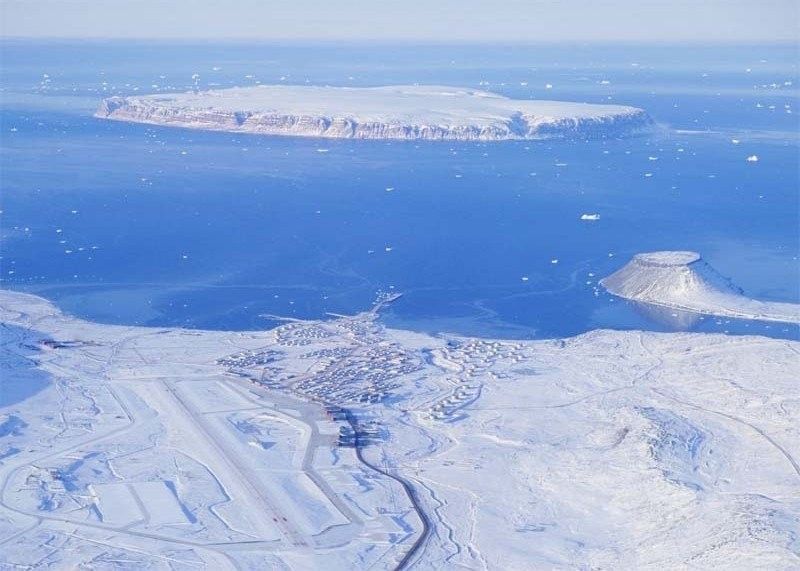
Nevertheless, the recent “Greenland crisis” has seriously damaged trust between the European Union and the United States—according to some commentators, it has actually destroyed that trust. The Donald Trump administration and the US president have repeatedly shown that they are quite comfortable in the position of an international “backyard bully” and will not hesitate to make economic and political threats. Will a return to the rhetoric of cooperation and the prospect of energy security make America’s allies forget the recent crises and return to business as usual? Time will tell.


