


- WIADOMOŚCI
The end of Flamingo missiles? Fire Point responds to the accusations

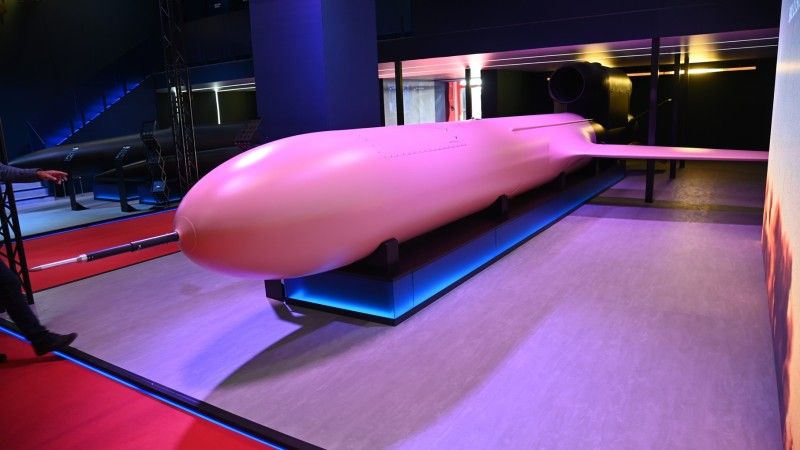
The Ukrainian company Fire Point denies reports regarding the termination of FP-5 Flamingo cruise missile production. Claims appeared on social media suggesting that the project had been closed due to its ineffectiveness. The dispute was fuelled by a snippet of an interview with the company’s CEO, Iryna Terekh, in which the journalist’s question was omitted. The manufacturer maintains that it intends to further develop the Flamingo while simultaneously concentrating a significant portion of its efforts on ballistic missiles.
Controversy has once again surrounded one of Ukraine’s most high-profile missile programmes. Online comments began characterising the FP-5 as a venture that the manufacturer had already abandoned. One widely circulated report, citing Stanislav Osman, attributed to him the claim that the project was closed due to its ineffectiveness.
However, Fire Point’s explanations do not support such a far-reaching conclusion. The firm declares that it is continuing production and further refining the missile. As reported by the Gordon portal, this position was also confirmed by the company’s press service.
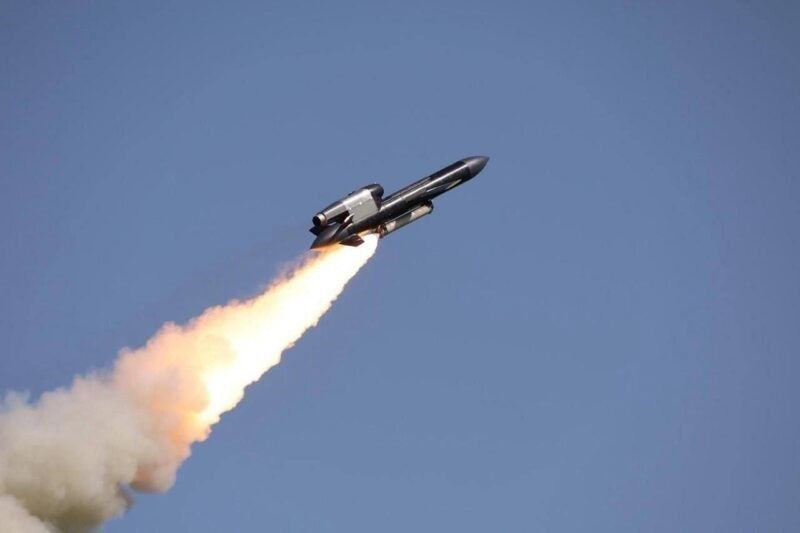
Several distinct issues were conflated in the discussion: the future of FP-5 production, plans to develop subsequent weaponry models, the assessment of strikes to date, and the political significance of the Ukrainian missile programme. It is necessary to separate these matters, as a mere correction of the CEO’s statement does not provide answers to all questions regarding the Flamingo’s capabilities.
An old interview and an omitted question
The source of some of the confusion was a conversation between Iryna Terekh and the Dronex.ua project, dating back to 20 July. In recent days, an abbreviated excerpt has been circulating on social media. The recording included the Fire Point head’s response concerning the future of cruise missiles but omitted the question she was answering.
The journalist was interested in the possibility of expanding the company’s portfolio with further designs in this category. He mentioned the designations FP-5, FP-7, and FP-9 and asked about potential subsequent cruise missile variants. He did not ask about terminating Flamingo production.
“There won’t be, at least for today we are not planning any more cruise missiles,” Terekh replied.
Without the preceding question, the statement could be interpreted as an announcement that the entire category of weaponry was being abandoned. In reality, it concerned the lack of plans to develop additional models. This is a significant distinction: a manufacturer can continue delivering an existing missile and refining its design without simultaneously commencing work on a new family of similar weaponry.
Terekh responded to the criticism by publishing a more extensive fragment of the conversation, which included the journalist’s question. She explained that the company intends to focus on improving the current model and on two ballistic designs. Meanwhile, the shortened recording was used to propagate allegations that the company was withdrawing from the programme, or even that the missile itself was a hoax.

Ballistics were meant to come first
The CEO’s explanations also reveal how the company presents the sequence of its work. According to Terekh, the development of ballistic weaponry began before the Flamingo project. However, it proved to be an undertaking requiring a longer design process and successive trials.
“We made the best use we could of the conditions in which we worked. Work on the ballistic missile started before the cruise missile, but it is an iterative, complicated, and time-consuming process,” she explained.
The company therefore decided to develop a parallel solution where it could utilise better-understood technologies and its existing expertise. According to Terekh’s account, this led to the creation of the Flamingo. She did not present it as the result of abandoning ballistics, but as weaponry developed during work on a more challenging programme.
From a defence industry perspective, such a sequence is justified. A nation at war requires deliveries in the shortest possible time, while more demanding projects may require further cycles of testing and revision. Launching a parallel project allows specific capabilities to be delivered to the military sooner, though it does not in itself guarantee the success of any particular design.
Future work on the FP-7 and FP-9 must therefore be assessed separately. The announcement of developing ballistic missiles does not yet confirm their operational readiness, the scale of future deliveries, or their effectiveness. Nor is it evidence of the termination of the FP-5 programme.
Another fragment of Terekh’s statement draws attention. The company head emphasised that the Flamingo was not intended to be a weapon capable of independently changing the course of the war.
“I think it was far more important as a political statement than as some ‘super-weapon’. We never pinned our hopes on it as a ‘super-weapon’. It was about showing the enemy that we can reach them where they least expect us. And it performs that function very well,” she stated.

Strikes do not yet provide a full assessment of effectiveness
The Flamingo received significant publicity even before broader information about its use was revealed. In August 2025, President Volodymyr Zelensky presented it as an exceptionally successful example of Ukrainian weaponry. He announced at the time that mass production would begin in January or February 2026.
Such declarations built high expectations. However, their subsequent verification requires a distinction between the announced production capacity, actual deliveries to the military, and the number of missiles effectively used against the enemy. These are related but distinct metrics.
In the following months, information emerged regarding the combat use of the FP-5. One example was an attack on industrial-defence targets in Cheboksary, the capital of the Russian Republic of Chuvashia, carried out on the night of 4–5 May 2026. Zelensky confirmed the use of the Flamingo, also publishing footage of the launches. According to his account, the missiles covered over 1,500 kilometres.
The next reported case concerned a strike on the Volgogradpromproyekt enterprise on the night of 10–11 September. Fire Point reported the use of its missiles and the hitting of the facility. Subsequent reports, based on satellite imagery, indicated the destruction of part of a production hall.
These examples are relevant to the discussion of the programme, but they do not allow for the calculation of its overall effectiveness. Such an assessment would require, among other things, data on the number of missiles launched, failures, interceptions, and hits, as well as the durability of the damage inflicted on the enemy.
A photograph of a damaged building can document the result of a specific strike. However, it does not answer the question of how many missiles were used to carry it out, nor how long the plant remained non-operational. Similarly, a single failed launch is insufficient to deem an entire programme worthless.
The military utility of such weaponry also depends on the repeatability of results. The ability to occasionally hit a distant object has a different value than the ability to regularly conduct successful strikes. Factors such as missile availability, the cost of achieving the desired result, and whether the destruction of a given target actually limits Russian war-fighting capabilities are all significant.

Who pays for missile development?
Responding to criticism, Iryna Terekh also addressed the funding of the work. She declared that Fire Point covers the development costs of its products independently, and the state has not allocated money for this stage.
“For the development of each of our product models, the state spent zero hryvnias and zero kopeks. This applies to the FP-1, FP-2, FP-4, FP-6, FP-7, and FP-9, and will apply to all subsequent designs. It is an atypical approach, but it is our additional contribution to the country,” she wrote.
A distinction must be maintained here between the financing of development work and the procurement of finished weaponry. The company covering design costs does not mean that subsequent production and deliveries to the armed forces take place without the involvement of public funds.
Both stages are significant for the economic assessment of the programme. An independently funded project may be a valuable contribution by a company to national defence, but the customer must still assess the price, quality, and utility of the product being purchased. Conversely, problems with a specific design do not automatically prove that the state funded its development.


