












- WIADOMOŚCI
- ANALIZA
Why does Poland need Tomahawks? To deter Russia

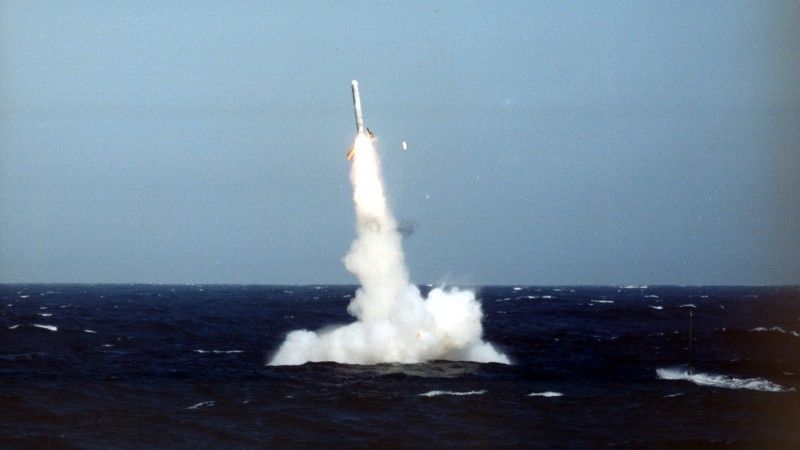
Acquiring Tomahawk cruise missiles with a range exceeding 1,000 km is a matter of Poland’s national interest. Apart from NATO membership, these missiles would become Poland’s most effective deterrent system.
Our article concerning Polish politicians’ efforts to purchase Tomahawk cruise missiles from the United States was not universally well received. Critics primarily highlighted two problems. Firstly, they pointed out that Poland has been trying to acquire these missiles for more than a decade, without achieving any success so far. Secondly, concerns were raised about the lack of access to source codes, which could potentially allow the United States to prohibit the use of Tomahawks against specific targets.
See also 
In reality, neither of these problems should discourage Poland from continuing its efforts to acquire cruise missiles. We should already be accustomed to the difficulties that even allied countries face when attempting to purchase the most advanced American weapons. However, as experience has shown, properly conducted negotiations can secure access to systems as sophisticated as the Integrated Battle Command System (IBCS) used by Patriot batteries, PAC-3 MSE missiles or fifth-generation F-35 aircraft.
Furthermore, it has become increasingly clear in recent years that the Americans are easing restrictions on the sale of their most advanced weapons, particularly as competing systems are beginning to appear on the market, often at considerably lower prices. Poland’s experience with the HIMARS system provides a useful example. In theory, under the framework agreement concluded during Minister Mariusz Błaszczak’s tenure between the Polish State Treasury and Lockheed Martin, Poland was supposed to acquire 27 Homar-A rocket artillery battalions, comprising 486 launchers.
Ultimately, however, only 20 M142 HIMARS launchers in the American configuration were delivered under the contract signed in February 2019. These launchers were not adapted to Polish requirements, leaving their operation entirely dependent on ammunition and spare parts supplied by the United States. The South Korean equivalent of HIMARS, the K239 Chunmoo, proved far more useful. Introduced into Polish service as the Homar-K, the system was rapidly acquired in a quantity of 290 launchers. Moreover, it was adapted to Polish requirements, and construction has already begun on a factory in Gorzów Wielkopolski that will manufacture GR-080 guided rockets for the K239.
A similar situation may develop in the case of Tomahawk missiles. The Americans are well aware that European solutions are increasingly catching up with American missiles in terms of performance. In addition, European alternatives are cheaper and offer guaranteed full autonomy over their use. While previously Tomahawks were operated only by the Americans and the British, the latter aboard submarines, naval variants are now also in service with Australia, the Netherlands and Japan.
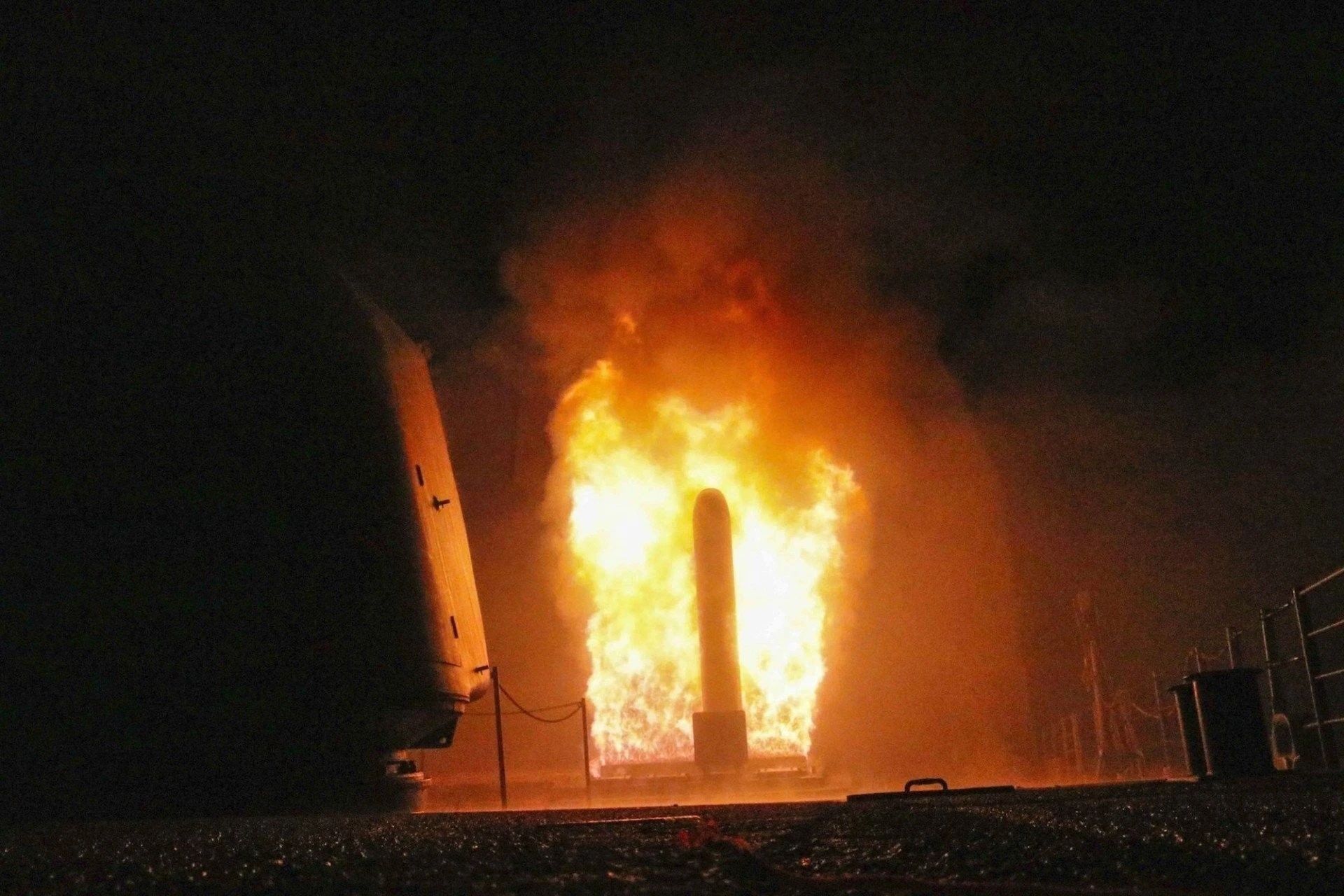
Another major breakthrough could come from the agreement currently being prepared between the United States and Germany. Poland’s western neighbour is seeking to acquire the land-based version of the Tomahawk while also encouraging the Americans to relocate production of these missiles to Europe. Preliminary approval for the delivery of American cruise missiles to Germany was already announced during this year’s NATO summit in Ankara. Poland’s efforts are therefore nothing exceptional, and the decision expected in early 2027 could prove highly satisfactory for our country.
Autonomy in the use of Tomahawks
In theory, a more serious problem could be the requirement for Tomahawk operators to obtain American approval when selecting targets for these missiles. However, it must always be remembered that everything depends on the negotiations conducted by prospective users before signing a contract.
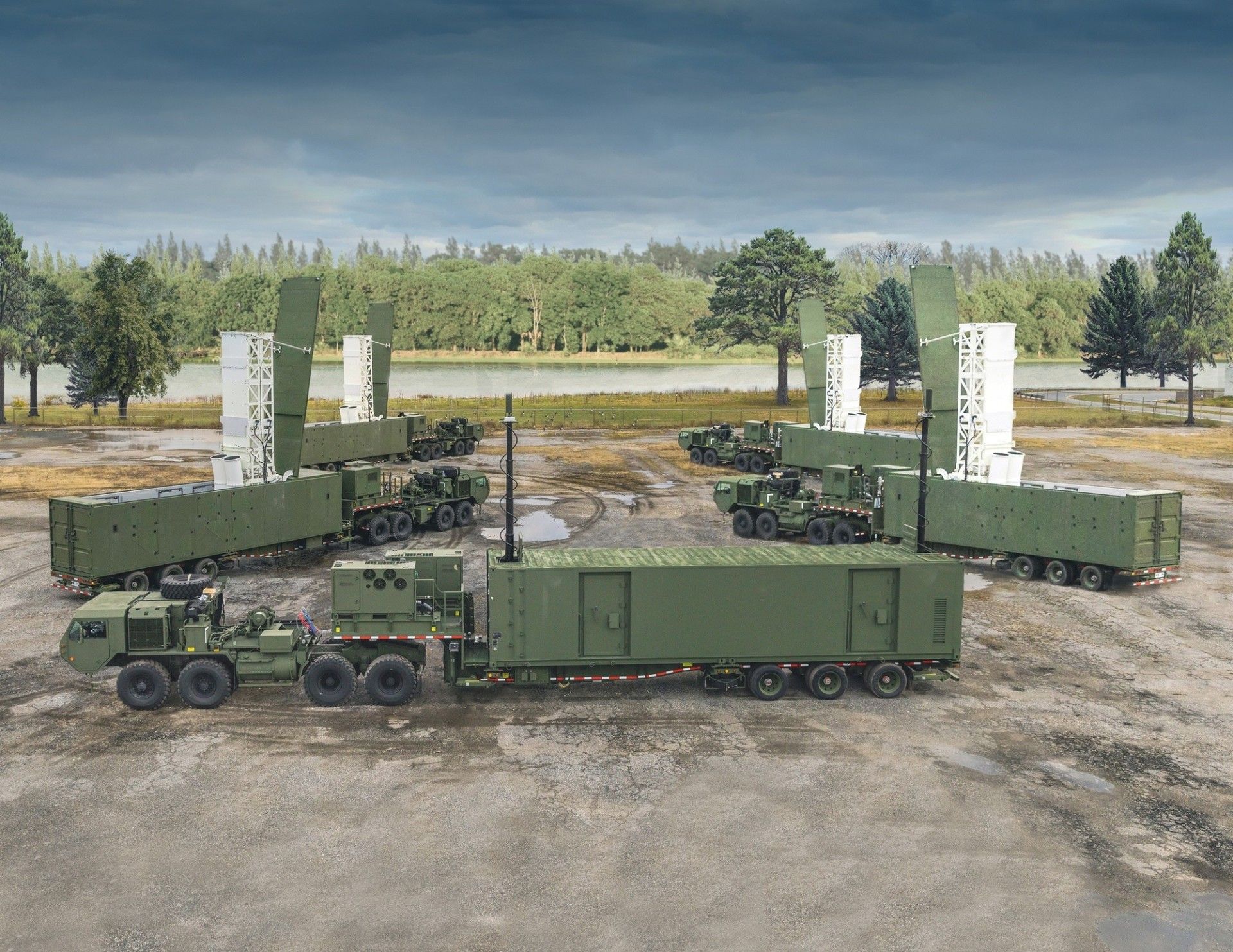
Unfortunately, analysing the effectiveness of any potential American restrictions on the use of Tomahawks is difficult because we do not know which missile variants Germany or Poland are seeking to acquire. Nevertheless, there is reason to hope that both countries are interested in missiles launched from the land-based MRC Typhon (Mid-Range Capability) system, which continues to be developed in the United States. The exact missile variant has not yet been publicly identified.
Most media outlets reporting on Poland’s efforts to acquire Tomahawks indicate only that the missiles would have a range of approximately 1,600 km. This could suggest that the weapons in question are the naval TLAM Block IV or Block V variants (Tomahawk Land Attack Missile). This is particularly plausible because these missiles were specifically envisaged for the land-based, containerised MRC Typhon launchers. These launchers are already capable of firing naval SM-6 missiles and are also expected to launch SM-3 missiles.
TLAM missiles are designed to strike land targets using a combination of several guidance systems. There would be little difficulty if they relied solely on GPS satellite navigation and inertial navigation. However, the latest Tomahawks, which are precisely the variants Poland is seeking, also navigate using TERCOM (Terrain Contour Matching), which tracks terrain features with a radar altimeter, and DSMAC (Digital Scene Matching Area Correlator), which uses a camera to recognise terrain during the terminal phase of flight. They also employ two-way satellite communications.

Purchasing Tomahawks would therefore require Poland to rely on American communications satellites and obtain access to databases in formats compatible with the TERCOM and DSMAC systems. Is this a major problem? Not for allies, and Poland is, after all, allied with the United States. Could these circumstances change? Unfortunately, yes, as demonstrated by Donald Trump’s sudden change of position towards Vladimir Putin.
However, it must be remembered that targets for Polish Tomahawks would be designated long before any potential restrictions were imposed by Washington. Therefore, in the event of a conflict, the Americans could potentially only complicate access to satellite communications, which are not actually essential for the standard employment of cruise missiles. Satellite communications were introduced primarily to enable targets to be changed during flight or to allow missiles to be launched before a target had been designated, with the relevant coordinates transmitted after launch.
The most important point, however, is that bilateral arrangements concerning autonomy in the use of Tomahawks will certainly not be made public. The Russians will therefore not know what restrictions, if any, the Americans have imposed on missiles supplied to Germany and potentially Poland. For the Kremlin, European Tomahawks will consequently represent weapons that must be taken into account when assessing the effectiveness of any potential attack against NATO, even one that is not immediately met with American military support.
Do the Russians really have reason to be concerned?
The decision to supply Tomahawks to Germany and, hopefully, Poland will undoubtedly send shockwaves through the Kremlin. Of course, nobody thinking rationally in Moscow should assume that NATO would launch a first strike against the Russian Federation simply because it possesses these weapons. Nevertheless, deploying missiles with a range of 1,600 km in Central and Eastern Europe would significantly complicate Moscow’s decision-making regarding any potential conventional aggression.
Tomahawks would therefore become Poland’s most valuable deterrent capability, apart from the enduring strength of its alliances. No other means of retaliatory strikes against the Russian Federation would pose such a serious problem for Moscow. Even the air-launched AGM-158B-2 JASSM-ER missiles, with a range of approximately 1,000 km, which Poland purchased on 28 May 2024 in quantities amounting to several hundred, do not provide an equally powerful deterrent. The Russians will know perfectly well where these missiles are located and from which directions they could approach.
In the case of land-based Tomahawks, however, the Russians would no longer possess such knowledge. Poland could seek to acquire TLAM missiles launched from standard containers, which would be virtually impossible to identify until the moment of launch. Every container on land, and even aboard vessels, could therefore represent a potential threat to Russia. This would become even more significant if containerised Tomahawks were eventually accompanied by containerised NSM anti-ship missiles, which can also strike land targets, although at considerably shorter ranges.

The Russians must therefore now take a compass and draw a semicircle with a radius of 1,600 km centred on each eastern NATO member state to establish a list of their own critical infrastructure facilities that could be attacked if Moscow started a war. Furthermore, Russian military commanders must recognise that the Tomahawk’s design and flight profile make it an exceptionally difficult weapon to intercept. They must therefore assume that a significant proportion of incoming missiles would penetrate Russian air defences and precisely destroy decision-making centres, oil refineries, weapons factories, bridges, fuel depots, ammunition storage facilities and other important targets.
Such strikes would be particularly effective because each Tomahawk carries a specialised warhead weighing approximately 450 kg. This is a sufficiently powerful payload to destroy a designated target, and it is precisely this capability that the Russians should now fear.
Poland’s efforts to acquire Tomahawk missiles should therefore continue, as these weapons could genuinely deter Russia from deciding to launch a potential attack against Poland and other countries on NATO’s eastern flank. Or, at the very least, postpone such a decision.


