












- ANALIZA
- WIADOMOŚCI
- KOMENTARZ
Between power and will: What France can really offer European allies

For their own security, European allies must look beyond French rhetoric and grasp the military and political limits of what Paris can realistically offer in peacetime and wartime.
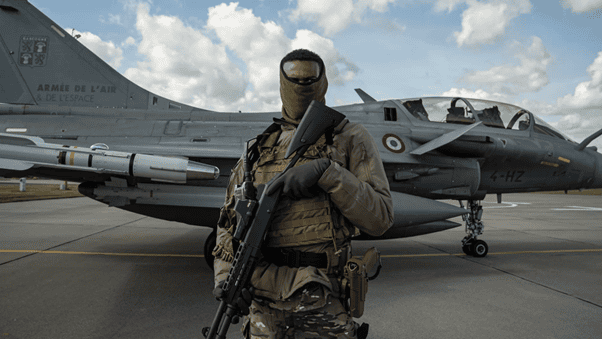
Forward nuclear deterrence in Europe, the deployment of peacekeeping troops to Ukraine, and the dispatch of a naval armada to the Middle East are just a few of the most prominent examples of France setting the pace of the European defence debate. Paris seeks to become a European security leader, and it holds strong assets to assume such a role. Its independent nuclear deterrent, sovereign high-end defence industry, and battle-hardened armed forces make France an especially attractive partner for European states at a time of heightened insecurity and growing doubts about US credibility.
The Élysée fully understands the favourable moment to seize political and economic gains by using security to elevate its position in Europe and secure lucrative arms contracts. Yet although France undoubtedly has, in many respects, Europe’s most capable military, its European allies must be equally aware of its current material and political limitations.
This is because behind the ambitious, at times hawkish, defence rhetoric lies a more sobering reality of France’s own fears of a „bonsaï army”, lacking mass and stockpiles, set against a deteriorating domestic situation. To see this clearly is to grasp the true limits of French power today. France can deliver critical quality, but not decisive quantity — and sustain it for weeks, perhaps months, not years, and only if the political will exists in the first place. To overlook these constraints is to risk, at best, disillusionment and, at worst, strategic disaster.
See also 

Increasingly attractive sovereign nuclear deterrent
To understand the limits of French military power, one must first recognise its strengths. Much of France’s appeal in the eyes of its allies rests on its sovereign nuclear deterrent — increasingly perceived as Europe’s only truly credible guarantee against a Russian invasion.
In stark contrast to Europe’s other nuclear power, Great Britain, France’s full independence in nuclear matters and its ability to employ its deterrent have never been seriously in doubt. Paris has historically prioritised full political and technological sovereignty, opting out of the NATO Nuclear Planning Group and ensuring technical autonomy, without reliance on external partners, such as the US.
France has long insisted that its nuclear deterrent has a European dimension, implying it could resort to nuclear weapons if its vital interests on the continent were threatened. In recent years, Paris has called on its European allies to engage in a strategic debate on how French nuclear capabilities could contribute more directly to Europe’s protection. This culminated in an invitation to participate in forward deterrence, accepted by several European capitals, including joining French forces in deterrence exercises and potentially hosting nuclear-armed Rafales.
However, this is very unlikely to lead to any Europeanisation of control over the French nuclear deterrent, with Macron repeatedly stressing that authority over its deployment and use rests exclusively with the French President. It is equally doubtful that France would help proliferate nuclear capabilities among other EU states, as doing so would mean relinquishing its status as the Union’s sole nuclear power and, with it, a highly valuable instrument of political influence.

Vast and deployable Rafale fleet
France currently operates 225 Rafale fighter jets, maintaining the largest combat air fleet in European NATO. A small fraction of them already regularly patrol the skies of eastern flank states, often in response to Russian aircraft and drones violating their airspace. This was the case after Russian drones entered Polish airspace last September, when Paris deployed three Rafale fighter jets to Poland.
Such operations both showcase and strengthen France’s Agile Combat Employment (ACE), namely its ability to rapidly deploy small packages of fighter jets away from main bases with limited personnel and equipment. France has steadily reduced the manpower needed to sustain such sorties abroad. After Russia’s annexation of Crimea in 2014, deployment to Poland required a support package of 80 personnel; more recent deployments to Romania and Sweden needed only 30. This suggests that, in the event of a conflict on NATO’s north-eastern flank, France could likely commit an initial combat air package immediately, but only on a limited scale of up to roughly 30 aircraft.
Advanced space-based intelligence
At the beginning of this year, President Macron claimed that Ukraine was receiving two-thirds of its external intelligence from France, underscoring the country’s independent high-end intelligence collection capabilities, which can partly substitute for those of the United States for its allies. At the core of these capabilities is the newly completed CSO constellation of three satellites, providing ultra-high-resolution optical 3D imagery (around 18–35 cm) for target identification, complemented by four dual-use Airbus Pléiades satellites of comparable quality. Together, these sovereign capabilities give France and its allies access to some of the world’s highest-resolution optical imagery.
Paris is also investing heavily in protecting these space systems, making France a European leader in counter-space capabilities. Following the July 2019 French Space Defence Strategy, France shifted from a passive to a more active posture, currently developing ground- and space-based lasers to dazzle hostile satellites, as well as “patrol-guard” satellites capable of close-proximity self-defence operations. Together with Europe’s main space launch site in French Guiana, this means France can offer its allies high-end intelligence, space technology, and access to space itself.

Europe's most capable navy
When Cyprus came under Iranian missile fire, France was the first to dispatch military vessels to help defend the British RAF base on the island. The episode was emblematic of a broader shift in European naval power. It exposed the relative decline of Britain’s Royal Navy, weakened by chronic understaffing, underfunding, and delayed modernisation, while highlighting the rise of the French Navy as the continent’s pre-eminent maritime force, capable of sustained power projection and rapid deployment. While Britain struggled to send even a single destroyer to Cyprus because of capacity and readiness constraints, France deployed around a dozen ships to the region at short notice, including the Charles de Gaulle carrier strike group. France’s only aircraft carrier had also operated earlier this year in the Baltic Sea, where the French Navy is steadily expanding its presence with intelligence-gathering and mine-countermeasure vessels to help counter Russian hybrid activity and its shadow fleet.
Globally battle-hardened armed forces
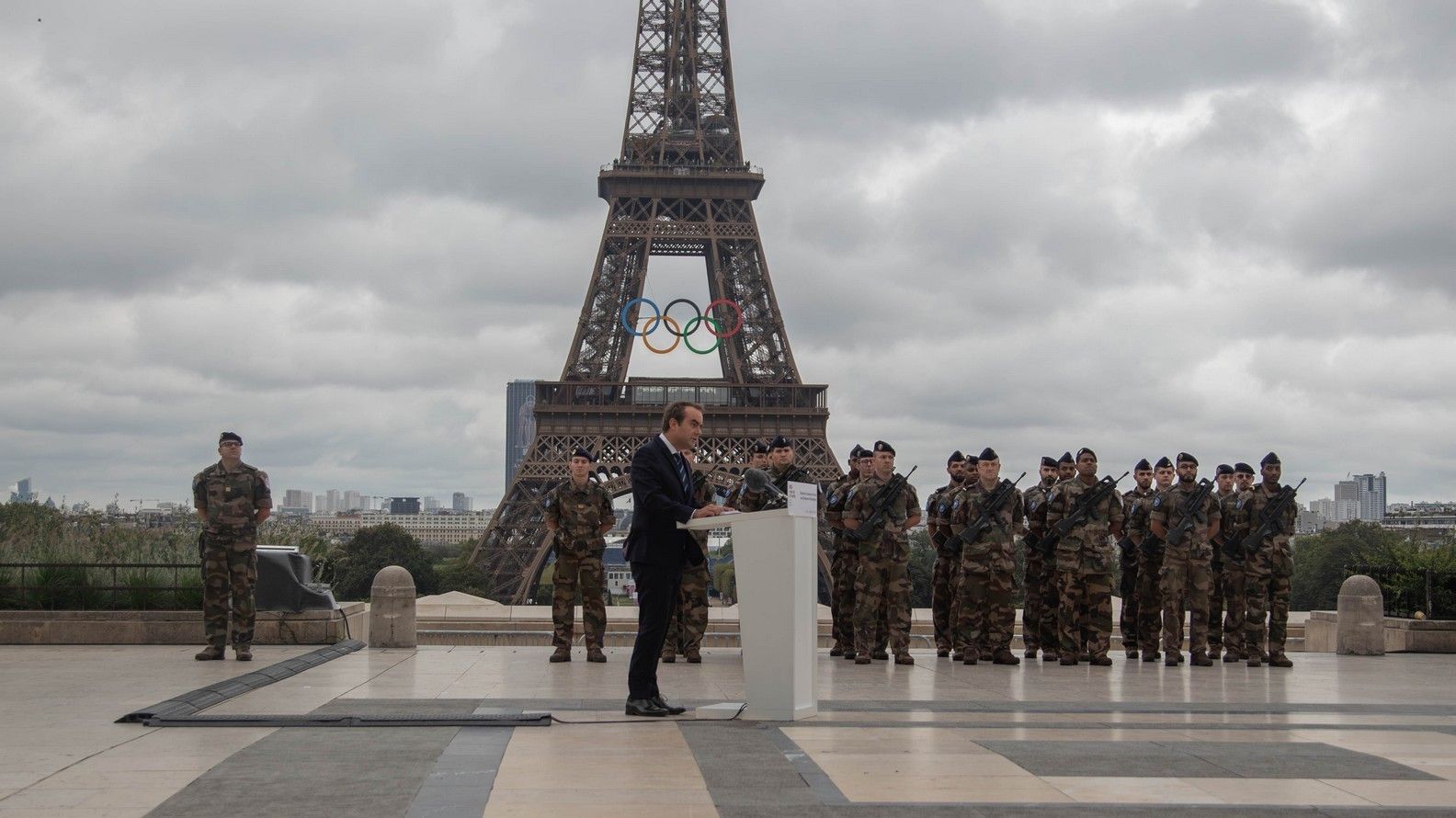
Since the Second World War, the French military has been almost continuously engaged in active operations somewhere in the world. Today, France maintains around 20,000 troops deployed beyond continental France, across its overseas territories, the Sahel, the Middle East, and NATO’s eastern flank. This makes it one of NATO’s most battle-hardened militaries, alongside those of the United States and Turkey. It is difficult to overstate the value of forces tested not only in exercises, but in sustained real-world operations across multiple domains. Such combat experience shifts the assessment of French capabilities away from abstract, numbers-based comparisons towards practical lessons drawn from the battlefield. By demonstrating a long-cultivated ability to react quickly, decisively, and, if necessary, to use force, France reinforces its credibility among European countries that already host its forces, such as Romania and Estonia.
Leading European defence industry
Lastly comes perhaps France’s most powerful military asset: its vast defence and technological industrial base. Few other countries can procure such a large share of their military equipment domestically while still exporting it globally en masse. A sovereign DTIB stands at the core of French strategic autonomy, allowing France to procure domestically all major categories of weapons, exercise full discretion over their use without fear of external red buttons or restrictions, and secure priority in procurement and servicing.
French arms producers can offer European allies viable alternatives to US systems across many areas, while also looking increasingly like a more credible partner. In fact, nearly 60% of French arms exports went to European allies in 2024. Among the most in-demand systems in 2025 were Griffon and Serval vehicles, Mistral and Aster air defence systems, Caesar self-propelled howitzers, and surveillance radars. This position could be further strengthened by Macron’s push for a war economy, intended to deliver faster, more flexible, and more scalable production of critical systems such as drones, munitions, and missiles. France could therefore emerge as one of Europe’s key reservoirs of industrial power in the event of a high-intensity conflict with Russia.
What the French military cannot do
France is likely Europe’s most capable military power in terms of nuclear, air, maritime, and space capabilities, underpinned by a leading DTIB and tried-and-tested armed forces. Yet these strengths should not obscure a critical reality: French military power remains structurally constrained in meeting the demands of high-intensity warfare on NATO’s north-eastern flank.

Rigid nuclear deterrent
The first weakness lies in the very structure of the French nuclear deterrent, which lacks the size and flexibility needed to address the full spectrum of Russian nuclear threats. France does not possess tactical nuclear weapons, namely lower-yield warheads designed for battlefield use, but relies exclusively on 290 strategic warheads intended for deterrence at the highest level. As a result, in the event of Russian tactical nuclear use in Europe, France would lack a clearly proportionate nuclear response.
In addition, France now retains only two legs of the nuclear triad — around forty designated Rafale aircraft and four Le Triomphant-class ballistic missile submarines — after abandoning its land-based missile component in the 1990s. This further limits its room for manoeuvre. For these reasons, the current French deterrent may remain credible against a large-scale strategic nuclear attack from Russia, the least likely scenario, but is less well suited to deterring limited or tactical nuclear escalation, which is more plausible.
"Bonsaï army"
At the conventional level, the French armed forces are not well configured for the challenges posed by Russia. For decades, they were optimised for expeditionary missions and counter-terrorism operations against asymmetric adversaries. Yet a recent parliamentary report on France’s preparedness for high-intensity, protracted, attritional warfare against a peer adversary concludes that the military suffers from a structural lack of mass in personnel, platforms, and stockpiles, calling it a “bonsaï army”.
A 2023 parliamentary report already warned that French ammunition stocks, across shells, missiles, and torpedoes, were insufficient for a conflict of this kind and would support only a few weeks of high-intensity operations. That vulnerability has since been laid bare, and further aggravated, in the Middle East, where Rafales defending the United Arab Emirates have expended dozens of MICA air-to-air missiles against Iranian drones and missiles. In just two weeks, France burned through several months of current MICA production to counter threats that were dozens, if not hundreds, of times cheaper, raising serious concerns about both operational endurance and economic sustainability. The resulting depletion is already limiting the scale of French support to Ukraine and would likely do the same in the event of a wider conflict on NATO’s north-eastern flank.

Deadlocked war economy
The deepening shortages have exposed a widening mismatch between industrial and battlefield tempos, despite four years of proclaimed war economy. The state wants the defence industry to take greater risks and anticipate future demand, while industry insists on firm long-term contracts before expanding production capacity, creating a persistent deadlock. Unless France reconciles these positions and unleashes funds enabling a genuine industrial ramp-up, its ability to equip both its own and allied armed forces with high-end and conventional munitions will remain severely constrained.
Crucial unknown: political will
Ultimately, the deployment of these French military capabilities would depend on Paris’s political will, shaped by the interplay of national interests, domestic politics, and constraints. And this willingness can never be taken for granted, even within an allied relationship.
President Macron may reassure his European allies of France’s determination to protect them in the event of aggression, but he will be out of the office next spring. With the National Rally’s Jordan Bardella leading in the presidential polls, France’s stance on support for Ukraine, forward deterrence, and even Russia could undergo a radical shift next year. Meanwhile, the French parliament could descend further into fragmentation and paralysis, or come under the sway of rising far-right or far-left forces that are less supportive of France’s alliance obligations.
What further undermines confidence in the long-term sustainability of France’s commitment to its allies is its increasingly unstable domestic situation. For several years, the country has been gripped by persistent political, fiscal, and social crises — from successive government collapses and rising debt and deficits to recurring waves of violent protest. Together, these pressures are already forcing France to focus more inward, drawing limited resources and political attention away from external commitments and allied security.
Many heavy political decisions will also hinge on the support or disapproval of French public opinion. Today, a large majority of the French public sees Russia as a threat and supports rearmament, even at a fiscal cost. More than half support using nuclear deterrence to protect the EU. Yet the public remains far more reluctant about direct military engagement, especially in Ukraine, but also in European countries in the event of a direct Russian attack, reflecting a persistent fear of escalation and of being drawn into a broader, unwanted conflict.
In this context, former Chief of the Defence Staff Pierre de Villiers warned in a recent interview that France lacks the social cohesion and trust needed to endure a prolonged conflict, referring to rising internal divisions and tensions. In his view, material rearmament must be matched by a “réarmement des forces morales”, that is, stronger civic spirit, solidarity, and willingness to sacrifice. A widespread public and political backlash to remarks by the new Chief of the Defence Staff, General Fabien Mandon, that the country must be ready to “lose its children” exposed that much of French society remains mentally unprepared for war’s sacrifices.
See also

Factoring in military and political constraints
France is therefore likely to provide significant high-end but ultimately limited in mass military support, given both political and military constraints. While the French military’s preparedness for high-intensity conflict may improve in the coming years, the political willingness to employ it may simultaneously decline. In this sense, France may come to resemble the United States from the perspective of European allies: unable to provide mass in conventional terms, yet still capable of delivering support that is, in the words of the new US National Defence Strategy, „limited but critical” through high-end capabilities and nuclear deterrence.
What does all this mean for France’s European allies, particularly those most exposed to the Russian threat on the north-eastern flank? Above all, they cannot look to France as a replacement for a gradually retreating United States, let alone outsource their security to Paris. France lacks both the hard power and the political will to assume such a role. As this analysis shows, that expectation would be as ungrounded militarily as it would be irresponsible politically.
Yet this is not to say that France could not play a complementary role. In peacetime, it can make a meaningful contribution to deterrence through forward presence and strategic deployments. In wartime, it could provide high-end capabilities in the fields of space intelligence, combat air power, and missile systems, but only limited conventional mass on the ground. This may improve in the coming years if the modernisation of the French land forces and the war economy deliver tangible results. Even then, France’s political willingness to commit those forces would remain uncertain, given the upcoming elections, the level of public support, and the country’s lower perception of the Russian threat.

Planning for the worst, anchoring for the best
European allies should neither assume French engagement nor count on its scale, but instead plan for limited rather than extensive support. At the same time, they should work to maximise the chances of decisive French involvement, which could significantly strengthen their collective military potential. In strategic terms, they should plan militarily for the worst, while politically anchoring French interests and presence in the region to maximise the chances of the best possible outcome.
Achieving this would require deeper political, military, defence-industrial, and economic cooperation, leading to a stronger French troop presence, more deployed assets, and greater private-sector stakes on the ground. Such entrenchment would raise the political and economic costs for France of failing to intervene decisively in the event of a Russian attack.
This should be reinforced by an extensive public diplomacy effort in France aimed at building support for such commitments. Through events, outreach programmes, and social media, it should help strengthen the perception that an attack on NATO’s north-eastern flank would be a direct threat to Europe and hence to France’s own security. To be effective, such messaging should appeal not only to strategic self-interest, but also to the rich shared history, culture, and values between the countries.
Politically, France’s far right and far left — both now plausible contenders for power — can no longer be ignored or isolated by their regional counterparts. Refusing contact, let alone displaying open hostility, risks pushing them towards more detached and neutralist positions, especially given their long-standing pro-Moscow leanings. Far wiser would be to keep communication channels open now, restrain public antagonism, and, should they come to power, pursue pragmatic engagement grounded in transactionalism and mutual self-interest.
Only such a sustained and coordinated effort could align French national interests, public opinion, and political will to the extent that decisive engagement on the north-eastern flank would cease to be a political question and become a purely military one.


