


- WIADOMOŚCI
- ANALIZA
Will divisions replace brigades in Russia? Not enough equipment to go around

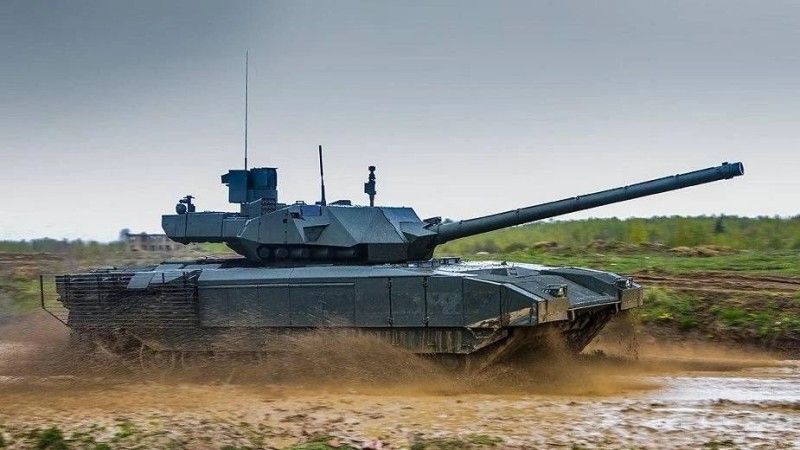
We recently reported on the formation of Russia’s new 84th Guards Motor Rifle Division, named after St George the Victorious and awarded the Order of Suvorov. This provides a timely opportunity to examine the current state of efforts to re-establish divisions within the Russian Ground Forces.
The ground forces of the Soviet Union, and subsequently Russia, were traditionally organised around divisions. Nearly two decades ago, a transition towards a brigade-based structure was initiated. A decade ago, this trend was reversed, with Russia once again beginning to re-establish divisions. Progress has been relatively slow, with new divisions being formed either from one, two or three existing brigades or entirely from scratch.
The Russian Ground Forces currently have 21 tank and motor rifle divisions, comprising:
- 3 tank divisions;
- 18 mechanised (motor rifle) divisions;

These tank and motor rifle divisions are assigned to armies or army corps, with one tank division reporting directly to a military district command. Listed in numerical order, they are:
- 2nd Motor Rifle Division, 1st Tank Army;
- 3rd Motor Rifle Division, 20th Combined Arms Army;
- 4th Tank Division, 1st Tank Army;
- 6th Motor Rifle Division, 3rd Army Corps;
- 18th Motor Rifle Division, 11th Army Corps;
- 19th Motor Rifle Division, 58th Combined Arms Army;
- 20th Motor Rifle Division, 8th Combined Arms Army;
- 27th Motor Rifle Division, 2nd Combined Arms Army;
- 42nd Motor Rifle Division, 58th Combined Arms Army;
- 47th Tank Division, 1st Tank Army;
- 67th Motor Rifle Division, 25th Combined Arms Army;
- 68th Motor Rifle Division, 6th Combined Arms Army;
- 69th Motor Rifle Division, 6th Combined Arms Army;
- 70th Motor Rifle Division, 18th Combined Arms Army;
- 71st Motor Rifle Division, 14th Army Corps;
- 72nd Motor Rifle Division, 44th Army Corps;
- 84th Motor Rifle Division, 3rd Combined Arms Army;
- 90th Motor Rifle Division, Central Military District;
- 127th Motor Rifle Division, 20th Combined Arms Army;
- 144th Motor Rifle Division, 5th Combined Arms Army;
- 150th Motor Rifle Division, 8th Combined Arms Army.
See also 

As the above list illustrates, Russia’s combined-arms divisions are distributed across numerous armies. The 1st Tank Army has the largest number, with three divisions. However, several armies still have no divisions of their own. These are:
- 29th Combined Arms Army;
- 35th Combined Arms Army;
- 36th Combined Arms Army;
- 41st Combined Arms Army;
- 49th Combined Arms Army;
- 51st Combined Arms Army.
This is because the brigade echelon has yet to be eliminated from the Russian Ground Forces. Their current structure still includes, among other formations:
- 2 tank brigades;
- 34 motor rifle brigades;
- 1 coastal defence brigade;
- 1 covering brigade.
Russia retains a hybrid brigade–division structure in its Ground Forces
Interestingly, some of these brigades were established relatively recently, from 2022 onwards, after the beginning of Russia’s full-scale war against Ukraine. This does not refer solely to brigades originating from the self-proclaimed Luhansk and Donetsk People’s Republics, which were incorporated into the Russian Armed Forces on 1 January 2023. The 11th Tank Brigade and eight motor rifle brigades — numbered 72, 85, 88, 128, 137, 144, 164 and 169 — were formed entirely from scratch.

Photo. Russian MOD
Until relatively recently, it appeared that the Russian Ground Forces’ transition from a brigade-based to a division-based structure was intended to be comprehensive and permanent. It is now apparent, however, that a hybrid structure will persist for many years to come. Both Russia and Ukraine continue to grapple with competing views on how the principal tactical-level formation should be organised. Divisions inherited from the Soviet era had extensive organisational structures and were designed to fight as cohesive formations. Under post-Soviet Russian conditions, however, maintaining them became increasingly impractical because of their demands for equipment, personnel and funding. A divisional regiment could not operate independently without support from other units within the division. This prompted the decision to adopt a brigade-based structure. Under the original concept, a motor rifle or tank brigade was intended to be capable of independent combat operations. It possessed virtually all the specialised elements found in a division, but these were organised at battalion and company level rather than as regiments and battalions.
For reasons that remain unclear to this day, these self-contained brigades subsequently began to be reorganised into divisions, effectively restoring structures resembling those of the Soviet period. In Russia, this process has taken years, with virtually every division requiring a prolonged period to develop its combat capabilities.
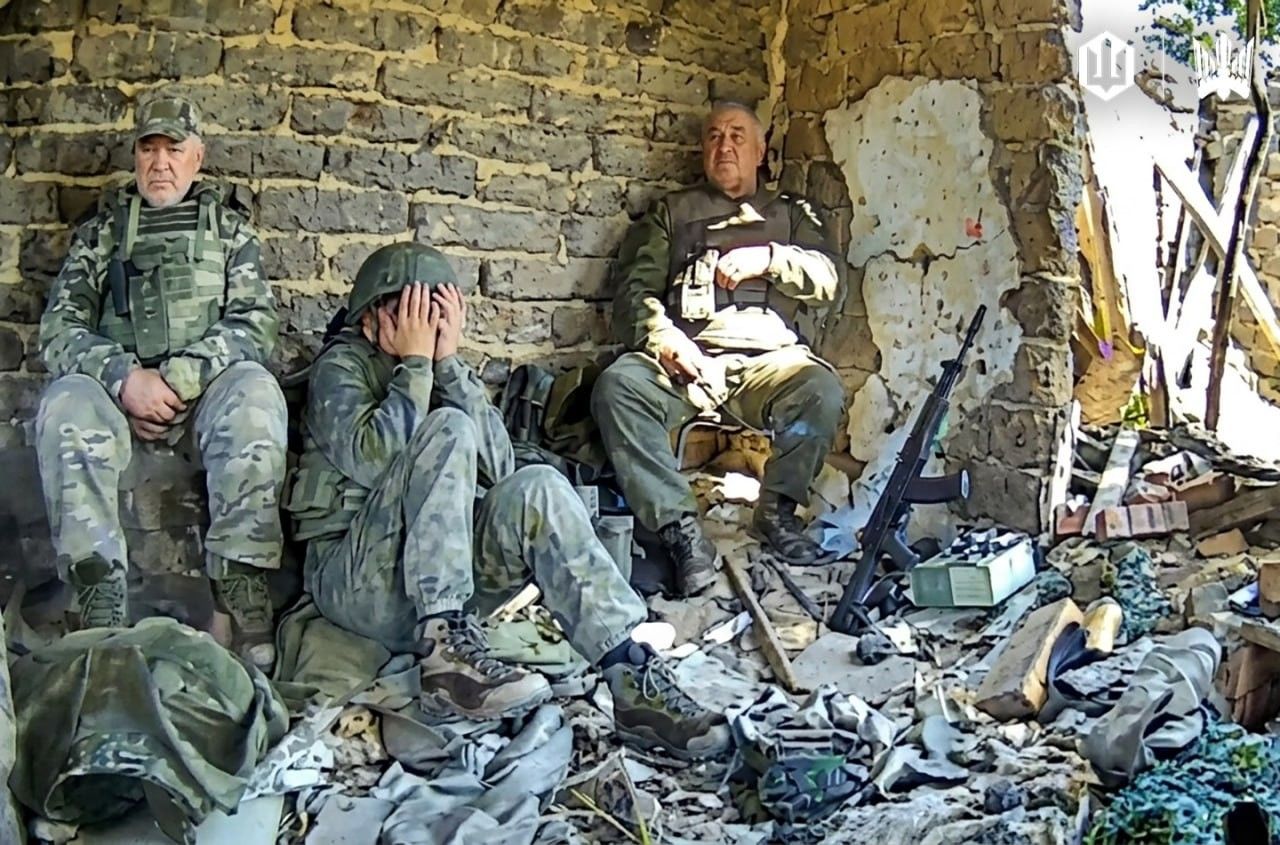
Wartime mobilisation, involving the formation of new units from 2022 onwards and their assignment to existing divisions, brigades and even regiments, has further compounded this organisational “chaos”. Russia’s enormous personnel and equipment losses have also contributed to a situation in which virtually every division now has a different structure and level of combat effectiveness, making reliable assessments based on open-source information extremely difficult.
The organisation of today’s Russian divisions can broadly be divided into two components: a permanent establishment and a variable component. The permanent organisational structure of a tank or motor rifle division comprises:
- tank regiments or an independent tank battalion, and motor rifle regiments;
- a self-propelled artillery regiment or an artillery regiment;
- an independent anti-tank artillery battalion (in motor rifle divisions only);
- a surface-to-air missile regiment or an independent surface-to-air missile battalion;
- an independent reconnaissance battalion;
- an independent signals battalion;
- an independent combat engineer battalion;
- an independent logistics support battalion;
- an independent medical battalion.
In addition, divisional headquarters have various companies within their establishments, including unmanned aerial vehicle (UAV), electronic warfare (EW), and chemical, biological, radiological and nuclear (CBRN) defence companies, alongside other specialist elements. With the establishment of Russia’s Unmanned Systems Forces, UAV companies in some, and possibly all, divisions are being, or will be, reorganised into unmanned systems battalions.

Photo. Mil.ru / Wikimedia Commons / CC BY 4.0 (https://creativecommons.org/licenses/by/4.0/)
The variable component of individual divisions includes, among other mobilised formations:
- motor rifle regiments (territorial forces);
- independent motor rifle battalions (territorial forces);
- tank regiments (territorial forces);
- self-propelled artillery regiments and artillery regiments;
- independent anti-tank artillery battalions;
- independent howitzer artillery battalions.

Russia forms a new 84th Mechanised Division
Under current wartime conditions, compounded by Russia’s stringent military secrecy, it is difficult to distinguish between units that form part of a division’s permanent establishment and those placed under its command for the duration of the war. This is particularly true of all divisions formed since 2022. Divisions established before that date have permanent barracks in their respective garrisons, making it possible to identify their constituent units with a reasonable degree of accuracy. New divisions, by contrast, are sometimes established using existing barracks infrastructure but are more commonly formed around training centres or military units tasked specifically with raising new formations.
In practice, the definitive permanent structure of individual divisions will only become clear after the war against Ukraine has ended and demobilisation has taken place. Unfortunately, there is currently no indication of when that might happen.

Photo. mil.ru
Meanwhile, existing brigades, together with their subordinate regiments and battalions, have expanded and continue to grow in personnel strength. The situation is considerably worse when it comes to weapons and equipment. Consequently, particularly during the initial stages of mobilisation, newly mobilised units were described as little more than sources of “cannon fodder”. The process of establishing new divisions has therefore continued, partly to make these formations’ organisational structures more viable and, above all, to improve command and control. The clearest example is the newly established 84th Motor Rifle Division. It is being formed around the 4th Independent Motor Rifle Brigade and its subordinate units, including the 1194th and 1465th Motor Rifle Regiments. Their combined nominal strength can be estimated at approximately 10,000 personnel.

The brigade’s existing battalions have been used to establish the division’s permanent motor rifle regiment, whose designation remains unknown. The other two motor rifle regiments are the aforementioned mobilised formations. It is likely that, at least for the time being, the division will not have its own tank regiment, but instead an independent tank battalion. Similarly, rather than a surface-to-air missile regiment, it will probably field a surface-to-air missile battalion or a combined surface-to-air missile and artillery battalion. These limitations stem from shortages of tanks and modern air defence systems. Russia does not, however, face comparable shortages of artillery equipment, enabling the division to develop a regiment equipped with either self-propelled or towed artillery. The division’s remaining battalions — reconnaissance, signals, combat engineers, logistics and technical support, and medical — are being established using the corresponding brigade-level companies as their foundations.
Further Russian Ground Forces divisions can be expected to be formed in the near future. For the time being, however, it remains unclear which existing formations will provide their foundations or what numerical designations they will receive. Attempts to predict these developments are therefore of limited reliability. Similar information has previously emerged in Russia, but much of it has subsequently proved inaccurate. Further information will be needed to establish the direction of these developments. Such information will be particularly valuable in determining whether the Russian Ground Forces intend to retain a hybrid force structure combining divisions and combined-arms brigades, or whether their ultimate objective remains a complete transition to a division-based organisation.


