


- WIADOMOŚCI
- ANALIZA
Putin is taking over Africa. Russia offers missiles, drones and military protection


Russia is preparing another diplomatic and military offensive in Africa. On 28–29 October, Moscow will host the third Russia–Africa Summit, which, together with its accompanying forum, is expected to bring together more than 2,000 participants. This time, the Kremlin is preparing concrete proposals covering air defence, counter-drone systems, military cooperation, nuclear energy and cybersecurity. Despite its war against Ukraine, Russia continues to expand its influence across the African continent. Importantly, Moscow is increasingly combining arms exports with the presence of Russian military personnel and long-term security agreements.
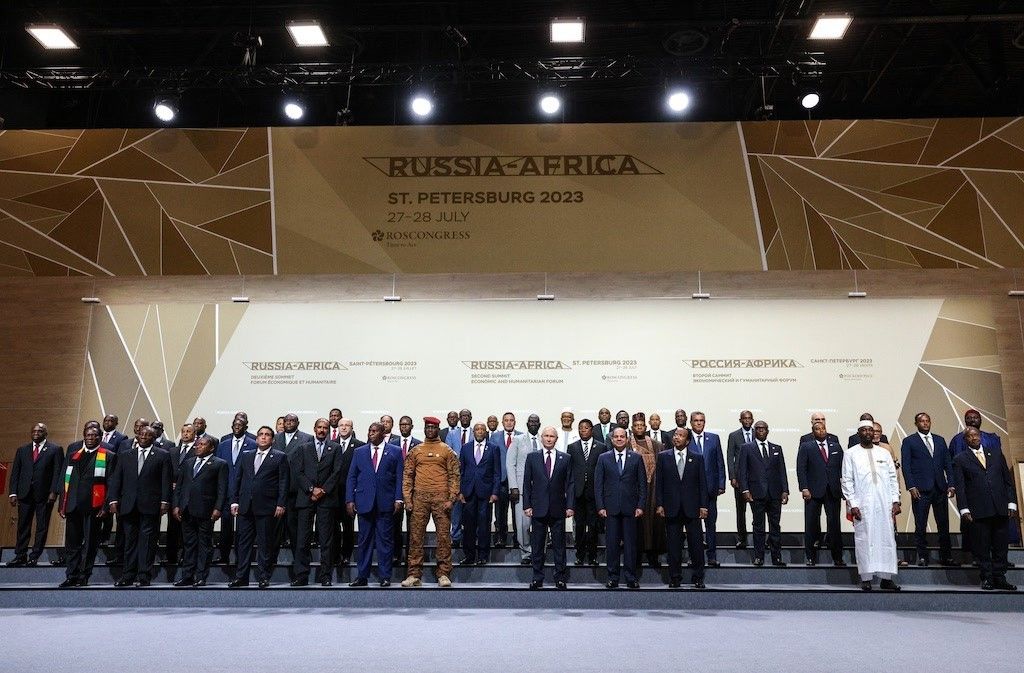
Following the summits in Sochi in 2019 and St Petersburg in 2023, Vladimir Putin will once again welcome African delegations. According to the Russian Ministry of Foreign Affairs, most countries have already confirmed their participation. On 28 October, Sergei Lavrov will meet African foreign ministers, while the following day Putin is expected to co-chair the plenary session alongside Burundi’s President Évariste Ndayishimiye, the current Chairperson of the African Union. However, the most important discussions will take place during bilateral meetings, where Moscow intends to negotiate further military, energy and economic agreements.
See also 
Russia offers Africa new military technologies
One of the most interesting announcements is Rosoboronexport’s planned presentation of its new Anti-Drone Dome system, designed to protect military facilities, critical infrastructure, transport convoys and government buildings against unmanned aerial vehicles. The solution is intended to integrate radar systems, electronic warfare capabilities, automated command and control, and counter-drone weapons. Russia plans to offer African countries systems including the Pantsir-S1M, Pantsir-SMD-E and Verba man-portable air defence systems, alongside other technologies developed by the Russian defence industry.
This is particularly interesting because many African countries are struggling with terrorism, the activities of armed and rebel groups, and the increasingly frequent use of drones by terrorist organisations. Russia intends to draw on its experience from the war against Ukraine to promote its military technologies. However, it should be remembered that the effectiveness of Russian weaponry remains a subject of debate, particularly given Moscow’s difficulties in protecting its own military bases and energy infrastructure against Ukrainian attacks.
On the other hand, the Kremlin understands very well that African governments need weapons, training, military advisers and solutions that can be deployed relatively quickly. Moreover, if Europe or the United States are unwilling to sell arms to African countries, Russia or Turkey will step in.
The nature of Russia’s military presence in Africa is also changing. Operations previously conducted by the Wagner Group are gradually being taken over by Africa Corps, which is controlled by the Russian Ministry of Defence. Russian military personnel remain present in countries including Mali, Libya and the Central African Republic, providing training, operational support and protection for local authorities.
By March 2026, Russia had concluded nearly 60 military cooperation agreements covering 39 African countries. Between 2020 and 2025, Russian warships made more than 65 port visits to at least 18 African countries. This demonstrates that Russia’s military activities now extend far beyond the Sahel.
Weapons, nuclear energy and control
Military cooperation is only one part of Russia’s offer. Rosatom has announced that it will be the summit’s title sponsor and plans to sign new documents concerning cooperation in nuclear energy. Moscow is promoting nuclear power plants, floating nuclear reactors and long-term technological cooperation. Such agreements could make African partners dependent on Russia for decades, as they involve not only the construction of infrastructure but also nuclear fuel supplies, specialist training, maintenance and technical support. For the Kremlin, this represents another means of building lasting political and economic influence. After all, Russia is already building a nuclear power plant in Egypt.
The summit’s official programme also includes cybersecurity, artificial intelligence and so-called digital sovereignty. Particularly interesting is a session organised with the participation of Rosoboronexport, focusing on protecting state institutions, countering “colour revolutions” and controlling national information environments.

Russia is offering not only weapons to protect borders and military infrastructure, but also technologies that enable governments to control the flow of information and monitor their populations. For some African governments, including authoritarian ones, this may be an attractive proposition, although it also raises serious concerns about political surveillance – particularly regarding what Russian intelligence services might be able to monitor and control.
Is Europe responding?
Europe, however, possesses far greater economic potential. Trade in goods between the EU and Africa reached almost €355 billion in 2024, while the Global Gateway Africa–Europe Investment Package aims to mobilise up to €150 billion. The seventh European Union–African Union Summit also took place in November 2025. The problem, therefore, is not Europe’s lack of presence in Africa, but its effectiveness in translating economic cooperation into political influence and security partnerships. Russia has considerably fewer financial resources, but concentrates its efforts on selected countries, particularly in the Sahel, military institutions and sectors where it can build long-term relationships.
The third Russia–Africa Summit will not determine the future of the entire continent. African countries have different interests and are developing cooperation not only with Moscow, but also with Beijing, Washington and Europe. Nevertheless, Russia is once again demonstrating that it understands the importance of regular political engagement. Arms deliveries can lead to further training programmes, military advisers can facilitate negotiations over access to bases, and nuclear projects create technological dependencies lasting decades.

Europe will not limit Russian influence in Africa through statements and criticism of the Kremlin alone. It needs competitive offers of military cooperation, training, investment and a direct, regular political presence. What is missing here is Ukraine’s response to this Russian offensive. Moscow is not waiting for the war in Ukraine to end before strengthening its position in Africa. Why should Europe wait?


