












- WIADOMOŚCI
- WYWIADY
How to effectively counter Kremlin actions: “The Russian influence apparatus has its weaknesses”

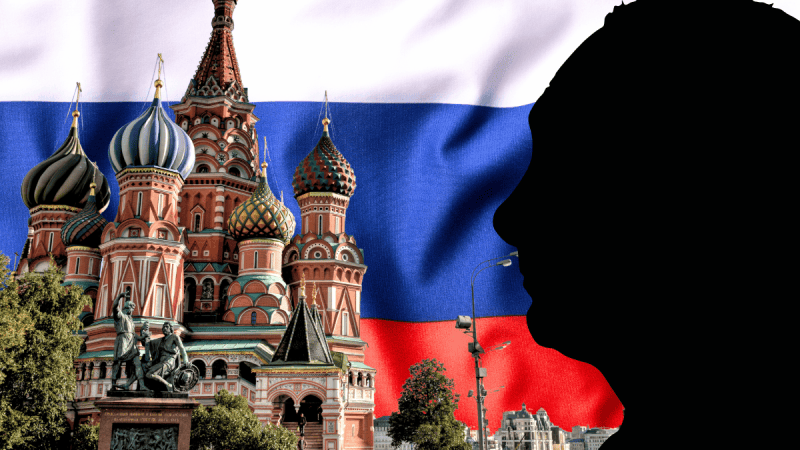
Active defence is designed to seize the initiative from the adversary, force adjustments to their operations, and limit their freedom to conduct influence operations.
The INFO OPS Alliance is developing an active defence model designed not only to identify Russian influence operations, but also to mitigate their effectiveness and increase the adversary’s operational costs. The organisation monitors the Kremlin’s information apparatus, analyses its vulnerabilities, and declares the deployment of countermeasures—the details of which remain classified.
Active defence is designed to seize the initiative from the adversary, force adjustments to their operations, and limit their freedom to conduct influence operations. The INFO OPS Alliance analyses both Russian narratives targeted abroad and the domestic situation within the Russian Federation, alongside the vulnerabilities of the Kremlin’s propaganda apparatus.
The organisation combines analysis, resilience building, and active response while maintaining strategic ambiguity regarding its operational methods.
Russian information operations are not limited to disseminating individual pieces of misinformation; they constitute a component of long-term strategic pressure exerted on democratic nations.
According to the INFO OPS Alliance, merely describing threats is insufficient; therefore, intelligence on adversary actions must lead to responses that curb their effectiveness.
A key element of this approach involves monitoring the Russian information environment and identifying tensions between the propaganda image of strength and the actual costs of war, as well as domestic challenges.
We speak about active defence, information deterrence, and countermeasures against the Russian influence apparatus with the spokesperson for the INFO OPS Alliance, who prefers to remain anonymous due to the nature of their operations.
INFO OPS Alliance – What Is It?
Mikołaj Rogalewicz, CyberDefence24: The INFO OPS Alliance is presented as an international collaborative framework of organisations and experts dedicated to countering information, psychological, and influence operations. This sounds like something more than a traditional analytical initiative. What, in essence, is the Alliance after two years of operation?
INFO OPS Alliance Spokesperson: The INFO OPS Alliance was established out of the conviction that democratic states, civil societies, and expert communities cannot limit themselves merely to passively describing information threats. Russian, Belarusian, or broadly speaking—authoritarian—influence operations are not isolated incidents. They represent an ongoing element of strategic pressure applied against states, societies, institutions, and decision-making processes.
This is why the Alliance is a framework for practical cooperation. It integrates analytical, expert, communication, and operational capabilities. On the one hand, we identify the mechanisms of hostile influence; on the other, we develop active defence models designed to tangibly reduce the adversary’s effectiveness. We are not mere observers. We are interested in shaping the operational environment, not just describing it.
What Is Active Defence?
The concept of „active defence” is appearing more frequently, but it is often understood in very different ways. How does the INFO OPS Alliance define it?
Active defence is the capacity to respond to hostile information operations in a way that prevents the adversary from holding a monopoly on initiative. Passive defence involves waiting for the adversary to spread a narrative and then attempting to debunk it. Active defence operates earlier, deeper, and more broadly.
It encompasses recognising intent, identifying patterns, anticipating vectors of attack, preparing audience resilience, neutralising narratives, and taking actions that increase the operational cost for the adversary. This also applies to the Russian information environment itself, where the Kremlin is engaged in a continuous battle to control the perception of its own domestic population. In this sense, Russia is not merely a source of threat; it is also a domain in which the Kremlin’s influence apparatus faces its own limitations, vulnerabilities, and anxieties.
It is not a matter of crude propaganda counter-punches or mirroring Kremlin tactics. It is about the professional management of the information environment to strip the adversary of their freedom of manoeuvre. Active defence is designed to make influence operations more costly, risky, unpredictable, and ineffective for the opponent.
Does this mean the Alliance not only analyses Russian propaganda, but also takes action against the adversary?
Analysis alone is necessary, but insufficient. When we identify an influence operation, pinpoint its objectives, target vectors, the emotions it seeks to trigger, and the decisions it aims to delay or block, taking action is the natural next step. Active defence means turning diagnosis into impact.
This also applies to measures directed against the Russian influence apparatus and the Russian-language information environment. We closely monitor which topics the Kremlin needs to suppress, which events it is forced to explain away, where it shifts its tone, and where it tries to overwrite reality with a narrative of power, control, and unity. These observations have practical value. They allow us to understand where Russian propaganda is genuinely strong, and where it is merely performing a ritual of strength.
I will not disclose the details of our methods, channels, procedures, or specific measures—doing so would be irresponsible. However, I can state that the Alliance develops and deploys various forms of active engagement against the adversary’s influence apparatus. Their objective is to curb the effectiveness of Russian operations, force the adversary to adjust, disrupt their momentum, expose inconsistencies in their messaging, and foster an environment where hostile actions no longer carry zero cost.
See also 

How do you impose costs in the information environment?
You use the phrase „imposing costs on the adversary.” What does that mean in the information domain?
In the information environment, a cost is not always material. It can take the form of lost credibility, the forced alteration of a narrative, the burning of an operational playbook, a shortened shelf life for a message, eroded audience trust, exposure of manipulation, or the obligation to explain away internal contradictions. An adversary that must constantly improvise, react to the exposure of its own mechanics, and adjust its operations loses both momentum and energy.
In the case of Russia, this cost carries an additional dimension. The Kremlin conducts external information operations while simultaneously striving to maintain narrative stability at home. It must mask the costs of war, rationalise losses, explain away failures, project an image of agency, and neutralise signals that could undermine trust in the state, the military, or the leadership. If active defence forces the influence apparatus to expend resources defending its own constructed reality, that represents a tangible cost.
Information deterrence is not solely about the threat of retaliation. It is about compelling the adversary to calculate risk. When they know their actions are being monitored, analysed, and met with an active, intelligent response, they lose their operational comfort. And operational comfort is one of the propaganda apparatus’s most vital resources.
Does this mean that the INFO OPS Alliance conducts deterrence operations?
Yes, but deterrence must be understood more broadly than in the traditional military sense. In the information domain, deterrence relies on establishing the conviction that influence operations will be neither cheap, safe, nor invisible. The adversary must assume that their actions will be identified, documented, neutralised, and, under specific conditions, turned back against their own credibility.
Deterrence operates across three dimensions. The first is recognition—the adversary knows they are being watched. The second is resilience—the adversary sees that their messaging does not take hold as easily as assumed. The third is active response—the adversary understands that their operations can trigger consequences for themselves. We do not need to outline these consequences in detail. In many cases, it is enough that the adversary knows they exist.
Regarding Russia, information deterrence also means stripping the Kremlin of the confidence that it can export chaos with impunity while maintaining the facade of absolute internal control. This is a critical component of active defence. The Russian Federation invests heavily in projecting an image of its own resilience, unity, and the inevitability of victory. Every Kremlin influence operation relies on the assumption that this image will remain stable. We believe it must be analysed, tested, and, where justified, disrupted in its propaganda consistency.
See also

The Kremlin has its own fears and vulnerabilities
Is the Alliance monitoring the internal situation in Russia?
Yes. We closely monitor the situation within the Russian Federation, particularly those areas relevant to the Russian influence apparatus, the Kremlin’s narrative stability, and its capability to conduct information and psychological operations. We are interested not only in what Russian propaganda projects externally, but also in what it is forced to explain to its own public.
This is crucial. Russia’s external operations are deeply intertwined with its domestic reality: public mood, war fatigue, economic pressures, elite friction, regional tensions, the cult of strength, the military’s public image, the leadership’s standing, and the need to conceal the costs of aggression. If you want to understand Russian propaganda targeted at Poland, Ukraine, the Baltic states, or the West, you must also understand what the Kremlin fears within its own society.
For us, Russia is not merely a transmitter of hostile narratives. It is also the ecosystem in which these narratives are produced, tested, refined, and defended. Monitoring this environment provides a clearer picture of when the Kremlin feels secure, when it is improvising, when it doubles down on repressive messaging, and when it attempts to paper over events inconvenient to its domestic audience. This insight carries not just analytical value, but practical significance as well.
Can these vulnerabilities be leveraged in active defence?
Active defence relies, among other things, on understanding where the adversary is genuinely strong versus where they are merely projecting a facade of strength. The Russian influence apparatus frequently constructs an image of total control, determination, social unity, and the inevitability of victory. In practice, this image requires constant maintenance, the masking of contradictions, and the suppression of signals that could disrupt the official narrative.
Yes, Russian vulnerabilities play a role in active defence. However, that does not mean we will publicly highlight which ones matter most to us, how they are analysed, or how they might be factored into operations. What can be said is that every propaganda system has its own friction points: between rhetoric and reality, between the image of strength and the costs of war, between promises of stability and the lived experience of citizens, between narratives of victory and facts that cannot be hidden indefinitely.
Our task is to identify these contradictions and design responses that constrain the adversary’s ability to freely manage perception. Sometimes this means exposing false narratives. Sometimes it involves highlighting the inconsistencies between their claims and reality. Other times it means heightening audience awareness that they are encountering a psychological operation rather than standard news. And in certain instances, it involves measures we will not describe publicly, as their effectiveness relies on discretion.
You speak directly about operating within the Russian information environment. Isn’t that risky?
What would be risky is pretending that the Russian information environment doesn’t matter. That is precisely where the Kremlin generates much of the justification for its policies, tests its rhetoric of violence, paints the West as the enemy, and tries to sustain the conviction that the war is necessary, just, and victorious. If we want to counter Russian influence operations, we must also understand their internal underpinnings.
This does not mean we will publicly discuss specific actions, assets, or vectors of engagement. On the contrary—the greater the importance of a given domain, the greater the required operational security. We can state the baseline principle: the Alliance monitors Russia, analyses its information vulnerabilities, and factors them into active defence models. However, we will not provide the adversary with details that would allow them to better shield their own influence apparatus.

Active defence cannot become propaganda
How can such active defence be conducted without crossing the line between defence and propaganda?
That is a crucial question. We do not mirror Russian tactics. We do not construct systems of deceit, fabricate alternative realities, or replace one form of propaganda with another. The distinction between active defence and propaganda lies in standards, intent, and accountability.
Authoritarian influence operations rely on manipulation, intimidation, false attribution, the cynical exploitation of emotions, and the erosion of trust. Active defence, as we define it, is grounded in intelligence, truth, analysis, resilience, and the deliberate restriction of hostile impact. This does not imply naivety; it demands professionalism.
It is possible to act decisively while remaining responsible. One can exert pressure on the adversary’s influence apparatus without becoming its mirror image. Active measures can be deployed, provided they remain within the bounds of the law, ethics, and the security of our partners. That is precisely why we place such heavy emphasis on risk assessment, information control, and safeguarding operational effectiveness.
So not everything the Alliance does will be public?
Of course not. In information security, total transparency can be counterproductive. We speak publicly about our objectives, standards, operational logic, and broad lines of activity. However, we do not disclose operational details, procedures, timing, assets, channels, metrics of effectiveness, or the specific vulnerabilities we observe on the adversary’s side.
This applies particularly to operations concerning Russia. When we monitor the vulnerabilities of the Russian influence apparatus and analyse its mistakes, friction points, and narrative weaknesses, we will not discuss them in a manner that helps the Kremlin adapt. The effectiveness of active defence requires discretion. In this field, not every effective measure should take the form of a press release.
This is not about building secrecy for secrecy’s sake; it is about protecting operational impact. If we were to explain in detail how we identify specific vulnerabilities, how we analyse them, and how we calibrate our response, we would be handing the Russian influence apparatus a manual for adaptation. We will not do that.

The Russian influence apparatus under constant surveillance
Should the Russian influence apparatus assume it is under constant observation?
It should assume it is monitored continuously, systematically, and along multiple dimensions. We track Russian messaging, propaganda ecosystems, narrative amplification mechanisms, responses to crisis events, shifts in rhetoric, message adaptation, and methods used to manipulate audience emotions. We analyse not just the content of the messaging, but also its rhythm, timing, purpose, and alignment with other state apparatus actions.
Of particular interest are those moments when the Russian communication system shifts to a defensive posture: when it is forced to account for losses, minimise the fallout of attacks, deflect attention from internal troubles, cover up social tensions, or abruptly pivot its propaganda focus. Such instances reveal a great deal about the Kremlin’s genuine anxieties.
We do not view propaganda as a collection of isolated texts. It is an operational system. When you understand the system, you can identify its limitations. And once those limitations are visible, you can construct a response that goes beyond mere reaction—one that forces the adversary onto the defensive.
What does such a response look like in practice?
I will answer in terms of logic, not tactics. Imagine a scenario where Russian propaganda attempts to push the narrative that NATO is provoking a war, Poland is merely a tool of Washington, Ukraine is generating chaos, and the West is exhausted and morally bankrupt. These are familiar persuasion lines. Passive defence would limit itself to debunking each falsehood individually. Active defence asks: why is this narrative surfacing now, who is the intended audience, what emotion is it designed to trigger, what decision is it meant to delay, what trust is it trying to undermine, and where can its effectiveness be restricted?
When dealing with Russia, we also ask: what is this narrative trying to cover up domestically, what vulnerability is it attempting to mask, what cost of war is it trying to neutralise, what fear is it attempting to channel into aggression toward the West, and what contradiction is it trying to drown out? That is the essence of active defence regarding Russia. It is not just about reacting to what the Kremlin says to us. It is also about understanding why the Kremlin says it to its own society.
Operational responses may involve strengthening audience resilience, exposing manipulation patterns, stripping the adversary of credibility, highlighting contradictions in their communications, supporting regional partners, preparing institutions for anticipated attack vectors, or other measures we will not discuss publicly. The crucial element is the outcome: the adversary must lose momentum, coherence, and freedom of manoeuvre.
You mentioned „other measures.” That sounds deliberately vague.
Professional communication regarding active defence must be selective. We can state that the Alliance employs a range of active measures against the adversary and its influence apparatus. We can state that their aim is to curb the effectiveness of adversary operations, strengthen the resilience of allies, and impose costs on hostile actions. We can also state that the Russian vector is one of our primary areas of focus, as Russia conducts some of the most systematic and aggressive information and psychological operations against democratic states.
What we will not do, however, is detail how these measures are selected, when they are deployed, against which vulnerabilities, or how we measure their impact. Nor will we publicly confirm specific operational assumptions concerning Russia’s domestic environment. In this domain, providing an excess of detail does not build credibility—it creates risk.
Could it be said that the Alliance is testing new active defence models in practice?
Yes. We are testing models, procedures, and forms of cooperation that carry real weight under conditions of actual information pressure. This is not about experimenting on societies. It is about evaluating which mechanisms of intelligence, warning, communication, resilience, and active response function effectively in practice, and which require adjustment.
The Russian influence apparatus is adaptive, which means defence must be adaptive as well. Writing a report once or drafting a single manual is not enough. Every crisis, every campaign, and every manipulation attempt yields data on how the adversary operates and how the response should be structured. In this sense, active defence is a process of continuous learning rather than a one-off reaction.
The analysis of Russia’s own reactions is of particular importance here. We observe how the influence apparatus responds to pressure—when it accelerates, when it stays silent, when it shifts narrative, when it attempts to distract, and when it pivots into a defensive posture. These behaviours form part of the situational picture. They allow us to assess whether the adversary retains the initiative or is beginning to lose it.

Describing the threat is only the beginning
What sets the INFO OPS Alliance apart from conventional organisations dealing with disinformation?
First, we view disinformation as a component of broader influence operations, rather than as isolated false statements. Second, we integrate analysis with the practice of active defence. Third, we operate within the logic of international cooperation across a region that has experienced Russian information pressure for years. Fourth, we are focused not merely on describing the threat, but on the outcome: whether we have managed to reduce the adversary’s effectiveness, enhance audience resilience, and raise the operational costs for the opponent.
Many entities document disinformation. That is important. However, we work on the assumption that description is the beginning of action, not its endpoint. In conditions of information confrontation, those who merely comment often cede the initiative to the adversary.
Another key distinction lies in how we analyse the Russian influence apparatus—as an integrated system tied to the condition of the Russian state itself. We are not interested solely in what the Kremlin says about Poland, NATO, or Ukraine. We are equally interested in why it says it at a given moment, what internal friction it is attempting to conceal, and what psychological impact it seeks to achieve both abroad and within its own society.
Can the Alliance therefore be described as an entity of information deterrence?
It can be described as an entity that builds capabilities for information deterrence and active defence. That is an important distinction. We are not a state, we do not replace public institutions, and we do not claim competencies we do not possess. But as an expert and operational network, we can reinforce the security ecosystem: providing intelligence, building resilience, supporting partners, identifying hostile operations, and developing response models that constrain the adversary’s effectiveness.
Deterrence in this domain requires more than state power; it demands societal, expert, and communication capabilities. Russian propaganda does not target governments alone. It targets societies, media, expert communities, diasporas, non-governmental organisations, and groups susceptible to polarisation. The response, therefore, must also be multi-layered.
The Alliance’s public posture serves a functional purpose, not a self-promotional one. The adversary should recognise that there is a community capable of intelligence gathering, interpretation, and active response. Partners should see that they are not alone. Societies should know that someone is systematically analysing and mitigating operations intended to undermine their resilience. This is the intelligent construction of credibility: not by declaring strength, but through the consistent demonstration of competence, discipline, and impact.
Does this kind of activity require a degree of strategic ambiguity?
Yes, but ambiguity should not be confused with a lack of principles. Our principles are clear: we act in defence of democratic states, societies resilient to manipulation, and information security. However, we do not reveal the full architecture of our operations, as the adversary would use that knowledge to adapt.
Strategic ambiguity possesses deterrent value. The adversary does not need to know every element of our response. It is enough for them to know that their actions can be identified, disrupted, compromised, or stripped of effectiveness. It is enough that they lack certainty as to when and how their operation will lose momentum. In the information domain, uncertainty on the adversary’s side is a defensive asset.
When applied to Russia, this ambiguity is of particular importance. The Kremlin understands the language of cost, risk, and control very well. Therefore, it does not need to know the details of our measures. It is enough that it cannot be certain which of its narratives have already been identified, which vulnerabilities are being monitored, and which elements of its influence apparatus have lost their safe operational space.
See also

An international active defence network
What role does international cooperation play in all of this?
A crucial one. Russian propaganda respects no national borders. Narratives are tested in one country, adapted in a second, and amplified in a third. What appears today in Moldova, Georgia, or Armenia may tomorrow be directed against Poland, Lithuania, Romania, or Ukraine. What the Kremlin tells its own domestic public often signals the upcoming vector of its external influence operations.
The Alliance makes it possible to spot patterns faster, compare experiences, and build a response before the adversary’s operation reaches full maturity. International scope here is a distinct advantage, not a public relations extra. In the information domain, timing, context, and the capacity to exchange early warnings carry strategic weight.
What is particularly important is that partners from different countries observe different fragments of the exact same system. Some spot narratives tested along the Baltic vector earlier; others notice them in the Black Sea region, while others track them within the Russian-language sphere. Only by synthesising these observations do we get a complete operational picture. That is precisely what separates an active defence network from the conventional analysis of isolated messages.
What long-term outcome are you aiming to achieve?
We want hostile influence operations to encounter an environment that is less susceptible, better prepared, and capable of an active response. We want the Russian propaganda apparatus to lose its ease in dictating agendas, emotions, and interpretations. We want regional partners to identify threats faster and respond more effectively. Ultimately, we want the adversary to understand that information operations against democratic states carry a cost.
Regarding Russia specifically, our goal is also to constrain the Kremlin’s ability to seamlessly bridge its external and domestic propaganda. If Russia seeks to intimidate the West, it must simultaneously keep its own society convinced that the regime remains in full control. If it attempts to project itself as a power immune to pressure, it must conceal the costs of war and its own failures. If it tries to build an image of moral superiority, it must cover up violence, repression, and the imperial nature of its policies. These are the very friction points that matter for active defence.
This is not about securing a one-off communications victory; it is about permanently altering the adversary’s operational conditions. When their operations become more costly, slower, less credible, and higher risk, active defence fulfills its objective.
Can Russian propaganda be completely defeated?
Not in the sense of a single final announcement, a single publication, or a single campaign. Russian propaganda is a function of a state engaged in a long-term confrontation with the West. It will evolve, adapt, and resurface in new forms. We should not think in terms of a simple „end” to this phenomenon, but rather about systematically curbing its effectiveness.
We can strengthen societal resilience. We can accelerate campaign detection. We can shorten the lifespan of false narratives. We can restrict the transfer of propaganda across borders. We can expose manipulation mechanisms. We can ensure that the influence apparatus incurs an ever-increasing operational cost. We can also force the Kremlin to expend more energy defending its domestic narrative rather than freely exporting destabilisation abroad.
This represents the realistic logic of victory in this domain: not a spectacular declaration, but the steady erosion of the adversary’s freedom of manoeuvre.
See also

A message to partners and the adversary
What would you like to convey to those who are just learning about the INFO OPS Alliance’s work?
That information security is not an add-on to state security; it is one of its central dimensions. Russian propaganda is not merely a collection of lies. It is a system designed to manipulate emotions, decisions, trust, perceptions of reality, and society’s capacity for rational action.
The INFO OPS Alliance was established to build a response commensurate with this threat: expert-driven, international, active, and responsible. We monitor the Russian influence apparatus, analyse its vulnerabilities, identify its mechanisms, and develop active defence models. Not everything we do will be public. Not everything should be public. But our direction is clear: to identify threats, build resilience, restrict the effectiveness of hostile operations, and impose costs on those who attempt to destabilise democratic states.
And what would you say to the adversary itself?
Very little. In this domain, an excess of words can be a weakness. It is enough for the adversary to know that its actions are monitored, analysed, and increasingly met with an active response. It is enough that it understands it does not operate in a vacuum. It is enough that it begins to calculate the cost.
And if it does not yet understand this—all the better for us.
Thank you for the conversation.


