- WIADOMOŚCI
- ANALIZA
NATO summit in Ankara: Defence deals worth $50 billion

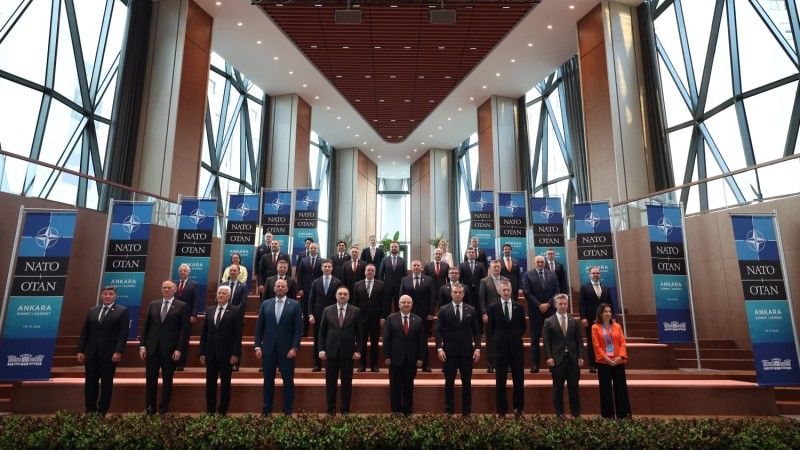
Photo. Official X Account of the Republic of Türkiye Ministry of National Defence
During the Defence Industrial Forum, held as part of the 36th NATO Summit in Ankara, allied nations announced deals and investment packages worth over $50 billion. These agreements form the basis of a new strategy to strengthen NATO’s operational capabilities and deterrence by building international “purchasing coalitions” and deepening industrial cooperation, known as “Made in NATO.” In parallel, Secretary General Mark Rutte underscored that these ambitions must be matched by higher defence spending, calling on Allies to increase their defence budgets to 5% of GDP by 2035.
Aviation and early warning systems (ISR)
Among the key announcements was the modernisation of the air fleet, including the purchase of Swedish Saab GlobalEye early-warning aircraft. NATO has begun formal negotiations to procure up to 10 airborne early warning and control (AEW&C) aircraft worth $4.5 billion. These aircraft will replace the aging E-3 AWACS fleet, providing simultaneous surveillance of land, air, and maritime domains.
Another important step was the decision regarding the MQ-4C Triton drones. Denmark, Finland, Germany, and Norway signed a letter of intent regarding the joint purchase of up to five unmanned aerial vehicles manufactured by the American company Northrop Grumman. These aircraft can remain aloft at high altitudes for over 30 hours and will be used to monitor vast maritime areas, including shipping lanes and the Arctic.
Discussions during the forum also focused on the joint Airbus A400M transport fleet. Seven countries – Belgium, Croatia, France, Poland, Spain, Türkiye, and the United Kingdom – have launched a new international High Visibility Project to build and share a fleet of these aircraft. At the same time, Finland’s accession to the joint Airbus A330 Multi-Role Tanker Transport (MRTT) program and the imminent delivery of the tenth aircraft of this type were announced.

Missile production and missile defence
The US-based Lockheed Martin and Germany’s Rheinmetall have signed a memorandum of understanding to establish production of ATACMS ballistic missiles in Germany. This is the first production line for this type of missile outside the United States, which will help fill gaps in the supply chains for war-torn Ukraine and NATO countries. Production is to take place, among other locations, at Rheinmetall’s Unterlüß plant, where rocket engine production capabilities are also being developed. Production of engines and components for the guided missiles could begin as early as 2027. The agreement is part of a broader process of transferring some US production capabilities to Europe and strengthening the European defence industry.
Also worth mentioning is the intergovernmental agreement signed by the United States, Germany, the Netherlands, Poland, and Sweden to explore the possibility of establishing a dedicated service centre in Europe for PAC-3 missiles, used in Patriot systems. While the facility’s location has not yet been determined, it is already known that the planned facility will enable maintenance and repair work to be conducted directly in Europe, reducing missile downtime and increasing their operational availability. This is particularly important given the growing demand for air and missile defence systems and the need to maintain high operational readiness among European Patriot users.

Drone defence – What is the $40 billion NATO Drone Edge Initiative?
The growing importance of unmanned systems on the modern battlefield is also reflected in the launch of the NATO Drone Edge initiative. As NATO Secretary General Mark Rutte emphasised, the experience of the war in Ukraine, conflicts in the Middle East, and repeated incidents involving drones within the Alliance demonstrate the need for rapid development of both large-scale drone capabilities and countermeasures.
The project’s main objectives are based on four pillars:
- Development of drone defence: A significant portion of the $40 billion budget will be allocated to the development and implementation of advanced systems for the early detection, identification, and neutralisation of hostile drones.
- Counter-drone systems market: NATO is launching a dedicated market that will facilitate and significantly accelerate the mass procurement of counter-drone equipment and surveillance drones. The NATO Support and Procurement Agency (NSPA) will oversee contracts worth hundreds of millions of euros.
- Intensive operator training: Equipment development requires adequate personnel, which is why allied nations have committed to increasing the number of military drone operators in their armies fivefold by the end of 2027.
- Expanding the training base (NATO Flight Training Europe): The Alliance is significantly expanding its training capabilities. During the summit, it was announced that Finland, France, and Sweden have joined a joint flight training project. This will expand the program to 20 allied nations, with a total of 16 training centres.

Satellite technology and space operations
The Hybrid Alliance Layered Operations in Space (HALO) initiative is also crucial for developing space capabilities. Eight NATO nations – Denmark, Canada, Finland, Germany, Norway, the Netherlands, Sweden, and Türkiye – have launched a project to explore the creation of a networked constellation of megasatellites. The initiative aims to better connect and integrate national military satellites controlled by individual nations into a single, more resilient architecture. While still in the development phase (concept exploration), this solution aims to strengthen the Alliance’s capabilities in high-speed communications, reconnaissance, and missile tracking. According to NATO, this model aims to mitigate the weaknesses resulting from relying solely on individual national satellite constellations, which remain vulnerable to cyberattacks, jamming, or physical destruction. The networked architecture will also reduce the constraints related to the cost, construction time, and range of individual satellite fleets.
In the area of space access, the German company Isar Aerospace and the Canadian company Maritime Launch Services have signed another important agreement – the $140 million STARLIFT initiative. The agreement ensures readiness for rapid orbital flights and the launch of allied payloads in crisis situations. This is an attempt to establish a NATO „lifeline,” guaranteeing the rapid re-launch of lost satellites without waiting for standard queues and approvals from foreign launch centres.
Among the national initiatives strengthening the Alliance’s potential, Türkiye’s role is noteworthy. It has announced funding for the construction of two high-resolution observation satellites developed by the national institute TÜBİTAK, at a cost of $300 million. Furthermore, the Turkish Armed Forces will invest over $350 million in low-orbit satellites, military communications systems, and radars manufactured by ASELSAN as part of the integrated „Steel Dome” defence system. These investments are aimed at strengthening the Turkish Armed Forces’ communications, reconnaissance, and early warning capabilities. They also strengthen national competences in key defence technologies and reduce dependence on foreign suppliers.
See also 

Integrated air and missile defence and resources
New initiatives related to the Integrated Air and Missile Defence Initiative also played a significant role. Seven countries – Belgium, Denmark, Finland, Greece, Romania, Sweden, and Türkiye – joined a project aimed at strengthening capabilities against low-altitude threats, including drones and cruise missiles. Norway, in turn, joined a separate initiative aimed at developing passive airspace surveillance. The broader package of projects and investments in this area, presented at the forum, is worth approximately $26 billion.
In the area of strike capabilities, six countries – Denmark, France, Italy, Norway, Türkiye, and the United Kingdom – initiated the international Ground-Based Precision Strike Capabilities project. Its goal is to develop new ground-based precision strike systems, including cruise and ballistic missiles. At the same time, Türkiye announced the purchase of a significant number of long-range ATMACA land-based cruise missiles, manufactured by the domestic company ROKETSAN. The total value of this and other projects announced during the forum in the areas of strike capabilities and ammunition is approximately $1.6 billion.
Furthermore, to ensure stability and security in the defence sector, a group of twelve NATO nations launched an international project on critical raw materials for the defence industry. The initiative aims to increase the resilience of supply chains through cooperation in the sourcing, transportation, and storage of strategic materials, as well as the management of inventories of components and recycled products. The goal is to reduce the defence industry’s vulnerability to supply disruptions and other crises.

Analysis of the major packages
An analysis of the major arms packages announced at the NATO Summit in Ankara reveals a profound transformation of the Alliance’s strategy. At the same time, a picture emerges of comprehensive actions aimed not only at individual purchases but also at the long-term integration and independence of the member states’ defence industries.
Building Strategic Autonomy and Cost Sharing: The Air Force and Intelligence (ISR) modernisation package clearly demonstrates a commitment to closer international cooperation (the “pooling and sharing” concept), enabling smaller nations to access advanced technologies without having to bear the full costs. This is also a direct response to the United States’ reduced logistical involvement in European defence plans. NATO is compensating for these shortcomings by building its own strong transport base.
Decentralising Ammunition Production and Support: This is one of the most important decisions, addressing supply chain bottlenecks exposed by the wars in Ukraine and the Middle East. The additional relocation of industry to Europe will significantly reduce repair times and thus increase Europe’s defence readiness.
Responding to an asymmetric battlefield: This massive $40 billion package, spread over five years, highlights the painful lessons NATO has learned from modern conflicts. Drones have gone from a novelty to a decisive factor on the battlefield. The initiative includes not only the procurement of counter-drone platforms but also extensive training activities.
Security and resilience of space infrastructure: Space has become critical infrastructure, and the packages signed at the summit focus primarily on strengthening the orbital architecture against disruptions and cyberattacks.
Securing the foundations of the supply chain: Even the best technologies are useless without the ability to mass-produce them. Therefore, the 12-nation initiative on critical defence raw materials is an extremely important package.
Overall, the packages presented in Ankara demonstrate NATO’s commitment to creating an integrated military ecosystem “Made in NATO,” pooling transatlantic resources, enhancing European arms autonomy, and generating significant contracts that stimulate economic growth and create thousands of jobs.
The Forum itself is widely viewed as a “watershed moment for European security and Allied industrial cooperation.” At the same time, it sends a clear signal of solidarity and deterrence – the values that allies prize most. Colonel Sarah Fortin, NATO’s senior military advisor, said that hosting the summit and the Forum in Ankara sends a strong signal to adversaries, demonstrating that allies are stronger when they work together. Turkish Defence Minister Yaşar Güler, in turn, emphasised that the investments, worth tens of billions of dollars, are tangible proof of NATO’s commitment to strengthening deterrence and rapidly delivering what armies actually need on the battlefield.