


- WIADOMOŚCI
- KOMENTARZ
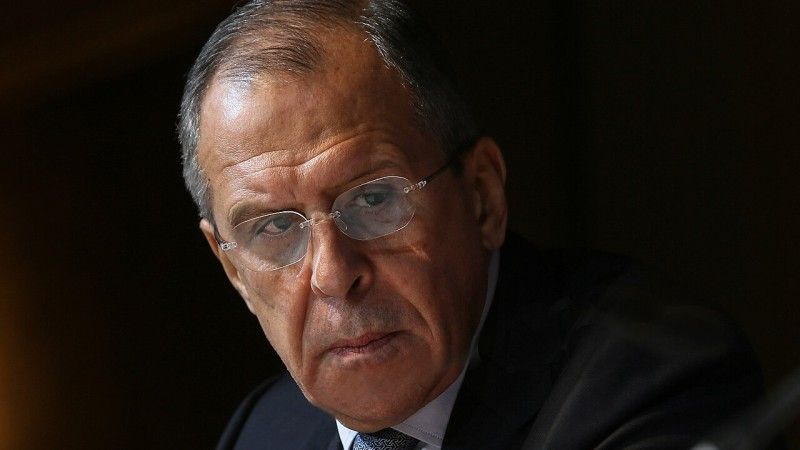
Lavrov visits Minsk. Talks on a new Eurasian security architecture begin

When Vladimir Putin says that peace talks on Ukraine must also address a new architecture of collective security, he is not speaking in abstractions. Since 2023, Belarus, with active Russian support, has been developing a concrete proposal known as the “Eurasian Charter of Diversity and Multipolarity in the Twenty-First Century”.
Minsk has become the main platform for promoting it, and Russian Foreign Minister Sergey Lavrov has attended every conference on Eurasian security held there. This year’s meeting is special for two reasons. First, the initiative has received formal international status. Second, the OSCE Secretary-General is also taking part — the clearest, if still limited, sign of institutional interest from the West so far.

What is the essence of the Charter?
Its authors present the document as drawing on the spirit of the 1975 Helsinki Final Act and the principles of the OSCE. The stated ambition is to create an umbrella text that could bring together the interests of Europe and Asia, folding in existing projects from China (the Belt and Road Initiative and Beijing’s global security, civilisation and development initiatives), Russia (the Greater Eurasian Partnership) and India (the Voice of the Global South).
Negotiations were formally launched on 25 September 2026 on the margins of the UN General Assembly. Nine countries have so far backed the process, including Russia, Iran and Kazakhstan. China has welcomed the start of talks — its special envoy for Eurasian affairs, Sun Linjiang, said as much yesterday at the Minsk conference — but continues to watch from the sidelines rather than join formally.
Two rounds of expert consultations are planned: one in Minsk in December and another in Russia in the spring of 2027. After that comes a summit of Eurasian leaders in Minsk and, if agreement is reached, the signing of the Charter. The timetable is ambitious, but deliberately flexible; Moscow has already signalled that it will not force artificial deadlines.

Why Belarus? Launching the idea from a smaller state rather than from Russia itself is meant to make the project look more neutral and open to others. For Alexander Lukashenko, it is also a chance to show that Belarus remains an independent and internationally significant player and to restore Minsk’s reputation as a place where high-level security talks can take place.
In Western capitals, the initiative has attracted little attention so far. This may prove a mistake, especially as peace talks on Ukraine slowly gather pace and the question of a broader European security order returns to the agenda.
The Charter is unlikely to achieve its stated ambitious goals while confrontation between Russia and the European Union remains sharp. Even so, in any future talks with Moscow, the document will give Russia something concrete to put on the table at a moment when ideas about a new Eurasian security order are scarce. If the EU does not want to lose the strategic initiative, it will need to be ready with its own inclusive proposal for a new security architecture — one that can be taken seriously by Eurasian partners and opponents who are already looking for alternatives.
About the author: Alexander Pirozhnikov, PhD, is Director of the East European Strategic Forum, a Warsaw-based think tank focused on security and political developments in Eastern Europe. He specialises in foreign policy analysis and the region’s strategic affairs.


