












- WIADOMOŚCI
- ANALIZA
Terrorism in Russia at national, regional and international level

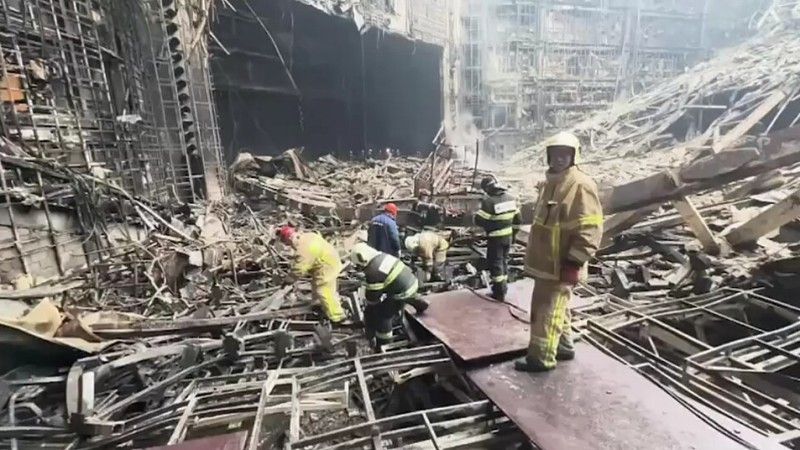
Photo. Пресс-служба Губернатора Московской области / Wikimedia Commons
Terrorism in Russia should be analysed not only as a threat to national security, but also as a political tool used by the Kremlin at the national, regional and international levels. The evolution of threats in the Russian Federation, from the North Caucasus and the Caucasus Emirate, through the growing significance of the so-called Islamic State, to the activities of the Islamic State – Khorasan Province and the attack at the Crocus City Hall, illustrates the many challenges facing the Russian security services.
Terrorism is a term that is widely used but difficult to define unambiguously. The phenomenon is dynamic and depends on the legal and political context, as well as on the actor defining it: the state, an international organisation or a researcher. In the Russian case, this ambiguity is particularly important, because Moscow does not treat terrorism only as a security category. It also treats it as a political instrument.
It should be emphasised that extremism is not a synonym for terrorism. Extremism refers to a broader ideological, organisational and political category associated with extreme views, radicalisation, propaganda or the activities of groups regarded as a threat. It may lead to violence or terrorist activity, but it is not necessarily the same thing. Terrorism refers primarily to the use of violence or the threat of violence for political, ideological, religious or social purposes.
In the Russian legal system, extremism and terrorism are treated as related but distinct legal categories. Article 282.2 of the Criminal Code of the Russian Federation concerns extremist organisations, but explicitly excludes organisations designated as terrorist under Russian law. Terrorist organisations are covered by separate regulations, in particular Article 205.5 of the Criminal Code, which concerns the organisation of, and participation in, the activities of a terrorist organisation.
At the same time, in the practice of the Russian security apparatus, the concepts of extremism and terrorism are sometimes used in parallel as instruments of social control and for the political definition of threats. This is the core of the Russian approach. For the Moscow authorities, achieving political objectives is crucial, and for this reason they use their own, context-dependent definition of terrorism.
Russian legislation, including Article 205 of the Criminal Code, defines a terrorist act as causing an explosion, arson or other acts designed to instil fear in the population and pose a threat to life, cause significant property damage or other grave consequences, undertaken with the aim of destabilising the activities of public authorities or international organisations or influencing their decisions. The provision also covers the mere threat of carrying out such actions.
See also 

The Federal Law „On Countering Terrorism” defines terrorism as an ideology of violence and the practice of influencing the decisions of government authorities or international organisations by intimidating the population or through other forms of unlawful action involving the use of violence. The Act introduces a broad understanding of terrorist activity, including attacks, planning, financing, incitement, the creation of illegal armed structures, recruitment, training, information activity and propaganda.
This broad scope gives the Russian state considerable leeway in classifying certain activities as terrorist. The National Antiterrorism Committee serves as the central body coordinating Russia’s counterterrorism efforts, integrating the activities of federal, regional and local structures under the leadership of the Federal Security Service. It is responsible for planning counterterrorism operations, shaping state policy in this area and managing communication related to threats. This demonstrates the centralisation of Russia’s security system and the significant role of the Kremlin in defining threats.
Russia also defines international terrorism in very broad terms and in a way directly linked to its own interests. Article 361 of the Criminal Code includes not only traditional acts of violence, such as terrorist attacks or arson, but also any activities considered to be directed against the interests of the Russian Federation or to interfere with the „peaceful coexistence of states”. In practice, this means that the category of terrorism can be applied much more broadly than only to domestic security threats.

From the North Caucasus to ISIS-K
After the collapse of the Soviet Union, the highest concentration of terrorist attacks on Russian territory was recorded in the North Caucasus, especially in Chechnya, Dagestan and Ingushetia. These areas have long been major centres of activity for Islamist and separatist groups. Although North Ossetia was the site of one of the most tragic terrorist attacks in Russia’s history, its significance in contemporary attack statistics is smaller than that of the other Caucasian republics.
As recently as 2012, before the series of attacks in Western Europe, including in France, Great Britain, Belgium and Germany, the terrorist conflict in the North Caucasus was regarded as the most brutal of its kind in Europe. During that period, around 700–800 people were killed each year in clashes between Russian forces and militants described by the Russian authorities as terrorists. Between 1992 and 2011, 1,415 terrorist attacks linked to groups operating in the North Caucasus were recorded in Russia. The highest number of incidents occurred in Chechnya, Dagestan and Ingushetia, although some attacks were also carried out in Moscow and Saint Petersburg.
Russia’s experience of Islamist terrorism is long-standing and systemic. Since the war in Afghanistan, through the Chechen conflicts and later its involvement in Syria, Moscow has remained one of the main opponents of jihadist groups. As a result, Russia has been the target of numerous attacks, including those carried out at the theatre in Dubrovka in 2002, at the school in Beslan in 2004 and at the Crocus City Hall in 2024. At the same time, despite its awareness of the threat, the Russian security apparatus has limited capacity to neutralise it effectively, especially while stretched by the war against Ukraine.
Since the 1990s, Russia’s „war on terrorism” in Chechnya has not been merely an internal affair. It has been part of its foreign policy strategy. After the attacks of 11 September 2001, Moscow sought to frame its actions in the Caucasus within the global narrative of the fight against terrorism. It used the temporary convergence of interests with the United States, especially in the context of Afghanistan and the American military presence in Central Asia, to legitimise its own operations.

For many years, Chechen separatists were portrayed by the Russian authorities as the most serious terrorist threat to the Russian Federation. Between 1999 and 2013, structures originating from this movement were responsible for most terrorist attacks carried out on Russian territory, although their activity gradually decreased over time.
A new phase began on 31 October 2007, when Doku Umarov, one of the leaders of the North Caucasian insurgency, renounced his position as President of the Chechen Republic of Ichkeria and proclaimed the creation of the Caucasus Emirate. It was an Islamist, self-proclaimed organisational structure that for many years served as the principal terrorist base in the North Caucasus. Local jamaats operating in Dagestan, Ingushetia, Kabardino-Balkaria, Karachay-Cherkessia and North Ossetia became the organisational and personnel base for the Caucasus Emirate. In December 2009, the Supreme Court of the Russian Federation banned its activity, recognising it as a terrorist organisation.
The rise of the so-called Islamic State had a direct impact on the security situation in the Russian North Caucasus. Hundreds of militants left the region to join the armed conflict in Syria and Iraq. Among the foreign fighters serving in the ranks of ISIS and other jihadist organisations, a significant proportion were citizens of the Russian Federation, many of whom came from the North Caucasus. This weakened the Caucasus Emirate and reduced its recruitment opportunities.
After 2014, the structures of the Caucasus Emirate began to break down. This was the result of both intensified operations by the Russian security services and deep internal divisions within the Caucasian jihadist community. Between 2014 and 2015, some commanders and militants pledged allegiance to ISIS, which gradually assumed the role of the dominant ideological and organisational centre for radical circles from the North Caucasus.

The Islamic State Caucasus Province, established in June 2015, became a significant actor in Russia’s terrorist threat landscape. It drew on part of the former Caucasus Emirate’s cadre base and organisational infrastructure. During the Syrian conflict, around 2,800 fighters from the countries of the former Soviet Union joined the fighting in the ranks of ISIS, including people from the North Caucasus and Central Asian states. This led to the gradual disintegration of the Caucasus Emirate and the takeover of part of its personnel and infrastructure by ISIS structures.
Russia’s military intervention in Syria in 2015 further increased the terrorist threat. When Moscow launched its military offensive in support of Bashar al-Assad, jihadist organisations began to call for attacks against Russian citizens and interests. On 31 October 2015, an explosive device detonated on board a Russian passenger aircraft flying from Sharm el-Sheikh to Saint Petersburg. A total of 224 people were killed. ISIS claimed responsibility, presenting the attack as direct retaliation for Russia’s intervention in Syria.
Another example was the attack in the Saint Petersburg metro on 3 April 2017. The Imam Shamil Battalion, affiliated with Al-Qaeda and referring to itself as the „Knights of Islam”, claimed responsibility. The suicide bombing between the Sennaya Ploshchad and Tekhnologichesky Institut stations killed 15 people and injured several dozen. Russian authorities detained 11 individuals from Central Asia in connection with the attack. This showed the importance of transnational jihadist networks and their ability to conduct or inspire attacks inside Russia.
Between 2015 and 2022, Russia faced terrorist threats concentrated mainly in the North Caucasus. These attacks were largely carried out by jihadist groups linked to the Islamic State Caucasus Province, which had taken over part of the personnel and structures of the former Caucasus Emirate. They most often took the form of targeted strikes against security service officers, local government representatives and religious institutions. At the same time, the Russian language became the third most popular language of ISIS propaganda after Arabic and English.
Since 2020, the Islamic State – Khorasan Province has gained increasing prominence in relation to Russia. ISIS-K, operating primarily in Afghanistan and Central Asia, gradually took the lead in planning and instigating attacks aimed at Russia. This organisation operates differently from previous North Caucasian groups. Its recruitment relies heavily on economic migrants from Tajikistan, Uzbekistan and Kyrgyzstan, functioning on the margins of Russian society. These communities may become vulnerable to radicalisation in conditions of discrimination, repression and disinformation.
The attack at the Crocus City Hall on 22 March 2024 was the most dramatic demonstration of this threat. ISIS-K carried out the attack in the Krasnogorsk area of Moscow Oblast. A total of 144 people were killed and 551 were injured. It was not only one of the largest demonstrations of ISIS-K’s capabilities in Russia, but also one of the largest terrorist attacks globally in recent years. The fact that Russia reportedly received warnings from other states, including Iran and the United States, shows that the problem was not only the absence of information. It was also the limited ability, or willingness, of the Russian system to correctly assess the threat.
The Russian response again focused on narrative management. Even immediately after the attack, the Kremlin pushed the suggestion that Ukraine and Western intelligence services were involved. This was consistent with the broader Russian approach after 2022. Terrorism in Russia has ceased to be merely one of the threats to security and has become an element of domestic and international policy, a tool used to support political and military actions.
In 2024, Russia also faced attacks in Dagestan, where armed assailants carried out coordinated attacks on Orthodox churches, synagogues and police stations in Derbent and Makhachkala. At least 20 people were killed, including security officers and clergy, and more than 40 were injured. Russian services did not confirm the identities of the perpetrators. Some information indicated cooperation with organisations associated with ISIS, including the Islamic State Caucasus Province, while ISIS-K provided media support. Once again, Russian authorities constructed a narrative alleging Western or Ukrainian involvement.

Russia, CSTO and the regional security problem
Russia is the main source of terrorist threats in the post-Soviet space among the member states of the Collective Security Treaty Organisation, and it is also a country accused of terrorist activities both domestically and abroad. The Kremlin, in order to achieve its own objectives, demonstratively resorts to measures in domestic policy that fall within the definition of terrorism. At the same time, Russia develops an anti-terrorist strategy that it uses to subjugate regions and communities and to justify military actions.
The terrorist threat to CSTO member states is connected not only with the Caucasus, but also with Central Asia and Afghanistan. There is a risk that terrorist organisations from the Caucasus will attempt to carry out attacks not only in Russia, but also in other CSTO member states. Their operations also have a criminal dimension, because terrorist organisations cooperate with criminal groups and obtain funds through international drug trafficking, kidnappings and arms sales. The use of the territories of CSTO member states to conduct illegal activities, including through a Europe–Asia trade route, poses a serious threat to regional security.
Afghanistan remains particularly important. Tajikistan, a CSTO member state bordering Afghanistan, has repeatedly reported terrorism-related threats from its southern border. This is linked to the unstable situation in Afghanistan and the lack of security at border crossings. After 2022, Central Asian states significantly changed their policy towards Kabul. They recognise the risks, but at the same time the development of Afghanistan’s relations with Kazakhstan, Uzbekistan, Turkmenistan, Tajikistan and Kyrgyzstan is influenced by Russia, which seeks to oversee regional cooperation projects and prevent Central Asian states from strengthening their independence.
See also

The CSTO has formal structures for counterterrorism cooperation. Its Working Group on the Fight against Terrorism and Extremism prepares proposals to improve joint operations, regularly updates lists of organisations recognised as terrorist and extremist in member states, and works to improve the operational and combat training of special forces units. Between 2024 and 2025, it maintained and adapted its existing priorities to the changing security environment. Particular emphasis was placed on countering terrorist and extremist activity involving disinformation and new technologies, including propaganda and recruitment in cyberspace, combating transnational terrorist groups linked to cells in Afghanistan, protecting external borders, especially the Tajik-Afghan border, and strengthening joint exercises, IT cooperation and legal cooperation.
There are also many areas of cooperation between the CSTO and the United Nations in the field of combating terrorism. The basis for joint activity includes agreements between the CSTO Secretary General and selected UN organisational units, including the memorandum of understanding with the Counter-Terrorism Committee of the UN Security Council and the cooperation agreement between the CSTO Secretary General and the United Nations Office of Counter-Terrorism. Cooperation with the Commonwealth of Independent States and the Shanghai Cooperation Organisation is also significant.
However, Russia’s war against Ukraine exposed the weakness of the CSTO as a collective security mechanism. Instead of consolidation and cooperation, there has been distancing. Most members, apart from Belarus, have avoided openly supporting Moscow. They do not want to legitimise aggression or risk losing profits in their relations with the West. At the same time, the Kremlin continues to use the narrative of the need to combat terrorism and to justify its military operation in Ukraine in order to maintain influence in the region.
The problem is that, without Russia’s ability to intervene and impose resolutions on conflicts such as Armenia–Azerbaijan or Kyrgyzstan–Tajikistan, the CSTO becomes increasingly powerless. Countries in the region are seeking alternative cooperation projects with China and Turkey, as well as channels with the European Union. This weakens Russia’s ability to present itself as the uncontested security guarantor in the post-Soviet space.
See also

Africa, Syria and the internationalisation of the threat
Russia’s counterterrorism narrative also has an international dimension. Moscow declares that its counterterrorism efforts are focused primarily on the Sahel states, particularly Mali, where the fight against terrorism serves as one of the main justifications for the presence of Russian military forces and mercenaries. In practice, however, this activity also serves broader political, economic and military objectives, including maintaining influence and access to natural resources.
Russia’s anti-terrorist policy in Africa is presented as a response to the activities of jihadist groups operating on the continent. These include the Group for the Support of Islam and Muslims, Jama’at Nusrat al-Islam wal-Muslimin, the Islamic State Sahel Province, the Islamic State West Africa Province, Islamic State structures in Mozambique, also referred to as Ansar al-Sunna or Ahl al-Sunna, and, in Central Africa, the Allied Democratic Forces and ISIS structures in the Democratic Republic of the Congo linked to the Islamic State Central Africa Province.
In the Russian security narrative, these groups are portrayed as a threat that justifies Moscow’s continued military and political presence in selected African states. Yet the data show that terrorist threats remain strong in several countries where Russia is present or active. Mali, Burkina Faso, Niger, Mozambique, Libya, the Central African Republic and Sudan remain unstable. Russian activity does not lead to the elimination of terrorism. Instead, it often fits into a mechanism that sustains an environment of instability, enabling governments and juntas to become dependent on external support.

This is one of the most important elements of the Russian model. Russia functions as a beneficiary of prolonged chaos. Terrorism remains an element of cooperation that enables and justifies its continued presence, rather than a problem Moscow is able to resolve systemically. Russian mercenaries in Africa, who are often regular soldiers of the Russian army in practice, have repeatedly failed to effectively oppose terrorist groups. This scenario has been visible in Mozambique, the Central African Republic, Mali and Burkina Faso.
If Russia decides to build new bases, continue expanding the presence of the Wagner Group or Africa Corps, maintain infrastructure in Syria and construct additional facilities in Africa, it will have to commit more troops and resources to counterterrorism efforts both in Russia and abroad. This will require additional and significant investments, as well as a reallocation of resources, including funds currently allocated to the war in Ukraine. Russian bases in Africa would automatically become targets for terrorist groups, including jihadist organisations.
The Russian Federation therefore remains one of the countries particularly exposed to terrorist threats. In the Global Terrorism Index 2025, Russia was ranked 17th in the world, moving up 20 places compared with the 2024 report. In the Global Terrorism Index 2026, it ranked 16th. This rise was a consequence of increased terrorist activity within the country, including successful attacks with a significant impact on society. Russia, while conducting a full-scale military operation against Ukraine and engaging militarily in Africa under the slogan of combating terrorism, is simultaneously increasing its vulnerability to such threats.
See also

The political use of counterterrorism
The authorities in Moscow portray Russia as a key actor in the international fight against terrorism. They emphasise the need to avoid double standards and to build a broad coalition against terrorism and extremism. They treat counterterrorism as a tool of state policy. They promote a narrative that prioritises eliminating existing threats rather than prevention. They control the information space and marginalise the importance of human rights. This is intended to legitimise repressive methods inside the country and increase influence abroad.
At the same time, establishing cooperation with the Taliban government or using „counterterrorism” operations instrumentally to support activities in Syria, the Sahel and Ukraine undermines the credibility of this narrative. Russia is not only trying to fight terrorism. It is trying to compete with Western countries in the way threats are defined, security narratives are constructed and its own actions are legitimised under the banner of counterterrorism.
The Russian Federation has for years argued that the fight against terrorism should be conducted without double standards, often using this issue to highlight what it presents as Western hypocrisy. This argument has become an important instrument of Russian foreign policy. Moscow opposes what it sees as selective Western treatment of actors such as Afghanistan, Iran, Syria, Hezbollah or Hamas, and uses this to undermine the credibility of the United States and its allies.

The events of 2024, including the Crocus City Hall attack and the attacks in Dagestan, showed not only the scale of challenges in the field of terrorism, but also gaps in the Russian response system, despite earlier warnings from other states. The Kremlin’s response focused largely on controlling the narrative, expanding the powers of the security services and attributing responsibility to selected terrorist groups and political opponents, in particular Ukraine and Western countries. This is consistent with the use of terrorism as an element of domestic policy and as a tool for mobilising public support.
The Crocus City Hall attack demonstrated that, despite years of pacification efforts, Russia had not eliminated the sources of the terrorist threat. The root of the problem still lies partly in the North Caucasus, where radicalisation in republics such as Chechnya, Dagestan and Ingushetia remains a persistent phenomenon, particularly among younger generations. Jihadist structures linked to the Islamic State, and also to the re-emerging Caucasus Emirate, continue to focus on operations against security services and state institutions.
The conditions and threats discussed do not necessarily indicate a constant increase in the scale of terrorism in Russia, but they do indicate the existence of persistent factors that cannot be fully eliminated, even by an authoritarian security apparatus. The neglect of early signs of radicalisation, the ongoing and escalating terror, and the privileged position of Russian security services at local and regional levels have led to incorrect threat assessments and delayed state responses.

This is the key weakness of the Russian model. It is based less and less on prevention and more and more on the political definition of opponents. It allows the Kremlin to describe enemies as terrorists, to present repression as security policy and to justify foreign military action as counterterrorism. But this model does not eliminate terrorism. It distorts the perception of threats.
Russia cannot, and will not, fully eliminate terrorist threats domestically or abroad. The experience of the North Caucasus, the influence of Chechen elements, the activities of Al-Qaeda and ISIS, the emergence of ISIS-K, the attacks in Moscow and Dagestan, and the instability surrounding Russia’s foreign operations all point in the same direction. Moscow may strengthen the security apparatus, expand legislation and control the narrative. But if counterterrorism is used primarily as a political tool, the state will continue to misread threats and remain vulnerable to further attacks.
Full issue available under the following LINK


