- WIADOMOŚCI
- KOMENTARZ
Ireland wants 550 French armoured vehicles. Can its army handle them?

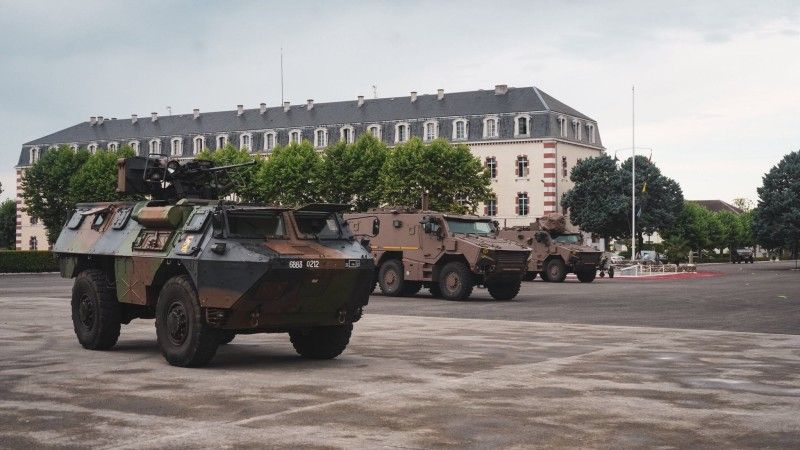
Ireland is preparing for one of the largest military modernisation programmes in its history. Military planners are recommending the purchase of more than 550 French armoured vehicles under the SCORPION programme, transforming the Irish Army from a force focused primarily on peacekeeping into one capable of conducting conventional military operations. However, serious questions remain about costs, personnel and the ability to maintain such a large fleet. The Irish Defence Forces currently have fewer than 8,000 permanent personnel.
According to The Irish Times, the proposed acquisition would include three French vehicles: the six-wheeled Griffon armoured personnel carrier, the lighter four-wheeled Serval and the Jaguar reconnaissance and combat vehicle. The programme could equip an entire brigade of approximately 4,000 soldiers.
Importantly, the proposed number has increased considerably from earlier estimates of 300–400 vehicles. France was officially selected as Ireland’s preferred partner on 24 February 2026, but no final contract has been signed, and the number of vehicles and total cost remain subject to negotiations.
See also 
Ireland is also considering French CAESAR 155 mm self-propelled howitzers and MEPAC 120 mm mortar carriers. These systems would significantly strengthen the army’s firepower, while SCORPION’s SICS battlefield information system would improve coordination between vehicles and military units. However, the artillery acquisitions have not yet been approved. Dublin is therefore considering a much broader transformation of its land forces, including reconnaissance, firepower, command systems and protected mobility.
France is already becoming one of Ireland’s most important defence partners. In September 2026, Dublin ordered five Thales radar systems, including four Ground Master 400 Alpha radars and one Ground Master 200 Multi-Mission radar. Deliveries are expected to begin in 2027, with full operational capability planned by the end of 2028. The agreement demonstrates that Irish-French cooperation now extends beyond armoured vehicles to air surveillance and the protection of national airspace.
The real challenge is personnel and money
The scale of the planned transformation is particularly interesting given the size of Ireland’s armed forces. On 30 June 2026, the Permanent Defence Force had 7,816 personnel, compared with 9,085 ten years earlier. Meanwhile, the proposed French vehicles could equip a brigade of approximately 4,000 soldiers.
Ireland’s defence allocation for 2027, including pensions, has increased to €1.61 billion, but establishing a mechanised formation will require much more than purchasing military equipment. New infrastructure, training facilities, ammunition, spare parts and qualified maintenance personnel will all be necessary.
Belgium provides an important warning. In 2018, Brussels signed a contract for 442 French SCORPION vehicles, initially valued at approximately €1.6 billion. However, Belgian auditors subsequently estimated the programme’s total lifetime costs at more than €14 billion, including maintenance, infrastructure and operational expenditure. These figures concern Belgium, not the prospective Irish contract, but they demonstrate the financial commitments associated with operating a modern armoured fleet.

Ireland has also experienced serious procurement problems. Its fleet of 27 RG-32M light armoured vehicles, purchased for approximately €16 million, suffered from maintenance difficulties and limited use. One vehicle reportedly travelled only 2,100 kilometres over 14 years, while maintenance and repairs cost approximately €220,000. These experiences raise questions about Dublin’s capacity to maintain hundreds of more sophisticated French vehicles.
Ireland wants to strengthen its national defence capabilities while remaining militarily neutral and participating in European military operations, including EU rapid deployment missions. At the same time, it risks acquiring one of the most modern armoured fleets in Europe without the personnel and resources required to use its full potential.