












- ANALIZA
- WAŻNE
- WIADOMOŚCI
- PILNE
The end of CAATSA sanctions? Türkiye’s path back to the F-35

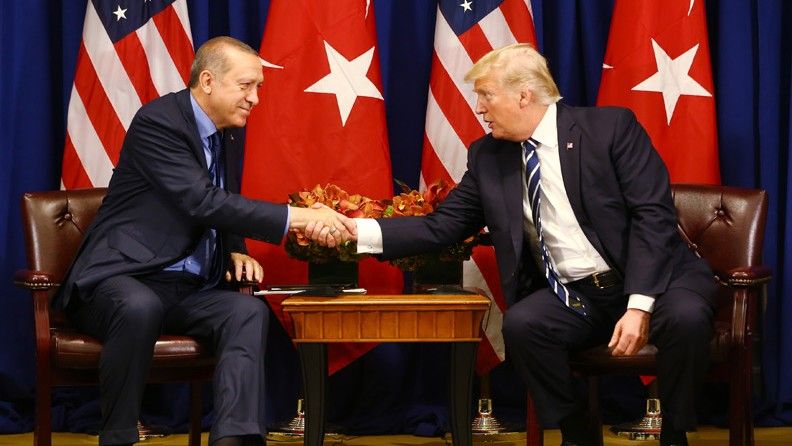
The NATO Summit in Ankara in July 2026 marked a turning point in the tense defence relations between the United States and Türkiye. President Donald Trump’s clear declarations of his desire to lift sanctions under the Countering America’s Adversaries Through Sanctions Act (CAATSA) created a new, positive political climate. American officials, including US Ambassador to NATO Matt Whitaker and Congressman Mike Turner, officially confirmed that Ankara’s return to the F-35 fighter jet programme is possible and that talks with Turkish decision-makers are yielding „promising” results. Nevertheless, as Turkish Foreign Minister Hakan Fidan soberly notes, alongside the political will of President Trump and President Erdoğan, the legal framework imposed by the US Congress remains crucial, constituting a necessary condition for any compromise.
CAATSA as a Serious Obstacle to US–Turkish Relations
CAATSA sanctions were imposed on Türkiye after the SSB finalised a deal with a major Russian arms exporter, Rosoboronexport, to purchase the S-400 air defence system. From the US perspective, this action violated Section 231 of the aforementioned act, which imposes penalties on entities concluding significant transactions with the Russian defence or intelligence sectors.
The main argument for imposing sanctions was the risk of technological espionage. The US viewed the acquisition of these systems as a direct threat to NATO’s defence architecture and the security of US military technology. Washington feared that Türkiye’s simultaneous use of the Russian S-400 air defence system and US F-35 fighter jets could allow Russian radars and intelligence agencies to intercept highly sensitive data regarding the aircraft’s stealth technology. Moreover, the operation of the S-400 system posed the risk that Russian specialists would gain insight into the infrastructure of the Turkish Armed Forces and defence industry.

By opting for the S-400—instead of alternative NATO-interoperable systems—Türkiye became the first member of the Alliance to be subject to such US sanctions. It is worth emphasising that these sanctions do not constitute a general embargo covering the entire Turkish economy, but rather targeted measures affecting the defence sector, military technologies, and financing channels.
The SSB was banned from obtaining any US export licences or permits for equipment and technologies. Furthermore, US banks were prohibited from financing the SSB, and the institution itself lost its ability to borrow from international financial institutions.
Direct sanctions were also imposed on the then head of the SSB, Dr İsmail Demir, and several other high-ranking officials within the agency. These restrictions included a freeze on financial assets in the US and a visa ban preventing entry to the United States. Importantly, although the first deliveries of Russian batteries took place in 2019, the formal announcement of sanctions did not occur until 14 December 2020, at the end of the first Trump administration. It should be emphasised, however, that even the lifting of the aforementioned CAATSA sanctions does not automatically mean that Ankara will fully return to the F-35 programme. A multi-stage process is more likely: first easing or suspending sanctions, then rebuilding military trust, and only then negotiating Türkiye’s access to cutting-edge American technologies.
Ankara’s Exclusion from the F-35 Programme
It is worth noting that Türkiye’s exclusion from the F-35 programme occurred in 2019, a year before CAATSA sanctions were formally imposed. Türkiye was one of the project’s nine main partners, and its domestic defence industry produced over 1,000 key components, such as the fuselage, landing gear, and cockpit canopies. Ankara paid $1.4 billion for the fighters, and Turkish pilots even travelled to the United States to train on Turkish-flagged aircraft. Unfortunately, after the S-400 crisis erupted, the aircraft never reached Türkiye, and in 2020, the US Congress formally reinforced this blockade by legally preventing the transfer of the fighters until the Russian systems were removed.

The US Congress’s Position
The decision-making process in the United States is hampered by strong lobbying pressure. This is currently one of the most serious obstacles. Both Athens and Tel Aviv are openly and vocally opposed to equipping Türkiye with advanced F-35 fighter jets, fearing that this would disrupt the balance of power in the Middle East and the Eastern Mediterranean. Many key members of Congress are therefore influenced by the security concerns of Israel and Greece and by the state of Ankara’s relations with these countries.
Furthermore, scepticism persists among some Democrats and Republicans about Ankara’s long-term geopolitical intentions, including its relationship with Russia. Even if Türkiye were to sell the S-400 system to a third country, such as a Persian Gulf state, sceptics—including representatives of the think tank Foundation for Defense of Democracies (FDD)—warn that this would not fully resolve the issue. Locating the Russian system in the Persian Gulf, which is home to important US bases and critical infrastructure, would pose new security threats and could give Congress grounds to veto the agreement.
However, it is crucial that the process of resolving this crisis is supported by, among others, Senator Jeanne Shaheen—one of the main authors of the original bill excluding Türkiye from the F-35 programme. Donald Trump himself also retains strong influence over Republican politicians in Congress, which could be crucial to pushing through the final agreement. It should be remembered, however, that CAATSA was deliberately designed to limit the president’s authority to lift the imposed sanctions unilaterally. The US president cannot lift sanctions by arbitrary presidential decree, as these restrictions are based in law. However, the president can negotiate the terms of the agreement, determine the pace of talks with Ankara, and exert political pressure on his party in Congress. The upcoming November midterm elections, however, could lead to the Republicans losing their majority, which analysts believe would almost certainly hinder any chance of transferring F-35 technology and, from January next year, could block it completely. Hakan Fidan himself admitted that Turkish diplomacy is now entering a process in which it will have to actively manage pressure and negative lobbying by external actors targeting the American political establishment.
The window for concluding an agreement on lifting CAATSA sanctions is currently quite narrow. Although the political climate has improved significantly following the NATO Summit, final congressional approval will depend on the precision of the proposed solution and the effective neutralisation of negative external lobbying.
It should also be noted that Türkiye’s return to the F-35 programme was blocked by a special clause in the 2020 defence budget, which additionally requires formal congressional approval for the transfer of the aircraft.
Impact of Sanctions on the Turkish Defence Industry and Technological Cooperation with the US
Although public debate has focused on the F-35 fighter jet, CAATSA sanctions have had far-reaching consequences for Turkish industry. These sanctions have severely hampered the SSB’s ability to acquire key avionics, components, and technologies from the United States, as well as hindering the modernisation of existing platforms.
CAATSA has negatively affected flagship Turkish national projects, such as the fifth-generation KAAN fighter, due to difficulties in acquiring American F110 engines, the Hürjet aircraft, the Altay tank, the Atak helicopter, and MİLGEM naval vessels. The lack of access to the F-35 also forced Ankara in 2021 to seek the purchase of F-16 fighter jets and upgrade kits for its ageing fleet, a move that also faced significant political obstacles in the US.
It should be also mentioned that given the country’s current level of technological development, a potential purchase of a limited number of F-35s would not undermine the national programme. On the contrary, it would complement it. Operating both types of aircraft would therefore provide the Turkish Air Force with enormous operational flexibility. Experts emphasise that such a solution would eliminate the need for Türkiye to deploy KAAN aircraft everywhere, which in turn would allow for better protection of their unique capabilities, performance characteristics, and technological secrets. However, American officials and experts emphasise that even if sanctions were immediately lifted, new F-35s would take several years to reach Türkiye due to production delays in the US and a long queue of other customers awaiting deliveries. This situation gives Ankara time to complete the KAAN programme without creating a drastic gap in its defence capabilities. In this context, Minister Fidan’s key piece of information is that the deadline for notifying the US Congress about the purchase of F110 engines—absolutely essential for powering the KAAN fighters—has passed.
In short, the normalisation of relations could pave the way for the modernisation of the Turkish Air Force, although the ultimate success of these efforts depends on striking a balance between Washington’s strategic interests and Ankara’s pursuit of defence autonomy.
See also 

Possible Scenarios
The future of CAATSA sanctions and Türkiye’s potential return to the F-35 programme remains dependent on numerous political, legal, and strategic factors. The resolution of the S-400 issue, the position of the US Congress, and the willingness of both sides to compromise will all be crucial. On this basis, four most likely scenarios can be identified.
At present, the most likely scenario assumes a gradual easing of sanctions, under which Türkiye would remove or permanently disable the S-400 systems. The United States would gradually ease the sanctions, while negotiations regarding the F-35 programme would remain a separate process.
The optimistic scenario assumes complete diplomatic success and a swift resolution of the impasse. The S-400 systems would either be completely removed from Turkish territory or sold with Moscow’s consent. The US president would manage to convince Congress that the Russian system no longer poses a threat, leading to the full and official lifting of CAATSA sanctions. As a result, Türkiye would not only receive approval to take delivery of the F-35 fighter jets already produced and paid for on its behalf, as part of its $1.4 billion contribution, but would also rejoin the global supply chain as a key manufacturer of components for these aircraft. This return would consequently significantly strengthen NATO’s southern flank and the interoperability of Alliance forces.
The limited-compromise scenario assumes that sanctions would remain in place, but that the presidential administration would use exemption mechanisms, known as waivers, or legal loopholes that would allow selected key defence contracts to be concluded. This „transactional normalisation” would allow the strict regulations to be circumvented in order to provide Türkiye with essential technologies. This would primarily include unblocking the supply of American F110 engines for the KAAN programme, for which the congressional notification period has already expired, as well as the modernisation of existing platforms and systems.
The negative scenario, however, assumes a complete lack of agreement. This would mean a lack of consensus on the future of the S-400 system. It is also possible that Congress would block concessions, leading Türkiye to diversify its defence partnerships even further. Ankara would intensify work on the national KAAN fighter jet, finalise purchases of European Eurofighter Typhoons, and fully implement its multi-vector policy, deepening its military and strategic autonomy regardless of Washington’s decisions.
Regardless of the ultimate fate of CAATSA sanctions and the F-35 programme, Türkiye would continue its multifaceted policy, maintaining and balancing its relations with the United States, NATO, Russia, the Gulf states, European partners, and China. The easing of US sanctions under such an agreement would primarily be aimed at protecting Ankara’s national interests and strengthening its independent position on the international stage.

The Significance of the Potential Lifting of Restrictions
The expected lifting of CAATSA sanctions would formally remove the restrictions imposed on the SSB. According to Turkish officials, this would open up the possibility of acquiring key components for domestic projects. Furthermore, the lifting of restrictions would enable Turkish defence products to be sold to the United States and other NATO countries and pave the way for the launch of entirely new joint defence projects.
However, it is important to remember that negotiations regarding Türkiye’s return to the F-35 programme remain a separate and much longer process. As noted by US officials, including Ambassador Matt Whitaker, even after all legal requirements have been met, the delivery of the advanced fighter jets would be time-consuming due to production queues and logistical constraints.


