












- WIADOMOŚCI
- ANALIZA
A black month for Russian military aviation: Losses approach record levels

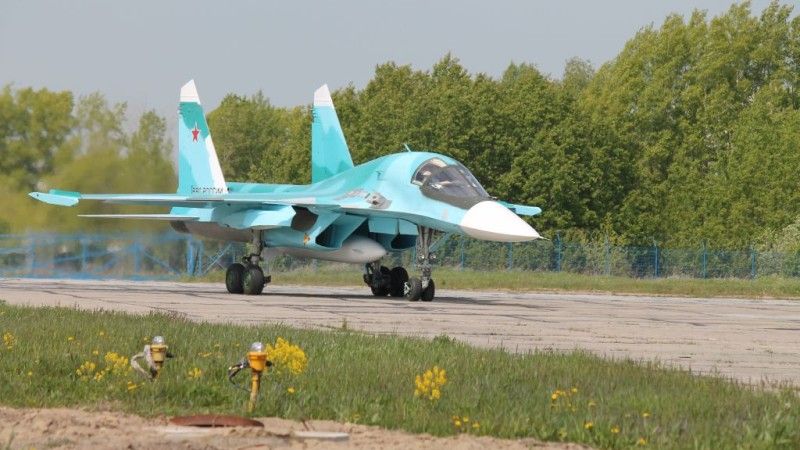
The Russian Aerospace Forces have not experienced such a disastrous month in this war for a long time. Between 1 and 31 October, Russia lost 11 military aircraft and two helicopters, marking the third-highest monthly total since the beginning of the war.
The highest confirmed monthly losses suffered by Russian military aviation occurred, unsurprisingly, in March 2022. At that time, Russian forces, underestimating their opponent, launched attacks along multiple axes across Ukraine and employed their airpower with few restrictions. Confirmed losses that month amounted to 20 fixed-wing aircraft and 31 helicopters. The second-highest total was recorded in June 2025, when 11 Russian long-range bombers were destroyed during Operation Spiderweb, while another three helicopters and three tactical aircraft were lost for other reasons. This brought the total to 14 fixed-wing aircraft and three helicopters.
At first glance, these monthly figures may not appear particularly significant. However, considering that Russia currently has approximately 600 operational aircraft and that its aviation industry can deliver only 20–30 new aircraft annually, losses on this monthly scale become increasingly consequential. This is particularly notable given that some months pass without any documented aviation losses, while in others Moscow loses just a single aircraft.

The October series of losses began on 1 October. While countering Ukrainian long-range one-way attack (OWA) UAV strikes, a Russian Su-35 mistakenly shot down a Russian Mi-8 multirole helicopter over Voronezh Oblast. The helicopter crashed, killing its crew. Several days later, on 4 October, Ukrainian drones resembling Shahed and Geran UAVs struck Khanskaya Air Base in Adygea. Two aircraft were destroyed on the taxiways: an Su-34 and an aircraft identified as an Su-35.
Strikes on air bases and aircraft accidents
A major success was achieved on 15 October, when Long Neptune missiles struck a group of six Su-34 bombers at the air base in Borisoglebsk. At least four aircraft were completely destroyed. Their wreckage was visible in satellite imagery, although Russian personnel had managed to remove two of the fuselages beforehand. Nevertheless, the remaining fragments and debris appear to substantiate the reported losses. In addition, the two aircraft positioned farthest from the centre of the strike, one on each side, were apparently towed away before the satellite passed overhead. It appears that they must have sustained at least some fragmentation damage from the explosions.
🔻 Satellite images of 🇷🇺 Borisoglebsk Air Base as of October 15, 08:25 UTC On the night of October 15, several Su-34 were destroyed at Borisoglebsk Air Base. https://t.co/3ZNBWhU6UD
— AviVector (@avivector) October 15, 2026
The following week brought no combat successes, but Russian aviation experienced an exceptionally unfortunate day. On 21 October, an Su-30SM belonging to the Russian Knights aerobatic team crashed, officially due to adverse weather conditions, killing two experienced pilots. On the same day, two other Su-30SM fighters collided over Kaliningrad Oblast. One was destroyed, while the other managed to land.
On 23 October, Ukrainian forces attempted to repeat their success at Borisoglebsk by launching four Long Neptune missiles against another Russian air base. However, the missiles were intercepted. Another successful strike followed on 29 October, when Neptune missiles destroyed two Su-34 bombers at Marinovka Air Base near Volgograd. On the same day, a new-generation Su-57 fighter caught fire, or exploded and subsequently burned, at Akhtubinsk Air Base. This was only the second confirmed loss of an Su-57 during the nearly five-year war. However, the Su-57 fleet numbers only around 30 aircraft, and the previous aircraft was lost to friendly fire near Moscow as recently as July.
Additional higher-resolution satellite imagery. https://t.co/lrl7kyyIP4
— AviVector (@avivector) October 30, 2026
All aircraft lost were modern platforms
The final successful strike, neatly bringing the month full circle, was recorded on 29 October. On that day, Ukrainian FPV drone operators attacked an Mi-8 helicopter in occupied Luhansk Oblast, first forcing it to land and then destroying it with two subsequent strikes.
October’s total losses therefore amounted to 11 combat aircraft (one Su-57, one Su-35, two Su-30s and seven Su-34s) and two helicopters (both Mi-8s). Notably, every destroyed fixed-wing aircraft was a modern platform manufactured after 2010. These were not derelict aircraft that had been sitting abandoned for years at an air base in Crimea and were subsequently finished off by FPV drones, or even operational aircraft dating from the Soviet era or the early 1990s.

It should also be noted that October’s series of losses was effectively a continuation of a trend observed since September. During that month, five helicopters were destroyed by drones under various circumstances, with another damaged on Sakhalin Island. A Tu-95MS strategic bomber crashed in an aviation accident in the Russian Far East, two Su-35 fighters collided and crashed, and a previously damaged Su-30 was destroyed at Anapa Airport. Ukrainian sources claim that the latter aircraft was an Su-33, a carrier-based fighter with comparable combat value. September’s losses therefore totalled four fixed-wing aircraft and five helicopters.
Weaknesses of the training system and an ageing fleet
Several emerging patterns are worth noting in the aircraft losses recorded during September and October. First, there has been a significant number of losses attributed to technical failures and crew errors. Two mid-air collisions involving fighter aircraft occurred within two months, representing either a remarkable coincidence or evidence of inadequate training or crew fatigue. The crashes of the Tu-95 and one of the Su-30s, the latter officially attributed to „weather conditions”, may also indicate a deteriorating technical condition across the fleet.
It is also evident that Ukrainian successes against Russian aviation, when achieved, have occurred not in air-to-air engagements but through strikes against air bases. The strategy of „killing the archer rather than the arrow” has been pursued for some time and occasionally delivers results. Russian forces have already developed a degree of resilience against drone strikes, which are no longer producing results comparable to those achieved in previous years. However, missiles are now assuming this role, at least in attacks against well-protected facilities such as military air bases.
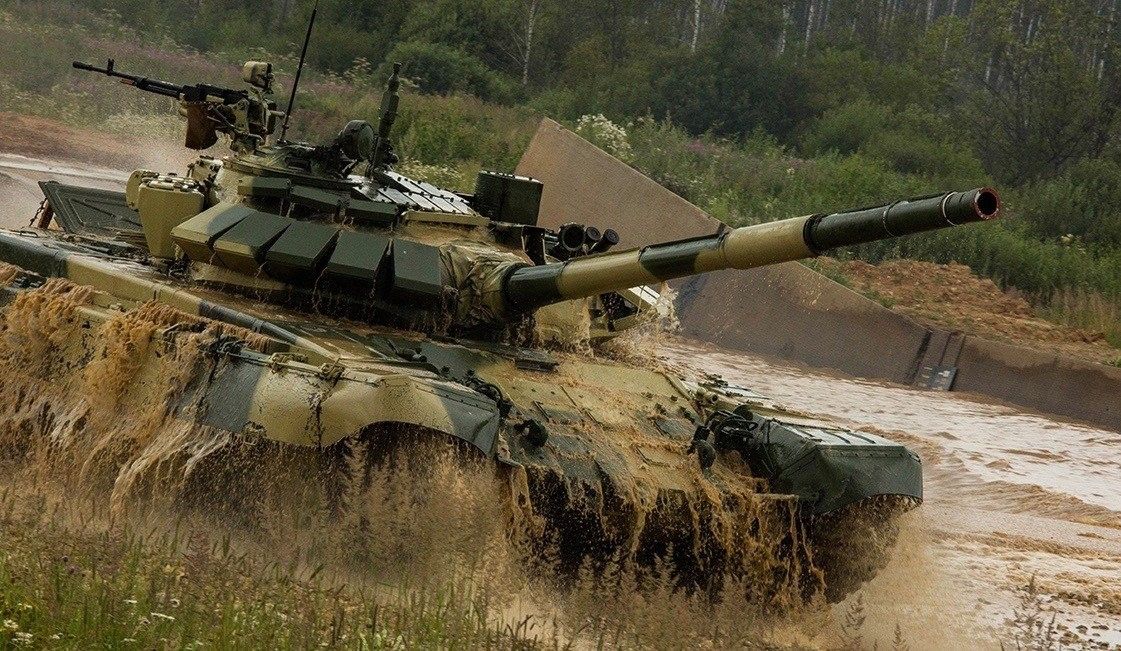
Are Ukrainian forces seeking to exhaust Russian aircrews and wear down their aircraft?
The October strikes also demonstrate that Ukrainian forces are targeting Russian bombers. Whether strategic, long-range or frontline aircraft, the distinction appears to be of little importance. However, priority is being given to platforms that routinely pose the greatest difficulties for Ukrainian forces on the front lines, particularly the Su-34. The 4 October attack already appears to have followed this approach, with the Su-35 likely destroyed because a more desirable target was unavailable — a target of opportunity, although the aircraft itself was undoubtedly a valuable target. This was followed by three additional strikes against Su-34s, two of which were successful.
Discussions have emerged on the Russian internet suggesting that Su-34s should be relocated to more distant, safer air bases. However, this may be precisely what Ukraine intends to achieve. More distant bases would mean longer flights to glide-bomb release points and longer return journeys, resulting in greater crew fatigue and increased wear and tear on the aircraft. The trade-off is therefore between losses from attacks on air bases and the accelerated consumption of aircraft service life.

What happens next remains an open question. Will November continue the trend observed in September and October? The coming weeks will provide an answer. If Russia were to sustain losses at October’s rate for several or even a dozen months, its combat aviation capabilities would undergo significant degradation.


