












- WIADOMOŚCI
East Front News #93: Defence24 Days, possible dialogue reopening with Belarus and the HÜRJET program

East Front News is a weekly newsletter summarizing the past week’s most important events concerning security and the situation in the Central and Eastern Europe region. It includes original opinions and comments, along with key news items significant from a Polish perspective. If you would like to receive this newsletter, please sign up by clicking
Belarus: between Washington and Moscow
The article examines the growing debate over whether the European Union and Poland should reconsider their policy of isolating Belarus amid signs of a limited rapprochement between Minsk and Washington. The authors argue that the United States is pursuing a more pragmatic and transactional approach towards Alyaksandr Lukashenko’s regime, using selective sanctions relief and diplomatic engagement in exchange for the release of political prisoners and reduced tensions in the region.
At the same time, the analysis highlights the risks of reopening dialogue with Belarus, given the country’s deep dependence on Russia and its role in supporting Moscow’s strategic interests. The authors suggest that Poland and other eastern flank states may eventually move towards cautious and highly conditional engagement with Minsk, focused on border stability, de-escalation and preserving Belarus’s remaining autonomy from the Kremlin.
Authors: Aleksander Olech, Patryk Jagnieża, Leon Pińczak

Defence24 Days: the Eastern flank of NATO is key to the defence of Europe
During the Defence24 Days conference in Warsaw, defence ministers from Poland, Latvia, Estonia and Slovakia stressed the strategic importance of NATO’s eastern flank for European security. The discussion focused on growing threats from Russia, the need for stronger military cooperation and the importance of increasing defence spending, ammunition production and industrial capacity across Europe.
The ministers also highlighted the value of regional cooperation and interoperability within NATO. Poland’s Defence Minister Władysław Kosiniak-Kamysz emphasised the growing scale of hybrid threats in the Baltic region and underlined Poland’s ambition to play a leading role in regional security. Slovakia additionally announced plans to contribute to Baltic Air Policing and strengthen air defence capabilities on NATO’s eastern flank.
Author: Mariusz Marszałkowski

Sweden's shadow fleet crackdown intensifies
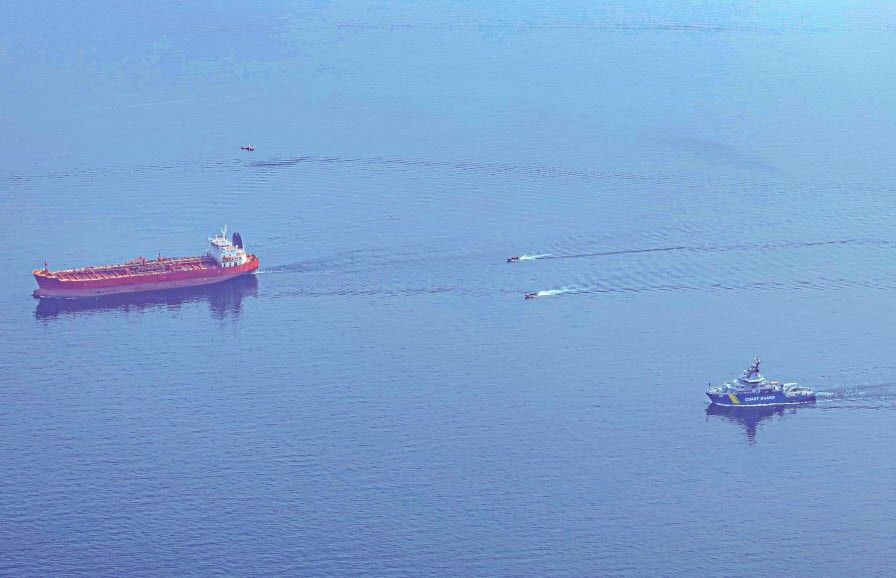
Sweden has detained another vessel suspected of belonging to Russia’s so-called shadow fleet, continuing a more aggressive enforcement campaign in the Baltic Sea. The tanker Jin Hui, sailing under a Syrian flag and linked to a Marshall Islands-based company, was intercepted by the Swedish Coast Guard near Trelleborg and taken for further investigation. The vessel is already subject to sanctions imposed by several Western countries and Ukraine.
The article highlights Sweden’s increasingly proactive approach towards Russian-linked maritime activity, including inspections based on environmental risks, insurance issues and registration concerns. Against the backdrop of suspected sabotage incidents in the Baltic region, the author argues that NATO members should adopt a coordinated regional strategy modelled on Sweden’s firm response.
Author: Karolina Kisiel
Türkiye and Spain: the HÜRJET program as a test of European defence cooperation
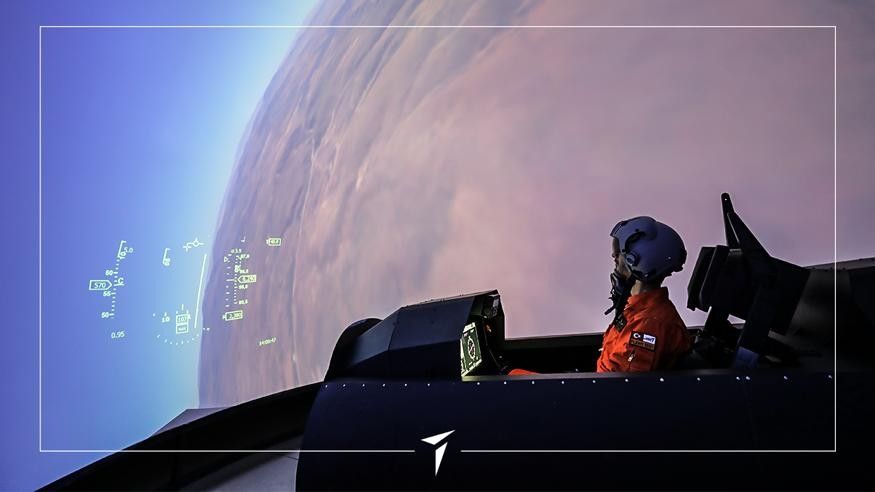
Spain has signed an agreement with Türkiye to integrate the HÜRJET combat trainer aircraft into its air force training system under the SAETA II programme. Beyond the purchase of around 30 aircraft, the project aims to create a comprehensive pilot training ecosystem involving simulators, digital infrastructure and industrial cooperation with Spanish companies responsible for a large share of the production and support systems.
The article argues that the programme reflects a broader trend towards pragmatic defence cooperation in Europe, particularly as uncertainty grows around long-term American military commitments. For Türkiye, the deal strengthens its position as a supplier of advanced military technology, while for Spain it supports the development of national industrial capabilities and strategic autonomy within NATO and Europe.
Author: Natalia Potera
Frigate hunts drones. The French are learning from Ukraine
During the NATO exercise Neptune Strike 26-2, the French frigate FS Alsace practised counter-drone operations as part of the French carrier strike group in the Mediterranean. The exercise focused on using NH90 helicopters as a cost-effective first line of defence against unmanned aerial vehicles, supported by shipboard radar systems and airborne early warning aircraft. French forces tested procedures for identifying, tracking and neutralising drones using machine guns, jammers and other low-cost solutions.
The article highlights how lessons from the war in Ukraine are influencing French naval doctrine and future modernisation plans. France is increasingly adapting to the threat posed by cheap mass-produced drones by considering new electronic warfare systems, interceptor drones and portable air-defence weapons, including potential interest in Poland’s Piorun MANPADS systems.
Author: Mariusz Marszałkowski

Flamingo in action. Attack on Russian arms factories
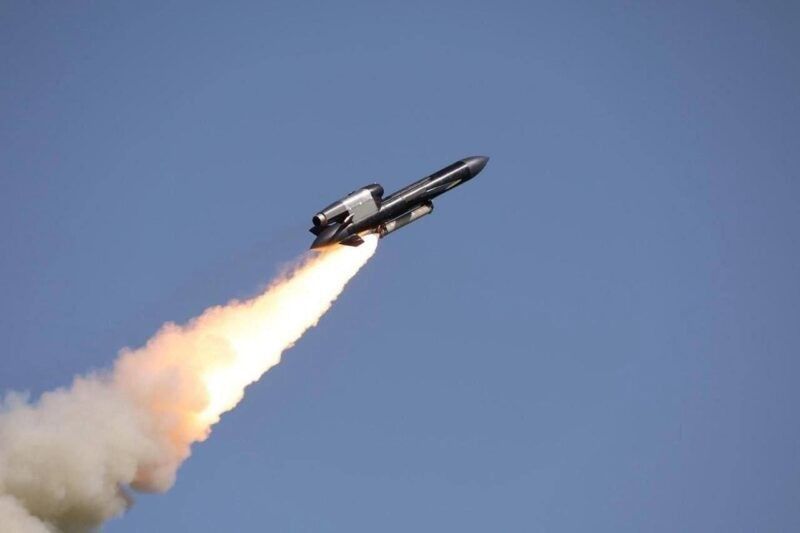
Ukraine has reportedly used domestically produced FP-5 Flamingo cruise missiles to strike Russian military-industrial facilities in Cheboksary during a long-range deep strike operation. According to President Volodymyr Zelensky, the targeted factories were involved in producing components and automation systems for the Russian Navy, missile industry and armoured forces.
The FP-5 Flamingo is one of Ukraine’s long-range strike systems designed to attack infrastructure deep inside Russian territory. The missile is said to carry a warhead weighing up to 1,150 kilograms and has a reported range of 3,000 kilometres, complementing Ukraine’s growing use of drones in long-distance attacks.
Author: Patryk Jagnieża
France tests military service model
France is introducing a ten-month voluntary national military service programme aimed at rebuilding the connection between society and defence structures. President Emmanuel Macron’s initiative is designed to strengthen awareness, responsibility and reserve capabilities rather than restore traditional conscription. Participants will receive military training and serve within operational units across France.
The article argues that the programme reflects broader European efforts to adapt to a more unstable security environment by expanding reserve systems and civilian involvement in defence. Although initial interest in the programme has been strong, questions remain about its long-term sustainability, recruitment balance and whether it can become a meaningful component of France’s defence strategy.
Author: Aleksander Olech
See also 

Polish defence minister calls for 24/7 arms production
Polish Defence Minister Władysław Kosiniak-Kamysz called on the country’s defence industry to move to continuous, round-the-clock production in response to growing security threats. Speaking at the Defence24 Days conference in Warsaw, he stressed the urgent need to increase output of munitions, drones and missile systems, while also investing in technologies such as artificial intelligence and satellite reconnaissance.
The minister also reaffirmed Poland’s long-term security strategy based on society, the armed forces and international alliances. He said Poland aims to build the largest army in Europe by 2030 and expressed support for a stronger American military presence in the region. Kosiniak-Kamysz additionally urged European NATO members to raise defence spending more rapidly in light of the current security situation.
Author: Kacper Kremiec

MESKO ammunition and missiles to be integrated with Kongsberg's RS6/RS4 remote weapon stations
The signing of the Memorandum of Understanding (MoU) between MESKO S.A. and Kongsberg Defence & Aerospace took place during Defence24 Days. It marks another step in the rapidly expanding Polish-Nordic defence cooperation, this time with Norway’s defence industry.
The planned cooperation between MESKO and Kongsberg will focus on integrating the Polish company’s ammunition and missile products with its Norwegian partner’s RS6/RS4 remote weapon stations. Among them will be MESKO’s flagship product, the Piorun man-portable air-defence system, which proved especially lethal in Ukraine.
Author: Kacper Kremiec


